Results by title
1445 books match the query 'Life Sciences' and 32 start with o
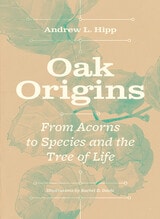
Oak Origins
From Acorns to Species and the Tree of LifeAndrew L. Hipp
University of Chicago Press, 2024
An oak begins its life with the precarious journey of a pollen grain, then an acorn, then a seedling. A mature tree may shed millions of acorns, but only a handful will grow. One oak may then live 100 years, 250 years, or even 13,000 years. But the long life of an individual is only a part of these trees’ story.
With naturalist and leading researcher Andrew L. Hipp as our guide, Oak Origins takes us through a sweeping evolutionary history, stretching back to a population of trees that lived more than 50 million years ago. We travel to the ancient tropical Earth to see the ancestors of the oaks evolving side by side with the dinosaurs. We journey from the oaks’ childhood in the once-warm forests of the Arctic to the montane cloud forests of Mexico and the broad-leaved evergreen forests of Southeast Asia. We dive into current research on oak genomes to see how scientists study genes’ movement between species and how oaks evolve over generations—spanning tens of millions of years. Finally, we learn how oak evolutionary history shapes the forests we know today, and how it may even shape the forests of the future.
Oaks are familiar to almost everyone, and beloved. They are embedded in our mythology. They have fed us, housed us, provided wood for our ships and wine barrels and homes and halls, planked our roads, and kept us warm. Every oak also has the potential to feed thousands of birds, squirrels, and mice and host countless insects, mosses, fungi, and lichens. But as Oak Origins makes clear, the story of the oaks’ evolution is not just the story of one important tree. It is the story of the Tree of Life, connecting all organisms that have ever lived on Earth, from oaks’ last common ancestor to us.
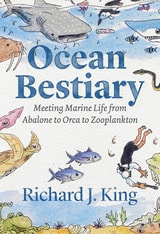
Ocean Bestiary
Meeting Marine Life from Abalone to Orca to ZooplanktonWritten and illustrated by Richard J. King
University of Chicago Press, 2023
For millennia, we have taken to the waves. And yet, for humans, the ocean remains our planet’s most inaccessible region, the place about which we know the least. From A to Z, abalone to zooplankton, and through both text and original illustrations, Ocean Bestiary is a celebration of our ongoing quest to know the sea and its creatures.
Focusing on individual species or groups of animals, Richard J. King embarks upon a global tour of ocean wildlife, including beluga whales, flying fish, green turtles, mako sharks, noddies, right whales, sea cows (as well as sea lions, sea otters, and sea pickles), skipjack tuna, swordfish, tropicbirds, walrus, and yellow-bellied sea snakes. But more than this, King connects the natural history of ocean animals to the experiences of people out at sea and along the world’s coastlines. From firsthand accounts passed down by the earliest Polynesian navigators to observations from Wampanoag clamshell artists, African-American whalemen, Korean female divers (or haenyeo), and today’s pilots of deep-sea submersibles—and even to imaginary sea expeditions launched through poems, novels, and paintings—Ocean Bestiary weaves together a diverse array of human voices underrepresented in environmental history to tell the larger story of our relationship with the sea. Sometimes funny, sometimes alarming, but always compelling, King’s vignettes reveal both how our perceptions of the sea have changed for the better and how far we still have to go on our voyage.
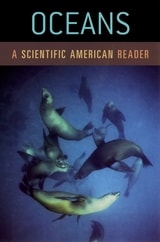
Oceans
A Scientific American ReaderEdited by Scientific American
University of Chicago Press, 2007
With selections chosen for their value in identifying the multiple uses of oceans, their resources, and the hurdles they face as the world’s population continues to expand and consume their resources at a staggering rate, Oceans collects more than thirty thematically arranged articles from the past decade, including recent pieces written in the wake of the 2004 tsunami. The bookfeatures articles that investigate the origins of the world’s oceans, the diversity of life in the water, the state of global fisheries, the dangers of natural disasters, and the perils oceans face, whether induced by nature or by humans.
With breadth of topics as wide as the ocean is deep, this Scientific American reader will engage general readers interested in the evolution, ecology, and conservation of the oceanic ecosystem and can be used in courses on introductory oceanography, environmental science, and marine biology.
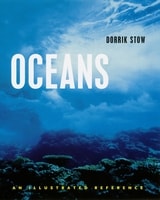
Oceans
An Illustrated ReferenceDorrik Stow
University of Chicago Press, 2005
Oceans: An Illustrated Reference tells the story of this last great frontier. With hundreds of beautiful full-color photographs and explanatory diagrams, charts, and maps, Oceans combines the visual splendor of ocean life with up-to-date scientific information to provide an invaluable and fascinating resource on this vital realm. Covering all major areas of oceanographic knowledge and research, Oceans is divided into two parts. The first, "Ocean Systems," examines the physical nature of the oceans, including plate tectonics, temperature and climate, waves and tides, natural resources and much more. The second, "Ocean Life,"explores biodiversity, evolution and adaptation, marine ecosystems and complex communities, and the preservation of fragile marine environments.
Oceans also offers readers a host of tools to better understand the magnificent world of the sea. A special section of bathymetric maps-made possible by satellite observation, deep-towed surveying craft, and remotely operated submarine vessels-provides a view of the depth and texture of ocean floors around the globe, giving us a glimpse of worlds rarely seen. And throughout the book, engagingly written special features delve into specific marine environments and phenomena such as the lost Tethys Ocean, from which the Himalayas were born. Cross-references and a detailed index help readers navigate this multifaceted volume, and a glossary provides clear definitions of scientific vocabulary.
Although the oceans are vast, their resources are finite. Oceans clearly presents the future challenge to us all-that of ensuring that our common ocean heritage is duly respected, wisely managed, and carefully harnessed for the benefit of the whole planet. Lavishly illustrated and filled with current research, Oceans is a step in that direction: a rich, magnificent, and illuminating volume for anyone who has ever heard the siren song of the sea.
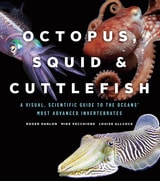
Octopus, Squid, and Cuttlefish
A Visual, Scientific Guide to the Oceans’ Most Advanced InvertebratesRoger Hanlon, Mike Vecchione, and Louise Allcock
University of Chicago Press, 2018
Largely shell-less relatives of clams and snails, the marine mollusks in the class Cephalopoda—Greek for “head-foot”—are colorful creatures of many-armed dexterity, often inky self-defense, and highly evolved cognition. They are capable of learning, of retaining information—and of rapid decision-making to avoid predators and find prey. They have eyes and senses rivaling those of vertebrates like birds and fishes, they morph texture and body shape, and they change color faster than a chameleon. In short, they captivate us.
From the long-armed mimic octopus—able to imitate the appearance of swimming flounders and soles—to the aptly named flamboyant cuttlefish, whose undulating waves of color rival the graphic displays of any LCD screen, there are more than seven hundred species of cephalopod. Featuring a selection of species profiles, Octopus, Squid, and Cuttlefish reveals the evolution, anatomy, life history, behaviors, and relationships of these spellbinding animals. Their existence proves that intelligence can develop in very different ways: not only are cephalopods unusually large-brained invertebrates, they also carry two-thirds of their neurons in their arms.
A treasure trove of scientific fact and visual explanation, this worldwide illustrated guide to cephalopods offers a comprehensive review of these fascinating and mysterious underwater invertebrates—from the lone hunting of the octopus, to the social squid, and the prismatic skin signaling of the cuttlefish.
Of Maybugs and Men
A History and Philosophy of the Sciences of HomosexualityPieter R. Adriaens and Andreas De Block
University of Chicago Press, 2022
Questions about the naturalness or unnaturalness of homosexuality are as old as the hills, and the answers have often been used to condemn homosexuals, their behaviors, and their relationships. In the past two centuries, a number of sciences have involved themselves in this debate, introducing new vocabularies, theories, arguments, and data, many of which have gradually helped tip the balance toward tolerance and even acceptance. In this book, philosophers Pieter R. Adriaens and Andreas De Block explore the history and philosophy of the gay sciences, revealing how individual and societal values have colored how we think about homosexuality.
The authors unpack the entanglement of facts and values in studies of male homosexuality across the natural and human sciences and consider the extent to which science has mitigated or reinforced homonegative mores. The focus of the book is on homosexuality’s assumed naturalness. Geneticists rephrased naturalness as innateness, claiming that homosexuality is innate—colloquially, that homosexuals are born gay. Zoologists thought it a natural affair, documenting its existence in myriad animal species, from maybugs to men. Evolutionists presented homosexuality as the product of natural selection and speculated about its adaptive value. Finally, psychiatrists, who initially pathologized homosexuality, eventually appealed to its naturalness or innateness to normalize it.
Discussing findings from an array of sciences—comparative zoology, psychiatry, anthropology, evolutionary biology, social psychology, developmental biology, and machine learning—this book is essential reading for anyone interested in what science has to say about homosexuality.
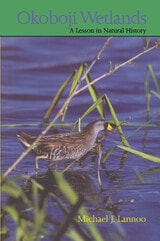
Okoboji Wetlands
A Lesson in Natural HistoryMichael J. Lannoo
University of Iowa Press, 1996
Lake Okoboji in northwest Iowa is the jewel of the Iowa Great Lakes. A region of wetlands formed by prairie potholes, the area is rich with lakes, sloughs, fens, creeks, prairies, and kettleholes. In this readable and beautifully illustrated volume, Michael Lannoo presents an extensive natural history of Okoboji and its cherished wetlands that examines that world of our grandparents, compares it to today's world, and extrapolates to the world of our grandchildren.
On Water
Fluid PerspectivesEdited by Anna-Lisa Dieter
Diaphanes, 2027
Asks what we can learn from water's cycles, its adaptability, and its capacity for connection.
Water is ubiquitous: we drink it, bathe in it, and encounter it as rain, ice, rivers, and oceans. And yet it remains contradictory, both familiar and strange. In the context of climate change, growing cities, and global inequality, it poses a distinct challenge to established practices and ways of thinking. Contributors to this volume frame water as a dynamic element that fosters new scientific perspectives and inventive forms of social negotiation. On Water: Fluid Perspectives brings science, art, and society into conversation, exploring a single element and the many ways of thinking with it. This book accompanies the exhibition On Water—WasserWissen at Humboldt Labor in Berlin while extending its questions and perspectives beyond the show. Visual materials from the exhibition are interwoven with thoughtful essays from Berlin researchers that illuminate water as a compelling subject of inquiry.
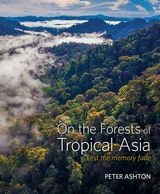
On the Forests of Tropical Asia
Lest the Memory FadePeter Ashton
Royal Botanic Gardens, Kew, 2014
On the Forests of Tropical Asia is the first book to describe the forests of the entire tropical Asian region, from Sind to New Guinea. It opens with chapters on physical geography and geological history and then moves on to address forest and tree structure and dynamics, floristics, and symbiotic organisms, as well as genetics, evolutionary history, species diversity, and human impact. A final chapter covers future policy and practice options for saving what remains. Hundreds of full-color illustrations serve as a lasting testimony to the diverse forests. Ashton combines existing research with his own experience and collaborations, creating a broad, comprehensive understanding of forest variation. By presenting a clear picture of where the forests stand today, he offers a framework for future research, policy, and conservation.
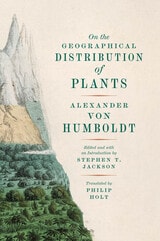
On the Geographical Distribution of Plants
Alexander von Humboldt
University of Chicago Press, 2027
The first English translation of an essay that is among Alexander von Humboldt’s least known but most important scientific works.
In the nineteenth century, Alexander von Humboldt was arguably the world’s most famous celebrity after Napoleon. What started in 1799 as a serendipitous trip to the New World tropics with his friend Aimé Bonpland to collect plants and minerals expanded into a five-year exploration of Venezuela, Colombia, Ecuador, Perú, México, and Cuba. The discoveries the two amassed were nothing short of staggering, and much of our knowledge of tropical botany, zoology, geography, and geology can be traced back to these journeys. The voyage, and the publication of Humboldt’s travel narratives and scientific studies from these expeditions, which totaled dozens of books, elevated Humboldt to cult status.
In the past two decades, Humboldt’s writings have been rediscovered in multiple fields, including biogeography; Earth and environmental sciences; American and Latin American studies; nineteenth-century art, poetry, and literature; and transatlantic cultural history. His ideas are profoundly relevant to twenty-first-century thinking on the relationship between humans and nature, and the ecological framework in which he viewed the world remains essential two centuries after his travels.
Among his many interests, Humboldt invested considerable effort in explaining the underlying causes of the uneven distribution of plant species across the globe. His extended essay On the Geographical Distribution of Plants is among his least known but most important works, laying foundations for the development of ecology, climatology, and evolutionary biology in the following decades. It was first published in 1815 as an introduction to a seven-volume Latin botanical monograph, Nova genera et species plantarum (New Genera and Species of Plants). The essay, republished in 1817 as a standalone volume, held great influence over nineteenth-century naturalists. It is Humboldt’s most comprehensive and detailed treatment of plant geography. In the essay, he applies what he calls “botanical arithmetic” to reveal ecological and biogeographic patterns of plants, applications that still ground modern macroecology; and he provides frameworks to link vegetation patterns and climate, which are essential in modern Earth system science. Introduced and organized by ecologist Stephen T. Jackson and translated from Latin to English by Philip Holt, this book is essential for the libraries of scientists, historians, and all Humboldt admirers.
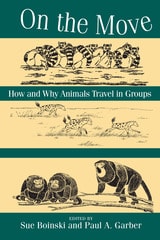
On the Move
How and Why Animals Travel in GroupsEdited by Sue Boinski and Paul A. Garber
University of Chicago Press, 2000
On the Move addresses these questions, examining the social, cognitive, and ecological processes that underlie patterns and strategies of group travel. Chapters discuss how factors such as group size, resource distribution and availability, the costs of travel, predation, social cohesion, and cognitive skills affect how individuals as well as social groups exploit their environment. Most chapters focus on field studies of a wide range of human and nonhuman primate groups, from squirrel monkeys to Turkana pastoralists, but chapters covering group travel in hyenas, birds, dolphins, and bees provide a broad taxonomic perspective and offer new insights into comparative questions, such as whether primates are unique in their ability to coordinate group-level activities.
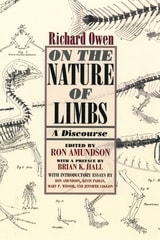
On the Nature of Limbs
A DiscourseRichard Owen
University of Chicago Press, 2007
Just as Darwin’s ideas continue to propel the modern study of adaptation, so too will Owen’s contributions fuel the new interest in homology, organic form, and evolutionary developmental biology. His theory of the archetype and his views on species origins were first offered to the general public in On the Nature of Limbs, published in 1849. It reemerges here in a facsimile edition with introductory essays by prominent historians, philosophers, and practitioners from the modern evo-devo community.
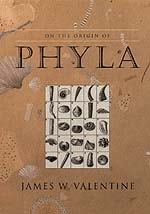
On the Origin of Phyla
James W. Valentine
University of Chicago Press, 2004
One of the twentieth century's most distinguished paleobiologists, Valentine here integrates data from molecular genetics, evolutionary developmental biology, embryology, comparative morphology, and paleontology into an analysis of interest to scholars from any of these fields. He begins by examining the sorts of evidence that can be gleaned from fossils, molecules, and morphology, then reviews and compares the basic morphology and development of animal phyla, emphasizing the important design elements found in the bodyplans of both living and extinct phyla. Finally, Valentine undertakes the monumental task of developing models to explain the origin and early diversification of animal phyla, as well as their later evolutionary patterns.
Truly a magnum opus, On the Origin of Phyla will take its place as one of the classic scientific texts of the twentieth century, affecting the work of paleontologists, morphologists, and developmental, molecular, and evolutionary biologists for decades to come.
"Truly a magnum opus, On the Origin of Phyla has already taken its place as one of the classic scientific texts of the twentieth century, affecting the work of paleontologists, morphologists, and developmental, molecular, and evolutionary biologists for decades to come."—Ethology, Ecology & Evolution
"Valentine is one of the Renaissance minds of our time. . . . Darwin wisely called his best-known work On the Origin of the Species; the origin of the phyla is an even stickier problem, and Valentine deserves credit for tackling it at such breadth . . . . A magnificient book."—Stefan Bengtson, Nature
On the Origins of Life and Its Infectious Nature
Life in a Cosmic ContextJosé Quintáns
University of Chicago Press, 2013
Once a River
Bird Life and Habitat Changes on the Middle GilaAmadeo M. Rea
University of Arizona Press, 1983
It is no mystery how the desert swallowed up the Gila. Beaver trapping, overgrazing, and woodcutting first ruined natural watersheds, then damming confined the last drops of its surface flow. Historical sources and archaeological data inform us of the Gila's past, but its bird life further testifies to the changes.
Amadeo Rea traces the decline of bird life on the Middle Gila in a book that addresses the broader issue of habitat deterioration. Bird lovers will find it a storehouse of data on avian migration patterns and on ornithological classification based on skeletal structure. Anthropologists can draw on its Piman ethnoclassification of birds, which links the Gila River tribe with various other Uto-Aztecan peoples of Mexico's west coast.
But for all concerned with protecting our environment, Once a River offers evidence of change that might be apprehended elsewhere. It is a case history of a loss that perhaps need never have occurred.
One Planet, Many Worlds
The Climate ParallaxDipesh Chakrabarty
Brandeis University Press, 2023
Climate change represents a deep conundrum for humans. It is difficult for humans to give up the unequal and yet accelerating pursuit of a good life based on an insatiable appetite for energy sourced mainly from fossil fuel. But the same pursuit, scientists insist, damages the geobiological system that supports the existence of interrelated forms of life, including ours, on this planet. The planet, seen thus, is one. The global sway of financial and extractive capital connects humans technologically, but they remain divided along multiple axes of inequality. Their worlds are many and their politics still global rather than planetary. In the narrative presented here, Chakrabarty continues to explore the temporal and intellectual fault lines that mark the collapse of the global and the planetary in human history.
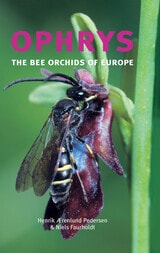
Ophrys
The Bee Orchids of EuropeHenrik Ærenlund Pedersen and Niels Faurholdt
Royal Botanic Gardens, Kew, 2007
Ophrys – the Bee Orchids of Europe is an easy to use, comprehensive introduction to the plants found in Europe. It can be used as a field guide (with keys, descriptions and numerous colour photographs) and a standard reference (with chapters on structure, biology, evolution and conservation). The chapter by Richard Manuel gives ample guidelines for cultivation for growers, and is especially helpful for conservationists introducing plants back into the wild.
The classification is based on a broad species concept, and offers an alternative to the finely split classifications of the genus that prevail in most recent field guides.
Finally, the chapter ‘recommended Ophrys excursions’ is ideal for planning field trips."
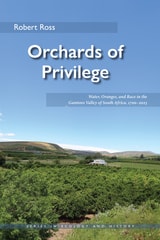
Orchards of Privilege
Water, Oranges, and Race in the Gamtoos Valley of South Africa, 1700–2023Robert Ross
Ohio University Press, 2025
This study of the Gamtoos River floodplain in South Africa’s Eastern Cape Province traces its transformation from an eighteenth-century natural landscape of thick bush into an agricultural zone now threatened by climate change. The first half of the book explains how missionaries from the London Missionary Society and residents of the Hankey Mission Station introduced irrigation, turning the area into a community of small-scale farmers. Despite early failures, by 1849 they had constructed South Africa’s first major irrigation tunnel and aqueduct. However, conflicts between the missionaries and residents led to the loss of communal lands to privatization, which ultimately impoverished the local farmers. The second half explores efforts to develop the valley for large-scale agriculture, addressing challenges like drought, flash floods, and saline water. By the mid-twentieth century, Afrikaners dominated the area, benefiting from the construction in 1970 of the Kouga Dam, which provided fresh water for the floodplain. This led to the rise of a wealthy white farming community, sustained by apartheid policies and labor from the “Coloured” and African populations. In the early twenty-first century, however, this prosperity has become threatened by severe droughts linked to global climate change. In view of these historical transformations, the Gamtoos River floodplain exemplifies the complex interplay between human ambition, environmental challenges, and sociopolitical forces.
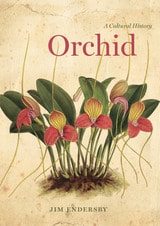
Orchid
A Cultural HistoryJim Endersby
University of Chicago Press, 2016
Following the stories of orchids throughout history, Jim Endersby divides our attraction to them into four key themes: science, empire, sex, and death. When it comes to empire, for instance, orchids are a prime example of the exotic riches sought by Europeans as they shaped their plans for colonization. He also reveals how Charles Darwin’s theory of evolution became intimately entangled with the story of the orchid as he investigated their methods of cross-pollination. As he shows, orchids—perhaps because of their extraordinarily diverse colors, shapes, and sizes—have also bloomed repeatedly in films, novels, plays, and poems, from Shakespeare to science fiction, from thrillers to elaborate modernist novels.
Featuring many gorgeous illustrations from the collection of the Royal Botanic Gardens, Kew, Orchid: A Cultural History tells, for the first time, the extraordinary story of orchids and our prolific interest in them. It is an enchanting tale not only for gardeners and plant collectors, but anyone curious about the flower’s obsessive hold on the imagination in history, cinema, literature, and more.
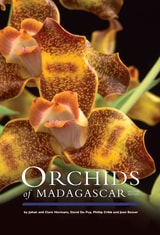
Orchids of Madagascar Second Edition
Edited by Johan Hermans, Clare Hermans, David Du Puy, Phillip Cribb, and Jean Bosser
Royal Botanic Gardens, Kew, 2007
Ordinary Genomes
Science, Citizenship, and Genetic IdentitiesKaren-Sue Taussig
Duke University Press, 2009
Organic Management for the Professional
The Natural Way for Landscape Architects and Contractors, Commercial Growers, Golf Course Managers, Park Administrators, Turf Managers, and Other Stewards of the LandBy Howard Garrett, John Ferguson, and Mike Amaranthus
University of Texas Press, 2012
Can you manage the landscape of a golf course, city park, or corporate campus without synthetic fertilizers and toxic pesticides? Absolutely! Organic landscaping is not only possible on a large scale, but it also makes sense both economically and environmentally. It promotes healthy soils and plants, which require less water and sequester more carbon—a winning combination for both your bottom line and the planet’s fight against resource depletion and global warming. Organic programs on a commercial scale have enormous potential to make a difference in the quality of our environment, our use of fuels, and our climate. And as those who have already converted to organics have discovered, they also cost a lot less over the long term.
Organic Management for the Professional is the first comprehensive guide to “going green” in large-scale landscaping. Nationally recognized organic gardening expert Howard Garrett, with associates John Ferguson and Mike Amaranthus, not only explains in detail how to manage projects with natural organic techniques, but also presents the material in clear, simple terms so that commercial and institutional property owners can understand what to ask of their landscape architects, contractors, growers, and maintenance people. They give detailed, proven instructions for the key components of organic landscaping—soil building, correct planting techniques, fertilizing, pest control, compost, and mulch. Then they show how to apply these organic methods in large-scale landscaping, commercial growing (orchards, tree farms, nurseries, and greenhouse operations), and recreational properties (golf courses, parks, and sports fields).

Origins of Psychopathology
The Phylogenetic and Cultural Basis of Mental IllnessFábrega Jr., Horacio
Rutgers University Press, 2002
In Origins of Psychopathology, Horacio Fárega Jr. employs principles of evolutionary biology to better understand the significance of mental illness. He explores whether what psychiatry has categorized as mental disorders could have existed during earlier phases of human evolution. Fábrega approaches the prominent features of mental disorders as adaptive responses to the environment and life’s circumstances, which in turn can only be understood in the context of our evolutionary past. Taking his cue from theoretical issues raised by research into primate behavior and early hominid evolution, he poses the question: What, if any, aspects of mental illness are rooted in our evolution? Does mental illness occur in primates and other animals, and if so, what does this tell us about mental illness in human evolution? How has mental illness played an adaptive role? How has the development of language and higher cognitive functions affected characteristics of psychopathology? Fábrega synthesizes insights from both the clinical and the evolutionary points of view. This facet of psychopathology, which involves its origins and manifestations viewed across the expanse of human evolution, has, until now, been largely neglected in psychiatric education, theory, and practice.
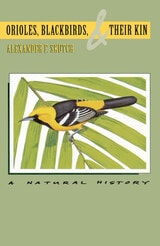
Orioles, Blackbirds, and Their Kin
A Natural HistoryAlexander F. Skutch
University of Arizona Press, 1996
The least known of these species are perhaps best known to Alexander Skutch, who has studied birds in a Costa Rican tropical valley for more than half a century. In this fascinating book the first devoted exclusively to the icterids—he combines his own observations with those of other naturalists to provide a comparative natural history and biology of this remarkable family of birds. Devoting a separate chapter to each major group or genus, he delineates the outstanding characteristics of each and includes observations of little-studied tropical species such as caciques and oropendolas.
Orioles, Blackbirds, and Their Kin is an eminently readable natural history in the classic style. Enhanced by 31 scratchboard illustrations, this book will delight nature enthusiasts everywhere with its fascinating exposition of avian diversity. Because so much of the published information on the icterids is widely scattered, Skutch's painstaking compilation has created a valuable reference work that will provide students and researchers with a wealth of new insights into the tropical members of this New World family.
Our Intelligent Bodies
Gary F. Merrill
Rutgers University Press, 2020
In Our Intelligent Bodies, physiology professor Gary F. Merrill takes you on a guided tour through the human body. You’ll learn how our eyes are designed to detect unimaginably small bursts of light and how our ears contain bundles of tiny hairs, each one attuned to different sound frequencies. You’ll also discover how our hearts are smart enough to compensate for skipped beats and irregular rhythms and how our pulmonary system adjusts for low oxygen levels. You’ll even find out why the gut is sometimes called the “second brain,” its reflexes controlled by millions of neurons.
Written in a fun, easy-to-comprehend style and filled with illuminating analogies, Our Intelligent Bodies also brings readers up to date on cutting-edge research into the wonders of human physiology. It will give you a new appreciation for the smart decisions our bodies are making when our brains aren’t paying attention.
Our Magnetic Earth
The Science of GeomagnetismRonald T. Merrill
University of Chicago Press, 2010
But as Ronald T. Merrill reveals in Our Magnetic Earth, geomagnetism really is an enduring, vibrant area of science, one that offers answers to some of the biggest questions about our planet’s past—and maybe even its future. In a clear and careful fashion, he lays out the physics of geomagnetism and magnetic fields, then goes on to explain how Earth’s magnetic field provides crucial evidence for our understanding of continental drift and plate tectonics; how and why animals, ranging from bacteria to mammals, sense and use the magnetic field; how changes in climate over eons can be studied through variations in the magnetic field in rocks; and much more. Throughout, Merrill peppers his scientific account with bizarre anecdotes and fascinating details, from levitating pizzas to Moon missions to blackmailing KGB agents—a reminder that real science can at times be stranger, and more amusing, than fiction.
A winning primer for anyone who has ever struggled with a compass or admired a ragged V of migrating geese, Our Magnetic Earth demonstrates that education and entertainment need not be polar opposites.
Our Marvelous Bodies
An Introduction to the Physiology of Human HealthMerrill, Gary F
Rutgers University Press, 2008
Our Marvelous Bodies offers a unique perspective on the structure, function, and care of the major systems of the human body. Unlike other texts that use a strictly scientific approach, physiologist Gary F. Merrill relays medical facts alongside personal stories that help students relate to and apply the information.
Readers learn the basics of feedback control systems, homeostasis, and physiological gradients. These principles apply to an understanding of the body’s functioning under optimal, healthy conditions, and they provide insight into states of acute and chronic illness. Separate chapters are devoted to each of the body’s systems in detail: nervous, endocrine, cardiovascular, respiratory, renal, gastrointestinal, musculoskeletal, reproductive, and immune. Through a series of real-life examples, the book also shows the importance of maintaining careful medical records for health care professionals, scientists, and patients alike.
Our Oldest Task
Making Sense of Our Place in NatureEric T. Freyfogle
University of Chicago Press, 2017
Passionate and pragmatic, extraordinarily well read and eloquent, Freyfogle details a host of forces that have produced our self-defeating ethos of human exceptionalism. It is this outlook, he argues, not a lack of scientific knowledge or inadequate technology, that is the primary cause of our ecological predicament. Seeking to comprehend both the multifaceted complexity of contemporary environmental problems and the zeitgeist as it unfolds, Freyfogle explores such diverse topics as morality, the nature of reality (and the reality of nature), animal welfare, social justice movements, and market politics. The result is a learned and inspiring rallying cry to achieve balance, a call to use our knowledge to more accurately identify the dividing line between living in and on the world and destruction. “To use nature,” Freyfogle writes, “but not to abuse it.”
Our Once and Future Planet
Restoring the World in the Climate Change CenturyPaddy Woodworth
University of Chicago Press, 2013
But that paints an unbalanced—and overly disheartening—picture of what’s going on with environmental stewardship today. There are success stories, and Our Once and Future Planet delivers a fascinating account of one of the most impressive areas of current environmental experimentation and innovation: ecological restoration. Veteran investigative reporter Paddy Woodworth has spent years traveling the globe and talking with people—scientists, politicians, and ordinary citizens—who are working on the front lines of the battle against environmental degradation. At sites ranging from Mexico to New Zealand and Chicago to Cape Town, Woodworth shows us the striking successes (and a few humbling failures) of groups that are attempting to use cutting-edge science to restore blighted, polluted, and otherwise troubled landscapes to states of ecological health—and, in some of the most controversial cases, to particular moments in historical time, before widespread human intervention. His firsthand field reports and interviews with participants reveal the promise, power, and limitations of restoration.
Ecological restoration alone won’t solve the myriad problems facing our environment. But Our Once and Future Planet demonstrates the role it can play, and the hope, inspiration, and new knowledge that can come from saving even one small patch of earth.
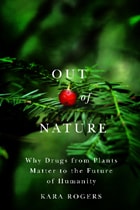
Out of Nature
Why Drugs from Plants Matter to the Future of HumanityKara Rogers
University of Arizona Press, 2012
About half of all species under threat of extinction in the world today are plants. The loss of plant biodiversity is disturbing for many reasons, but especially because it is a reflection of the growing disconnect between humans and nature. Plants have been used for millennia in traditional systems of healing and have held a significant place in drug development for Western medicine as well. Despite the recent dominance of synthetic drug production, natural product discovery remains the backbone of drug development. As the diversity of life on Earth is depleted and increasing numbers of species become lost to extinction, we continue to lose opportunities to achieve advances in medicine.
Through stories of drug revelation in nature and forays into botany, human behavior, and conservation, Kara Rogers sheds light on the multiple ways in which humans, medicine, and plants are interconnected. With accessible and engaging writing, she explores the relationships between humans and plants, relating the stories of plant hunters of centuries past and examining the impact of human activities on the environment and the world's biodiversity. Rogers also highlights the role that plant-based products can play in encouraging conservation and protecting the heritage and knowledge of indigenous peoples.
Out of Nature provides a fresh perspective on modern drug innovation and its relationship with nature. The book delves into the complexity of biophilia—the innate human attraction to life in the natural world—and suggests that the reawakening of this drive is fundamental to expanding conservation efforts and improving medicine. Rogers's examination of plants, humans, and drug discovery also conveys a passionate optimism for the future of biodiversity and medicine. Including a collection of hand-drawn maps and plant illustrations created by the author, this well-researched narrative will inspire as well as inform.
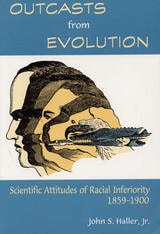
Outcasts from Evolution
Scientific Attitudes of Racial Inferiority, 1859 - 1900John S. Haller, Jr.
Southern Illinois University Press, 1996
In the only book to date to explore the period between the 1859 publication of Darwin’s Origin of Species and the discovery in 1900 of Gregor Mendel’s experiments in genetics, John S. Haller, Jr., shows the relationship between scientific "conviction" and public policy. He focuses on the numerous liberally educated American scientists who were caught up in the triumph of evolutionary ideas and who sought to apply those ideas to comparative morality, health, and the physiognomy of nonwhite races.
During this period, the natural and social scientists of the day not only accepted without question the genetic and cultural superiority of the Caucasian; they also asserted that the Caucasian race held a monopoly on evolutionary progress, arguing that "inferior races" were no more than evolutionary survivors doomed by their genetic legacy to remain outcasts from evolution.
Hereditarians and evolutionists believed that "less fit" human races were perishing from the rigors of civilization’s struggle and competition. Indeed, racial inferiority lay at the very foundation of the evolutionary framework and, remaining there, rose to the pinnacle of "truth" with the myth of scientific certainty.
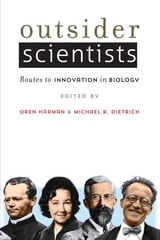
Outsider Scientists
Routes to Innovation in BiologyEdited by Oren Harman and Michael R. Dietrich
University of Chicago Press, 2013