Results by title
102 books match the query 'Limits' and 3 start with o
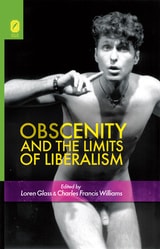
Obscenity and the Limits of Liberalism
Edited by Loren Glass and Charles Francis Williams
The Ohio State University Press, 2011
Over the course of the nineteenth century in both Europe and the United States, the state usurped the traditional authority of the church in regulating sexual expression and behavior. In the same century philosophers of classical liberalism identified that state function as a threat to individual liberty. Since then, liberalism has provided the framework for debates over obscenity around the globe.
But liberalism has recently been under siege, on the one side from postmodern thinkers skeptical about its andro- and ethnocentric assumptions, and on the other side from religious thinkers doubtful of the moral integrity of the Enlightenment project writ large.The principal challenge for those who conduct academic work in this realm is to formulate new models of research and analysis appropriate to understanding and evaluating speech in the present-day public sphere.
Toward those ends, Obscenity and the Limits of Liberalism contains a selection of essays and interventions by prominent authors and artists in a variety of disciplines and media. These writings, taken as a whole, put recent developments into historical and global contexts and chart possible futures for a debate that promises to persist well into the new millennium.
[more]
On Descartes' Metaphysical Prism
The Constitution and the Limits of Onto-theo-logy in Cartesian ThoughtJean-Luc Marion
University of Chicago Press, 1999
Does Descartes belong to metaphysics? What do we mean when we say "metaphysics"? These questions form the point of departure for Jean-Luc Marion's groundbreaking study of Cartesian thought. Analyses of Descartes' notion of the ego and his idea of God show that if Descartes represents the fullest example of metaphysics, he no less transgresses its limits. Writing as philosopher and historian of philosophy, Marion uses Heidegger's concept of metaphysics to interpret the Cartesian corpus—an interpretation strangely omitted from Heidegger's own history of philosophy. This interpretation complicates and deepens the Heideggerian concept of metaphysics, a concept that has dominated twentieth-century philosophy. Examinations of Descartes' predecessors (Aristotle, Augustine, Aquinas, and Suarez) and his successors (Leibniz, Spinoza, and Hegel) clarify the meaning of the Cartesian revolution in philosophy.
Expertly translated by Jeffrey Kosky, this work will appeal to historians of philosophy, students of religion, and anyone interested in the genealogy of contemporary thought and its contradictions.
Expertly translated by Jeffrey Kosky, this work will appeal to historians of philosophy, students of religion, and anyone interested in the genealogy of contemporary thought and its contradictions.
[more]
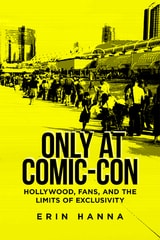
Only at Comic-Con
Hollywood, Fans, and the Limits of ExclusivityErin Hanna
Rutgers University Press, 2020
When the San Diego Comic-Con was founded in 1970, it provided an exclusive space where fans, dealers, collectors, and industry professionals could come together to celebrate their love of comics and popular culture. In the decades since, Comic-Con has grown in size and scope, attracting hundreds of thousands of fans each summer and increased attention from the media industries, especially Hollywood, which uses the convention’s exclusivity to spread promotional hype far and wide. What made the San Diego Comic-Con a Hollywood destination? How does the industry’s presence at Comic-Con shape our ideas about what it means to be a fan? And what can this single event tell us about the relationship between media industries and their fans, past and present? Only at Comic-Con answers these questions and more as it examines the connection between exclusivity and the proliferation of media industry promotion at the longest-running comic convention in North America.
[more]