Results by title
153 books match the query 'Metaphysics' and 10 start with o

Of Joints and Other Articulations
The Futures of ArthrosophyMichael Marder
Northwestern University Press, 2026
What if we were to reimagine bodies of all kinds—biological and ecosystemic, political and textual, cosmic and artistic—from the perspective of their joints? This is the wager of Michael Marder’s philosophical treatise, which skirts the extremes of totalization and fragmentation by following the model of the joints, the structures that both articulate and disarticulate complex living unities.
Of Joints and Other Articulations: The Futures of Arthrosophy proposes that, as embodied figures of relations, joints shed new light on the question of time and the meaning of art, the activity of language and the fluctuations of good and ill health, political violence and humility, conversions and perversions. Arthrosophy, the wisdom of joints, supplements and substantiates philosophy itself, teaching us how to think through and with our knees and elbows, hips and shoulders, sutures and pivot joints.
On Creation [Quaestiones Disputatae de Potentia Dei, Q. 3]
Catholic University of America Press, 2011
On Descartes' Metaphysical Prism
The Constitution and the Limits of Onto-theo-logy in Cartesian ThoughtJean-Luc Marion
University of Chicago Press, 1999
Expertly translated by Jeffrey Kosky, this work will appeal to historians of philosophy, students of religion, and anyone interested in the genealogy of contemporary thought and its contradictions.
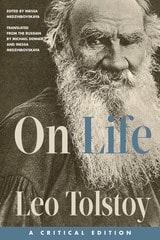
On Life
A Critical EditionLeo Tolstoy, Edited by Inessa Medzhibovskaya, Translated from the Russian by Michael Denner and Inessa Medzhibovskaya
Northwestern University Press, 2018
After its completion, On Life was suppressed by the tsars, attacked by the hierarchs of the Russian Orthodox Church, and then censored by the Stalinist regime. This critical edition is the first accurate translation of this unsung classic of Russian thought into English, based on a study of manuscript pages of Tolstoy's drafts, and the first scholarly edition of this work in any language. It includes a detailed introduction and annotations, as well as historical material, such as early drafts, documents related to the presentation of an early version at the Moscow Psychological Society, and responses to the work by philosophers, religious leaders, journalists, and ordinary readers of Tolstoy's day.
On Metaphysics
Roderick Chisholm
University of Minnesota Press, 1989
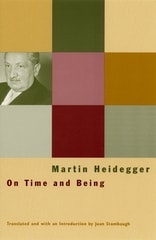
On Time and Being
Martin Heidegger
University of Chicago Press, 2002
"This collection may well vie with Vom Wesen des Grundes and Identität and Differenz as definitive statements of Heidegger's ontology."—Library Journal
"The title of the English translation is that of the lead essay, the highly celebrated lecture which Heidegger gave in 1962 and which bears the same title as the never published 'third division' of the 'first half' of Being and Time. This lecture is perhaps the most significant document to be added to the Heideggerian corpus since the Letter of Humanism. . . . Stambaugh's translation is superb."—Stanley O. Hoerr and staff, The Review of Metaphysics

Ontological Catastrophe
Zizek and the Paradoxical Metaphysics of German IdealismJoseph Carew
Michigan Publishing Services, 2014
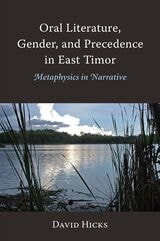
Oral Literature, Gender, and Precedence in East Timor
Metaphysics in NarrativeDavid Hicks
National University of Singapore Press, 2020

Order In The Twilight
Bernhard Waldenfels
Ohio University Press, 1996
“Whoever distrusts the barking of watchdogs, however, does not immediately have to begin howling with the wolves.”—Bernhard Waldenfels
In this seminal work, acclaimed philosopher Bernhard Waldenfels deals with the problem of the nature of order after the “shattering of the world,” and the loss of the idea of a universal or fundamental order.
Order in the Twilight unites phenomenological methodology with recent work on the theory of order, normativity, and dialogue, as well as structuralism and Gestalt theory. Philosophically stringent, it expresses a more optimistic attitude than much modern philosophy, especially deconstruction.
Waldenfels passes the question of order through numerous defining aspects, and concludes that there is not one global order, but rather various conflicting domains of order. Whenever the boundary of a vital or experiential domain is crossed, a discourse speaks at the boundary, not about it, and across a threshold without abolishing it. The rest is rationalization, i.e., an attempt to find a place in the respective order for what is to-be-ordered. But why, the author concludes, should a theory be more unambiguous than reality?
Order in the Twilight is an important book at this time, because it may help lift the humanities out of the skeptical, relativistic disarray in which they have been embroiled in recent decades. Waldenfels does not attempt to dictate what reality should be; rather, he is open to any valid evidences. His book offers a solid footing to the human and social sciences as they seek to escape from deconstructive irrationalism.
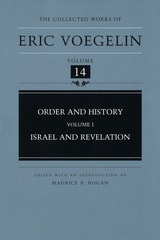
Order and History, Volume 1 (CW14)
Israel and RevelationEric Voegelin, Edited & Intro by Maurice P. Hogan
University of Missouri Press, 2001
Eric Voegelin's Israel and Revelation is the opening volume of his monumental Order and History, which traces the history of order in human society. This volume examines the ancient near eastern civilizations as a backdrop to a discussion of the historical locus of order in Israel. The drama of Israel mirrors the problems associated with the tension of existence as Israel attempted to reconcile the claims of transcendent order with those of pragmatic existence and so becomes paradigmatic.
According to Voegelin, what happened in Israel was a decisive step, not only in the history of Israel, but also in the human attempt to achieve order in society. The uniqueness of Israel is the fact that it was the first to create history as a form of existence, that is, the recognition by human beings of their existence under a world-transcendent God, and the evaluation of their actions as conforming to or defecting from the divine will. In the course of its history, Israel learned that redemption comes from a source beyond itself.
Voegelin develops rich insights into the Old Testament by reading the text as part of the universal drama of being. His philosophy of symbolic forms has immense implications for the treatment of the biblical narrative as a symbolism that articulates the experiences of a people's order. The author initiates us into attunement with all the partners in the community of being: God and humans, world and society. This may well be his most significant contribution to political thought: "the experience of divine being as world transcendent is inseparable from an understanding of man as human."