Results by title
941 books match the query 'Military' and 25 start with o
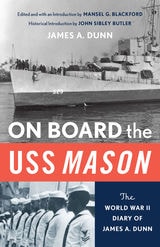
ON BOARD THE USS MASON
THE WORLD WAR II DIARY OF JAMES A. DUNNMANSEL G. BLACKFORD
The Ohio State University Press, 2016
Dunn kept a day-to-day diary during his spare time on board the Mason. Such diaries are a rarity, for the navy (and other armed services) forbade the keeping of diaries, fearful lest secret information fall into enemy hands. The diary chronicles the Mason’s wartime activities, from the first convoy to the final return to the United States. It captures the feeling and meaning of life on board with an immediacy not fully found in retrospective accounts. The diary accurately records the mortal danger Dunn and his shipmates were in while attacking enemy submarines or dealing with extreme weather conditions in the North Atlantic. It conveys the boredom the men encountered while confined on long, tedious convoys and the joy of shore leaves. Here is the daily life aboard ship—the duties and the pastimes that made shipboard life endurable.
Equally interesting, the diary reveals what it meant to be an African American in a white navy within a segregated American society, the shipboard tensions, and the shipboard cooperation and sense of unity. It also portrays the life of an African American onshore in the United States, Great Britain, and North Africa and the love story that unfolded between James and his wife, Jane.
Supplemented by additional sources, including interviews with Dunn, this diary is a personal view into an important part of American history. Like the Tuskegee airmen, the men of the USS Mason paved the way for desegregation in America’s armed forces, contributing to a civil rights movement that changed the face of a nation.
Oh, Say, Can You See
The Semiotics of the Military in Hawai’iKathy E. Ferguson
University of Minnesota Press, 1998
Considers what the military presence in Hawai’i tells us about colonialism, gender, race, and class.
Everywhere you look in Hawai’i, you might see the military. And yet, in daily life few residents see the military at all-it is hidden in plain sight. This paradox of invisibility and visibility, of the available and the hidden, is the subject of Oh, Say, Can You See?, which maps the power relations involving gender, race, and class that define Hawai’i in relation to the national security state.
Western intruders into Hawai’i-from the early explorers, missionaries, and sugar planters to the military, tourists, and foreign investors-have seen the island nation as a feminine place, waiting to embrace those who come to penetrate, protect, mold, and develop, yet conveniently lacking whatever the newcomers claim to possess. Thus feminized, this book contends, the islands and the people have been reinscribed with meanings according to the needs, fears, and desires of outsiders. Authors Kathy E. Ferguson and Phyllis Turnbull locate and “excavate” sites of memory, such as cemeteries, memorials, monuments, and museums, to show how the military constructs its gendered narrative upon prior colonial discourses. Among the sites considered are Fort DeRussy, Pearl Harbor, and Punchbowl Cemetery, as well as the practices of citizenship that are produced or foreclosed by the narratives of order and security written upon Hawai’i by the military.This semiotic investigation of ways the military marks Hawai’i necessarily explores the intersection of immigration, colonialism, military expansion, and tourism on the islands. Attending to the ways in which the military represents itself and others represent the military, the authors locate the particular representational elements that both conceal and reveal the military’s presence and power; in doing so, they seek to expand discursive space so that other voices can be heard. ISBN 0-8166-2978-1 Cloth $49.95xxISBN 0-81662979-X Paper $19.95x240 pages 5 7/8 x 9 DecemberBorderlines Series, Volume 10Translation inquiries: University of Minnesota Press
Ohio Volunteer
The Childhood and Civil War Memoirs of Captain John Calvin Hartzell, OVICharles I. Switzer
Ohio University Press, 2005
Edited and introduced by Charles Switzer, Ohio Volunteer: The Childhood and Civil War Memoirs of Captain John Calvin Hartzell, OVI documents military strategy, the life of the common soldier, the intense excitement and terror of battle, and the wretchedness of the wounded.
Hartzell’s family implored him to set down his life story, including his experiences in the Civil War from 1862 to 1866. Hartzell did so diligently, taking more than two years to complete his manuscript. The memoir reveals a remarkable memory for vivid details, the ability to see larger and more philosophical perspectives, and a humorous outlook that helped him bear the unbearable.
He also depicted the changing rural economy, the assimilation of the Pennsylvania Dutch, and the transformations wrought by coal mining and the iron industry. Hartzell felt individualism was threatened by the Industrial Revolution and the cruelties of the war. He found his faith in humanity affirmed—and the dramatic tension in his memoir resolved—when 136,000 Union soldiers reenlisted and assured victory for the North. The common soldier, he wrote, was “loyal to the core.”
Ohio
A Military HistoryMichael Mangus
Westholme Publishing, 2016
Complete with a list of historical sites and a comprehensive bibliography, Ohio: A Military History is an important reference for those interested in the role of the Buckeye State in our nation’s history.
Westholme State Military History Series
Each state in the United States of America has a unique military history. The volumes in this series seek to provide a portrait of the richness of each state’s military experience, primarily defined by its borders, as well as the important contributions the state has made to the nation’s military history. Written by historians for the general reader, the volumes trace the history of conflict from the original native populations to today. The volumes are well illustrated and include specially commissioned maps, extensive bibliographies, lists of national and state historical sites, and a detailed index.
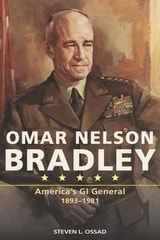
Omar Nelson Bradley
America's GI General, 1893-1981Steven L. Ossad
University of Missouri Press, 2017
Omar Nelson Bradley was the youngest and last of nine men to earn five-star rank and the only army officer so honored after World War II. This new biography by Steven L. Ossad gives an account of Bradley’s formative years, his decorated career, and his postwar life.
Bradley’s decisions shaped the five Northwest European Campaigns from the D-Day landings to VE Day. As the man who successfully led more Americans in battle than any other in our history, his long-term importance would seem assured. Yet his name is not discussed often in the classrooms of either civilian or military academies, either as a fount of tactical or operational lessons learned, or a source of inspiration for leadership exercised at Corps, Army, Group, Army Chief, or Joint Chiefs of Staff levels.
The Bradley image was tailor-made for the quintessential homespun American heroic ideal and was considered by many to be a simple, humble country boy who rose to the pinnacle of power through honesty, hard work, loyalty and virtuous behavior. Even though his classmates in both high school and at West Point made remarks about his looks, and Bradley was always self-conscious about smiling because of an accident involving his teeth, he went on to command 12 Army Group, the largest body of American fighting men under a single general.
Bradley’s postwar career as administrator of the original GI Bill and first Chairman of the Joint Chiefs of Staff during the Korean War ensures his legacy. These latter contributions, as much as Bradley’s demonstrable World War II leadership, shaped U.S. history and culture in decisive, dramatic, and previously unexamined ways.
Drawing on primary sources such as those at West Point, Army War College and Imperial War Museum, this book focuses on key decisions, often through the eyes of eyewitness and diarist, British liaison officer Major Thomas Bigland. The challenges our nation faces sound familiar to his problems: fighting ideologically-driven enemies across the globe, coordinating global strategy with allies, and providing care and benefits for our veterans.
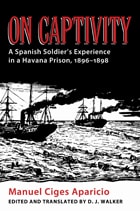
On Captivity
A Spanish Soldier's Experience in a Havana Prison, 1896-1898Manuel Ciges Aparicio
University of Alabama Press, 2012
A rare and unfiltered witness to Spain’s colonial collapse—Ciges Aparicio’s prison memoir exposes the political, human, and moral stakes of the Cuban War of Independence.
Ciges enlisted in the Spanish army in 1893 at the age of twenty. He served in Africa and then in Cuba, where he opposed Spanish General Valeriano Weyler’s policies in Cuba as well as the war itself. Ciges soon found himself imprisoned and facing execution for treason as punishment for an article critical of Weyler’s conducting of the war that was intercepted by Spanish authorities before it could be published in the pro-Cuban Parisian paper L’Intransigeant.
First published in book form in 1903, Ciges’s account includes detailed observations concerning prison organization, perceptions of political events and personalities of the time, as well as graphic descriptions of the daily life of the men confined in the infamous prison. Ciges is the only one of the so-called Generation of 1898—writers considered to have been deeply marked by el desastre (the loss of the colonies)—who was in Cuba during the war years. His witness to events there, colored by his stance as a freethinker and political skeptic, constitutes a significant historical document. Following his release from prison, Ciges returned to Spain where he resumed his career as an activist journalist and also earned acclaim as a translator and novelist. In time, his political allegiances shifted from socialism to liberal republicanism. He was acting as provincial governor of Avila when he was killed by unidentified assassins on August 4, 1936—eighteen days after the Falangist uprising against the Second Republic.

On Guerrilla Warfare
Mao Tse-tung
University of Illinois Press, 1961
One of the most influential documents of our time, Mao Tse-tung's pamphlet on guerrilla warfare has become the basic textbook for waging revolution in underdeveloped and emergent areas throughout the world.
Recognizing the fundamental disparity between agrarian and urban societies, Mao advocated unorthodox strategies that converted deficits into advantages: using intelligence provided by the sympathetic peasant population; substituting deception, mobility, and surprise for superior firepower; using retreat as an offensive move; and educating the inhabitants on the ideological basis of the struggle. This radical new approach to warfare, waged in jungles and mountains by mobile guerrilla bands closely supported by local inhabitants, has been adopted by other revolutionary leaders from Ho Chi Minh to Che Guevara.
Mao wrote On Guerrilla Warfare in 1937 while in retreat after ten years of battling the Nationalist army of Chiang Kai-shek. Twelve years later, the Nationalist Chinese were rousted from the mainland, and Mao consolidated his control of a new nation, having put his theories of revolutionary guerrilla warfare to the test.
Established governments have slowly come to recognize the need to understand and devise means to counter this new method of warfare. Samuel B. Griffith's classic translation makes Mao's treatise widely available and includes a comprehensive introduction that profiles Mao, analyzes the nature and conduct of guerrilla warfare, and considers its implications for American policy.
On War and Writing
Samuel Hynes
University of Chicago Press, 2018
Samuel Hynes knows war personally: he served as a Marine Corps pilot in the Pacific Theater during World War II, receiving the Distinguished Flying Cross. He has spent his life balancing two careers: pilot and professor of literature. Hynes has written a number of major works of literary criticism, as well as a war-memoir, Flights of Passage, and several books about the World Wars. His writing is sharp, lucid, and has provided some of the most expert, detailed, and empathetic accounts of a disappearing generation of fighters and writers.
On War and Writing offers for the first time a selection of Hynes’s essays and introductions that explore the traditions of war writing from the twentieth century to the present. Hynes takes as a given that war itself—the battlefield uproar of actual combat—is unimaginable for those who weren’t there, yet we have never been able to turn away from it. We want to know what war is really like: for a soldier on the Somme; a submariner in the Pacific; a bomber pilot over Germany; a tank commander in the Libyan desert. To learn, we turn again and again to the memories of those who were there, and to the imaginations of those who weren’t, but are poets, or filmmakers, or painters, who give us a sense of these experiences that we can’t possibly know.
The essays in this book range from the personal (Hynes’s experience working with documentary master Ken Burns, his recollections of his own days as a combat pilot) to the critical (explorations of the works of writers and artists such as Thomas Hardy, E. E. Cummings, and Cecil Day-Lewis). What we ultimately see in On War and Writing is not military history, not the plans of generals, but the feelings of war, as young men expressed them in journals and poems, and old men remembered them in later years—men like Samuel Hynes.
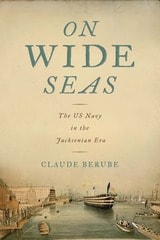
On Wide Seas
The US Navy in the Jacksonian EraClaude Berube
University of Alabama Press, 2022
An analytical study of naval policy, expansion, and maritime strategy in the formative Jacksonian era.
The 1830s is an overlooked period in American naval history and is usually overshadowed by the more dramatic War of 1812 and the Civil War. Nevertheless, the personnel, operations, technologies, policies, and vision of the Navy of that era, which was emerging from the “Age of Sail,” are important components of its evolution, setting it on the long path to its status as a global maritime power. On Wide Seas: The US Navy in the Jacksonian Era details the ways in which the US Navy transformed from an antiquated arm of the nation’s military infrastructure into a more dynamic and effective force that was soon to play a pivotal role in a number of national and international conflicts.
By Andrew Jackson’s inauguration in 1829, the Navy had engaged with two major powers, defended American shipping, conducted antipiracy operations, and provided a substantive, long-term overseas presence. The Navy began to transform during Jackson’s administration due in part to the policies of the administration and to the emerging officer corps, which sought to professionalize its own ranks, modernize the platforms on which it sailed, and define its own role within national affairs and in the broader global maritime commons. Jackson had built his reputation as a soldier, but he quickly recognized as president the necessity for a navy that could foster his policies. To expand American commerce, he needed a navy that could defend shipping as well as conduct punitive raids or deterrence missions.
Jackson developed a clear, concise naval strategy that policymakers and officers alike could seize and execute. He also provided a vision for the Navy, interceded to resolve naval disciplinary challenges, and directed naval operations. Also, given Jackson’s own politics, junior officers were emboldened by the populist era to challenge traditional, conservative thinking. They carried out a collective vision that coincided with the national literary movement that recognized America’s future would rely upon the Navy.
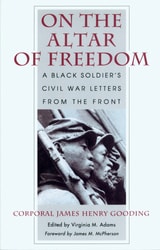
On the Altar of Freedom
A Black Soldier’s Civil War Letters from the FrontJames Henry Gooding
University of Massachusetts Press, 1991
From basic training at Camp Meigs in Readville, Massachusetts, through campaigns in Georgia, South Carolina, and Florida, Gooding faithfully records the activities of the 54th, including the legendary storming of Fort Wagner. He also voices the injustice felt by soldiers of his regiment over the issue of unequal pay, the refusal to promote deserving black enlistees to officer rank, and the deeply ingrained racism of whites in both the North and South.
Wounded and captured during the battle of Olustee, Florida, in February 1864, Gooding died later that year in Andersonville Prison.
In her introduction, Virginia M. Adams provides biographical details on Gooding's life and examines the antebellum history of New Bedford's large and articulate community of free blacks.

On the Eve of Conquest
The Chevalier de Raymond's Critique of New France in 1754Joseph L. Peyser
Michigan State University Press, 1997
In 1754, Charles de Raymond, chevalier of the Royal and Military Order of Saint Louis and a captain in the Troupes de la Marine wrote a bold, candid, and revealing expose; on the French colonial posts and settlements of New France. On the Eve of the Conquest, more than an annotated translation, includes a discussion on the historical background of the start of the French and Indian War, as well as a concise biography of Raymond and Michel Le Courtois de Surlaville, the army colonel at the French court to whom the report was sent. The events surrounding Raymond's controversial year as commandant of the post (now Fort Wayne, Indiana) in 1749-50, his disputed recall by Governor General Jacques-Pierre de Taffanel de La Jonquier, and the subsequent friction between La Jonquiere's successor, Ange de Menneville Duqesne, and Raymond are presented in detail and illustrated by translations of their correspondence.
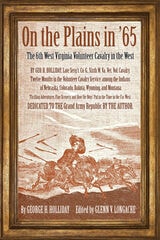
On the Plains in ’65
The 6th West Virginia Volunteer Cavalry in the WestGeorge H. Holliday
Ohio University Press, 2021
A new scholarly edition of an Ohio boy soldier’s revealing post-Civil War memoir.
This annotated edition of Holliday’s recollections—known primarily among historians of the American West—re-contextualizes his memoir to include his boyhood in southern Ohio and the largely untold story of the hundreds of Buckeyes who crossed the Ohio River to serve their country in Virginia (later West Virginia) regiments, ultimately traveling across Kansas, Nebraska, Colorado, and Wyoming to safeguard mail and stage routes along the celebrated Oregon Trail during a pivotal time in American history.
Glenn Longacre’s extensive research in federal, state, and local archives, manuscript collections, and period newspapers complements his correspondence with the living descendants of Holliday and other soldiers. His research integrates this story deservedly as part of Appalachian history before, during, and after the Civil War. From this perspective it addresses an entirely new audience of Appalachian studies scholars, Civil War and frontier history enthusiasts, students, and general readers.
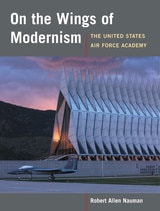
On the Wings of Modernism
The United States Air Force AcademyRobert Allen Nauman
University of Illinois Press, 2003
The United States Air Force Academy stands as one of the most extensive architectural projects of the cold war era. Key to a full understanding of American modernism, the project was also a volatile battleground involving competing ideas about aesthetics and politics. Arguing that the academy's production was squarely grounded in bureaucratic and political processes, Robert Allen Nauman demonstrates that selection of both the site and the design firm was the result of political maneuverings involving U.S. military leadership.
In the academy’s iconic design, myths and metaphors of flight and the American West were interwoven with those of modernism, both to justify the plan and to free it from any lingering socialist or European associations. Skidmore, Owings, and Merrill’s first public exhibition of plans and models for the project was designed by the former Bauhaus master Herbert Bayer, and it incorporated photographs of the Colorado Springs site by Ansel Adams and William Garnett. Using previously unexplored resources of the U.S. Air Force Academy, SOM, and the Air Force Academy Construction Agency, Nauman uncovered materials such as negatives of Adams’s original photographs of the sites. He also conducted extensive interviews with SOM’s project director for the academy, Walter Netsch, in tracing the complete history of the academy's construction, from its earliest conception to eventual completion.
One Sunny Day
A Child's Memories of HiroshimaHideko Tamura Snider
Oregon State University Press, 2023
Hideko was ten years old when the atomic bomb devastated her home in Hiroshima. In this eloquent and moving narrative, Hideko recalls her life before the bomb, the explosion itself, and the influence of that trauma upon her subsequent life in Japan and the United States. Her years in America have given her unusual insights into the relationship between Japanese and American cultures and the impact of Hiroshima on our lives.
This new edition includes two expanded chapters and revisions throughout. A new epilogue brings the story up to date. This poignant story of courage and resilience remains deeply relevant today, offering a profoundly personal testament against the ongoing threat of nuclear warfare.
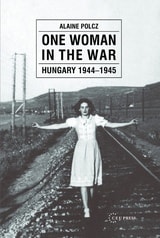
One Woman in the War
Hungary 1944-1945Alaine Polcz
Central European University Press, 2002

Opposing the Second Corps at Antietam
The Fight for the Confederate Left and Center on America's Bloodiest DayMarion V. Armstrong, Jr.
University of Alabama Press, 2016
A definitive guide to the Confederate army’s primary engagements at the epic Battle of Antietam
With a tally of more than five thousand killed, twenty thousand wounded, and three thousand missing, the Battle of Antietam made September 17, 1862, the deadliest day of combat in American history. In Opposing the Second Corps at Antietam, Antietam scholar Marion V. Armstrong Jr. completes his magisterial study of Antietam begun in Unfurl Those Colors! by examining Robert E. Lee’s leadership at the climactic battle in the Confederate invasion of Union territory.
Eminent Civil War historians consider Antietam the turning point of the war. Hoping to maintain the initiative they had gained at the Second Battle of Bull Run, Confederate leaders looked to a stunning victory on Northern soil to sour Northern sentiment on the war as well as to coax European powers to recognize the fledgling Confederacy. Having examined McClellan’s command and role at Antietam in Unfurl Those Colors!, Armstrong now recounts in riveting detail Lee’s command decisions and their execution in the field, drawing on a superlative collection of first-person accounts by Confederate veterans to narrate the cataclysmic struggle between Lee and McClellan.
Armstrong sets the stage with a lively recap of the political and military events leading up to the early fall of 1862 and foreshadowing the conflagration to come on September 17. Each chapter then traces a critical section of the battle, the fight for the West Woods and the bloody engagement of the Sunken Road. Armstrong augments this collection with an exceptional set of maps, which will be valued by scholars, readers, and visitors to the battlefield. These unique maps delineate troop movements in intervals as brief as fifteen minutes, bringing to life the fluid, mutable lines that characterize the glory and horror of Antietam.
Either together with Unfurl Those Colors! or as a stand-alone account of the Confederate side of the battle, Opposing the Second Corps at Antietam provides the fullest possible understanding of the experience of Confederate soldiers at Antietam.

Orange Parades
The Politics of Ritual, Tradition and ControlDominic Bryan
Pluto Press, 2000

Organised Militarism in Interwar Britain
The Navy League and the Air League of the British EmpireRowan Thompson
University of London Press, 2026
While militaristic and patriotic organizations formed an important part of political culture in Edwardian Britain, 1918 often marks a terminus for histories of organized militarism. Taking the end of the First World War as its starting point, this book argues that militarism was able to survive World War I, despite the competing rise of liberal internationalism, pacifism, and anti-war sentiment. Focusing on the ideas, aims, and activities of the Navy League and the Air League of the British Empire—two extra-parliamentary organizations established to promote naval and aerial supremacy—the book examines how the Leagues negotiated the trauma of the First World War and how they contributed to the societal and military preparation for a second global conflict as the clouds of war gathered in the late 1930s.
Drawing on extensive archival research, Organised Militarism in Interwar Britain explains how these Leagues mobilized broad public and political support and what the story of each organization tells us about the impact of war on British society and culture, civil-military relations, political and private activism, military theater and commemoration, youth, and the politics of disarmament, collective security, internationalism, and national defense. In doing so, it demonstrates that martial and militaristic sentiment remained an important part of mainstream British political culture, despite the ravages of war.
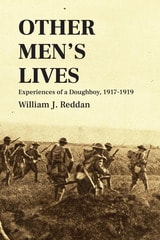
Other Men's Lives
Experiences of a Doughboy, 1917–1919William J. Reddan
Westholme Publishing, 2017
“Who can explain the feelings or thoughts of a soldier during the last few minutes before a battle? He fixes his bayonet, sees that his rifle is working properly, loads it, turns the safety lock, doing a dozen things, automatically from force of training. Just a faint trace of nervousness. . . . A few of us were thinking of a wife and children hoping if it was our turn to ‘Go West,’ that the folks back home would not feel too badly.”—from Other Men’s Lives
Receiving orders in March 1917 to report for active service in the European war, Capt. William J. Reddan and his New Jersey National Guard unit joined the 29th Infantry Division of the U.S. Army. Following training for “Over There,” which included maneuvering under live machine gun and grenade fire and constant bayonet drills, Reddan assumed command of Company B, 114th Infantry—two hundred officers and men. Arriving in France in June 1918, Reddan and his company entered the frontline trenches along the Alsace front in August. Fighting side by side with the French, the 114th conducted patrols in “no man’s land,” repulsed attacks, and endured artillery and chemical barrages. Toward the end of September, the regiment was moved by truck to a new sector: the Argonne Forest. Here, Reddan and his company would be part of the Meuse-Argonne offensive, the largest in the history of the U.S. Army. This final Allied assault would last until the Armistice, November 11, 1918, and claim the most American lives of the war. On October 12, Reddan and the rest of the 114th Infantry were ordered to take a German position that was supposed to offer little resistance; instead, Reddan watched in horror as his company was destroyed: of his two hundred officers and men, only thirteen survived the ordeal. Wounded by both shrapnel and gas, Reddan was evacuated to a field hospital and did not return to his unit until after peace was declared.
Written in 1936, Other Men’s Lives: Experiences of a Doughboy, 1917–1919 recounts the complete story of Reddan’s company in the World War, including the true story of what happened in that tragic October battle as well as the political aftermath that sought to exonerate the upper command who had bungled the operation.
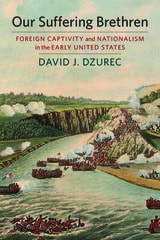
Our Suffering Brethren
Foreign Captivity and Nationalism in the Early United StatesDavid J. Dzurec III
University of Massachusetts Press, 2019
In October 1785, American statesman John Jay acknowledged that the more his countrymen “are treated ill abroad, the more we shall unite and consolidate at home.” Behind this simple statement lies a complicated history. From the British impressment of patriots during the Revolution to the capture of American sailors by Algerian corsairs and Barbary pirates at the dawn of the nineteenth century, stories of Americans imprisoned abroad helped jumpstart democratic debate as citizens acted on their newly unified identity to demand that their government strengthen efforts to free their fellow Americans. Deliberations about the country's vulnerabilities in the Atlantic world reveal America's commitment to protecting the legacy of the Revolution as well as growing political divisions.
Drawing on newspaper accounts, prisoner narratives, and government records, David J. Dzurec III explores how stories of American captivity in North America, Europe, and Africa played a critical role in the development of American political culture, adding a new layer to our understanding of foreign relations and domestic politics in the early American republic.
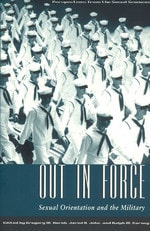
Out in Force
Sexual Orientation and the MilitaryEdited by Gregory M. Herek, Jared B. Jobe, and Ralph M. Carney
University of Chicago Press, 1996
Both sides base their views on assumptions about the consequences of integration. Even defenders of the ban grudgingly acknowledge that homosexuals are fully capable of serving with distinction. Few question gay service members' abilities or patriotism; justifications for the ban are now predicated on heterosexuals' negative reactions.
Out in Force refutes the notions that homosexuality is incompatible with military service and that gay personnel would undermine order and discipline. Leading social science scholars of sexual orientation and the military offer reasoned and comprehensive discussions about military organizations, human sexuality, and attitudes toward individuals and groups. They demonstrate forcefully that the debate is really about the military as an institution, and how that institution will adapt to larger social changes. The contributors show that the ban could be successfully eliminated, and set forth a program for implementation. In sorting opinion from fact, myth from reality, Out in Force stands as an invaluable guide for the military, lawmakers, and the courts as they continue to grapple with this question of institutional and societal change.
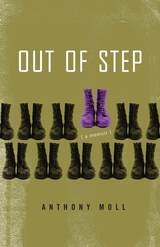
Out of Step
A MemoirAnthony Moll
The Ohio State University Press, 2018
What makes a pink-haired queer raise his hand to enlist in the military just as the nation is charging into war? In his memoir, Out of Step, Anthony Moll tells the story of a working-class bisexual boy running off to join the army in the midst of two wars and the “Don’t Ask, Don’t Tell” era. Set against the backdrop of hypermasculinity and sexual secrecy, Moll weaves a queer coming-of-age story.
Out of Step traces Moll’s development through his military service, recounting how the army both breaks and builds relationships, and what it was like to explore his queer identity while also coming to terms with his role in the nation’s ugly foreign policy. From a punk, nerdy, left-leaning, poor boy in Nevada leaving home for the first time to an adult returning to civilian life and forced to address a world more complicated than he was raised to believe, Moll’s journey isn’t a classic flag-waving memoir or war story—it’s a tale of finding one’s identity in the face of war and changing ideals.
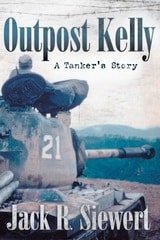
Outpost Kelly
A Tanker's StoryJack R. Siewert, with a foreword by Paul M Edwards
University of Alabama Press, 2006
Heavy rains turned the mountainous terrain around Outpost Kelly into shin-deep mud and muck. At the height of the fighting, Siewert was able to bring to bear the guns of only one of his five tanks against the enemy. Forced to abandon traditional tank warfare doctrine, he improvised. Allowing members of the 15th Infantry to retake Outpost Kelly, Siewert offers an excellent analysis of how theory and experience come together in a point-of-the-spear military situation.
Outpost Kelly also paints a fascinating picture of the type of fighting, often overlooked, that characterized the second and third years of the Korean War. With truce talks proceeding in Panmunjom, both sides fought to claim incremental pieces of real estate along the demarcation line between North and South.
Outsourced Empire
How Militias, Mercenaries and Contractors Support US StatecraftAndrew Thompson
Pluto Press, 2018
Over There
Living with the U.S. Military Empire from World War Two to the PresentMaria Höhn and Seungsook Moon, eds.
Duke University Press, 2010
Contributors
Donna Alvah
Chris Ames
Jeff Bennett
Maria Höhn
Seungsook Moon
Christopher Nelson
Robin Riley
Michiko Takeuchi