968 books match the query 'Movements' and 20 start with o
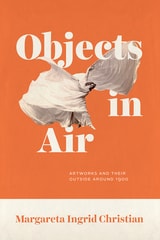
cover of Objects in Air: Artworks and Their Outside around 1900

Objects in Air

Artworks and Their Outside around 1900

Margareta Ingrid Christian

University of Chicago Press, 2021

Margareta Ingrid Christian unpacks the ways in which, around 1900, art scholars, critics, and choreographers wrote about the artwork as an actual object in real time and space, surrounded and fluently connected to the viewer through the very air we breathe. Theorists such as Aby Warburg, Alois Riegl, Rainer Maria Rilke, and the choreographer Rudolf Laban drew on the science of their time to examine air as the material space surrounding an artwork, establishing its “milieu,” “atmosphere,” or “environment.” Christian explores how the artwork’s external space was seen to work as an aesthetic category in its own right, beginning with Rainer Maria Rilke’s observation that Rodin’s sculpture “exhales an atmosphere” and that Cezanne’s colors create “a calm, silken air” that pervades the empty rooms where the paintings are exhibited.

Writers created an early theory of unbounded form that described what Christian calls an artwork’s ecstasis or its ability to stray outside its limits and engender its own space. Objects viewed in this perspective complicate the now-fashionable discourse of empathy aesthetics, the attention to self-projecting subjects, and the idea of the modernist self-contained artwork. For example, Christian invites us to historicize the immersive spatial installations and “environments” that have arisen since the 1960s and to consider their origins in turn-of-the-twentieth-century aesthetics. Throughout this beautifully written work, Christian offers ways for us to rethink entrenched narratives of aesthetics and modernism and to revisit alternatives.
 
[more]
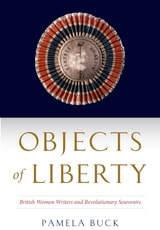
cover of Objects of Liberty: British Women Writers and Revolutionary Souvenirs

Objects of Liberty

British Women Writers and Revolutionary Souvenirs

Pamela Buck

University of Delaware Press, 2024
Objects of Liberty explores the prevalence of souvenirs in British women’s writing during the French Revolution and Napoleonic era. It argues that women writers employed the material and memorial object of the souvenir to circulate revolutionary ideas and engage in the masculine realm of political debate. While souvenir collecting was a standard practice of privileged men on the eighteenth-century Grand Tour, women began to partake in this endeavor as political events in France heightened interest in travel to the Continent. Looking at travel accounts by Helen Maria Williams, Mary Wollstonecraft, Catherine and Martha Wilmot, Charlotte Eaton, and Mary Shelley, this study reveals how they used souvenirs to affect political thought in Britain and contribute to conversations about individual and national identity. At a time when gendered beliefs precluded women from full citizenship, they used souvenirs to redefine themselves as legitimate political actors. Objects of Liberty is a story about the ways that women established political power and agency through material culture.


[more]
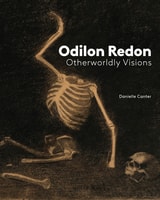
cover of Odilon Redon: Otherworldly Visions

Odilon Redon

Otherworldly Visions

Danielle Canter

J. Paul Getty Trust, The, 2026

This visually striking book provides an introduction to the mysterious and dreamlike work of the artist Odilon Redon.

Enigmatic and haunting, the work of the French Symbolist Odilon Redon (1840–1916) intrigues and entrances all who encounter it. During the first half of his career, Redon created dramatically monochromatic charcoal drawings and lithographs, dreamily dark images that plumbed the depths of his wild imagination. Eventually, however, he also turned to pastels, adopting a bold colorful palette in fantastical explorations of the natural world.

Featuring more than seventy illustrations, this publication offers an overview of Redon's career. The informative, accessible essays examine his disparate influences from the worlds of religion, mythology, literature, and music, and demonstrate why Redon’s mysterious work is an important precursor to Surrealism.

This volume is published to accompany an exhibition on view at the J. Paul Getty Museum at the Getty Center from July 14 to October 18, 2026.
[more]
cover of Of Derrida Heidegger and Spirit

Of Derrida Heidegger and Spirit

David Wood

Northwestern University Press, 1993
Jacques Derrida's De l'espirit: Heidegger et la question is one of his most interesting and accessible later works. In it, Derrida attempts to come to terms with Heidegger's Nazi connections by way of an extended reflection on Heidegger's use of the term "Geist." In Of Derrida, Heidegger, and Spirit, David Wood presents a variety of powerful and distinctive responses to Derrida's book.
[more]
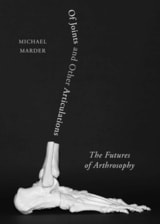
cover of Of Joints and Other Articulations: The Futures of Arthrosophy

Of Joints and Other Articulations

The Futures of Arthrosophy

Michael Marder

Northwestern University Press, 2026

Articulates a philosophical mode of thinking modeled after our bodily construction points
 
What if we were to reimagine bodies of all kinds—biological and ecosystemic, political and textual, cosmic and artistic—from the perspective of their joints? This is the wager of Michael Marder’s philosophical treatise, which skirts the extremes of totalization and fragmentation by following the model of the joints, the structures that both articulate and disarticulate complex living unities.
 
Of Joints and Other Articulations: The Futures of Arthrosophy proposes that, as embodied figures of relations, joints shed new light on the question of time and the meaning of art, the activity of language and the fluctuations of good and ill health, political violence and humility, conversions and perversions. Arthrosophy, the wisdom of joints, supplements and substantiates philosophy itself, teaching us how to think through and with our knees and elbows, hips and shoulders, sutures and pivot joints. 
[more]
cover of Of Spirit: Heidegger and the Question

Of Spirit

Heidegger and the Question

Jacques Derrida

University of Chicago Press, 1989

"I shall speak of ghost, of flame, and of ashes." These are the first words of Jacques Derrida's lecture on Heidegger. It is again a question of Nazism—of what remains to be thought through of Nazism in general and of Heidegger's Nazism in particular. It is also "politics of spirit" which at the time people thought—they still want to today—to oppose to the inhuman.

"Derrida's ruminations should intrigue anyone interested in Post-Structuralism. . . . . This study of Heidegger is a fine example of how Derrida can make readers of philosophical texts notice difficult problems in almost imperceptible details of those texts."—David Hoy, London Review of Books

"Will a more important book on Heidegger appear in our time? No, not unless Derrida continues to think and write in his spirit. . . . Let there be no mistake: this is not merely a brilliant book on Heidegger, it is thinking in the grand style."—David Farrell Krell, Research in Phenomenology

"The analysis of Heidegger is brilliant, provocative, elusive."—Peter C. Hodgson, Religious Studies Review
[more]
cover of Of Spirit: Heidegger and the Question

Of Spirit

Heidegger and the Question

Jacques Derrida

University of Chicago Press, 1990

"I shall speak of ghost, of flame, and of ashes." These are the first words of Jacques Derrida's lecture on Heidegger. It is again a question of Nazism—of what remains to be thought through of Nazism in general and of Heidegger's Nazism in particular. It is also "politics of spirit" which at the time people thought—they still want to today—to oppose to the inhuman.

"Derrida's ruminations should intrigue anyone interested in Post-Structuralism. . . . . This study of Heidegger is a fine example of how Derrida can make readers of philosophical texts notice difficult problems in almost imperceptible details of those texts."—David Hoy, London Review of Books

"Will a more important book on Heidegger appear in our time? No, not unless Derrida continues to think and write in his spirit. . . . Let there be no mistake: this is not merely a brilliant book on Heidegger, it is thinking in the grand style."—David Farrell Krell, Research in Phenomenology

"The analysis of Heidegger is brilliant, provocative, elusive."—Peter C. Hodgson, Religious Studies Review
[more]
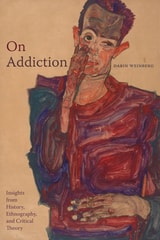
cover of On Addiction: Insights from History, Ethnography, and Critical Theory

On Addiction

Insights from History, Ethnography, and Critical Theory

Darin Weinberg

Duke University Press, 2024
Mainstream addiction science sees addiction either as a biomedical disease that renders one incapable of self-control or as a voluntary practice engaged in freely. In On Addiction, Darin Weinberg shows how this dynamic is deeply influenced by a series of binaries (free will/determinism, mind/body, objectivity/subjectivity) that hinder our understanding of addiction. Here, he offers a new theorization of addiction in which he breaks down these contradictions and incompatibilities, calling into question the taken-for-granted distinction between the “biological” and the “social.” To the extent that it is understood as a loss of self-control over one’s behavior, addiction, Weinberg contends, requires a supple theoretical framework that provides for movements into and out of self-control, for the social and natural processes that influence these movements, for the historical contexts within which they occur, and for the ethical ramifications of taking them seriously. To create this framework, Weinberg brings together history, ethnography, and critical theory as well as the clinical and social sciences. In this way, Weinberg takes a more holistic approach to examining the fundamental nature and ethics of addiction.
[more]
cover of On Emotional Presentation

On Emotional Presentation

Alexius Meinong, translated from the German by Marie-Luise Schubert Kalsi and with a new foreword by John J. Drummond

Northwestern University Press, 1972

On Emotional Presentation, first published in German in 1917, contains the Austrian philosopher Alexius Meinong’s clearest and most developed account of the emotions and their relation to values. In this work, written toward the end of his life, Meinong argues that values are given in and through emotions but are also ontologically independent of these emotions or any subjective attitude.

Available again in English, with a new foreword by John J. Drummond that situates Meinong’s account within contemporary discussions of the emotions, this translation will be welcome to those interested in Meinong and his theory of objects as well as those interested in the philosophy of the emotions and values.
[more]
cover of On Faith

On Faith

Nathan Rotenstreich

University of Chicago Press, 1998

The concept of faith has remained inscrutable to thinkers for centuries. The late Nathan Rotenstreich believed that faith was such a difficult topic for so many because of its inextricable links to theology and religion. On Faith, Rotenstreich's last work which was edited and prepared for publication by Paul Mendes-Flohr, attempts to detach the concept from its religious underpinnings and consider it in its own right, as a human phenomenon and cognitive attitude. Faith, Rotenstreich contends, should not be confused with its historical manifestations. By making faith a philosophical rather than a theological matter, he explores its essence as an awareness of how we relate within mundane reality to all that is beyond the human world. Arguing for the intentionality of faith, Rotenstreich shows how it structures a variety of relations that range from the experience of the holy to the nature of cults, traditional religion, and the idea of servitude to God.

Rotenstreich's phenomenological study will be of great importance for religious scholars as well as for philosophers.

Nathan Rotenstreich (1913-93) was professor of philosophy at the Hebrew University of Jerusalem. He was elected to the Israel Academy of Sciences and Humanities, and his works include Jews and German Philosophy and Reason and Its Manifestations: A Study of Kant and Hegel.
[more]
cover of On Heidegger and Language

On Heidegger and Language

Edited and Translated by Joseph J. Kockelmans

Northwestern University Press, 1980
This collection contains original translations of essays, discussions, and papers including six previously unpublished works from the International Colloquium on Heidegger’s Conception of Language, held at The Pennsylvania State University in 1969. This volume endeavors to place Martin Heidegger’s ideas within a wide range of philosophical thought. It contains critical reflections on his conception of speech in Being and Time, linguistic meditations on Heidegger’s use of language, and analysis of his view on the relationship between thought and the language in which it is expressed. In this book, Heidegger scholars will find additional insights into his conception of language and his philosophy as a whole.
[more]
cover of On Humanism, Volume 14

On Humanism, Volume 14

Elizabeth Weed and Ellen Rooney, eds.

Duke University Press, 0

Twentieth-century ideologies, from liberalism to fascism, are rooted in humanism—the faith in the sovereignty of human reason and potential that grew out of Renaissance thought and discovery. This special issue asks if it is true that all vestiges of humanism have been dismantled, or whether humanism has taken on new forms. Have new versions of historical analysis and cultural studies reanimated humanist themes? What is posthumanism? These essays examine relationships among structuralism, poststructuralism, and the subject; explore the challenge of anticolonialist critique to the coherence of antihumanism; reconsider the canon of antihumanists such as Heidegger and Foucault, and broach the intractable problems posed by efforts to comprehend the Holocaust, the camps, and ethnic cleansing.

Contributors. Athena Athanasiou, Etienne Balibar, Mara de Gennaro, Carolyn J. Dean, Brady Thomas Heiner, Lynne Joyrich, Jacques Lezra
[more]
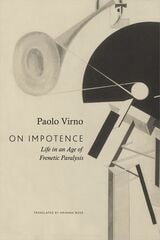
cover of On Impotence: Life in an Age of Frenetic Paralysis

On Impotence

Life in an Age of Frenetic Paralysis

Paolo Virno

Seagull Books, 2026

An incisive and urgent book that explores the hidden roots of our contemporary powerlessness.

Contemporary life is marked by a paradoxical form of impotence. Whether in love, labor, or political struggle, we often find ourselves locked in a state of frenetic paralysis—unable to act as we wish or to endure what confronts us. This impotence is not born of lack, but of excess: an abundance of skills, capacities, and opportunities that, instead of taking form as coherent actions or speech, stagnate and turn in on themselves. In this thought-provoking meditation, philosopher Paolo Virno examines this strange impotence through the lens of classical thought, drawing especially on Aristotle and Marx.
 
To overcome this troubling state, Virno calls for a collective search for a shared spiritual and practical exercise aimed at reclaiming agency. He argues that only by learning to renounce renunciation can we cultivate deliberate words and timely decisions.
[more]
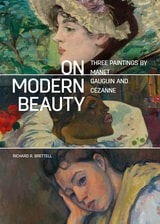
cover of On Modern Beauty: Three Paintings by Manet, Gauguin, and Cézanne

On Modern Beauty

Three Paintings by Manet, Gauguin, and Cézanne

Richard R. Brettell

J. Paul Getty Trust, The, 2019

A thought-provoking examination of beauty using three works of art by Manet, Gauguin, and Cézanne. As the discipline of art history has moved away from connoisseurship, the notion of beauty has become increasingly problematic. Both culturally and personally subjective, the term is difficult to define and nearly universally avoided. In this insightful book, Richard R. Brettell, one of the leading authorities on Impressionism and French art of the nineteenth and early twentieth centuries, dares to confront the concept of modern beauty head-on. This is not a study of aesthetic philosophy, but rather a richly contextualized look at the ambitions of specific artists and artworks at a particular time and place.
 
Brettell shapes his manifesto around three masterworks from the collection of the J. Paul Getty Museum: Édouard Manet’s Jeanne (Spring), Paul Gauguin’s Arii Matamoe (The Royal End), and Paul Cézanne’s Young Italian Woman at a Table. The provocative discussion reveals how each of these exceptional paintings, though depicting very different subjects—a fashionable actress, a preserved head, and a weary working woman—enacts a revolutionary, yet enduring, icon of beauty.
 
[more]
cover of On the Way to Heidegger’s Contributions to Philosophy

On the Way to Heidegger’s Contributions to Philosophy

Parvis Emad

University of Wisconsin Press, 2007
     One of the most significant philosophical works of the twentieth century, Contributions to Philosophy is also one of the most difficult. Parvis Emad, in this collection of interpretive and critical essays, unravels and clarifies this challenging work with a rare depth and originality. In addition to grappling with other commentaries on Heidegger, he highlights Heidegger's "being-historical thinking" as thinking that sheds new light on theological, technological, and scientific interpretations of reality. At the crux of Emad's interpretation is his elucidation of the issue of "the turning" in Heidegger's thought and his "enactment" of Heidegger's thinking. He finds that only when Heidegger's work is enacted is his thinking truly revealed.
[more]
cover of On the Way to Theory

On the Way to Theory

Lawrence Grossberg

Duke University Press, 2024
In On the Way to Theory, Lawrence Grossberg introduces the major ways of thinking that provide the backstory for contemporary Western theory. Asking readers to think about thinking, Grossberg traces cultural and critical theory’s foundations from the contested enlightenments to modern and postmodern conceptualizations of power, experience, language, and existence. He introduces key figures as historical characters and lays out the unique set of tools for thought that their “deep theories” offer. Through finely tuned and accessible descriptions of their concepts and logics, Grossberg highlights thinkers including Spinoza, Kant, Hegel, Marx, Nietzsche, Wittgenstein, Heidegger, Derrida, Foucault, Deleuze, and Hall, defining the possibilities of their thought. This book is essential for those interested in how theories shape our understanding of the world, influence our choices, and define our realities. It challenges us to recognize the multiplicity and complexities of ways of thinking in our quest for knowledge and understanding. By setting out a story of theoretical foundations, Grossberg invites readers to think toward the future of theory and expand conversations around theoretical scrutiny and criticism.
[more]
cover of Operation Valhalla: Writings on War, Weapons, and Media

Operation Valhalla

Writings on War, Weapons, and Media

Friedrich Kittler. Edited and translated by Ilinca Iurascu, Geoffrey Winthrop-Young, and Michael Wutz

Duke University Press, 2021
Operation Valhalla collects eighteen texts by German media theorist Friedrich Kittler on the close connections between war and media technology. In these essays, public lectures, interviews, literary analyses, and autobiographical musings, Kittler outlines how war has been a central driver of media's evolution, from Prussia's wars against Napoleon to the so-called War on Terror. Covering an eclectic array of topics, he charts the intertwined military and theatrical histories of the searchlight and the stage lamp, traces the microprocessor's genealogy back to the tank, shows how rapid-fire guns brought about new standards for optics and acoustics, and reads Thomas Pynchon's Gravity's Rainbow to upset established claims about the relationship between war, technology, and history in the twentieth century. Throughout, Operation Valhalla foregrounds the outsize role of war in media history as well as Kittler's importance as a daring and original thinker.
[more]
cover of Original Forgiveness

Original Forgiveness

Nicolas de Warren

Northwestern University Press, 2021

In Original Forgiveness, Nicolas de Warren challenges the widespread assumption that forgiveness is always a response to something that has incited it. Rather than considering forgiveness exclusively in terms of an encounter between individuals or groups after injury, he argues that availability for the possibility of forgiveness represents an original forgiveness, an essential condition for the prospect of human relations. De Warren develops this notion of original forgiveness through a reflection on the indispensability of trust for human existence, as well as an examination of the refusal or unavailability to forgive in the aftermath of moral harms.

De Warren engages in a critical discussion of philosophical figures, including Martin Heidegger, Hannah Arendt, Mikhail Bakhtin, Edmund Husserl, Gabriel Marcel, Emmanuel Levinas, and Jean Améry, and of literary works by William Shakespeare, Fyodor Dostoevsky, Heinrich von Kleist, Simon Wiesenthal, Herman Melville, and Maurice Sendak. He uses this discussion to show that in trusting another person, we must trust in ourselves to remain available to the possibility of forgiveness for those occasions when the other person betrays a trust, without thereby forgiving anything in advance. Original forgiveness is to remain the other person’s keeper—even when the other has caused harm. Likewise, being another’s keeper calls upon an original beseeching for forgiveness, given the inevitable possibility of blemish or betrayal.

[more]
cover of Orozco's American Epic: Myth, History, and the Melancholy of Race

Orozco's American Epic

Myth, History, and the Melancholy of Race

Mary K. Coffey

Duke University Press, 2020
Between 1932 and 1934, José Clemente Orozco painted the twenty-four-panel mural cycle entitled The Epic of American Civilization in Dartmouth College's Baker-Berry Library. An artifact of Orozco's migration from Mexico to the United States, the Epic represents a turning point in his career, standing as the only fresco in which he explores both US-American and Mexican narratives of national history, progress, and identity. While his title invokes the heroic epic form, the mural indicts history as complicit in colonial violence. It questions the claims of Manifest Destiny in the United States and the Mexican desire to mend the wounds of conquest in pursuit of a postcolonial national project. In Orozco's American Epic Mary K. Coffey places Orozco in the context of his contemporaries, such as Diego Rivera and David Alfaro Siqueiros, and demonstrates the Epic's power as a melancholic critique of official indigenism, industrial progress, and Marxist messianism. In the process, Coffey finds within Orozco's work a call for justice that resonates with contemporary debates about race, immigration, borders, and nationality.
[more]
cover of Outliers and American Vanguard Art

Outliers and American Vanguard Art

Lynne Cooke

University of Chicago Press, 2017

Since the last century, the relationship between vanguard and self-taught artists has been defined by contradiction. The established art world has been quick to make clear distinctions between trained and untrained artists, yet at the same time it has been fascinated by outliers whom it draws selectively and intermittently into its orbits. For a new exhibition launching at the National Gallery of Art, curator Lynne Cooke explores shifting conceptualizations of the American outlier across the twentieth century, drawing on the inherent sociality of the exhibition in her installation of these works. This companion catalog, Outliers and American Vanguard Art, offers a fantastic opportunity to consider works by schooled and self-taught creators in relation to each other and defined by historical circumstance.

The art works in Outliers and American Vanguard Art come from three distinct periods when the intersections between mainstream and outlier artists were most dynamic and productive, ushering in exhibitions of art based on various degrees of co-existence, inclusion, and assimilation. Works by such diverse artists as Charles Sheeler, Christina Ramberg, and Matt Mullican are set in conversation with a range of works by such self-taught artists as Horace Pippin, Janet Sobel, and Henry Darger. Cooke also examines a recent increase of radically expressive work that challenges what it means to be an outlier today. She reveals how these distinctions have been freighted with a particularly American point of view as she investigates our assumptions about creativity, artistic practice, and the role of the artist in contemporary culture.
 
Outliers and American Vanguard Art is the most comprehensive show ever to examine outliers in dialogue with their established peers.   It is sure to inspire vigorous conversation about how artists and the work they make are represented.
[more]