Results by title
76 books match the query 'Narrative' and 4 start with o
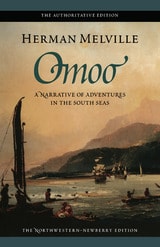
Omoo
A Narrative of Adventures in the South Seas, Volume TwoHerman Melville
Northwestern University Press, 1999
Whitman praised its "good-natured style." But many reviewers doubted Melville's veracity, and some objected to his "raciness" and "indecencies." Some also denounced his criticism of missionary endeavors, for his attacks on missionaries were more polemical than those undertaken in the earlier book. Omoo, however, influenced later visitors to Tahiti such as Pierre Loti, Henry Adams, John La Farge, and Jack London; it was the book that sent Robert Louis Stevenson to the South Seas.
Omoo
A Narrative of Adventures in the South Seas, Volume Two, Scholarly EditionHerman Melville
Northwestern University Press, 1968
This scholarly edition aims to present a text as close to the author's intention as surviving evidence permits. Based on collations of all editions publishing during Melville's lifetime, it incorporates author corrections and many emendations made by the present editors. This edition of Omoo is an Approved Text of the Center for Editions of American Authors (Modern Language Association of America).

On Narrative
W. J. T. Mitchell
University of Chicago Press, 1981
Ordinary Enchantments
Magical Realism and the Remystification of NarrativeWendy B. Faris
Vanderbilt University Press, 2004
Faris argues that by combining realistic representation with fantastic elements so that the marvelous seems to grow organically out of the ordinary, magical realism destabilizes the dominant form of realism based on empirical definitions of reality, gives it visionary power, and thus constitutes what might be called a "remystification" of narrative in the West. Noting the radical narrative heterogeneity of magical realism, the author compares its cultural role to that of traditional shamanic performance, which joins the worlds of daily life and that of the spirits. Because of that capacity to bridge different worlds, magical realism has served as an effective decolonizing agent, providing the ground for marginal voices, submerged traditions, and emergent literatures to develop and create masterpieces. At the same time, this process is not limited to postcolonial situations but constitutes a global trend that replenishes realism from within.
In addition to describing what many consider to be the progressive cultural work of magical realism, Faris also confronts the recent accusation that magical realism and its study as a global phenomenon can be seen as a form of commodification and an imposition of cultural homogeneity. And finally, drawing on the narrative innovations and cultural scenarios that magical realism enacts, she extends those principles toward issues of gender and the possibility of a female element within magical realism.