Results by title
754 books match the query 'Native American Studies' and 20 start with o
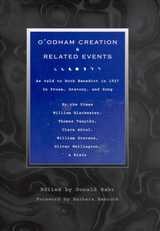
O'odham Creation and Related Events
As Told to Ruth Benedict in 1927Edited by Donald Bahr; Foreword by Barbara Babcock
University of Arizona Press, 2001
The origin stories of the O’odham (Pima) Indians of Arizona are renowned for their beauty and complexity but have been collected in only a handful of books. This volume—the third full O’odham telling of ancientness to appear in print—brings together dozens of stories collected in 1927 by anthropologist Ruth Benedict during her only visit to the Pimas. Never before published, they helped inspire Benedict to write her groundbreaking book Patterns of Culture.
The Pimas represented a way of life that Benedict at first called “Dionysian” after hearing the stories, narratives, songs, and oratory collected from various tellers during her three-month stay. The oral literature concerns the creation of the world and its transformations over time, the creation of the O’odham people, and other cultural traditions. Featuring a pair of man-gods, a female monster born of woman, and a conquest of Pimas by Pimas, they serve to mark the O’odham as a people distinct from their neighbors near and far.
The present volume contains more stories than any other source of Pima tales, plus more of the songs and orations that accompanied a telling. It includes “The Rafter,” a host of ancillary stories, numerous Coyote tales, and additional speeches tied to the narratives of ancientness. One long story, “The Feud,” found only in this collection, shows similarities to the Maya Popol Vuh.
Donald Bahr, a preeminent authority on the O’odham, has not only clarified the text but has also written an introduction that provides the background to the collection and analyzes Benedict’s probable reasons for never having published it. He has also included a previously unpublished text by Benedict, “Figures of Speech among the Pima.” O’odham Creation and Related Events represents an invaluable sourcebook of a people’s oral literature as well as a tribute to a singular scholar’s dedication and vision.
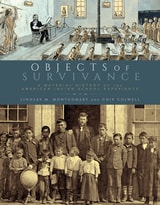
Objects of Survivance
A Material History of the American Indian School ExperienceLindsay M. Montgomery
University Press of Colorado, 2019
This visual and material archive serves as a lens through which to view a key moment in US history—when Native Americans were sequestered onto reservation lands, forced into unfamiliar labor economies, and attacked for their religious practices. Education, the government hoped, would be the final tool to permanently transform Indigenous bodies through moral instruction in Western dress, foodways, and living habits. Yet Lindsay Montgomery and Chip Colwell posit that Bratley’s collection constitutes “objects of survivance”—things and images that testify not to destruction and loss but to resistance and survival. Interwoven with documents and interviews, Objects of Survivance illuminates how the US government sought to control Native Americans and how Indigenous peoples endured in the face of such oppression.
Rejecting the narrative that such objects preserve dying Native cultures, Objects of Survivance reframes the Bratley Collection, showing how tribal members have reconnected to these items, embracing them as part of their past and reclaiming them as part of their contemporary identities. This unique visual and material record of the early American Indian school experience and story of tribal perseverance will be of value to anyone interested in US history, Native American studies, and social justice.
Co-published with the Denver Museum of Nature & Science
Of Cartography
PoemsEsther G. Belin
University of Arizona Press, 2017
In this long-anticipated collection, Belin daringly maps the poetics of womanhood, the body, institution, family, and love. Depicting the personal and the political, Of Cartography is an exploration of identity through language. With poems ranging from prose to typographic and linguistic illustrations, this distinctive collection pushes the boundaries of traditional poetic form.
Marking territory and position according to the Diné cardinal points, Of Cartography demands much from the reader, gives meaning to abstraction, and demonstrates the challenges of identity politics.
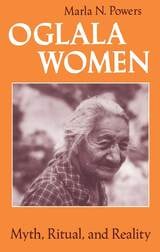
Oglala Women
Myth, Ritual, and RealityMarla N. Powers
University of Chicago Press, 1986
"It is a happy event when a fine scholarly work is rendered accessible to the general reader, especially so when none of the complexity of the subject matter is sacrificed. Oglala Women is a long overdue revisionary ethnography of Native American culture."—Penny Skillman, San Francisco Chronicle Review
"Marla N. Powers's fine study introduced me to Oglala women 'portrayed from the perspectives of Indians,' to women who did not pity themselves and want no pity from others. . . . A brave, thorough, and stimulating book."—Melody Graulich, Women's Review of Books
"Powers's new book is an intricate weaving . . . and her synthesis brings all of these pieces into a well-integrated and insightful whole, one which sheds new light on the importance of women and how they have adapted to the circumstances of the last century."—Elizabeth S. Grobsmith, Nebraska History
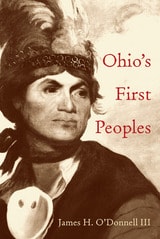
Ohio’s First Peoples
James H. O'Donnell
Ohio University Press, 2004
Although founders of the state like Rufus Putnam pointed to the remaining prehistoric earthworks at Marietta as evidence that the architects were a people of “ingenuity, industry, and elegance,” their words did not prevent a rivalry with the area’s Indian inhabitants that was settled only through decades of warfare and treaty-making.
Native American armies managed to win battles with Josiah Harmar and Arthur St. Clair, but not the war with Anthony Wayne. By the early nineteenth century only a few native peoples remained, still hoping to retain their homes. Pressures from federal and state governments as well as the settlers‘ desire for land, however, left the earlier inhabitants no refuge. By the mid-1840s they were gone, leaving behind relatively few markers on the land.
Ohio’s First Peoples depicts the Native Americans of the Buckeye State from the time of the well-known Hopewell peoples to the forced removal of the Wyandots in the 1840s.
Professor James O’Donnell presents the stories of the early Ohioans based on the archaeological record. In an accessible narrative style, he provides a detailed overview of the movements of Fort Ancient peoples driven out by economic and political forces in the seventeenth century. Ohio’s plentiful game and fertile farmlands soon lured tribes such as the Wyandots, Shawnees, and Delawares, which are familiar to observers of the historic period.
In celebrating the bicentennial of Ohio, we need to remember its earliest residents. Ohio’s First Peoples recounts their story and documents their contribution to Ohio’s full heritage.
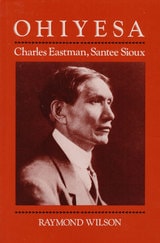
Ohiyesa
Charles Eastman, Santee SiouxRaymond Wilson
University of Illinois Press, 1983
Charles Eastman, called Ohiyesa in Santee, came of age amidst increasing tensions and violence between Native and European colonizers. Though raised to be a hunter-warrior, Eastman was persuaded by his Christian father to enter white society. Eastman graduated from Dartmouth and the Boston University School of Medicine. His career included service as the government physician at the Pine Ridge Agency, where he tended casualties at Wounded Knee; as an Inspector for the Bureau of Indian Affairs; as Indian secretary for the YMCA; and as one of the cofounders of the Boy Scouts of America.
Raymond Wilson examines these accomplishments while also delving into the writings that expressed Eastman’s determination to hold onto his Santee roots. Popular works like Indian Boyhood, The Soul of the Indian, and Indian Heroes and Chieftains reconfirmed his heritage and aimed at making white society aware of Indigenous peoples’ contribution to American civilization.
On Decoloniality
Concepts, Analytics, PraxisWalter D. Mignolo and Catherine E. Walsh
Duke University Press, 2018
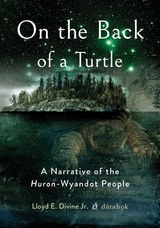
On the Back of a Turtle
A Narrative of the Huron-Wyandot PeopleLloyd Divine Jr.
The Ohio State University Press, 2019
As characters and tribes emerge in the Huron-Wyandot’s oral tradition of creation, and take their respective places upon the Great Island, the author reveals the most difficult element of the Huron-Wyandot’s history: how the tribal name was obtained. With the knowledge of how both Huron and Wyandot are relevant names for one tribe of people, the author then shares his tribe’s amazing history. The reader will be fascinated to learn how one of the smallest tribes, birthed amid the Iroquois Wars, rose to become one of the most respected and influential tribes of North America.
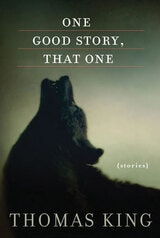
One Good Story, That One
StoriesThomas King
University of Minnesota Press, 2013
One Good Story, That One is a collection steeped in native oral tradition and shot through with Thomas King’s special brand of wit and comic imagination. These highly acclaimed stories conjure up Native and Judeo-Christian myths, present-day pop culture, and literature while mixing in just the right amount of perception and experience.
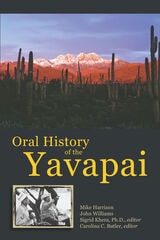
Oral History of the Yavapai
Mike Harrison and John Williams; Edited by Sigrid Khera and Carolina C. Butler
University of Arizona Press, 2015
Although Harrison and Williams have since passed away, their voices shine through the pages of this book and the history of their people remains to be passed along and shared. Thanks to the efforts of Scottsdale, Arizona, resident and Orme Dam activist Carolina Butler, this important document is being made available to the public for the first time.
Oral History of the Yavapai offers a wide range of information regarding the Yavapai people, from creation beliefs to interpretations of historical events and people. Harrison and Williams not only relate their perspectives on the relationship between the “White people” and the Native American peoples of the Southwest, but they also share stories about prayers, songs, dreams, sacred places, and belief systems of the Yavapai.
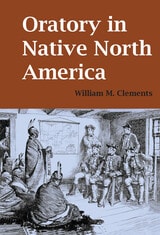
Oratory in Native North America
William M. Clements
University of Arizona Press, 2002
Here is a rich documentation of oratory dating from the earliest records: Benjamin Franklin's publication of treaty proceedings with the Six Nations of the Iroquois; the travel narratives of John Lawson, who visited Carolina Indians in the early 1700s; accounts of Jesuit missionary Pierre De Smet, who evangelized to Northern Plains Indians in the nineteenth century; and much more. The book also includes full texts of several orations. These texts are comprehensive documents that report not only the contents of the speeches but the entirety of the delivery: the textures, situations, and contexts that constitute oratorical events. While there are valid concerns about the reliability of early recorded oratory given the prejudices of those recording them, Clements points out that we must learn what we can from that record.
He extends the thread unwoven in his earlier study Native American Verbal Art to show that the long history of textualization of American Indian oral performance offers much that can reward the reader willing to scrutinize the entirety of the texts. By focusing on this one genre of verbal art, he shows us ways in which the sources are—and are not—valuable and what we must do to ascertain their value. Oratory in Native North America is a panoramic work that introduces readers to a vast history of Native speech while recognizing the limitations in premodern reporting. By guiding us through this labyrinth, Clements shows that with understanding we can gain significant insight not only into Native American culture but also into a rich storehouse of language and performance art.
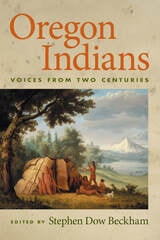
Oregon Indians
Voices from Two CenturiesStephen Dow Beckham
Oregon State University Press, 2006
In this deeply researched volume, Stephen Dow Beckham brings together commentary by Native Americans about the events affecting their lives in Oregon. Now available in paperback for the first time, this volume presents first-person accounts of events threatening, changing, and shaping the lives of Oregon Indians, from “first encounters” in the late eighteenth century to modern tribal economies.
The book's seven thematic sections are arranged chronologically and prefaced with introductory essays that provide the context of Indian relations with Euro-Americans and tightening federal policy. Each of the nearly seventy documents has a brief introduction that identifies the event and the speakers involved. Most of the book's selections are little known. Few have been previously published, including treaty council minutes, court and congressional testimonies, letters, and passages from travelers’ journals.
Oregon Indians opens with the arrival of Euro-Americans and their introduction of new technology, weapons, and diseases. The role of treaties, machinations of the Oregon volunteers, efforts of the US Army to protect the Indians but also subdue and confine them, and the emergence of reservation programs to “civilize” them are recorded in a variety of documents that illuminate nineteenth-century Indian experiences.
Twentieth-century documents include Tommy Thompson on the flooding of the Celilo Falls fishing grounds in 1942, as well as Indian voices challenging the "disastrous policy of termination," the state's prohibition on inter-racial marriage, and the final resting ground of Kennewick Man. Selections in the book's final section speak to the changing political atmosphere of the late twentieth century, and suggest that hope, rather than despair, became a possibility for Oregon tribes.
Osage Indian Customs and Myths
Louis F. Burns
University of Alabama Press, 2005
Siouan peoples who migrated from the Atlantic coastal region and settled in the central portion of the North American continent long before the arrival of Europeans are now known as Osage. Because the Osage did not possess a written language, their myths and cultural traditions were handed down orally through many generations. With time, only those elements deemed vital were preserved in the stories, and many of these became highly stylized. The resulting verbal recitations of the proper life of an Osage—from genesis myths to body decoration, from star songs to child-naming rituals, from war party strategies to medicinal herbs—constitute this comprehensive volume.
Osage myths differ greatly from the myths of Western Civilization, most obviously in the absence of individual names. Instead, “younger brother,” “the messenger,” “Little Old Men,” or a clan name may serve as the allegorical embodiment of the central player. Individual heroic feats are also missing because group life took precedence over individual experience in Osage culture.
Supplementing the work of noted ethnographer Francis La Flesche who devoted most of his professional life to recording detailed descriptions of Osage rituals, Louis Burns’s unique position as a modern Osage—aware of the white culture’s expectations but steeped in the traditions himself is able to write from an insider’s perspective.
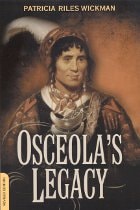
Osceola's Legacy
Patricia Riles Wickman
University of Alabama Press, 2006
A bestselling, re-evaluation of a major Native American resistance leader. Named an Outstanding Book by the Gustavus Myers Center for the Study of Human Rights.
Born in Alabama to a Muscogee/Creek Indian mother and an English father, Osceola, born Billy Powell, came to prominence in the 1830s for resisting the U. S. government's sweep into Florida. He protested the government's Florida Indian removal, killed a pro-emigration Indian leader and then made war on the US government.
Osceola's Legacy draws on a wealth of sources, including letters, diaries, and artifacts to bring this fascinating figure and the central role he played in the Second Seminole War into vivid focus. Of particular interest is a chapter on the forensic report on Osceola's grave as well as descriptions and the illustrations of his personal property at the time of his death.
Osceola's Legacy is significant for its genealogy and archaeological study of this Native American and his interaction with the federal government during the 1800s. The catalog of photographs of Osceola portraits and his personal possessions makes this a worthwhile reference book as well.
Otherwise Worlds
Against Settler Colonialism and Anti-BlacknessTiffany Lethabo King, Jenell Navarro, and Andrea Smith, editors
Duke University Press, 2020
Contributors. Maile Arvin, Marcus Briggs-Cloud, J. Kameron Carter, Ashon Crawley, Denise Ferreira da Silva, Chris Finley, Hotvlkuce Harjo, Sandra Harvey, Chad B. Infante, Tiffany Lethabo King, Jenell Navarro, Lindsay Nixon, Kimberly Robertson, Jared Sexton, Andrea Smith, Cedric Sunray, Se’mana Thompson, Frank B. Wilderson
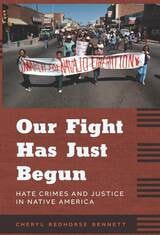
Our Fight Has Just Begun
Hate Crimes and Justice in Native AmericaCheryl Redhorse Bennett
University of Arizona Press, 2022
Illuminating largely untold stories of hate crimes committed against Native Americans in the Four Corners region of the United States, this work places these stories within a larger history, connecting historical violence in the United States to present-day hate crimes. Bennett contends that hate crimes committed against Native Americans have persisted as an extension of an “Indian hating” ideology that has existed since colonization, exposing how the justice system has failed Native American victims and families.
While this book looks deeply at multiple generations of unnecessary and ongoing pain and violence, it also recognizes that this is a time of uncertainty and hope. The movement to abolish racial injustice and racially motivated violence has gained fierce momentum. Our Fight Has Just Begun shows that racism, hate speech, and hate crimes are ever present and offers recommendations for racial justice.
Our Fire Survives the Storm
A Cherokee Literary HistoryDaniel Heath Justice
University of Minnesota Press, 2006
Through cycles of war and peace, resistance and assimilation, trauma and regeneration, Cherokees have long debated what it means to be Cherokee through protest writings, memoirs, fiction, and retellings of traditional stories. Justice employs the Chickamauga consciousness of resistance and Beloved Path of engagement—theoretical approaches that have emerged out of Cherokee social history—to interpret diverse texts composed in English, a language embraced by many as a tool of both access and defiance.
Justice’s analysis ultimately locates the Cherokees as a people of many perspectives, many bloods, mingled into a collective sense of nationhood. Just as the oral traditions of the Cherokee people reflect the living realities and concerns of those who share them, Justice concludes, so too is their literary tradition a textual testament to Cherokee endurance and vitality.
Daniel Heath Justice is assistant professor of aboriginal literatures at the University of Toronto.
Our Fire Survives the Storm
A Cherokee Literary History, Citizenship and Sovereignty EditionDaniel Heath Justice
University of Minnesota Press, 2026
The twentieth-anniversary edition of the path-clearing study of Cherokee writing in English, with an emphatic refocus on voices from the three Cherokee tribal nations
This Citizenship and Sovereignty Edition of Our Fire Survives the Storm is a thoroughly updated, nationhood-focused, twentieth-anniversary revision of Daniel Heath Justice’s influential study of Cherokee writing in English. Through politically astute and historically grounded readings of diverse texts by citizens of the Cherokee Nation, United Keetoowah Band of Cherokee Indians, and Eastern Band of Cherokee Indians, Justice connects Cherokee literature to Indigenous sovereignty, nationhood, and collective futurity.
Guided by a reparative vision that directly contends with the outdated literary legacies of the book’s first edition, this revision confronts the ongoing harms of unsubstantiated and false Cherokee heritage claims on literary studies, replacing readings of primary texts by unverified claimants with those of Cherokee citizen writers. As Justice addresses issues of accountability, he engages with the past two decades of Indigenous scholarship, fully updating terminology, concepts, and scholarly resources. He expands and deepens the intellectual and historical context for Cherokee literary production introduced in the first edition, and he discusses Cherokee writing and community in the mid-twentieth century, the Cherokee Freedmen’s long struggle for justice, and the future of Cherokee nationhood.
Highlighting the work of authors who illustrate the transformative collective discourses of what it means to be Cherokee, Justice examines the richness of Cherokee literary expression through motifs of roots, removal, and nationhood in traditional stories, speeches, legal and governance documents, memoirs, short stories, novels, and plays. An invitation to reflective criticism, this new edition of Our Fire Survives the Storm is grounded in the belief that Indigenous nationhood is a necessary ethical response to the violence of the settler imaginary.
Retail e-book files for this title are screen-reader friendly with images accompanied by short alt text and/or extended descriptions.
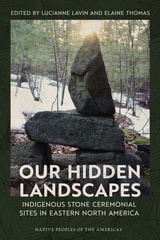
Our Hidden Landscapes
Indigenous Stone Ceremonial Sites in Eastern North AmericaLucianne Lavin
University of Arizona Press, 2023
This volume introduces readers to eastern North America’s Indigenous ceremonial stone landscapes (CSLs)—sacred sites whose principal identifying characteristics are built stone structures that cluster within specific physical landscapes. Our Hidden Landscapes presents these often unrecognized sites as significant cultural landscapes in need of protection and preservation.
In this book, Native American authors provide perspectives on the cultural meaning and significance of CSLs and their characteristics, while professional archaeologists and anthropologists provide a variety of approaches for better understanding, protecting, and preserving them. The chapters present overwhelming evidence in the form of oral tradition, historic documentation, ethnographies, and archaeological research that these important sites created and used by Indigenous peoples are deserving of protection.
This work enables archaeologists, historians, conservationists, foresters, and members of the general public to recognize these important ritual sites.
Contributors
Nohham Rolf Cachat-Schilling
Robert DeFosses
James Gage
Mary Gage
Doug Harris
Julia A. King
Lucianne Lavin
Johannes (Jannie) H. N. Loubser
Frederick W. Martin
Norman Muller
Charity Moore Norton
Paul A. Robinson
Laurie W. Rush
Scott M. Strickland
Elaine Thomas
Kathleen Patricia Thrane
Matthew Victor Weiss
Our People, Our Journey
The Little River Band of Ottawa IndiansJames M. McClurken
Michigan State University Press, 2009
Our People, Our Journey is a landmark history of the Little River Band of Ottawa Indians, a Michigan tribe that has survived to the present day despite the expansionist and assimilationist policies that nearly robbed it of an identity in the late nineteenth century.
In his thoroughly researched chronicle, McClurken documents in words and images every major lineage and family of the Little River Ottawas. He describes the Band's struggles to find land to call its own over several centuries, including the hardships that began with European exploration of what is now the upper Midwest. Although the Little River Ottawas were successful at integrating their economic and cultural practices with those of Europeans, they were forced to cede land in the face of American settlements.
McClurken explains how the Little River Band was forced, in 1858, onto a reservation on the Pere Marquette and Manistee Rivers where they settled with a number of other Ottawa bands. However, the very treaty intended to provide the Grand River Ottawas with a permanent reservation "homeland" eventually allowed non-Indians to acquire title to nearly two-thirds of the land within the reservation by 1880.