Results by title
1427 books match the query 'Politics' and 26 start with o
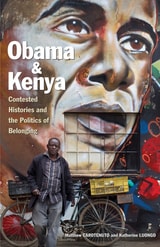
Obama and Kenya
Contested Histories and the Politics of BelongingMatthew Carotenuto
Ohio University Press, 2016
Barack Obama’s political ascendancy has focused considerable global attention on the history of Kenya generally and the history of the Luo community particularly. From politicos populating the blogosphere and bookshelves in the U.S and Kenya, to tourists traipsing through Obama’s ancestral home, a variety of groups have mobilized new readings of Kenya’s past in service of their own ends.
Through narratives placing Obama into a simplified, sweeping narrative of anticolonial barbarism and postcolonial “tribal” violence, the story of the United States president’s nuanced relationship to Kenya has been lost amid stereotypical portrayals of Africa. At the same time, Kenyan state officials have aimed to weave Obama into the contested narrative of Kenyan nationhood.
Matthew Carotenuto and Katherine Luongo argue that efforts to cast Obama as a “son of the soil” of the Lake Victoria basin invite insights into the politicized uses of Kenya’s past. Ideal for classroom use and directed at a general readership interested in global affairs, Obama and Kenya offers an important counterpoint to the many popular but inaccurate texts about Kenya’s history and Obama’s place in it as well as focused, thematic analyses of contemporary debates about ethnic politics, “tribal” identities, postcolonial governance, and U.S. African relations.
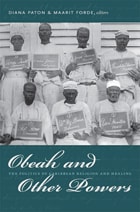
Obeah and Other Powers
The Politics of Caribbean Religion and HealingDiana Paton and Maarit Forde, eds.
Duke University Press, 2012
Contributors. Kenneth Bilby, Erna Brodber, Alejandra Bronfman, Elizabeth Cooper, Maarit Forde, Stephan Palmié, Diana Paton, Alasdair Pettinger, Lara Putnam, Karen Richman, Raquel Romberg, John Savage, Katherine Smith
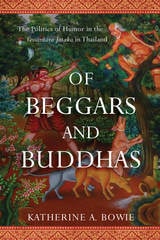
Of Beggars and Buddhas
The Politics of Humor in the Vessantara Jataka in ThailandKatherine A. Bowie
University of Wisconsin Press, 2020
The Vessantara Jataka has served both monastic and royal interests, encouraging parents to give their sons to religious orders and intimating that kings are future Buddhas. But, as Bowie shows, characterizations of the beggar Jujaka in various regions and eras have also brought ribald humor and sly antiroyalist themes to the story. Historically, these subversive performances appealed to popular audiences even as they worried the conservative Bangkok court. The monarchy sporadically sought to suppress the comedic recitations. As Thailand has changed from a feudal to a capitalist society, this famous story about giving away possessions is paradoxically being employed to promote tourism and wealth.
Oil, Banks, and Politics
The United States and Postrevolutionary Mexico, 1917–1924By Linda B. Hall
University of Texas Press, 1995
Mexico was second only to the United States as the world's largest oil producer in the years following the Mexican Revolution. As the revolutionary government became institutionalized, it sought to assure its control of Mexico's oil resources through the Constitution of 1917, which returned subsoil rights to the nation. This comprehensive study explores the resulting struggle between oil producers, many of which were U.S. companies, and the Mexican government.
Linda Hall goes beyond the diplomacy to look at the direct impact of a powerful, highly profitable foreign-controlled industry on a government and a nation trying to recover from a major civil war. She draws on extensive research in Mexican archives, including both government sources and the private papers of Presidents Alvaro Obregón and Plutarco Elías Calles, as well as U.S. government and private sources.
Since the North American Free Trade Agreement has expanded United States business ties to Mexico, this study of a crucial moment in U.S.-Mexican business relations will be of interest to a wide audience in business, diplomatic, and political history.
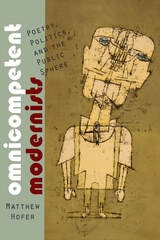
Omnicompetent Modernists
Poetry, Politics, and the Public SphereMatthew Hofer
University of Alabama Press, 2022
An innovative exploration of early twentieth-century avant-garde poetry’s relationship to the public sphere
“It is difficult / to get the news from poems / yet men die miserably every day / for lack / of what is found there,” as the poet William Carlos Williams memorably declared. In Omnicompetent Modernists: Poetry, Politics, and the Public Sphere, Matthew Hofer examines, through a multilayered literary critique of interwar modernist poetry, what it might mean to get the news, and more, from a poet.
Using pragmatist ideas about the public sphere as a tool, Hofer reveals how Langston Hughes, Ezra Pound, and Mina Loy sought to use literature to both express and enable thought. In Hughes, Pound, and Loy, Hofer attends to poets whose work vigorously imagined possible new relationships between language, thinking, and public society. Each poet had different goals and used different methods, but all found both inspiration and encouragement in popular political theory. Hughes advocated for a more just vision of color and class in the United States. Pound sought to condemn those whom he associated with public harm, linguistically, socially, economically, and politically. Loy championed the “psycho-democratic” representation of women, in both public and private life.
Although Hughes, Pound, and Loy are rarely considered together, what unites these three writers is how each reconceived the public realm, and revolutionized aesthetic form to articulate those visions. Hofer combines sharp intellectual historiography with rigorous literary criticism and the result is a study that reinvigorates both the poems and poets under consideration and speaks to the immense power of language in manipulating public opinion—with pertinent implications for the politics of the present.
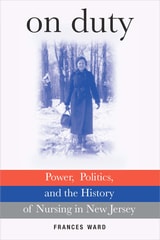
On Duty
Power, Politics, and the History of Nursing in New JerseyWard, Frances
Rutgers University Press, 2009

On Teacher Neutrality
Politics, Praxis, and PerformativityDaniel P. Richards
Utah State University Press, 2020
Higher education itself and its stakeholders are continually exploring the role of teachers in the classroom and the extent to which it is possible or ethical to engage in neutrality. Amplifying voices from teachers in underrepresented positions and institutions in discussions of teacher ideology, On Teacher Neutrality shapes the discourse around these topics both within the writing classroom and throughout higher education. The book offers a rich array of practices, pedagogies, and theories that will help ground instructors and posits a way forward toward better dialogue and connections with the various stakeholders of higher education in the United States.
Contributors:
Tristan Abbott, Kelly Blewett, Meaghan Brewer, Christopher Michael Brown, Chad Chisholm, Jessica Clements, Jason C. Evans, Heather Fester, Romeo García, Yndalecio Isaac Hinojosa, Mara Holt, Erika Johnson, Tawny LeBouef Tullia, Lauren F. Lichty, Adam Pacton, Daniel P. Richards, Patricia Roberts-Miller, Karen Rosenberg, Allison L. Rowland, Robert Samuels, David P. Stubblefield, Jennifer Thomas, John Trimbur
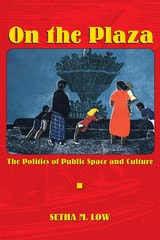
On the Plaza
The Politics of Public Space and CultureBy Setha M. Low
University of Texas Press, 2000
Robert B. Textor Prize for Excellence in Anticipatory Anthropology, American Anthropological Association, 2000
Honorable Mention, Victor Turner Award, Society for Humanistic Anthropology, 2001
Leeds Prize, Society of Urban, National, and Transnational/Global Anthropology, 2001
Friendly gossip, political rallies, outdoor concerts, drugs, shoeshines, and sex-for-sale—almost every aspect of Latin American life has its place and time in the public plaza. In this wide-ranging, multi-disciplinary study, Setha M. Low explores the interplay of space and culture in the plaza, showing how culture acts to shape public spaces and how the physical form of the plaza encodes the social and economic relations within its city.
Low centers her study on two plazas in San José, Costa Rica, with comparisons to public plazas in the United States, Europe, and elsewhere. She interweaves ethnography, history, literature, and personal narrative to capture the ambiance and meaning of the plaza. She also uncovers the contradictory ethnohistories of the European and indigenous origins of the Latin American plaza and explains why the plaza is often a politically contested space.

One Hundred Years of Futurism
Aesthetics, Politics and PerformanceEdited by John London
Intellect Books, 2017
One Hundred Years of Futurism
Aesthetics, Politics and PerformanceEdited by John London
Intellect Books, 2017
One Less Car
Bicycling and the Politics of AutomobilityAuthored by Zack Furness
Temple University Press, 2010
Although millions of people in the United States love to ride bicycles for exercise or leisure, statistics show that only 1% of the total U.S. population ride bicycles for transportation—and barely half as many use bikes to commute to work. In his original and exciting book, One Less Car, Zack Furness examines what it means historically, culturally, socioeconomically, and politically to be a bicycle transportation advocate/activist.
Presenting an underground subculture of bike enthusiasts who aggressively resist car culture, Furness maps out the cultural trajectories between mobility, technology, urban space and everyday life. He connects bicycling to radical politics, public demonstrations, alternative media production (e.g., ‘zines), as well as to the development of community programs throughout the world.
One Less Car also positions the bicycle as an object with which to analyze and critique some of the dominant cultural and political formations in the U.S.—and even breaks down barriers of race, class and gender privilege that are interconnected to mobility. For Furness, bicycles not only liberate people from technology, they also support social and environmental justice. So, he asks, Why aren’t more Americans adopting them for their transportation needs?
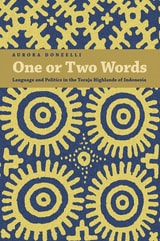
One or Two Words
Language and Politics in the Toraja Highlands of IndonesiaAurora Donzelli
National University of Singapore Press, 2020

Oracles of Empire
Poetry, Politics, and Commerce in British America, 1690-1750David S. Shields
University of Chicago Press, 1990
British America's poetry of empire was dominated by three issues: mercantilism's promise that civilization and wealth would be transmitted from London to the provinces; the debate over the extent of metropolitan prerogatives in law and commerce when they obtruded upon provincial rights and interests; and the argument that Britain's imperium pelagi was an ethical empire, because it depended upon the morality of trade, while the empires of Spain and France were immoral empires because they were grounded upon conquest. In discussing these issues, Shields provides a virtual anthology of poems long lost to students of American literature.

Orange Parades
The Politics of Ritual, Tradition and ControlDominic Bryan
Pluto Press, 2000
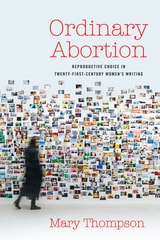
Ordinary Abortion
Reproductive Choice in Twenty-First-Century Women’s WritingMary Thompson
The Ohio State University Press, 2026
The Supreme Court’s Dobbs v. Jackson (2022) decision, which erased the constitutional right to abortion, abruptly redramatized access in the United States. Yet twenty-first-century literature written before Dobbs reflects a landscape in which abortion appears as an undramatic, routine part of women’s lives. In Ordinary Abortion, Mary Thompson argues that many contemporary women writers depict abortion as a commonplace decision intertwined with health, education, career, sexuality, relationships, family-making, and motherhood.
Drawing on American poetry, fiction, nonfiction, memoir, and dystopian writing, Ordinary Abortion examines how ideas about abortion circulate through literature and how literary forms, in turn, shape readers’ understandings of reproduction and politics. Thompson traces new plots, characters, narrative strategies, and genres emerging around birth control, unplanned pregnancy, termination, and family formation. These works reveal renewed thematic attention to abortion’s relationship with motherhood and mother-loss, neoliberal pressures, stratified reproduction, masculinity, violence, care work, and disability.
Ultimately, Ordinary Abortion shows that abortion literature extends far beyond stories centered on crisis or choice. Instead, twenty-first-century women’s writing reveals a quiet, pervasive truth: Abortion has long been woven into everyday American life, normalized in ways that public discourse has often failed to acknowledge.

Organized Labour and Politics in Mexico
Changes, Continuities and ContradictionsGraciela Bensusan and Kevin J. Middlebrook
University of London Press, 2012
This state of affairs - especially the failure to enact progressive labor law reform since democratic regime change in 2000 - limits democracy and imposes heavy costs on society as a whole.
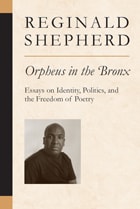
Orpheus in the Bronx
Essays on Identity, Politics, and the Freedom of PoetryReginald Shepherd
University of Michigan Press, 2010
"Orpheus in the Bronx not only extols the freedom language affords us; it embodies that freedom, enacting poetry's greatest gift---the power to recognize ourselves as something other than what we are. These bracing arguments were written by a poet who sings."
---James Longenbach
A highly acute writer, scholar, editor, and critic, Reginald Shepherd brings to his work the sensibilities of a classicist and a contemporary theorist, an inheritor of the American high modernist canon, and a poet drawing and playing on popular culture, while simultaneously venturing into formal experimentation.
In the essays collected here, Shepherd offers probing meditations unified by a "resolute defense of poetry's autonomy, and a celebration of the liberatory and utopian possibilities such autonomy offers." Among the pieces included are an eloquent autobiographical essay setting out in the frankest terms the vicissitudes of a Bronx ghetto childhood; the escape offered by books and "gifted" status preserved by maternal determination; early loss and the equivalent of exile; and the formation of the writer's vocation. With the same frankness that he brings to autobiography, Shepherd also sets out his reasons for rejecting "identity politics" in poetry as an unnecessary trammeling of literary imagination. His study of the "urban pastoral," from Baudelaire through Eliot, Crane, and Gwendolyn Brooks, to Shepherd's own work, provides a fresh view of the place of urban landscape in American poetry.
Throughout his essays---as in his poetry---Shepherd juxtaposes unabashed lyricism, historical awareness, and in-your-face contemporaneity, bristling with intelligence.
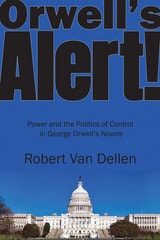
Orwell’s Alert!
Power and the Politics of Control in George Orwell’s NovelsROBERT VAN DELLEN
Parkhurst Brothers, Inc., 2026
A college professor and former college president reveals the political underpinnings of George Orwell as expressed in his novels, with special emphasis on the author’s last two novels, Animal Farm and 1984. The growth of Orwell’s disdain for colonialism, as well as his concern for the quality of life under various political systems, undergirds the analysis. While flaws in Orwell’s analyses are acknowledged, the author believes readers can learn important lessons from the study, lessons that can be applied to the individual’s relationship to the state in our time.

Osiris, Volume 14
Commemorative Practices in Science: Historical Perspectives on the Politics of Collective MemoryEdited by Pnina G. Abir-Am and Clark A. Elliot
University of Chicago Press, 2000
Contributors include Clark A. Elliott, Owen Gingerich, Dieter Hoffmann, Dominque Pestre, Robert W. Seidel, and V. Betty Smocovitis.
Osiris, Volume 20
Politics and Science in Wartime: Comparative International Perspectives on the Kaiser Wilhelm InstituteEdited by Carola Sachse and Mark Walker
University of Chicago Press, 2005
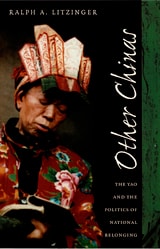
Other Chinas
The Yao and the Politics of National BelongingRalph A. Litzinger
Duke University Press, 2000
Litzinger begins by describing how during the Republican period the Yao were considered a dangerous people who preferred to consort with beasts and goblins rather than join in the making of a modern nation. He then compares this to the communist revolutionaries’ view of the Yao as impressive rebels and positive examples of subaltern agency. Litzinger shows how scholars, government workers, communist party officials, and Taoist ritual specialists have influenced the varied depictions of the Yao and, in doing so, he advances a new understanding of both the Yao and the effects of official discourse, written histories, state policy, and practices of minority empowerment. In addition to analyzing issues of ritual practice, social order, morality, and the governance of ethnic populations, Litzinger considers the Yao’s role in the cultural reforms of the 1980s. By distancing his study from romanticized depictions of minorities Litzinger is able to focus on how minority representation, struggle, and agency have influenced the history of the People’s Republic, cultural debates within contemporary Chinese society, and China’s rapidly changing role in the global order.
This book will be of interest to Asianists in both anthropology and cultural studies and should appeal more generally to scholars invested in issues of ethnic identity, minority politics, and transnationalism.
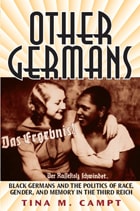
Other Germans
Black Germans and the Politics of Race, Gender, and Memory in the Third ReichTina M. Campt
University of Michigan Press, 2005
Other Worlds Here
Honoring Native Women’s Writing in Contemporary Anarchist MovementsTheresa Warburton
Northwestern University Press, 2021
All is not lost, however. Rather than centering a critical indictment of contemporary anarchist politics, Other Worlds Here maintains that a defining characteristic of New Anarchism is its ability to adapt and transform. Through close readings of texts by Native women authors, Warburton argues that anarchists must shift the paradigm that another world is possible to one that recognizes other worlds already here: stories, networks, and histories that lay out methods of building reciprocal relationships with the land and its people. Analyzing memoirs, poetry, and novels by writers including Deborah Miranda, Elissa Washuta, Heid E. Erdrich, Janet Rogers, and Leslie Marmon Silko, Other Worlds Here extends the study of Native women’s literatures beyond ethnographic analysis of Native experience to advance a widely applicable, contemporary political critique.
Our New Husbands Are Here
Households, Gender, and Politics in a West African State from the Slave Trade to Colonial RuleEmily Lynn Osborn
Ohio University Press, 2011
In Our New Husbands Are Here, Emily Lynn Osborn investigates a central puzzle of power and politics in West African history: Why do women figure frequently in the political narratives of the precolonial period, and then vanish altogether with colonization? Osborn addresses this question by exploring the relationship of the household to the state. By analyzing the history of statecraft in the interior savannas of West Africa (in present-day Guinea-Conakry), Osborn shows that the household, and women within it, played a critical role in the pacifist Islamic state of Kankan-Baté, enabling it to endure the predations of the transatlantic slave trade and become a major trading center in the nineteenth century. But French colonization introduced a radical new method of statecraft to the region, one that separated the household from the state and depoliticized women’s domestic roles. This book will be of interest to scholars of politics, gender, the household, slavery, and Islam in African history.
Our Sisters' Promised Land
Women, Politics, and Israeli-Palestinian CoexistenceAyala Emmett
University of Michigan Press, 2003
Out of Whiteness
Color, Politics, and CultureVron Ware and Les Back
University of Chicago Press, 2002
Vron Ware and Les Back look at key points in recent American and British culture where the "color line" has been blurred. Through probing accounts of racial masquerades in popular literature, the growth of the white power music scene on the Internet, the meteoric rise of big band jazz during the Second World War, and the pivotal role of white session players in crafting rhythm and blues classics by black artists, Ware and Back upset the idea of race as a symbol of inherent human attributes. Their book gives us a timely reckoning of the forces that continue to make people "white," and reveals to us the polyglot potential of identities and cultures.