Results by title
471 books match the query 'Power' and 6 start with o
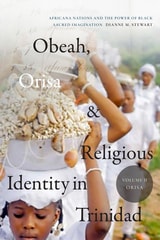
Obeah, Orisa, and Religious Identity in Trinidad, Volume II, Orisa
Africana Nations and the Power of Black Sacred Imagination, Volume 2Dianne M. Stewart
Duke University Press, 2022
Oligarchy in America
Power, Justice, and the Rule of the FewLuke Winslow
University of Alabama Press, 2024
Roderick P. Hart Outstanding Book Award for the National Communication Association's Political Communication Division
A fascinating survey of the history of political and economic ideas in the US that have led to an increasingly entrenched ultra-rich class of oligarchs.
To an American, oligarchy is something that happens somewhere else. In Oligarchy in America, Luke Winslow reveals oligarchy’s deep intellectual roots and alarming growth in America. The book provides conceptual tools the lack of which have prevented Americans from recognizing oligarchy at home.
Winslow argues that generic labels like “billionaires” for a class of ultra-rich masks the pervasive structures that entrench their power. He introduces instead the concept of democratic oligarchy—an institutional arrangement in which the ultra-rich form a class consciously creating and leveraging state power to accumulate wealth.
Like a master class in political ideas, Winslow traces the intellectual lineage of oligarchy in the US. His lively and compulsively readable survey examines key rhetorical sources such as Herbert Spencer, Andrew Carnegie, Friedrich Hayek, Lewis Powell, Milton Friedman, Charles Koch, Donald Trump, Tucker Carlson, and others.
Oligarchy in America maps the connective web of oligarchic ideas uniting these disparate figures. By offering a lucid framework through which to view oligarchic ideas ambient in American culture, Winslow makes a vital contribution to readers and scholars of communication and rhetorical studies, public address, economics, and political science.
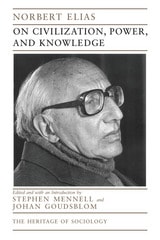
On Civilization, Power, and Knowledge
Selected WritingsNorbert Elias
University of Chicago Press, 1997
This volume is a carefully chosen collection of Elias's most important writings and includes many of his most brilliant ideas. The development of Elias's thinking during the course of his long career is traced along with a discussion of how his work relates to other major sociologists and how the various selections are interconnected. The result is a consistent and stimulating look at one of sociology's founding thinkers.
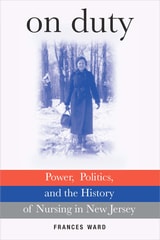
On Duty
Power, Politics, and the History of Nursing in New JerseyWard, Frances
Rutgers University Press, 2009

On Power and Ideology - New Edition
The Managua LecturesNoam Chomsky
Pluto Press, 2015
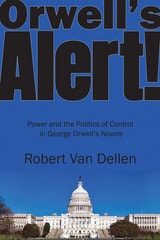
Orwell’s Alert!
Power and the Politics of Control in George Orwell’s NovelsROBERT VAN DELLEN
Parkhurst Brothers, Inc., 2026
A college professor and former college president reveals the political underpinnings of George Orwell as expressed in his novels, with special emphasis on the author’s last two novels, Animal Farm and 1984. The growth of Orwell’s disdain for colonialism, as well as his concern for the quality of life under various political systems, undergirds the analysis. While flaws in Orwell’s analyses are acknowledged, the author believes readers can learn important lessons from the study, lessons that can be applied to the individual’s relationship to the state in our time.