Results by title
391 books match the query 'Public opinion' and 7 start with o
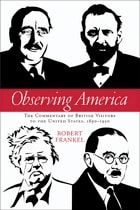
Observing America
The Commentary of British Visitors to the United States, 1890–1950Robert Frankel
University of Wisconsin Press, 2006
Robert Frankel examines the New World experiences of these commentators and the books they wrote about America. He also probes similar writings by other prominent observers from the British Isles, including Beatrice Webb, Rudyard Kipling, and George Bernard Shaw. The result is a book that offers keen insights into America’s national identity in a time of vast political and cultural change.
Observing America’s Jews
Marshall Sklare
Brandeis University Press, 1993
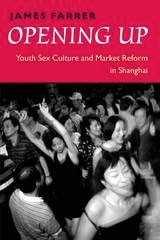
Opening Up
Youth Sex Culture and Market Reform in ShanghaiJames Farrer
University of Chicago Press, 2002
More and more men and women in China these days are having sex before marriage, creating a new youth sex culture based on romance, leisure, and free choice. The Chinese themselves describe these changes as an "opening up" in response to foreign influences and increased Westernization. Farrer explores these changes by tracing the basic elements in talk about sex and sexuality in Shanghai. He then shows how Chinese youth act out the sometimes-contradictory meanings of sex in the new market society. For Farrer, sexuality is a lens through which we can see how China imagines and understands itself in the wake of increased globalization. Through personal storytelling, neighborhood gossip, and games of seduction, young men and women in Shanghai balance pragmatism with romance, lust with love, and seriousness with play, collectively constructing and individually coping with a new culture based on market principles. With its provocative glimpse into the sex lives of young Chinese, then, Opening Up offers something even greater: a thoughtful consideration of China as it continues to develop into an economic superpower.
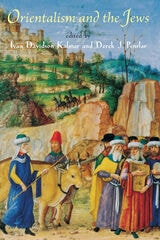
Orientalism and the Jews
Edited by Ivan Davidson Kalmar and Derek Penslar
Brandeis University Press, 2004
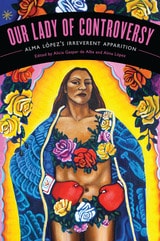
Our Lady of Controversy
Alma López's “Irreverent Apparition”Edited by Alicia Gaspar de Alba and Alma López
University of Texas Press, 2011
Months before Alma López's digital collage Our Lady was shown at the Museum of International Folk Art in 2001, the museum began receiving angry phone calls from community activists and Catholic leaders who demanded that the image not be displayed. Protest rallies, prayer vigils, and death threats ensued, but the provocative image of la Virgen de Guadalupe (hands on hips, clad only in roses, and exalted by a bare-breasted butterfly angel) remained on exhibition.
Highlighting many of the pivotal questions that have haunted the art world since the NEA debacle of 1988, the contributors to Our Lady of Controversy present diverse perspectives, ranging from definitions of art to the artist's intention, feminism, queer theory, colonialism, and Chicano nationalism. Contributors include the exhibition curator, Tey Marianna Nunn; award-winning novelist and Chicana historian Emma Pérez; and Deena González (recognized as one of the fifty most important living women historians in America).
Accompanied by a bonus DVD of Alma López's I Love Lupe video that looks at the Chicana artistic tradition of reimagining la Virgen de Guadalupe, featuring a historic conversation between Yolanda López, Ester Hernández, and Alma López, Our Lady of Controversy promises to ignite important new dialogues.
Our Nazi
An American Suburb’s Encounter with EvilMichael Soffer
University of Chicago Press, 2024
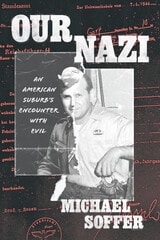
Reinhold Kulle seemed like the perfect school employee. But in 1982, as his retirement neared, his long-concealed secret came to light. The chief custodian at Oak Park and River Forest High School outside Chicago had been a Nazi, a member of the SS, and a guard at a brutal slave labor camp during World War II.
Similar revelations stunned communities across the country. Hundreds of Reinhold Kulles were gradually discovered: men who had patrolled concentration camps, selected Jews for execution, and participated in mass shootings—and who were now living ordinary suburban lives. As the Office of Special Investigations raced to uncover Hitler’s men in the United States, neighbors had to reconcile horrific accusations with the helpful, kind, and soft-spoken neighbors they thought they knew. Though Nazis loomed in the American consciousness as evil epitomized, in Oak Park—a Chicago suburb renowned for its liberalism—people rose to defend Reinhold Kulle, a war criminal.
Drawing on archival research and insider interviews, Oak Park and River Forest High School teacher Michael Soffer digs into his community’s tumultuous response to the Kulle affair. He explores the uncomfortable truths of how and why onetime Nazis found allies in American communities after their gruesome pasts were uncovered.
Overpotential
Fuel Cells, Futurism, and the Making of a Power PanaceaEisler, Matthew
Rutgers University Press, 2012
It sounds so simple. Just combine oxygen and hydrogen in an electrochemical reaction that produces water and electricity, and you’ll have a clean, efficient power source. But scientists have spent decades—and billions of dollars in government and industry funding—developing the fuel cell. There have been successes and serendipitous discoveries along the way, but engineering a fuel cell that is both durable and affordable has proved extraordinarily difficult.
Overpotential charts the twists and turns in the ongoing quest to create the perfect fuel cell. By exploring the gap between the theory and practice of fuel cell power, Matthew N. Eisler opens a window into broader issues in the history of science, technology, and society after the Second World War, including the sociology of laboratory life, the relationship between academe, industry, and government in developing advanced technologies, the role of technology in environmental and pollution politics, and the rise of utopian discourse in science and engineering.