Results by title
145 books match the query 'Refugees' and 4 start with o
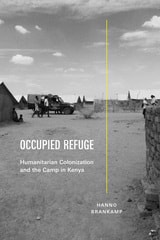
Occupied Refuge
Humanitarian Colonization and the Camp in KenyaHanno Brankamp
Duke University Press, 2026
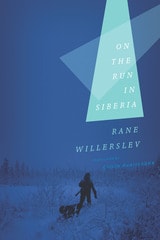
On the Run in Siberia
Rane Willerslev
University of Minnesota Press, 2012
If I had let myself be ruled by reason alone, I would surely be lying dead somewhere or another in the Siberian frost.
The Siberian taiga: a massive forest region of roughly 4.5 million square miles, stretching from the Ural Mountains to the Bering Sea, breathtakingly beautiful and the coldest inhabited region in the world. Winter temperatures plummet to a bitter 97 degrees below zero, and beneath the permafrost lie the fossilized remains of mammoths, woolly rhinoceroses, and other ice age giants. For the Yukaghir, an indigenous people of the taiga, hunting sable is both an economic necessity and a spiritual experience—where trusting dreams and omens is as necessary as following animal tracks. Since the fall of Communism, a corrupt regional corporation has monopolized the fur trade, forcing the Yukaghir hunters into impoverished servitude.
Enter Rane Willerslev, a young Danish anthropologist who ventures into this frozen land on an idealistic mission to organize a fair-trade fur cooperative with the hunters. From the outset, things go terribly wrong. The regional fur company, with ties to corrupt public officials, proves it will stop at nothing to maintain its monopoly: one of Willerslev’s Yukaghir business partners is arrested on spurious charges of poaching and illegal trading; another drowns mysteriously. When police are sent to arrest him, Willerslev fears for his life, and he and a local hunter flee to a remote hunting lodge even deeper in the icy wilderness. Their situation turns even more desperate right away: they manage to kill a moose but lose the meat to predators and begin to starve, frostbitten and isolated in the frozen taiga.
Thus begins Willerslev’s extraordinary, chilling tale of one year living in exile among Yukaghir hunters in the stark Siberian taiga region. At turns shocking and quietly moving, On the Run in Siberia is a pulse-pounding tale of idealism, political corruption, starvation, and survival (with a timely assist from Vladimir Putin) as well as a striking portrait of the Yukaghirs’ shamanistic tradition and their threatened way of life, a drama unfolding daily in one of the world’s coldest, most enthralling landscapes.
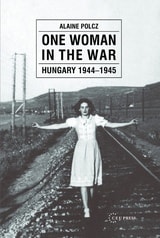
One Woman in the War
Hungary 1944-1945Alaine Polcz
Central European University Press, 2002

Organised Crime and Migration
Criminal Groups, Corruption and the Displacement Crisis in Central America and MexicoVictorie Knox
University of London Press, 2026
Organized criminal groups have been involved in the abuse of migrants and people-smuggling in Mexico for many years. A displacement crisis has emerged as people with different potential protection needs flee a complex mix of factors in Central America, from violence and threats from criminal gangs, persecution by state actors, gender violence, and hate crime to the impact of climate change, natural disasters, and entrenched inequality and poverty.
Drawing on original interview material with key informants speaking in their professional capacity and with migrants and refugees during their journey, the book analyzes organized crime’s role in provoking human displacement and the abuse of migrants, reflecting on state responsibility, the role of policy, corruption, and impunity in perpetuating abuse, and the implications for human rights. In doing so, it provides a new understanding of the likely consequences of implementing or externalizing migration policy in regions affected by endemic criminal violence and corruption globally.