Results by title
4127 books match the query 'Science' and 133 start with o
Oak Origins
From Acorns to Species and the Tree of LifeAndrew L. Hipp
University of Chicago Press, 2024
An oak begins its life with the precarious journey of a pollen grain, then an acorn, then a seedling. A mature tree may shed millions of acorns, but only a handful will grow. One oak may then live 100 years, 250 years, or even 13,000 years. But the long life of an individual is only a part of these trees’ story.
With naturalist and leading researcher Andrew L. Hipp as our guide, Oak Origins takes us through a sweeping evolutionary history, stretching back to a population of trees that lived more than 50 million years ago. We travel to the ancient tropical Earth to see the ancestors of the oaks evolving side by side with the dinosaurs. We journey from the oaks’ childhood in the once-warm forests of the Arctic to the montane cloud forests of Mexico and the broad-leaved evergreen forests of Southeast Asia. We dive into current research on oak genomes to see how scientists study genes’ movement between species and how oaks evolve over generations—spanning tens of millions of years. Finally, we learn how oak evolutionary history shapes the forests we know today, and how it may even shape the forests of the future.
Oaks are familiar to almost everyone, and beloved. They are embedded in our mythology. They have fed us, housed us, provided wood for our ships and wine barrels and homes and halls, planked our roads, and kept us warm. Every oak also has the potential to feed thousands of birds, squirrels, and mice and host countless insects, mosses, fungi, and lichens. But as Oak Origins makes clear, the story of the oaks’ evolution is not just the story of one important tree. It is the story of the Tree of Life, connecting all organisms that have ever lived on Earth, from oaks’ last common ancestor to us.
Object Lessons and the Formation of Knowledge
The University of Michigan Museums, Libraries, and Collections 1817–2017Kerstin Barndt and Carla M. Sinopoli, editors
University of Michigan Press, 2017
Objectivity and Diversity
Another Logic of Scientific ResearchSandra Harding
University of Chicago Press, 2015
Sandra Harding is not ready to throw out objectivity quite yet. For all of its problems, she contends that objectivity is too powerful a concept simply to abandon. In Objectivity and Diversity, Harding calls for a science that is both more epistemically adequate and socially just, a science that would ask: How are the lives of the most economically and politically vulnerable groups affected by a particular piece of research? Do they have a say in whether and how the research is done? Should empirically reliable systems of indigenous knowledge count as "real science"? Ultimately, Harding argues for a shift from the ideal of a neutral, disinterested science to one that prizes fairness and responsibility.
Observation Points
The Visual Poetics of National ParksThomas Patin
University of Minnesota Press, 2012
National parks are the places that present ideas of nature to Americans: Zion, Yosemite, Grand Canyon, Yellowstone bring to mind quintessential and awe-inspiring wilderness. By examining how rhetoric—particularly visual rhetoric—has worked to shape our views of nature and the “natural” place of humans, Observation Points offers insights into questions of representation, including the formation of national identity.
As Thomas Patin reveals, the term “nature” is artificial and unstable, in need of constant maintenance and reconstruction. The process of stabilizing its representation, he notes, is unavoidably political. America’s national parks and monuments show how visual rhetoric operates to naturalize and stabilize representations of the environment. As contributors demonstrate, visual rhetoric is often transparent, structuring experience while remaining hidden in plain sight. Scenic overlooks and turnouts frame views for tourists. Visitor centers, with their display cases and photographs and orientation films, provide their own points of view—literally and figuratively. Guidebooks, brochures, and other publications present still other ways of seeing. At the same time, images of America’s “natural” world have long been employed for nationalist and capitalist ends, linking expansionism with American greatness and the “natural” triumph of European Americans over Native Americans.
The essays collected here cover a wide array of subjects, including park architecture, landscape painting, public ceremonies, and techniques of display. Contributors are from an equally broad range of disciplines—art history, geography, museum studies, political science, American studies, and many other fields. Together they advance a provocative new visual genealogy of representation.
Contributors: Robert M. Bednar, Southwestern U, Georgetown, Texas; Teresa Bergman, U of the Pacific; Albert Boime, UCLA; William Chaloupka, Colorado State U; Gregory Clark, Brigham Young U; Stephen Germic, Rocky Mountain College; Gareth John, St. Cloud State U, Minnesota; Mark Neumann, Northern Arizona U; Peter Peters, Maastricht U; Cindy Spurlock, Appalachian State U; David A. Tschida, U of Wisconsin, Eau Claire; Sabine Wilke, U of Washington.
Observing Complexity
Systems Theory and PostmodernityWilliam Rasch
University of Minnesota Press, 2000
Shakes up postmodern criticism with paradigms from the social and techno-sciences.
Shakes up postmodern criticism with paradigms from the social and techno-sciences.
The rubric of systems theory brings together conceptual models and approaches in the sciences and social sciences that study complexity. It attempts to provide a coherent means of describing all systems, whether organic or inorganic, and offers a theory of knowledge that can account for the integration of humans in the social, informational, and ecological systems in which we are enmeshed. Observing Complexity brings the major concepts and foremost thinkers of systems theory into interaction with the major figures of postmodern theory. The format is multiplex and open-a rich montage, including interviews, exemplary essays, and staged dialogues. The writers’ aim is not to solidify theory but to provide a thorough explication and an open-ended exploration of how systems theory can address, in a fresh and productive way, theoretical questions that too often have led to impasses between different schools of postmodern theory. Contributors: Drucilla Cornell, Rutgers U; Jonathan Elmer, Indiana U; N. Katherine Hayles, UCLA; Peter Uwe Hohendahl, Cornell U; Eva Knodt; Marjorie Levinson, U of Michigan; Niklas Luhmann; Brian Massumi, SUNY, Albany.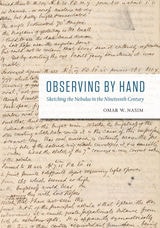
Observing by Hand
Sketching the Nebulae in the Nineteenth CenturyOmar W. Nasim
University of Chicago Press, 2013
Obsidian, Second Edition
Advances in Geological and Archaeological Obsidian Studies in the North American SouthwestM. Steven Shackley
University of Arizona Press, 2027
Archaeological obsidian studies in the American Southwest and beyond have significantly matured in the last two decades. Like ceramic analysis, obsidian artifact analysis has become a key factor in many archaeological projects because obsidian used to produce chipped stone tools is common across time periods in the Southwest—from Paleoindian through colonial periods. Even today, making stone tools from obsidian is used in teaching.
In the last twenty years, not only have the ways archaeologists use obsidian provenance to address twenty-first-century issues changed, but we now also see geologists and paleontologists using obsidian in ways never before imagined.
In the second edition of Obsidian, author M. Steven Shackley examines the newly discovered sources of archaeological obsidian and other volcanic rocks on both sides of the U.S.-Mexico border. This work has aided in building new inferences concerning exchange, group interaction, and social networks: subjects that were only emerging twenty years ago in obsidian studies.
The field of obsidian provenance studies is truly international, linking archaeologists and geologists in the United States like never before. While the obsidian sources covered in this volume are regionally specific, the applications and methods used in the understanding of source recording, composition issues, and provenance are relevant worldwide.
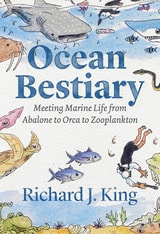
Ocean Bestiary
Meeting Marine Life from Abalone to Orca to ZooplanktonWritten and illustrated by Richard J. King
University of Chicago Press, 2023
For millennia, we have taken to the waves. And yet, for humans, the ocean remains our planet’s most inaccessible region, the place about which we know the least. From A to Z, abalone to zooplankton, and through both text and original illustrations, Ocean Bestiary is a celebration of our ongoing quest to know the sea and its creatures.
Focusing on individual species or groups of animals, Richard J. King embarks upon a global tour of ocean wildlife, including beluga whales, flying fish, green turtles, mako sharks, noddies, right whales, sea cows (as well as sea lions, sea otters, and sea pickles), skipjack tuna, swordfish, tropicbirds, walrus, and yellow-bellied sea snakes. But more than this, King connects the natural history of ocean animals to the experiences of people out at sea and along the world’s coastlines. From firsthand accounts passed down by the earliest Polynesian navigators to observations from Wampanoag clamshell artists, African-American whalemen, Korean female divers (or haenyeo), and today’s pilots of deep-sea submersibles—and even to imaginary sea expeditions launched through poems, novels, and paintings—Ocean Bestiary weaves together a diverse array of human voices underrepresented in environmental history to tell the larger story of our relationship with the sea. Sometimes funny, sometimes alarming, but always compelling, King’s vignettes reveal both how our perceptions of the sea have changed for the better and how far we still have to go on our voyage.

Ocean Yearbook, Volume 1
Edited by Elisabeth Mann Borgese and Norton Ginsburg
University of Chicago Press, 1979
Ocean Yearbook, Volume 10
Edited by Elisabeth Mann Borgese, Norton Ginsburg, and Joseph R. Morgan
University of Chicago Press, 1993
Ocean Yearbook, Volume 11
Edited by Elisabeth Mann Borgese, Norton Ginsburg, and Joseph R. Morgan
University of Chicago Press, 1995
Volume 11 addresses the development of marine resources, along with recent transportation, communication, marine science, and technology developments. Twenty-four articles focus on such topics as sea-based nuclear issues, regional cooperation, transport of liquefied natural gas, along with an analysis of the UN conference on Straddling and Highly Migratory Fish Stocks.
Ocean Yearbook, Volume 12
Edited by Elisabeth Mann Borgese, Norton Ginsburg, and Joseph R. Morgan
University of Chicago Press, 1996
Volume 12 focuses on the sustainable development and use of the world's oceans and their resources. Major articles examine the managerial implications of sustainable development in different oceanic regions as well as how they relate to fisheries, coastal ecosystems and genetic and biochemical resources. Current problems associated with marine transportation are also addressed. In addition, the twelfth edition celebrates the entry into force of the United Nations Convention on the Law of the Sea and the recent conclusion of the agreement relating to the conservation and management of straddling and highly migratory fish stocks.
Ocean Yearbook, Volume 13
Edited by Elisabeth Mann Borgese, Aldo Chircop, Moira L. McConnell, and Joseph R
University of Chicago Press, 1998
Ocean Yearbook, Volume 14
Edited by Elisabeth Mann Borgese, Aldo Chircop, Moira L. McConnell, and Joseph R
University of Chicago Press, 1998
Ocean Yearbook, Volume 16
Edited by Elisabeth Mann Borgese, Aldo Chircop, and Moira L. McConnell
University of Chicago Press, 2002
Selected Documents and Proceedings include:
Report of the International Ocean Institute 1999 - 2000
Oceans and the Law of the Sea Report of the Secretary General, 2000
UN Convention on the Law of the Sea Report
The Hamburg Declaration on the Ocean
The Fiji Declaration on Islands in the New Millennium
The Appendix includes a Directory of Oceans-related Institutions
Since its inception in 1978, the Ocean Yearbook has proven an invaluable research tool to marine biologists, oceanographers, ocean development specialists, students of international law, as well as analysts of foreign policy and international security.
Ocean Yearbook, Volume 17
Edited by Elisabeth Mann Borgese, Aldo Chircop, and Moira L. McConnell
University of Chicago Press, 2003
Ocean Yearbook is a collaborative initiative of the International Ocean Institute and the Marine and Environmental Law Programme at Dalhousie University Law School.
Ocean Yearbook, Volume 19
Edited by Aldo Chircop and Moira L. McConnell
University of Chicago Press, 2005
Ocean Yearbook, Volume 2
Edited by Elisabeth Mann Borgese and Norton Ginsburg
University of Chicago Press, 1981
Ocean Yearbook, Volume 3
Edited by Elisabeth Mann Borgese and Norton Ginsburg
University of Chicago Press, 1982
Ocean Yearbook, Volume 4
Edited by Elisabeth Mann Borgese and Norton Ginsburg
University of Chicago Press, 1984
Ocean Yearbook, Volume 5
Edited by Elisabeth Mann Borgese and Norton Ginsburg
University of Chicago Press, 1985
Ocean Yearbook, Volume 6
Edited by Elisabeth Mann Borgese and Norton Ginsburg
University of Chicago Press, 1987
Ocean Yearbook, Volume 7
Edited by Elisabeth Mann Borgese, Norton Ginsburg, and Joseph R. Morgan
University of Chicago Press, 1989
Ocean Yearbook, Volume 8
Edited by Elisabeth Mann Borgese, Norton Ginsburg, and Joseph R. Morgan
University of Chicago Press, 1990
Ocean Yearbook, Volume 9
Edited by Elisabeth Mann Borgese, Norton Ginsburg, and Joseph R. Morgan
University of Chicago Press, 1992
Oceanic Becoming
The Pacific beneath the PavementsRob Wilson
Duke University Press, 2025
Oceaning
Governing Marine Life with DronesAdam Fish
Duke University Press, 2024
Oceans
A Scientific American ReaderEdited by Scientific American
University of Chicago Press, 2007
With selections chosen for their value in identifying the multiple uses of oceans, their resources, and the hurdles they face as the world’s population continues to expand and consume their resources at a staggering rate, Oceans collects more than thirty thematically arranged articles from the past decade, including recent pieces written in the wake of the 2004 tsunami. The bookfeatures articles that investigate the origins of the world’s oceans, the diversity of life in the water, the state of global fisheries, the dangers of natural disasters, and the perils oceans face, whether induced by nature or by humans.
With breadth of topics as wide as the ocean is deep, this Scientific American reader will engage general readers interested in the evolution, ecology, and conservation of the oceanic ecosystem and can be used in courses on introductory oceanography, environmental science, and marine biology.
Oceans
An Illustrated ReferenceDorrik Stow
University of Chicago Press, 2005
Oceans: An Illustrated Reference tells the story of this last great frontier. With hundreds of beautiful full-color photographs and explanatory diagrams, charts, and maps, Oceans combines the visual splendor of ocean life with up-to-date scientific information to provide an invaluable and fascinating resource on this vital realm. Covering all major areas of oceanographic knowledge and research, Oceans is divided into two parts. The first, "Ocean Systems," examines the physical nature of the oceans, including plate tectonics, temperature and climate, waves and tides, natural resources and much more. The second, "Ocean Life,"explores biodiversity, evolution and adaptation, marine ecosystems and complex communities, and the preservation of fragile marine environments.
Oceans also offers readers a host of tools to better understand the magnificent world of the sea. A special section of bathymetric maps-made possible by satellite observation, deep-towed surveying craft, and remotely operated submarine vessels-provides a view of the depth and texture of ocean floors around the globe, giving us a glimpse of worlds rarely seen. And throughout the book, engagingly written special features delve into specific marine environments and phenomena such as the lost Tethys Ocean, from which the Himalayas were born. Cross-references and a detailed index help readers navigate this multifaceted volume, and a glossary provides clear definitions of scientific vocabulary.
Although the oceans are vast, their resources are finite. Oceans clearly presents the future challenge to us all-that of ensuring that our common ocean heritage is duly respected, wisely managed, and carefully harnessed for the benefit of the whole planet. Lavishly illustrated and filled with current research, Oceans is a step in that direction: a rich, magnificent, and illuminating volume for anyone who has ever heard the siren song of the sea.
Octopus, Squid, and Cuttlefish
A Visual, Scientific Guide to the Oceans’ Most Advanced InvertebratesRoger Hanlon, Mike Vecchione, and Louise Allcock
University of Chicago Press, 2018
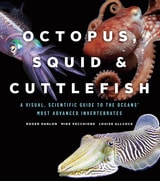
Largely shell-less relatives of clams and snails, the marine mollusks in the class Cephalopoda—Greek for “head-foot”—are colorful creatures of many-armed dexterity, often inky self-defense, and highly evolved cognition. They are capable of learning, of retaining information—and of rapid decision-making to avoid predators and find prey. They have eyes and senses rivaling those of vertebrates like birds and fishes, they morph texture and body shape, and they change color faster than a chameleon. In short, they captivate us.
From the long-armed mimic octopus—able to imitate the appearance of swimming flounders and soles—to the aptly named flamboyant cuttlefish, whose undulating waves of color rival the graphic displays of any LCD screen, there are more than seven hundred species of cephalopod. Featuring a selection of species profiles, Octopus, Squid, and Cuttlefish reveals the evolution, anatomy, life history, behaviors, and relationships of these spellbinding animals. Their existence proves that intelligence can develop in very different ways: not only are cephalopods unusually large-brained invertebrates, they also carry two-thirds of their neurons in their arms.
A treasure trove of scientific fact and visual explanation, this worldwide illustrated guide to cephalopods offers a comprehensive review of these fascinating and mysterious underwater invertebrates—from the lone hunting of the octopus, to the social squid, and the prismatic skin signaling of the cuttlefish.
Of Maybugs and Men
A History and Philosophy of the Sciences of HomosexualityPieter R. Adriaens and Andreas De Block
University of Chicago Press, 2022
Questions about the naturalness or unnaturalness of homosexuality are as old as the hills, and the answers have often been used to condemn homosexuals, their behaviors, and their relationships. In the past two centuries, a number of sciences have involved themselves in this debate, introducing new vocabularies, theories, arguments, and data, many of which have gradually helped tip the balance toward tolerance and even acceptance. In this book, philosophers Pieter R. Adriaens and Andreas De Block explore the history and philosophy of the gay sciences, revealing how individual and societal values have colored how we think about homosexuality.
The authors unpack the entanglement of facts and values in studies of male homosexuality across the natural and human sciences and consider the extent to which science has mitigated or reinforced homonegative mores. The focus of the book is on homosexuality’s assumed naturalness. Geneticists rephrased naturalness as innateness, claiming that homosexuality is innate—colloquially, that homosexuals are born gay. Zoologists thought it a natural affair, documenting its existence in myriad animal species, from maybugs to men. Evolutionists presented homosexuality as the product of natural selection and speculated about its adaptive value. Finally, psychiatrists, who initially pathologized homosexuality, eventually appealed to its naturalness or innateness to normalize it.
Discussing findings from an array of sciences—comparative zoology, psychiatry, anthropology, evolutionary biology, social psychology, developmental biology, and machine learning—this book is essential reading for anyone interested in what science has to say about homosexuality.
Of Prairie, Woods, and Water
Two Centuries of Chicago Nature WritingEdited by Joel Greenberg
University of Chicago Press, 2008
These writings tell the tale of a land in transition—one with abundant, unique, and incredibly lush flora and fauna, a natural history quite elusive today. Drawing on archives he uncovered while writing his acclaimed A Natural History of the Chicago Region, Greenberg hand-selected these first-person narratives, all written between 1721 and 1959. Not every author is familiar, but every contribution is distinctive. From a pioneer’s hilarious notes on life in the Kankakee marsh to Theodore Drieser’s poignant plea for conservation of the Tippecanoe River to infamous murderer Nathan Leopold’s charming description of a pet robin he kept in prison, the sources included are as diverse as the nature they describe.
Of Problematology
Philosophy, Science, and LanguageMichel Meyer
University of Chicago Press, 1995
For Meyer, philosophy does not solve problems or give answers but instead shows how propositions are related to a whole field of questions that give them meaning. Reason is identified not with answers but with the question-answer process. Meyer pursues this new theory of reason and meaning in a critique of Western philosophy from Socrates, Plato, and Aristotle through Heidegger, Wittgenstein, and Foucault. He provides a detailed analysis of Descartes' notion of radical doubt and demonstrates its implications for the subsequent philosophical tradition that ignored the questioning process while pursuing an unshakable foundation for knowledge. Meyer argues that recent work in rhetoric points toward a theory of radical questioning and claims that the methods of rhetoric and argumentation must be turned back on philosophy itself in order to recover the original significance of metaphysics as the science of ultimate questions.
Of Whales and Dinosaurs
The Story of Singapore's Natural History MuseumKevin Y. L. Tan
National University of Singapore Press, 2015
Of the Plurality of Worlds
A facsimile of the first edition of 1853; plus previously unpublished material excised by the author just before the book went to press; and Whewell's dialogue rebutting his critics, reprinted from the second editionWilliam Whewell
University of Chicago Press, 2001
The publication of Plurality in 1853 ignited a bitter Victorian debate on science and religion. This book reprints the first edition in facsimile, together with a vigorous response to his critics that Whewell added later and new introductory and bibliographic material by noted Darwin scholar Michael Ruse. This edition also includes 84 typeset pages—never before published—that Whewell cut from the original book at the last moment. Showing clearly the theological underpinnings of Whewell's thinking, these chapters also reveal the difficulties facing any Victorian who tried to reconcile traditional Christian thought with the findings of modern science.
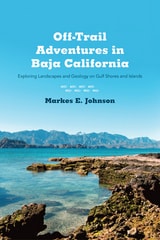
Off-Trail Adventures in Baja California
Exploring Landscapes and Geology on Gulf Shores and IslandsMarkes E. Johnson
University of Arizona Press, 2014
Off-Trail Adventures in Baja California describes—and maps and illustrates—nine hikes along outcrops on islands and peninsular shores where geography, geology, and ecology meet in singular ways. Each spot tells a story about the nature of the place—the cumulative effects of millions of years of natural forces at work. During the course of his long teaching career, Markes E. Johnson has hiked much of Baja California, often with students in tow. He brings a lifetime of study to his simple descriptions of the stories that are revealed by looking closely at natural phenomena framed by rocks and fossils.
This hiking guide offers a wealth of stories that seem to encompass everything, and can clearly communicate Johnson’s deep understanding of how our planet’s ecosystems function. Whether you like to hike with your boots on or from the comfort of your favorite chair, this book is a must-have for anyone who has visited or hopes to visit Baja California’s Gulf Coast.
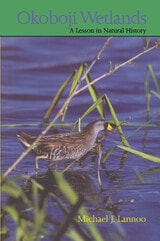
Okoboji Wetlands
A Lesson in Natural HistoryMichael J. Lannoo
University of Iowa Press, 1996
Lake Okoboji in northwest Iowa is the jewel of the Iowa Great Lakes. A region of wetlands formed by prairie potholes, the area is rich with lakes, sloughs, fens, creeks, prairies, and kettleholes. In this readable and beautifully illustrated volume, Michael Lannoo presents an extensive natural history of Okoboji and its cherished wetlands that examines that world of our grandparents, compares it to today's world, and extrapolates to the world of our grandchildren.

On Hysteria
The Invention of a Medical Category between 1670 and 1820Sabine Arnaud
University of Chicago Press, 2015
In On Hysteria, Sabine Arnaud traces the creation and rise of hysteria, from its invention in the eighteenth century through nineteenth-century therapeutic practice. Hysteria took shape, she shows, as a predominantly aristocratic malady, only beginning to cross class boundaries (and be limited to women) during the French Revolution. Unlike most studies of the role and status of medicine and its categories in this period, On Hysteria focuses not on institutions but on narrative strategies and writing—the ways that texts in a wide range of genres helped to build knowledge through misinterpretation and recontextualized citation.
Powerfully interdisciplinary, and offering access to rare historical material for the first time in English, On Hysteria will speak to scholars in a wide range of fields, including the history of science, French studies, and comparative literature.
On Knowing--The Natural Sciences
Richard P. McKeon
University of Chicago Press, 1994
In his lectures, McKeon outlines the entire history of Western thinking on the sciences. Treating the central concepts of motion, space, time, and cause, he traces modern intellectual debates back to the ancient Greeks, notably Plato, Aristotle, Democritus, and the Sophists. As he brings the story of Western science up to the twentieth century, he uses his fabled semantic schema (reproduced here for the first time) to uncover new ideas and observations about cosmology, mechanics, dynamics, and other aspects of physical science.
Illustrating the broad historical sweep of the lectures are a series of discussions which give detail to the course's intellectual framework. These discussions of Plato, Aristotle, Galileo, Newton, and Maxwell are perhaps the first published rendition of a philosopher in literal dialogue with his students. Led by McKeon's pointed questioning, the discussions reveal the difficulties and possibilities of learning to engage in serious intellectual communication.
On Monsters and Marvels
Ambroise Pare
University of Chicago Press, 1983

On Not Dying
Secular Immortality in the Age of TechnoscienceAbou Farman
University of Minnesota Press, 2020
An ethnographic exploration of technoscientific immortality
Immortality has long been considered the domain of religion. But immortality projects have gained increasing legitimacy and power in the world of science and technology. With recent rapid advances in biology, nanotechnology, and artificial intelligence, secular immortalists hope for and work toward a future without death.
On Not Dying is an anthropological, historical, and philosophical exploration of immortality as a secular and scientific category. Based on an ethnography of immortalist communities—those who believe humans can extend their personal existence indefinitely through technological means—and an examination of other institutions involved at the end of life, Abou Farman argues that secular immortalism is an important site to explore the tensions inherent in secularism: how to accept death but extend life; knowing the future is open but your future is finite; that life has meaning but the universe is meaningless. As secularism denies a soul, an afterlife, and a cosmic purpose, conflicts arise around the relationship of mind and body, individual finitude and the infinity of time and the cosmos, and the purpose of life. Immortalism today, Farman argues, is shaped by these historical and culturally situated tensions. Immortalist projects go beyond extending life, confronting dualism and cosmic alienation by imagining (and producing) informatic selves separate from the biological body but connected to a cosmic unfolding.
On Not Dying interrogates the social implications of technoscientific immortalism and raises important political questions. Whose life will be extended? Will these technologies be available to all, or will they reproduce racial and geopolitical hierarchies? As human life on earth is threatened in the Anthropocene, why should life be extended, and what will that prolonged existence look like?
On Petrocultures
Globalization, Culture, and EnergyImre Szeman
West Virginia University Press, 2019
On Petrocultures brings together key essays by Imre Szeman, a leading scholar in the field of energy humanities and a critical voice in debates about globalization and neoliberalism. Szeman’s most important and influential essays, in dialogue with exciting new pieces written for the book, investigate ever-evolving circuits of power in the contemporary world, as manifested in struggles over space and belonging, redefinitions of work and individual autonomy, and the deep links between energy use and climate change.
These essays explore life lived in the twenty-first century by examining critically the vocabulary through which capitalism makes sense of itself, focusing on concepts like the nation, globalization, neoliberalism, creativity, and entrepreneurship. At the heart of the volume is the concept of “petrocultures,” which demands that we understand a fundamental fact of modern life: we are shaped by and through fossil fuels. Szeman argues that we cannot take steps to address global warming without fundamentally changing the social, cultural, and political norms and expectations developed in conjunction with the energy riches of the past century. On Petrocultures maps the significant challenge of our dependence on fossil fuels and probes ways we might begin to leave petrocultures behind.
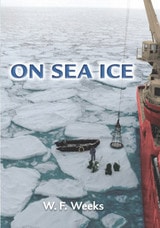
On Sea Ice
W. F. Weeks
University of Alaska Press, 2010
Covering more than seven percent of the earth’s surface, sea ice is crucial to the functioning of the biosphere—and is a key component in our attempts to understand and combat climate change. With On Sea Ice, geophysicist W. F. Weeks delivers a natural history of sea ice, a fully comprehensive and up-to-date account of our knowledge of its creation, change, and function.
The volume begins with the earliest recorded observations of sea ice, from 350 BC, but the majority of its information is drawn from the period after 1950, when detailed study of sea ice became widespread. Weeks delves into both micro-level characteristics—internal structure, component properties, and phase relations—and the macro-level nature of sea ice, such as salinity, growth, and decay. He also explains the mechanics of ice pack drift and the recently observed changes in ice extent and thickness.
An unparalleled account of a natural phenomenon that will be of increasing importance as the earth’s temperature rises, On Sea Ice will unquestionably be the standard for years to come.
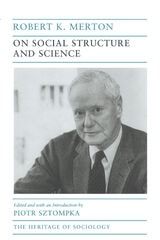
On Social Structure and Science
Robert K. Merton
University of Chicago Press, 1996
This definitive compilation encompasses the breadth and brilliance of his works, from the earliest to the most recent. Merton's foundational writings on social structure and process, on the sociology of science and knowledge, and on the discipline and trajectory of sociology itself are all powerfully represented, as are his autobiographical insights in a fascinating coda. Anchored by Piotr Sztompka's contextualizing introduction, Merton's vast oeuvre emerges as a dynamic and profoundly coherent system of thought, a constant source of vitality and renewal for present and future sociology.
On Sunspots
Galileo Galilei and Christoph Scheiner
University of Chicago Press, 2010
Galileo’s telescopic discoveries, and especially his observation of sunspots, caused great debate in an age when the heavens were thought to be perfect and unchanging. Christoph Scheiner, a Jesuit mathematician, argued that sunspots were planets or moons crossing in front of the Sun. Galileo, on the other hand, countered that the spots were on or near the surface of the Sun itself, and he supported his position with a series of meticulous observations and mathematical demonstrations that eventually convinced even his rival.
On Sunspots collects the correspondence that constituted the public debate, including the first English translation of Scheiner’s two tracts as well as Galileo’s three letters, which have previously appeared only in abridged form. In addition, Albert Van Helden and Eileen Reeves have supplemented the correspondence with lengthy introductions, extensive notes, and a bibliography. The result will become the standard work on the subject, essential for students and historians of astronomy, the telescope, and early modern Catholicism.
On Water
Fluid PerspectivesEdited by Anna-Lisa Dieter
Diaphanes, 2027
Asks what we can learn from water's cycles, its adaptability, and its capacity for connection.
Water is ubiquitous: we drink it, bathe in it, and encounter it as rain, ice, rivers, and oceans. And yet it remains contradictory, both familiar and strange. In the context of climate change, growing cities, and global inequality, it poses a distinct challenge to established practices and ways of thinking. Contributors to this volume frame water as a dynamic element that fosters new scientific perspectives and inventive forms of social negotiation. On Water: Fluid Perspectives brings science, art, and society into conversation, exploring a single element and the many ways of thinking with it. This book accompanies the exhibition On Water—WasserWissen at Humboldt Labor in Berlin while extending its questions and perspectives beyond the show. Visual materials from the exhibition are interwoven with thoughtful essays from Berlin researchers that illuminate water as a compelling subject of inquiry.
On What We Know We Don't Know
Explanation, Theory, Linguistics, and How Questions Shape ThemSylvain Bromberger
University of Chicago Press, 1992
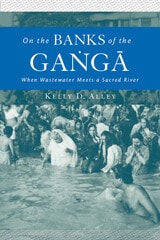
On the Banks of the Ganga
When Wastewater Meets a Sacred RiverKelly D. Alley
University of Michigan Press, 2002
Alley investigates ethno-semantic, discursive, and institutional data to flesh out the interplay between religious, scientific, and official discourses about the river Ganga. Using a new outward layering methodology, she points out that anthropological analysis must separate the historical and discursive strands of the debates concerning waste and sacred purity in order to reveal the cultural complexities that surround the Ganga. Ultimately, she addresses a deeply rooted cultural paradox: if the Ganga river is considered sacred by Hindus across India, then why do the people allow it to become polluted?
Examining areas of contemporary concern such as water usage and urban waste management in the most populated river basin in the world, this book will appeal to anthropologists and readers in religious, environmental, and Asian studies, as well as geography and law.
Kelly D. Alley is Associate Professor and Director of Anthropology at Auburn University. In addition to being a prolific writer, she has conducted research on public culture and environmental issues in northern India for over a decade. Alley is currently overseeing a project to ameliorate river pollution problems in India.
On the Existence of Digital Objects
Yuk Hui
University of Minnesota Press, 2016
Digital objects, in their simplest form, are data. They are also a new kind of industrial object that pervades every aspect of our life today—as online videos, images, text files, e-mails, blog posts, Facebook events.Yet, despite their ubiquity, the nature of digital objects remains unclear.
On the Existence of Digital Objects conducts a philosophical examination of digital objects and their organizing schema by creating a dialogue between Martin Heidegger and Gilbert Simondon, which Yuk Hui contextualizes within the history of computing. How can digital objects be understood according to individualization and individuation? Hui pursues this question through the history of ontology and the study of markup languages and Web ontologies; he investigates the existential structure of digital objects within their systems and milieux. With this relational approach toward digital objects and technical systems, the book addresses alienation, described by Simondon as the consequence of mistakenly viewing technics in opposition to culture.
Interdisciplinary in philosophical and technical insights, with close readings of Husserl, Heidegger, and Simondon as well as the history of computing and the Web, Hui’s work develops an original, productive way of thinking about the data and metadata that increasingly define our world.

On the Forests of Tropical Asia
Lest the Memory FadePeter Ashton
Royal Botanic Gardens, Kew, 2014
On the Forests of Tropical Asia is the first book to describe the forests of the entire tropical Asian region, from Sind to New Guinea. It opens with chapters on physical geography and geological history and then moves on to address forest and tree structure and dynamics, floristics, and symbiotic organisms, as well as genetics, evolutionary history, species diversity, and human impact. A final chapter covers future policy and practice options for saving what remains. Hundreds of full-color illustrations serve as a lasting testimony to the diverse forests. Ashton combines existing research with his own experience and collaborations, creating a broad, comprehensive understanding of forest variation. By presenting a clear picture of where the forests stand today, he offers a framework for future research, policy, and conservation.