279 books match the query 'Slavery' and 3 start with o
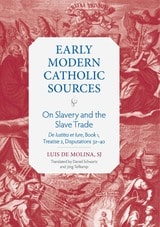
cover of On Slavery and the Slave Trade: <i>De Iustitia et lure</i>, Book 1, Treatise 2, Disputations 32-40

On Slavery and the Slave Trade

<i>De Iustitia et lure</i>, Book 1, Treatise 2, Disputations 32-40

Luis De Molina

Catholic University of America Press, 2023
In his monumental On Justice and Rights, the Jesuit Luis de Molina (1535-1600) discussed the legal and ethical aspects of the Portuguese trade in African and Asian enslaved persons. Molina surveys, develops, and problematizes the criteria necessary for the legitimate possession, sale, and purchase of human freedom. He insists that, even under legally valid slavery, persons who have sold or lost their freedom have inalienable rights as human beings, such as the freedom to make contracts, to marry, and even, under certain circumstances, to sue their owners in court. Molina also devotes attention to the ways in which slavery could be ended and whether and under what circumstances slaves had the right to escape from their owners. Well informed about the political structures and customs of many peoples in Africa, as well as Japan, China, and India, Molina paints a vivid and detailed picture of Portuguese trade. He gives specific accounts of the origins and development of the slave trade, region by region, and of the nature of the relationship between local rulers and the Portuguese kingdom. In doing so, he carefully describes the deception, coercion, and general indifference that pervades this trade regarding the rights to freedom of these people. It also attempts to identify the political, ecclesiastical, and market agents involved in this great injustice and their varying degrees of culpability. While Molina does not condemn slavery as a legal institution, the deeply flawed and even immoral behavior of sellers, buyers, regulators, and political rulers both in Portugal and in the slave-supplying regions that Molina denounces casts a heavy shadow on the morality of the trade.
[more]
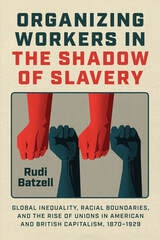
cover of Organizing Workers in the Shadow of Slavery: Global Inequality, Racial Boundaries, and the Rise of Unions in American and British Capitalism, 1870–1929

Organizing Workers in the Shadow of Slavery

Global Inequality, Racial Boundaries, and the Rise of Unions in American and British Capitalism, 1870–1929

Rudi Batzell

University of Chicago Press, 2025

An original analysis of the relationship between slavery and the labor movement in the late-nineteenth and early twentieth centuries.
 
During the rise of the labor movement in the late nineteenth century, why were American workers unable to organize inclusive trade unions like those formed by their counterparts in the United Kingdom? Comparing American and British capitalism in the port cities of Baltimore and Liverpool and the steel cities of Pittsburgh and Sheffield, Rudi Batzell reveals that the answer lies in the legacies of slavery and entrenched structures of racial inequality. Strikebreaking succeeded more often in the United States because landless Black Americans were, out of economic desperation, more likely to become scabs and fracture the class solidarity of any union movement. Batzell shows, in short, how racism was and is deeply connected to class, migration, and capitalism in a global economy marked by slavery and empire. In emphasizing the geography of economic inequality, this book offers new clarity on the late-nineteenth-century successes and failures of working-class formation. More broadly, Organizing Workers in the Shadow of Slavery makes it clear that the pursuit of justice today will require sustained economic reparations for slavery and colonialism.
[more]
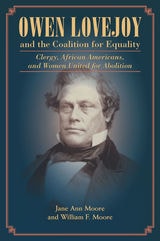
cover of Owen Lovejoy and the Coalition for Equality: Clergy, African Americans, and Women United for Abolition

Owen Lovejoy and the Coalition for Equality

Clergy, African Americans, and Women United for Abolition

Jane Ann Moore and William F. Moore

University of Illinois Press, 2019

Antislavery white clergy and their congregations. Radicalized abolitionist women. African Americans committed to ending slavery through constitutional political action. These diverse groups attributed their common vision of a nation free from slavery to strong political and religious values. Owen Lovejoy’s gregarious personality, formidable oratorical talent, probing political analysis, and profound religious convictions made him the powerful leader the coalition needed.

Owen Lovejoy and the Coalition for Equality examines how these three distinct groups merged their agendas into a single antislavery, religious, political campaign for equality with Lovejoy at the helm. Combining scholarly biography, historiography, and primary source material, Jane Ann Moore and William F. Moore demonstrate Lovejoy's crucial role in nineteenth-century politics, the rise of antislavery sentiment in religious spaces, and the emerging congressional commitment to end slavery. Their compelling account explores how the immorality of slavery became a touchstone of political and religious action in the United States through the efforts of a synergetic coalition led by an essential abolitionist figure.

[more]