Results by title
82 books match the query 'Tourism' and 2 start with o
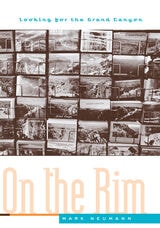
On The Rim
Looking for the Grand CanyonMark Neumann
University of Minnesota Press, 2001
Why do nearly five million people travel to the Grand Canyon each year? Mark Neumann answers this question with a book as compelling as the panoramic vistas of the canyon. In On the Rim, he describes how the Grand Canyon became an internationally renowned tourist attraction and cultural icon, and delves into the meanings the place holds for the individuals who live, work, and travel there.
Weaving history, ethnography, documentary photography, and autobiography, Neumann exposes the roots—the personal and social dimensions—of America’s pursuit of leisure. He shows how people visiting the Grand Canyon create their own experiences, even while they are affected by one hundred years of social history and cultural expectations. On the Rim examines the lines between progress and nostalgia, science and spirituality, nature and culture, authenticity and mass production, and work and leisure—all of which crisscross the tourist experience.
To support his argument, Neumann uses evidence from tourist registers and Park Service records, first-person narratives, interviews, and scenes from television shows, Hollywood movies, and popular novels. Heavily illustrated with historical and contemporary photographs, the narrative shifts back and forth between early descriptions of the canyon and modern tourist stories, the past illuminating the present at every step.
From Albert Einstein’s visit and the hunt for the fugitive Danny Horning to the everyday experiences of local Native Americans, park rangers, and vacationing families, Neumann reminds us that every trip to the Grand Canyon is a complex journey, fueled by shared expectations but always open to the possibility of surprise. On the Rim is a multilayered, nuanced study of the place and its many visitors.
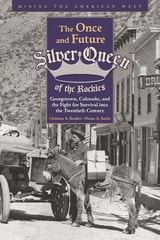
Once and Future Silver Queen of the Rockies
Georgetown, Colorado, and the Fight for Survival into the Twentieth CenturyChristine Bradley
University Press of Colorado, 2018
There are many studies of local communities during their heydays, but the life of a community in decline is rarely studied. The Once and Future Silver Queen of the Rockies delves into the life of Georgetown, Colorado, after the turn of the twentieth century as mining in Clear Creek County steadily declined and ultimately collapsed.
One of the earliest mining communities in the state, Georgetown began to struggle for survival as the nineteenth century drew to a close. The price of silver dropped precipitously while other mining camps were still opening around the region. The new, bright future once envisioned for the “Silver Queen of the Rockies” began to fade. Yet the community managed to survive and re-create itself in the new world of the twentieth century. Tourism, skiing, and historic preservation replaced mineral extraction as the basis of the regional economy. Today, Georgetown maintains the aesthetic feel of a nineteenth-century mining town and stands as an example of community-supported historic preservation.
This richly illustrated sequel to The Rise of the Silver Queen tells the compelling story of Georgetown’s survival, and ultimate flourishing, after the loss of its principal industry. It is an interesting and engaging addition to the history of Colorado and the West.