Results by title
991 books match the query 'Writing' and 25 start with o
Of Two Minds
Hypertext Pedagogy and PoeticsMichael Joyce
University of Michigan Press, 1996
Old China Through the Eyes of a Storyteller
Julie Moss Herrera
Parkhurst Brothers, Inc., 2012
“Having traveled on the same People to People Ambassador journey to China with Julie, I have seen Julie's anthology from inception to fruition. It is a masterful, engaging, informative and scholarly addition to our understanding and appreciation of Chinese culture, particularly storytelling and folk traditions, from ancient days to today. Practicing storytellers will especially appreciate her tips for telling and context clues at the end of each story.”
--Judith Heineman, storyteller, producer and Illinois Humanities Road Scholar
On Boredom
Essays in Art and WritingEdited by Rye Dag Holmboe and Susan Morris
University College London, 2021
What do we mean when we say that we are bored? Contributors to this volume, which include artists, art historians, psychoanalysts, and a novelist, examine boredom in its manifold and uncertain reality. Each part of the book takes up a crucial moment in the history of boredom and presents it in a new light, taking the reader from the trials of the consulting room to the experience of hysteria in the nineteenth century. The book pays particular attention to boredom’s relationship with the sudden and rapid advances in technology that have occurred in recent decades, specifically technologies of communication, surveillance, and automation. On Boredom is idiosyncratic for its combination of image and text, and the artworks included in its pages—featuring Mathew Hale, Martin Creed, and Susan Morris—help turn this volume into a material expression of boredom itself. It will appeal to readers in the fields of art history, literature, cultural studies, and visual culture.
On Location
Theory and Practice in Classroom-Based Writing Tutoringedited by Candace Spigelman & Laurie Grobman
Utah State University Press, 2005
Classroom-based writing tutoring is a distinct form of writing support, a hybrid instructional method that engages multiple voices and texts within the college classroom. Tutors work on location in the thick of writing instruction and writing activity.
On Location is the first volume to discuss this emerging practice in a methodical way. The essays in this collection integrate theory and practice to highlight the alliances and connections on-location tutoring offers while suggesting strategies for resolving its conflicts. Contributors examine classroom-based tutoring programs located in composition courses as well as in writing intensive courses across the disciplines.

On Repetition
Writing, Performance and ArtEdited by Eirini Kartsaki
Intellect Books, 2016
On Revision
The Only Writing That CountsWilliam Germano
University of Chicago Press, 2021
So you’ve just finished writing something? Congratulations! Now revise it. Because revision is about getting from good to better, and it’s only finished when you decide to stop. But where to begin? In On Revision, William Germano shows authors how to take on the most critical stage of writing anything: rewriting it.
For more than twenty years, thousands of writers have turned to Germano for his insider’s take on navigating the world of publishing. A professor, author, and veteran of the book industry, Germano knows what editors want and what writers need to know: Revising is not just correcting typos. Revising is about listening and seeing again. Revising is a rethinking of the principles from the ground up to understand why the writer is doing something, why they’re going somewhere, and why they’re taking the reader along with them.
On Revision steps back to take in the big picture, showing authors how to hear their own writing voice and how to reread their work as if they didn’t write it. On Revision will show you how to know when your writing is actually done—and, until it is, what you need to do to get it there.
On Teacher Neutrality
Politics, Praxis, and PerformativityDaniel P. Richards
Utah State University Press, 2020
Higher education itself and its stakeholders are continually exploring the role of teachers in the classroom and the extent to which it is possible or ethical to engage in neutrality. Amplifying voices from teachers in underrepresented positions and institutions in discussions of teacher ideology, On Teacher Neutrality shapes the discourse around these topics both within the writing classroom and throughout higher education. The book offers a rich array of practices, pedagogies, and theories that will help ground instructors and posits a way forward toward better dialogue and connections with the various stakeholders of higher education in the United States.
Contributors:
Tristan Abbott, Kelly Blewett, Meaghan Brewer, Christopher Michael Brown, Chad Chisholm, Jessica Clements, Jason C. Evans, Heather Fester, Romeo García, Yndalecio Isaac Hinojosa, Mara Holt, Erika Johnson, Tawny LeBouef Tullia, Lauren F. Lichty, Adam Pacton, Daniel P. Richards, Patricia Roberts-Miller, Karen Rosenberg, Allison L. Rowland, Robert Samuels, David P. Stubblefield, Jennifer Thomas, John Trimbur
On Visual Rhetoric
Christa J. Olson and Brandee Easter
University of Michigan Press, 2026
On War and Writing
Samuel Hynes
University of Chicago Press, 2018
Samuel Hynes knows war personally: he served as a Marine Corps pilot in the Pacific Theater during World War II, receiving the Distinguished Flying Cross. He has spent his life balancing two careers: pilot and professor of literature. Hynes has written a number of major works of literary criticism, as well as a war-memoir, Flights of Passage, and several books about the World Wars. His writing is sharp, lucid, and has provided some of the most expert, detailed, and empathetic accounts of a disappearing generation of fighters and writers.
On War and Writing offers for the first time a selection of Hynes’s essays and introductions that explore the traditions of war writing from the twentieth century to the present. Hynes takes as a given that war itself—the battlefield uproar of actual combat—is unimaginable for those who weren’t there, yet we have never been able to turn away from it. We want to know what war is really like: for a soldier on the Somme; a submariner in the Pacific; a bomber pilot over Germany; a tank commander in the Libyan desert. To learn, we turn again and again to the memories of those who were there, and to the imaginations of those who weren’t, but are poets, or filmmakers, or painters, who give us a sense of these experiences that we can’t possibly know.
The essays in this book range from the personal (Hynes’s experience working with documentary master Ken Burns, his recollections of his own days as a combat pilot) to the critical (explorations of the works of writers and artists such as Thomas Hardy, E. E. Cummings, and Cecil Day-Lewis). What we ultimately see in On War and Writing is not military history, not the plans of generals, but the feelings of war, as young men expressed them in journals and poems, and old men remembered them in later years—men like Samuel Hynes.
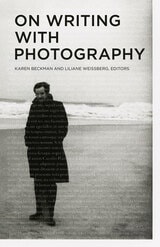
On Writing with Photography
Karen Beckman
University of Minnesota Press, 2013
From James Agee to W. G. Sebald, there has been an explosion of modern documentary narratives and fiction combining text and photography in complex and fascinating ways. However, these contemporary experiments are part of a tradition that stretches back to the early years of photography. Writers have been integrating photographs into their work for as long as photographs have existed, producing rich, multilayered creations; and photographers have always made images that incorporate, respond to, or function as writing. On Writing with Photography explores what happens to texts—and images—when they are brought together.
From the mid-nineteenth century to the present, this collection addresses a wide range of genres and media, including graphic novels, children’s books, photo-essays, films, diaries, newspapers, and art installations. Examining the works of Herman Melville, Don DeLillo, Claude McKay, Man Ray, Dare Wright, Guy Debord, Zhang Ailing, and Roland Barthes, among others, the essays trace the relationship between photographs and “reality” and describe the imaginary worlds constructed by both, discussing how this production can turn into testimony of personal and collective history, memory and trauma, gender and sexuality, and ethnicity.
Together, these essays help explain how writers and photographers—past and present—have served as powerful creative resources for each other.
Contributors: Stuart Burrows, Brown U; Roderick Coover, Temple U; Adrian Daub, Stanford U; Marcy J. Dinius, DePaul U; Marianne Hirsch, Columbia U; Daniel H. Magilow, U of Tennessee, Knoxville; Janine Mileaf; Tyrus Miller, U of California, Santa Cruz; Leah Rosenberg, U of Florida; Xiaojue Wang, U of Pennsylvania.
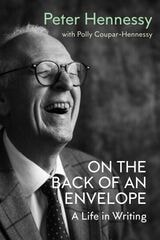
On the Back of an Envelope
A Life in WritingPeter Hennessy
Haus Publishing, 2025
As one of Britain’s foremost constitutional experts and contemporary historians, Peter Hennessy has spent his professional life unpicking the arcane world of Whitehall and Westminster. He began his career as a journalist for the Times, the Economist, and the Financial Times, developing a network of insider contacts who helped him shine a light on some of the dustiest corners of the British establishment. As a journalist, prize-winning contemporary historian, and political commentator, he has chronicled the workings of the British state with wit, affection, and a healthy sense of the absurd over a five-decade career. Now a crossbench peer, he has, in his own words, “moved in with his exhibits.” Hennessy is also a stalwart of BBC election night coverage and a regular commentator on BBC Radio 4, bringing a historical and constitutional perspective on current events.
In this new volume, he brings together selected journalism, unpublished lectures, and new writing alongside personal recollections and reflections on his time observing postwar Britain, how it is governed, and those who do the governing. He reflects on the making and unmaking of prime ministers from Attlee to Truss, life in the House of Lords, and the changing constitutional landscape in the wake of Brexit and amid uncertainty about the future of the Union. Interspersed with lectures, journalism, and new pieces, Hennessy also looks back at a fascinating career, reflecting on his own experiences as a young green graduate navigating the hard-nosed world of Fleet Street in the 1970s, bringing to life a cast of characters from a world now largely gone. He revisits his time as a public historian, academic, and crossbench peer with a levity reflected in his belief that history is “gossip with footnotes.”
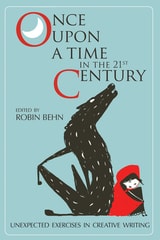
Once Upon a Time in the Twenty-First Century
Unexpected Exercises in Creative WritingEdited by Robin Behn
University of Alabama Press, 2020
Inspiring writers through creativity, experimentation, and unexpected discovery.
Once Upon a Time in the Twenty-First Century: Unexpected Exercises in Creative Writing is a unique creative writing text that will appeal to a wide range of readers and writers—from grade nine through college and beyond. Successful creative writers from numerous genres constructed these exercises, including poetry, fiction, and creative nonfiction to one-act plays, song lyrics, genre fiction, travel guides, comics and beyond. The exercises use a broad range of creative approaches, aesthetics, and voices, all with an emphasis on demystifying the writing process and having fun.
Editor Robin Behn has divided the book into three writing sections: Genres and Forms, Sources and Methods, and Style and Subject. In each section, Behn offers a brief introduction which explains how to get started and specific ways to develop one’s writing. Each introduction is followed by extensive exercises that draw on literature from classic to contemporary, as well as other art forms and popular culture. Examples range from Flannery O’Connor and Langston Hughes to Allen Ginsberg and Gertrude Stein, from Jamaica Kincaid and James Joyce to Arlo Guthrie and Harryette Mullen. Integrated within the exercises are apt examples of student writings that have emerged from actual use of the exercises in both the classroom and in writing groups. The book concludes with general advice and direction on how to get published.
Based on years of hands-on experiences in the teaching of creative writing in high schools, colleges, and after-school writing clubs, this volume of exercises offers inestimable value to students and teachers in the traditional classroom, as well as a growing number of homeschoolers, those who are part of a writing club or group, and independent writers and learners of all ages.
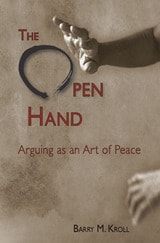
Open Hand
Arguing as an Art of PeaceBarry M. Kroll
Utah State University Press, 2013
Kroll cultivates a bodily investigation of noncombative argument, offering direct pedagogical strategies anchored in three modalities of learning—conceptual-procedural, kinesthetic, and contemplative—and projects, activities, assignments, informal responses, and final papers for students. Kinesthetic exercises derived from martial arts and contemplative meditation and mindfulness practices are key to the approach, with Kroll specifically using movement as a physical analogy for tactics of arguing.
Collaboration, mediation, and empathy are important yet overlooked values in communicative exchange. This practical, engaging, and accessible guide for teachers contains clear examples and compelling discussions of pedagogical strategies that teach students not only how to write persuasively but also how to deal with personal conflict in their daily lives.
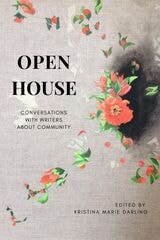
Open House
Essays on Community in Literary ArtsEdited by Kristina Marie Darling
Tupelo Press, 2025
This book offers a practical guide to building community, fostering collaboration, and inspiring generosity through the creative arts. This collection of original essays features an accomplished roster of contributors with backgrounds in diverse fields, including literary translation, magazine editing, publishing, higher education, and curriculum design. By featuring successful writers who represent such a wide range of skillsets and career paths, this book helps students envision themselves as leaders in the university and well beyond its boundaries.
In a cultural moment where graduates often seek meaningful careers outside of academia, this essay collection also offers an introduction to alt-ac career paths and the unique opportunities for effecting social change in these roles. Focusing on techniques that have broad applications for high school teachers, nonprofit leaders, community outreach organizations, and college classrooms, each chapter includes an original essay from a contemporary writer, editor, or nonprofit leader in the arts, culminating in a set of exercises for individuals and groups, which focus on empathy, citizenship, and community stewardship.
Contributors include Traci Brimhall, Chris Campanioni, Wendy Chen, Kristina Marie Darling, Ming Lauren Holden, John James, Dean Rader, and Zach Savich.
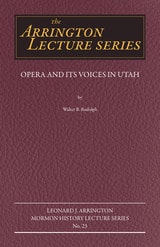
Opera and its Voices in Utah
Walter Rudolph
Utah State University Press, 2018
The Arrington Lecture series, established by one of the twentieth-century West's most distinguished historians, Leonard Arrington, has become a leading forum for prominent historians to address topics related to Mormon history. Utah State University hosts the Leonard J. Arrington Mormon History Lecture Series through the Merrill-Cazier Library Special Collections and Archives department.
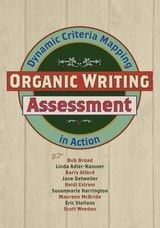
Organic Writing Assessment
Dynamic Criteria Mapping in ActionBob Broad, Linda Adler-Kassner, Barry Alford, Jane Detweiler, Heidi Estrem, Susanmarie Harrington, Maureen McBride, Eric Stalions, and Scott Weeden
Utah State University Press, 2009
For the authors of Organic Writing Assessment, the DCM experience provided not only an authentic assessment of their own programs, but a nuanced language through which they can converse in the always vexing, potentially divisive realm of assessment theory and practice. Of equal interest are the adaptations these writers invented for Broad’s original process, to make DCM even more responsive to local needs and exigencies.
Organic Writing Assessment represents an important step in the evolution of writing assessment in higher education. This volume documents the second generation of an assessment model that is regarded as scrupulously consistent with current theory; it shows DCM’s flexibility, and presents an informed discussion of its limits and its potentials.
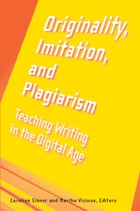
Originality, Imitation, and Plagiarism
Teaching Writing in the Digital AgeCaroline Eisner and Martha Vicinus, Editors
University of Michigan Press, 2008
"At long last, a discussion of plagiarism that doesn't stop at 'Don't do it or else,' but does full justice to the intellectual interest of the topic!"
---Gerald Graff, author of Clueless in Academe and 2008 President, Modern Language Association
This collection is a timely intervention in national debates about what constitutes original or plagiarized writing in the digital age. Somewhat ironically, the Internet makes it both easier to copy and easier to detect copying. The essays in this volume explore the complex issues of originality, imitation, and plagiarism, particularly as they concern students, scholars, professional writers, and readers, while also addressing a range of related issues, including copyright conventions and the ownership of original work, the appropriate dissemination of innovative ideas, and the authority and role of the writer/author. Throughout these essays, the contributors grapple with their desire to encourage and maintain free access to copyrighted material for noncommercial purposes while also respecting the reasonable desires of authors to maintain control over their own work.
Both novice and experienced teachers of writing will learn from the contributors' practical suggestions about how to fashion unique assignments, teach about proper attribution, and increase students' involvement in their own writing. This is an anthology for anyone interested in how scholars and students can navigate the sea of intellectual information that characterizes the digital/information age.
"Eisner and Vicinus have put together an impressive cast of contributors who cut through the war on plagiarism to examine key specificities that often get blurred by the rhetoric of slogans. It will be required reading not only for those concerned with plagiarism, but for the many more who think about what it means to be an author, a student, a scientist, or anyone who negotiates and renegotiates the meaning of originality and imitation in collaborative and information-intensive settings."
---Mario Biagioli, Professor of the History of Science, Harvard University, and coeditor of Scientific Authorship: Credit and Intellectual Property in Science
"This is an important collection that addresses issues of great significance to teachers, to students, and to scholars across several disciplines. . . . These essays tackle their topics head-on in ways that are both accessible and provocative."
---Andrea Lunsford, Louise Hewlett Nixon Professor of English, Claude and Louise Rosenberg Jr. Fellow, and Director of the Program in Writing and Rhetoric at Stanford University and coauthor of Singular Texts/Plural Authors: Perspectives on Collaborative Writing
digitalculturebooks is an imprint of the University of Michigan Press and the Scholarly Publishing Office of the University of Michigan Library dedicated to publishing innovative and accessible work exploring new media and their impact on society, culture, and scholarly communication. Visit the website at www.digitalculture.org.
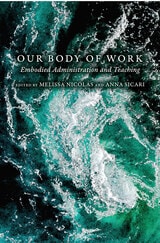
Our Body of Work
Embodied Administration and Teachingedited by Melissa Nicolas & Anna Sicari
Utah State University Press, 2022
Open exchanges enable complex and nuanced conversations about intersectionality and how racism, sexism, classism, and ableism (among other “isms”) create systems of power. Contributors examine how these conversations are framed around work, practices, policies, and research and identify ways to create inclusive, embodied practices in writing programs and classrooms. The collection is organized to maximize representation in the areas of race, gender, identity, ability, and class by featuring scholarly chapters followed by narratively focused interchapters that respond to and engage with the scholarly work.
The honest and emotionally powerful stories in Our Body of Work expose problematic and normalizing policies, practices, and procedures and offer diverse theories and methodologies that provide multiple paths for individuals to follow to make the academy more inclusive and welcoming for all bodies. It will be an important resource for researchers, as well a valuable addition to graduate and undergraduate syllabi on embodiment, writing instruction/pedagogy, and WPA work.
Contributors: Dena Arendall, Janel Atlas, Hayat Bedaiwi, Elizabeth Boquet, Lauren Brentnell, Triauna Carey, Denise Comer, Joshua Daniel, Michael Faris, Rebecca Gerdes-McClain, Morgan Gross, Nabila Hijazi, Jacquelyn Hoermann-Elliott, Maureen Johnson, Jasmine Kar Tang, Elitza Kotzeva, Michelle LaFrance, Jasmine Lee, Lynn C. Lewis, Mary Lourdes Silva, Rita Malenczyk, Anna Rita Napoleone, Julie Prebel, Rebecca Rodriguez Carey, Ryan Skinnell, Trixie Smith, Stacey Waite, Kelsey Walker, Shannon Walters, Isaac Wang, Jennie Young
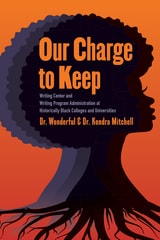
Our Charge to Keep
Writing Center and Writing Program Administration at Historically Black Colleges and UniversitiesWonderful Faison
Utah State University Press, 2026
The first book to explore writing center (WC) and writing program (WP) administration in HBCUs, Our Charge to Keep nuances ideas of ethical tutoring, explores Black college students’ beliefs about using Black Language in academic writing, provides new theories about tutoring, and gives insights into infrastructure and challenges facing WC and WP administrators in HBCU settings.
Many writing center directors have taken up the challenge to interrogate the impact of systemic racism on writing center theory, research, pedagogy, praxes, and daily operations, but the focus has largely been on predominantly white institutions (PWIs). As a result, writing center theory and research has unintentionally excluded the practices of everyday HBCU writing centers—their pedagogies, praxes, theories, and research. This edited volume rectifies this marginality by centering the epistemologies, practices, and wisdom of HBCU writing administrators, theorists, and practitioners. Chapters examine antiracist pedagogy, first-year writing challenges, the role of the larger HBCU community, and more.
Our Charge to Keep is a collection of writings that ultimately demystifies the administration of HBCU writing centers and inspires critical curiosity about them. Dr. Wonderful and Kendra Mitchell frame and showcase the resilience of HBCU writing center directors in combating the residual impact of systemic oppression and point the way forward for PWIs to shift toward new HBCU-centered perspectives on how to institute true antiracist policies and initiatives.
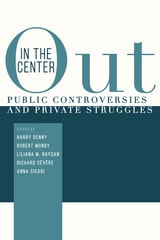
Out in the Center
Public Controversies and Private StrugglesHarry C. Denny
Utah State University Press, 2018
A diverse group of contributors interweaves personal experience with writing center theory and critical race theory, as well as theories on the politics and performance of identity. In doing so, Out in the Center extends upon the writing center corpus to disrupt and reimagine conventional approaches to writing center theory and practice. Out in the Center proposes that practitioners benefit from engaging in dialogue about identity to better navigate writing center work—work that informs the local and carries forth a social and cultural impact that stretches well beyond academic institutions.
Contributors:
Allia Abdullah-Matta, Nancy Alvarez, Hadi Banat, Tammy S. Conard-Salvo, Michele Eodice, Rochell Isaac, Sami Korgan, Ella Leviyeva, Alexandria Lockett, Talisha Haltiwanger Morrison, Anna Rita Napoleone, Beth A. Towle, Elizabeth Weaver, Tim Zmudka
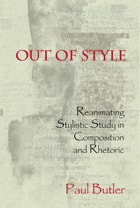
Out of Style
Reanimating Stylistic Study in Composition and RhetoricPaul G. Butler
Utah State University Press, 2008
Scholars in composition know that the ideas about writing most common in the discourse of public intellectuals are egregiously backward. Without a vital approach to stylistics, Butler argues, writing studies will never dislodge the controlling fantasies of self-authorized pundits in the nation’s intellectual press. Rhetoric and composition must answer with a public discourse that is responsive to readers’ ongoing interest in style but is also grounded in composition theory.
Outcomes Book
Debate and Consensus after the WPA Outcomes Statementedited by Susanmarie Harrington, Keith Rhodes, Ruth Fischer, & Rita Malenczyk
Utah State University Press, 2005
The WPA Outcomes Statement is important because it represents a working consensus among composition scholars about what college students should learn and do in a composition program. But as a single-page document, the statement cannot convey the kind of reflective process that a writing program must undertake to address the learning outcomes described.
The Outcomes Book relates the fuller process by exploring the matrix of concerns that surrounded the developing Statement itself, and by presenting the experience of many who have since employed it in their own settings.
Outcomes of Engaged Education
From Transfer to TransformationLinda Flower
University Press of Colorado, 2025
Outsiders Within
Writing on Transracial AdoptionJane Jeong Trenka
University of Minnesota Press, 2020
Confronting trauma behind the transnational adoption system—now back in print
Many adoptees are required to become people that they were never meant to be. While transracial adoption tends to be considered benevolent, it often exacts a heavy emotional, cultural, and economic toll on those who directly experience it. Outsiders Within is a landmark publication that carefully explores this most intimate aspect of globalization through essays, fiction, poetry, and art. Moving beyond personal narrative, transracially adopted writers from around the world tackle difficult questions about how to survive the racist and ethnocentric worlds they inhabit, what connects the countries relinquishing their children to the countries importing them, why poor families of color have their children removed rather than supported—about who, ultimately, they are. In their inquiry, the contributors unseat conventional understandings of adoption politics, reframing the controversy as a debate that encompasses human rights, peace, and reproductive justice.
Contributors: Heidi Lynn Adelsman; Ellen M. Barry; Laura Briggs, U of Massachusetts, Amherst; Catherine Ceniza Choy, U of California, Berkeley; Gregory Paul Choy, U of California, Berkeley; Rachel Quy Collier; J. A. Dare; Kim Diehl; Kimberly R. Fardy; Laura Gannarelli; Shannon Gibney; Mark Hagland; Perlita Harris; Tobias Hübinette, Stockholm U; Jae Ran Kim; Anh Đào Kolbe; Mihee-Nathalie Lemoine; Beth Kyong Lo; Ron M.; Patrick McDermott, Salem State College, Massachusetts; Tracey Moffatt; Ami Inja Nafzger (aka Jin Inja); Kim Park Nelson; John Raible; Dorothy Roberts, Northwestern U; Raquel Evita Saraswati; Kirsten Hoo-Mi Sloth; Soo Na; Shandra Spears; Heidi Kiiwetinepinesiik Stark; Kekek Jason Todd Stark; Sunny Jo; Sandra White Hawk; Indigo Williams Willing; Bryan Thao Worra; Jeni C. Wright.
Oyvind Fahlstrom
The Art of WritingSergio Bessa
Northwestern University Press, 2008
Fahlstrom (1928-76) created a body of work as profoundly political as it is aesthetic, spanning two tumultuous decades in the avant-garde and comprising concrete poetry, manifestos, plays, performance, filmmaking, paintings, multiple prints, sculpture, and installations. Bessa focuses on how Fahlstrom's early experiments with concrete poetry influenced his later works in the visual arts and offers close readings of his seminal work Bord, his painting series Ade-Ledic-Nander, his interactive painting The Planetarium, and his radio play Birds in Sweden.