4531 books match the query 'Cultural & Ethnic Studies' and 66 start with o
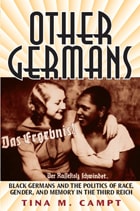
cover of Other Germans: Black Germans and the Politics of Race, Gender, and Memory in the Third Reich

Other Germans

Black Germans and the Politics of Race, Gender, and Memory in the Third Reich

Tina M. Campt

University of Michigan Press, 2005
It's hard to imagine an issue or image more riveting than Black Germans during the Third Reich. Yet accounts of their lives are virtually nonexistent, despite the fact that they lived through a regime dedicated to racial purity.
Tina Campt's Other Germans tells the story of this largely forgotten group of individuals, with important distinctions from other accounts. Most strikingly, Campt centers her arguments on race, rather than anti-semitism. She also provides oral history as background for her study, interviewing two Black Germans for the book.
In the end, the author comes face to face with an inevitable question: Is there a relationship between the history of Black Germans and those of other black communities?
The answers to Campt's questions make Other Germans essential reading in the emerging study of what it meant to be black and German in the context of a society that looked at anyone with non-German blood as racially impure at best.
Tina Campt is Associate Professor of Women's Studies at Duke University.
[more]
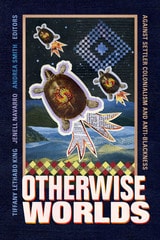
cover of Otherwise Worlds: Against Settler Colonialism and Anti-Blackness

Otherwise Worlds

Against Settler Colonialism and Anti-Blackness

Tiffany Lethabo King, Jenell Navarro, and Andrea Smith, editors

Duke University Press, 2020

The contributors to Otherwise Worlds investigate the complex relationships between settler colonialism and anti-Blackness to explore the political possibilities that emerge from such inquiries. Pointing out that presumptions of solidarity, antagonism, or incommensurability between Black and Native communities are insufficient to understand the relationships between the groups, the volume's scholars, artists, and activists look to articulate new modes of living and organizing in the service of creating new futures. Among other topics, they examine the ontological status of Blackness and Indigeneity, possible forms of relationality between Black and Native communities, perspectives on Black and Indigenous sociality, and freeing the flesh from the constraints of violence and settler colonialism. Throughout the volume's essays, art, and interviews, the contributors carefully attend to alternative kinds of relationships between Black and Native communities that can lead toward liberation. In so doing, they critically point to the importance of Black and Indigenous conversations for formulating otherwise worlds.

Contributors. Maile Arvin, Marcus Briggs-Cloud, J. Kameron Carter, Ashon Crawley, Denise Ferreira da Silva, Chris Finley, Hotvlkuce Harjo, Sandra Harvey, Chad B. Infante, Tiffany Lethabo King, Jenell Navarro, Lindsay Nixon, Kimberly Robertson, Jared Sexton, Andrea Smith, Cedric Sunray, Se’mana Thompson, Frank B. Wilderson

 
[more]
cover of Otium: An Anthropology of Work, Freedom, and Common Ground in the Global Economy

Otium

An Anthropology of Work, Freedom, and Common Ground in the Global Economy

Gregor Dobler

Lever Press, 2026

By constantly seeking higher yields of capital, today’s global economy changes how people around the world relate to time and productivity. Labor demands within the bounds of wage work accelerate, while people outside of wage work often remain marginalized and with too much unproductive time on their hands. In this ethnography of global labor, Gregor Dobler accompanies different groups of people in their attempts to find time autonomy and meaning in their everyday lives. He shows how moments of otium—moments when we feel free from the external constraints of work and capitalist definitions of productivity—can become productive in new ways. Otium leads individuals to new ideas and dreams, and becomes a source for critique and political renewal. Chapters focus on peasant work and unemployment in Northern Namibia; the pitfalls of free time on a Breton island shaped by early retirement; the gendered effects of combining care work and wage work in Swiss middle-class families; and the elasticity of the academic labor of writing and research in the US. Weaving together these ethnographies of work, leisure, and care, Otium presents a political anthropology of the possibilities for human freedom under capitalism, and advances post-work debates from a global perspective.
[more]
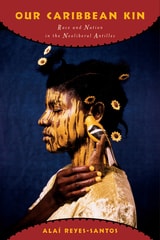
cover of Our Caribbean Kin: Race and Nation in the Neoliberal Antilles

Our Caribbean Kin

Race and Nation in the Neoliberal Antilles

Reyes-Santos, Alaí

Rutgers University Press, 2015

Beset by the forces of European colonialism, US imperialism, and neoliberalism, the people of the Antilles have had good reasons to band together politically and economically, yet not all Dominicans, Haitians, and Puerto Ricans have heeded the calls for collective action. So what has determined whether Antillean solidarity movements fail or succeed? In this comprehensive new study, Alaí Reyes-Santos argues that the crucial factor has been the extent to which Dominicans, Haitians, and Puerto Ricans imagine each other as kin. 

Our Caribbean Kin considers three key moments in the region’s history: the nineteenth century, when the antillanismo movement sought to throw off the yoke of colonial occupation; the 1930s, at the height of the region’s struggles with US imperialism; and the past thirty years, as neoliberal economic and social policies have encroached upon the islands. At each moment, the book demonstrates, specific tropes of brotherhood, marriage, and lineage have been mobilized to construct political kinship among Antilleans, while racist and xenophobic discourses have made it difficult for them to imagine themselves as part of one big family. 
 
Recognizing the wide array of contexts in which Antilleans learn to affirm or deny kinship, Reyes-Santos draws from a vast archive of media, including everything from canonical novels to political tracts, historical newspapers to online forums, sociological texts to local jokes. Along the way, she uncovers the conflicts, secrets, and internal hierarchies that characterize kin relations among Antilleans, but she also discovers how they have used notions of kinship to create cohesion across differences.


[more]
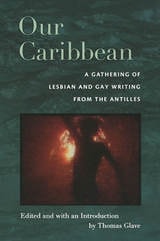
cover of Our Caribbean: A Gathering of Lesbian and Gay Writing from the Antilles

Our Caribbean

A Gathering of Lesbian and Gay Writing from the Antilles

Thomas Glave, ed.

Duke University Press, 2008

The first book of its kind, Our Caribbean is an anthology of lesbian and gay writing from across the Antilles. The author and activist Thomas Glave has gathered outstanding fiction, nonfiction, memoir, and poetry by little-known writers together with selections by internationally celebrated figures such as José Alcántara Almánzar, Reinaldo Arenas, Dionne Brand, Michelle Cliff, Audre Lorde, Achy Obejas, and Assotto Saint. The result is an unprecedented literary conversation on gay, lesbian, bisexual, and transgendered experiences throughout the Caribbean and its far-flung diaspora. Many selections were originally published in Spanish, Dutch, or creole languages; some are translated into English here for the first time.

The thirty-seven authors hail from the Bahamas, Barbados, Cuba, the Dominican Republic, Grenada, Guyana, Haiti, Jamaica, Panama, Puerto Rico, St. Vincent, St. Kitts, Suriname, and Trinidad. Many have lived outside the Caribbean, and their writing depicts histories of voluntary migration as well as exile from repressive governments, communities, and families. Many pieces have a political urgency that reflects their authors’ work as activists, teachers, community organizers, and performers. Desire commingles with ostracism and alienation throughout: in the evocative portrayals of same-sex love and longing, and in the selections addressing religion, family, race, and class. From the poem “Saturday Night in San Juan with the Right Sailors” to the poignant narrative “We Came All the Way from Cuba So You Could Dress Like This?” to an eloquent call for the embrace of difference that appeared in the Nassau Daily Tribune on the eve of an anti-gay protest, Our Caribbean is a brave and necessary book.

Contributors: José Alcántara Almánzar, Aldo Alvarez, Reinaldo Arenas, Rane Arroyo, Jesús J. Barquet, Marilyn Bobes, Dionne Brand, Timothy S. Chin, Michelle Cliff, Wesley E. A. Crichlow,
Mabel Rodríguez Cuesta, Ochy Curiel, Faizal Deen, Pedro de Jesús, R. Erica Doyle, Thomas Glave,
Rosamond S. King, Helen Klonaris, Lawrence La Fountain-Stokes, Audre Lorde, Shani Mootoo,
Anton Nimblett, Achy Obejas, Leonardo Padura Fuentes, Virgilio Piñera, Patricia Powell, Kevin Everod Quashie, Juanita Ramos, Colin Robinson, Assotto Saint, Andrew Salkey, Lawrence Scott,
Makeda Silvera, H. Nigel Thomas, Rinaldo Walcott, Gloria Wekker, Lawson Williams
[more]
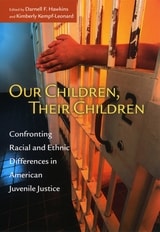
cover of Our Children, Their Children: Confronting Racial and Ethnic Differences in American Juvenile Justice

Our Children, Their Children

Confronting Racial and Ethnic Differences in American Juvenile Justice

Edited by Darnell F. Hawkins and Kimberly Kempf-Leonard

University of Chicago Press, 2005

In Our Children, Their Children, a prominent team of researchers argues that a second-rate and increasingly punitive juvenile justice system is allowed to persist because most people believe it is designed for children in other ethnic and socioeconomic groups. While public opinion, laws, and social policies that convey distinctions between "our children" and "their children" may seem to conflict with the American ideal of blind justice, they are hardly at odds with patterns of group differentiation and inequality that have characterized much of American history.

Our Children, Their Children provides a state-of-the-science examination of racial and ethnic disparities in the American juvenile justice system. Here, contributors document the precise magnitude of these disparities, seek to determine their causes, and propose potential solutions. In addition to race and ethnicity, contributors also look at the effects on juvenile justice of suburban sprawl, the impact of family and neighborhood, bias in postarrest decisions, and mental health issues. Assessing the implications of these differences for public policy initiatives and legal reforms, this volume is the first critical summary of what is known and unknown in this important area of social research.
[more]
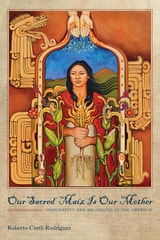
cover of Our Sacred Maíz Is Our Mother: Indigeneity and Belonging in the Americas

Our Sacred Maíz Is Our Mother

Indigeneity and Belonging in the Americas

Roberto Cintli Rodríguez

University of Arizona Press, 2014

“If you want to know who you are and where you come from, follow the maíz.” That was the advice given to author Roberto Cintli Rodriguez when he was investigating the origins and migrations of Mexican peoples in the Four Corners region of the United States.

Follow it he did, and his book Our Sacred Maíz Is Our Mother changes the way we look at Mexican Americans. Not so much peoples created as a result of war or invasion, they are people of the corn, connected through a seven-thousand-year old maíz culture to other Indigenous inhabitants of the continent. Using corn as the framework for discussing broader issues of knowledge production and history of belonging, the author looks at how corn was included in codices and Mayan texts, how it was discussed by elders, and how it is represented in theater and stories as a way of illustrating that Mexicans and Mexican Americans share a common culture.

Rodriguez brings together scholarly and traditional (elder) knowledge about the long history of maíz/corn cultivation and culture, its roots in Mesoamerica, and its living relationship to Indigenous peoples throughout the continent, including Mexicans and Central Americans now living in the United States. The author argues that, given the restrictive immigration policies and popular resentment toward migrants, a continued connection to maíz culture challenges the social exclusion and discrimination that frames migrants as outsiders and gives them a sense of belonging not encapsulated in the idea of citizenship. The “hidden transcripts” of corn in everyday culture—art, song, stories, dance, and cuisine (maíz-based foods like the tortilla)—have nurtured, even across centuries of colonialism, the living maíz culture of ancient knowledge.
 
[more]
cover of Our Sisters' Promised Land: Women, Politics, and Israeli-Palestinian Coexistence

Our Sisters' Promised Land

Women, Politics, and Israeli-Palestinian Coexistence

Ayala Emmett

University of Michigan Press, 2003

In this powerful and timely book, Ayala H. Emmett examines the political roles of women in the Israeli-Palestinian peace process. Emmett's insights come from numerous trips to the region that included in-depth interviews with many of the participants. Excerpts from the interviews give voice to the women who played vitally important yet often overlooked roles in the political transformations of the contemporary Middle East. Emmett's observations on women's actions in political venues have global implications, transcending the specific political and social contexts of the region and shedding light on both the strengths of female activism and the resistances of male political institutions.
Emmett investigates the successes and failures of women in the Israeli political landscape, particularly the harassment experienced during the leadership of Right and ultra-Right groups before the ascension to office of the late Prime Minister Yitzhak Rabin. Her account of women's activism in Israel provides a rich backdrop for viewing the compelling events that have taken place in the Middle East throughout the 1990s and offer insights into the future of women's political activism, both in the ever-changing Israeli political climate and in the broader world of women in politics.
"Brilliant in conception and theory, based on superb fieldwork, and clearly written for both specialist and non-specialist reader." --Maurie Sacks, Montclair State University
"A groundbreaking study. . . .Ayala Emmett brings an unusual voice of clarity into the muddled politics of the Middle East. Where most studies ignore or marginalize women's role in the peace process, Emmett highlights women as political actors and shows their capacity to bridge the chasm between two hostile peoples." --Cynthia Saltzman, Rutgers University, Camden
Ayala Emmett is Associate Professor of Anthropology, University of Rochester.
[more]
cover of Our Southern Accents: Asian American Voices in the U.S. South

Our Southern Accents

Asian American Voices in the U.S. South

Thao Le-Thanh Ha

Rutgers University Press, 2027

This powerful anthology centers Asian American, Native Hawaiian, and Pacific Islander communities in the U.S. South, tracing their histories, struggles, and cultural impact. From early settlements to present day challenges, it reimagines the South through stories of resilience, identity, and belonging that have long been overlooked.

[more]
cover of Our Way to Fight: Peace-Work Under Siege in Israel-Palestine

Our Way to Fight

Peace-Work Under Siege in Israel-Palestine

Michael Riordon

Pluto Press, 2011

This book follows the dangerous lives of peace activists in Israel and Palestine. It explores the crises that stirred them to act, the risks they face, and the small victories that sustain them.

Michael Riordon takes us to thousand year-old olive groves, besieged villages, refugee camps, checkpoints and barracks. In the face of deepening conflict, Our Way to Fight offers courageous grassroots action on both sides of the wall, and points the way to a liveable future.
[more]
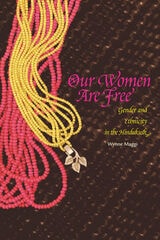
cover of Our Women Are Free: Gender and Ethnicity in the Hindukush

Our Women Are Free

Gender and Ethnicity in the Hindukush

Wynne Maggi

University of Michigan Press, 2001

The Kalasha are a dynamic community of about three thousand people living in three tiny finger valleys near Chitral, Pakistan. A tumultuous history has left them the only remaining practitioners of cultural and religious traditions that once extended across the Hindukush into Afghanistan. The Kalasha differ in many ways from the conservative Muslim communities now surrounding them.
Yet despite their obvious religious differences with nearby communities, when asked what makes the Kalasha unique, both men and women often reply, "Our women are free" (homa istrizia azat asan). The concept that Kalasha women are "free" (azat), that they have "choice" (chit), is a topic of spirited conversation among the Kalasha. It touches at the heart of both individual women's identities and the collective identity of the community.
Our Women are Free introduces the historical and cultural landscape of the Kalasha and describes the role that "women's freedom" plays as an ethnic marker for the entire community. Throughout the narrative, Wynne Maggi stays close to conversations and events that illustrate the daily life of the community, focusing particularly on the Kalasha people's sense of humor; on the pleasure they take in work, children, ritual, and relationships; as well as on the complexity and seriousness of their social lives.
Accessible and thought-provoking, Our Women are Free will be of interest to professional anthropologists, area scholars, and other social scientists.
Wynne Maggi teaches anthropology and women's studies at the University of Colorado.
[more]
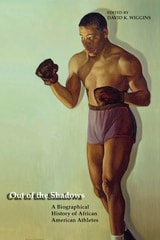
cover of Out of the Shadows: A Biographical History of African American Athletes

Out of the Shadows

A Biographical History of African American Athletes

David K. Wiggins

University of Arkansas Press, 2008

The original essays in this comprehensive collection examine the lives and sports of famous and not-so-famous African American male and female athletes from the nineteenth century to today. Here are twenty insightful biographies that furnish perspectives on the changing status of these athletes and how these changes mirrored the transformation of sports, American society, and civil rights legislation. Some of the athletes discussed include Marshall Taylor (bicycling), William Henry Lewis (football), Jack Johnson, Satchel Paige, Jesse Owens, Joe Lewis, Alice Coachman (track and field), Althea Gibson (tennis), Wilma Rudolph, Bill Russell, Jim Brown, Arthur Ashe, Michael Jordan, Tiger Woods, and Venus and Serena Williams.
[more]
cover of Outside the Paint: When Basketball Ruled at the Chinese Playground

Outside the Paint

When Basketball Ruled at the Chinese Playground

Kathleen S. Yep

Temple University Press, 2009

Outside the Paint takes readers back to the Chinese Playground of San Francisco in the 1930s and 1940s, the only public outdoor space in Chinatown. It was a place where young Chinese American men and women developed a new approach to the game of basketbal—with fast breaks, intricate passing and aggressive defense—that was ahead of its time.

Drawing on interviews with players and coaches, Kathleen Yep recounts some surprising stories. From the success of the Hong Wah Kues, a professional barnstorming men's basketball team and the Mei Wahs, a championship women’s amateur team, to Woo Wong, the first Chinese athlete to play in Madison Square Garden, and his extraordinarily talented sister Helen Wong, who is compared to Babe Didrikson.

Outside the Paint chronicles the efforts of these highly accomplished athletes who developed a unique playing style that capitalized on their physical attributes, challenged the prevailing racial hierarchy, and enabled them, for a time, to leave the confines of their segregated world. As they learned to dribble, shoot, and steal, they made basketball a source of individual achievement and Chinese American community pride.
[more]
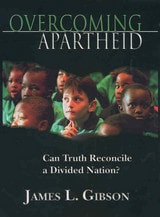
cover of Overcoming Apartheid: Can Truth Reconcile a Divided Nation?

Overcoming Apartheid

Can Truth Reconcile a Divided Nation?

James L. Gibson

Russell Sage Foundation, 2004

Perhaps no country in history has so directly and thoroughly confronted its past in an effort to shape its future as has South Africa. Working from the belief that understanding the past will help build a more peaceful and democratic future, South Africa has made a concerted, institutionalized effort to come to grips with its history of apartheid through its Truth and Reconciliation Commission. In Overcoming Apartheid, James L. Gibson provides the first systematic assessment of whether South Africa's truth and reconciliation process has been successful. Has the process allowed South Africa to let go of its painful past and move on? Or has it exacerbated racial tensions by revisiting painful human rights violations and granting amnesty to their perpetrators? Overcoming Apartheid reports on the largest and most comprehensive study of post-apartheid attitudes in South Africa to date, involving a representative sample of all major racial, ethnic, and linguistic groups. Grounding his analysis of truth in theories of collective memory, Gibson discovers that the process has been most successful in creating a common understanding of the nature of apartheid. His analysis then demonstrates how this common understanding is helping to foster reconciliation, as defined by the acceptance of basic principles of human rights and political tolerance, rejection of racial prejudice, and acceptance of the institutions of a new political order. Gibson identifies key elements in the process—such as acknowledging shared responsibility for atrocities of the past—that are essential if reconciliation is to move forward. He concludes that without the truth and reconciliation process, the prospects for a reconciled, democratic South Africa would diminish considerably. Gibson also speculates about whether the South African experience provides any lessons for other countries around the globe trying to overcome their repressive pasts. A groundbreaking work of social science research, Overcoming Apartheid is also a primer for utilizing innovative conceptual and methodological tools in analyzing truth processes throughout the world. It is sure to be a valuable resource for political scientists, social scientists, group relations theorists, and students of transitional justice and human rights.
[more]
cover of Ozu and the Ethics of Indeterminacy

Ozu and the Ethics of Indeterminacy

Daisuke Miyao

Duke University Press, 2026

Ozu and the Ethics of Indeterminacy re-examines cinema studies through the work of Japanese filmmaker Yasujirō Ozu, employing the multiple methodologies and indeterminacy of Ozu’s films as a model for discussions of cinema’s relationship to the world and the formation of film studies as a discipline. Centering a selection of Ozu films in each chapter, Daisuke Miyao builds a method based on the way films directed by Ozu avoid unitary perspective and allow multiple possibilities of standpoint and spectatorial position, which Miyao calls the ethics of indeterminacy. Analyzing Ozu’s use of cinematography, narrative, and color, Miyao theorizes the indeterminate in film—the seen and unseen, human and nonhuman, domestic and international—to initiate a multi-directional dialogue on the study of cinema that reaches beyond auteurism and culturalism to establish a new basis for disciplinary conversations.
[more]
cover of Ozu’s Anti-Cinema

Ozu’s Anti-Cinema

Yoshida Kiju; Translated by Daisuke Miyao & Kyoko Hirano

University of Michigan Press, 2003

Yoshida starts his award-winning Ozu’s Anti-Cinema with a story about his trip to Ozu’s deathbed. Yoshida writes that a dying Ozu whispered to him twice, as if speaking to himself, “Cinema is drama, not accident.” These cryptic last words troubled Yoshida for decades, and throughout this book he examines Ozu’s films and tries to uncover what Ozu really meant.
Ozu’s Anti-Cinema concerns Ozu’s films, but it is also Yoshida’s manifesto on films and filmmaking. In other words, this book is Yoshida’s personal journey into Ozu’s thoughts on filmmaking and, simultaneously, into his own thoughts on the nature of cinema. Every page displays the sensibility of one artist discussing another—this is probably a book that only a filmmaker could write. Within Yoshida’s luminous prose lies a finely tuned, rigorous analysis of Ozu’s films, which have rarely been engaged as closely and personally as here.
[more]