Results by title
28164 books match the query 'History' and 581 start with o

Oeconomies in the Age of Newton
2003 Supplement, Volume 35Margaret Schabas and Neil De Marchi
Duke University Press, 0
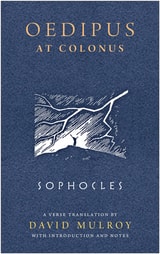
Oedipus at Colonus
Sophocles, A verse translation by David Mulroy, with introduction and notes
University of Wisconsin Press, 2014
As in his previous translations of Oedipus Rex and Antigone, Mulroy combines scrupulous scholarship and textual accuracy with a fresh poetic style. He uses iambic pentameter for spoken passages and short rhymed stanzas for choral songs, resulting in a text that is accessible and fun to read and perform.

Of "Good Laws" and "Good Men"
Law and Society in the Delaware Valley, 1680-1710William M. Offutt, Jr.
University of Illinois Press, 1995
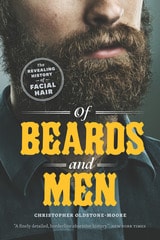
Of Beards and Men
The Revealing History of Facial HairChristopher Oldstone-Moore
University of Chicago Press, 2015
Of Beards and Men makes the case that today’s bearded renaissance is part of a centuries-long cycle in which facial hairstyles have varied in response to changing ideals of masculinity. Christopher Oldstone-Moore explains that the clean-shaven face has been the default style throughout Western history—see Alexander the Great’s beardless face, for example, as the Greek heroic ideal. But the primacy of razors has been challenged over the years by four great bearded movements, beginning with Hadrian in the second century and stretching to today’s bristled resurgence. The clean-shaven face today, Oldstone-Moore says, has come to signify a virtuous and sociable man, whereas the beard marks someone as self-reliant and unconventional. History, then, has established specific meanings for facial hair, which both inspire and constrain a man’s choices in how he presents himself to the world.
This fascinating and erudite history of facial hair cracks the masculine hair code, shedding light on the choices men make as they shape the hair on their faces. Oldstone-Moore adeptly lays to rest common misperceptions about beards and vividly illustrates the connection between grooming, identity, culture, and masculinity. To a surprising degree, we find, the history of men is written on their faces.
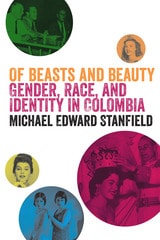
Of Beasts and Beauty
Gender, Race, and Identity in ColombiaBy Michael Edward Stanfield
University of Texas Press, 2013
All societies around the world and through time value beauty highly. Tracing the evolutions of the Colombian standards of beauty since 1845, Michael Edward Stanfield explores their significance to and symbiotic relationship with violence and inequality in the country. Arguing that beauty holds not only social power but also economic and political power, he positions it as a pacific and inclusive influence in a country “ripped apart by violence, private armies, seizures of land, and abuse of governmental authority, one hoping that female beauty could save it from the ravages of the male beast.” One specific means of obscuring those harsh realities is the beauty pageant, of which Colombia has over 300 per year. Stanfield investigates the ways in which these pageants reveal the effects of European modernity and notions of ethnicity on Colombian women, and how beauty for Colombians has become an external representation of order and morality that can counter the pathological effects of violence, inequality, and exclusion in their country.
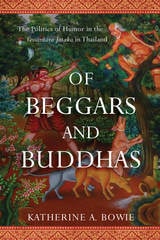
Of Beggars and Buddhas
The Politics of Humor in the Vessantara Jataka in ThailandKatherine A. Bowie
University of Wisconsin Press, 2020
The Vessantara Jataka has served both monastic and royal interests, encouraging parents to give their sons to religious orders and intimating that kings are future Buddhas. But, as Bowie shows, characterizations of the beggar Jujaka in various regions and eras have also brought ribald humor and sly antiroyalist themes to the story. Historically, these subversive performances appealed to popular audiences even as they worried the conservative Bangkok court. The monarchy sporadically sought to suppress the comedic recitations. As Thailand has changed from a feudal to a capitalist society, this famous story about giving away possessions is paradoxically being employed to promote tourism and wealth.
Of Body and Brush
Grand Sacrifice as Text/Performance in Eighteenth-Century ChinaAngela Zito
University of Chicago Press, 1997
Forging a critical cultural historical method that challenges traditional categories of Chinese studies, Zito shows for the first time that in their performance, the ritual texts embodied, literally, the metaphysics upon which imperial power rested. By combining rule through the brush (the production of ritual texts) with rule through the body (mandated performance), the throne both exhibited its power and attempted to control resistance to it. Bridging Chinese history, anthropology, religion, and performance and cultural studies, Zito brings an important new perspective to the human sciences in general.

Of Bridges
A Poetic and Philosophical AccountThomas Harrison
University of Chicago Press, 2021
Offers a philosophical history of bridges—both literal bridges and their symbolic counterparts—and the acts of cultural connection they embody.
“Always,” wrote Philip Larkin, “it is by bridges that we live.” Bridges represent our aspirations to connect, to soar across divides. And it is the unfinished business of these aspirations that makes bridges such stirring sights, especially when they are marvels of ingenuity.
A rich compendium of myths, superstitions, and literary and ideological figurations, Of Bridges organizes a poetic and philosophical history of bridges into nine thematic clusters. Leaping in lucid prose between distant times and places, Thomas Harrison questions why bridges are built and where they lead. He probes links forged by religion between life’s transience and eternity as well as the consolidating ties of music, illustrated by the case of the blues. He investigates bridges in poetry, as flash points in war, and the megabridges of our globalized world. He illuminates real and symbolic crossings facing migrants each day and the affective connections that make persons and societies cohere. In readings of literature, film, philosophy, and art, Harrison engages in a profound reflection on how bridges form and transform cultural communities. Of Bridges is a mesmerizing, vertiginous tale of bridges both visible and invisible, both lived and imagined.
Of Cabbages and Kings County
Agriculture and the Formation of Modern BrooklynMarc Linder
University of Iowa Press, 1999
No one today thinks of Brooklyn, New York, as an agricultural center. Yet Kings County enjoyed over two centuries of farming prosperity. Even as late as 1880 it was one of the nation's leading vegetable producers, second only to neighboring Queens County.
In Of Cabbages and Kings County, Marc Linder and Lawrence Zacharias reconstruct the history of a lost agricultural community. Their study focuses on rural Kings County, the site of Brooklyn's tremendous expansion during the latter part of the nineteenth century. In particular, they question whether sprawl was a necessary condition of American industrialization: could the agricultural base that preceded and surrounded the city have survived the onrush of residential real estate speculation with a bit of foresight and public policies that the politically outnumbered farmers could not have secured on their own?
The first part of the book reviews the county's Dutch American agricultural tradition, in particular its conversion after 1850 from extensive farming (e.g., wheat, corn) to intensive farming of market garden crops. The authors examine the growing competition between local farmers and their southern counterparts for a share of the huge New York City market, comparing farming conditions and factors such as labor and transportation.
In the second part of the book, the authors turn their attention to the forces that eventually destroyed Kings County's farming—ranging from the political and ideological pressures to modernize the city's rural surroundings to unplanned, market-driven attempts to facilitate transportation for more affluent city dwellers to recreational outlets on Coney Island and, once transportation was at hand, to replace farms with residential housing for the city's congested population.
Drawing on a vast range of archival sources, the authors refocus the history of Brooklyn to uncover what was lost with the expansion of the city. For today, as urban planners, ecologists, and agricultural developers reevaluate urban sprawl and the need for greenbelts or agricultural-urban balance, the lost opportunities of the past loom larger.
Of Caves and Shell Mounds
Edited by Kenneth C. Carstens and Patty Jo Watson
University of Alabama Press, 1996
Ancient human groups in the Eastern Woodlands of North America were long viewed as homogeneous and stable hunter-gatherers, changing little until the late prehistoric period when Mesoamerican influences were thought to have stimulated important economic and social developments. The authors in this volume offer new, contrary evidence to dispute this earlier assumption, and their studies demonstrate the vigor and complexity of prehistoric peoples in the North American Midwest and Midsouth. These peoples gathered at favored places along midcontinental streams to harvest mussels and other wild foods and to inter their dead in the shell mounds that had resulted from their riverside activities. They created a highly successful, pre-maize agricultural system beginning more than 4,000 years ago, established far-flung trade networks, and explored and mined the world's longest cave—the Mammoth Cave System in Kentucky.
Contributors include:
Kenneth C. Carstens, Cheryl Ann Munson, Guy Prentice, Kenneth B. Tankersley, Philip J. DiBlasi, Mary C. Kennedy, Jan Marie Hemberger, Gail E. Wagner, Christine K. Hensley, Valerie A. Haskins, Nicholas P. Herrmann, Mary Lucas Powell, Cheryl Claassen, David H. Dye, and Patty Jo Watson
Of Earth and Little Rain
The Papago IndiansBernard L. Fontana; Photographs by John P. Schaefer
University of Arizona Press, 1989
Of Forests and Fields
Mexican Labor in the Pacific NorthwestMario Jimenez Sifuentez
Rutgers University Press, 2016
Just looking at the Pacific Northwest’s many verdant forests and fields, it may be hard to imagine the intense work it took to transform the region into the agricultural powerhouse it is today. Much of this labor was provided by Mexican guest workers, Tejano migrants, and undocumented immigrants, who converged on the region beginning in the mid-1940s. Of Forests and Fields tells the story of these workers, who toiled in the fields, canneries, packing sheds, and forests, turning the Pacific Northwest into one of the most productive agricultural regions in the country.
Of G-Men and Eggheads
The FBI and the New York IntellectualsJohn Rodden
University of Illinois Press, 2017
John Rodden cuts this tall tale down to its authentic pint size, refusing to indulge the public relations myth promoted by J. Edgar Hoover's FBI. In Of G-Men and Eggheads, Rodden portrays federal agents’ hilarious obsession with monitoring that ever-present threat to national security, the American literary intellectual. Drawing on government dossiers and archives, Rodden focuses on the onetime members of a radical political sect of ex-Trotskyists (barely numbering a thousand at its height), the so-called New York intellectuals. He describes the nonsensical decades-long pursuit of this group of intellectuals, especially Lionel Trilling, Dwight Macdonald, and Irving Howe. The Keystone Cops style of numerous FBI agents is documented carefully in Rodden's meticulous case studies of how Hoover's men recruited informants to snoop on the "Commies," opened their personal mail, tracked their movements, and reported on their wives and friends.
Of Gardens and Graves
Kashmir, Poetry, PoliticsSuvir Kaul
Duke University Press, 2017
Of Giants
Sex, Monsters, And The Middle AgesJeffrey Jerome Cohen
University of Minnesota Press, 1999
Considers what monsters tell us about identity in the medieval period.
A monster lurks at the heart of medieval identity, and this book seeks him out. Reading a set of medieval texts in which giants and dismemberment figure prominently, Jeffrey Jerome Cohen brings a critical psychoanalytic perspective to bear on the question of identity formation-particularly masculine identity-in narrative representation. The giant emerges here as an intimate stranger, a monster who stands at the limits of selfhood.
Arguing that in the romance tradition of late fourteenth-century England, identity is inscribed on sexed bodies only through the agency of a monster, Cohen looks at the giant as the masculine body writ large. In the giant he sees an uncanny figure, absolutely other and curiously familiar, that serves to define the boundaries of masculine embodiment. Philosophically compelling, the book is also a philologically rigorous inquiry into the phenomenon of giants and giant-slaying in various texts from the Anglo-Saxon period to late Middle English, including Beowulf, Chrétien de Troyes’s The Knight and the Lion, Geoffrey of Monmouth’s History of the Kings of Britain, several works by Chaucer, Sir Gowther, Sir Gawain and the Green Knight, and more.A significant contribution to our understanding of medieval culture, Of Giants also provides surprising insights into questions about the psychosocial work of representation in its key location for the individual: the construction of gender and the social formation of the boundaries of gender identification. It will engage students of the Middle Ages as well as those interested in discourses of the body, social identity, and the grotesque. ISBN 0-8166-3216-2 Cloth £00.00 $47.95xxISBN 0-8166-3217-0 Paper £00.00 $18.95x240 Pages 5 black-and-white photos 5 7/8 x 9 MayMedieval Cultures Series, volume 17Translation inquiries: University of Minnesota Press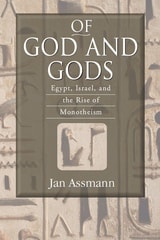
Of God and Gods
Egypt, Israel, and the Rise of MonotheismJan Assmann
University of Wisconsin Press, 2008
For thousands of years, our world has been shaped by biblical monotheism. But its hallmark—a distinction between one true God and many false gods—was once a new and radical idea. Of God and Gods explores the revolutionary newness of biblical theology against a background of the polytheism that was once so commonplace.
Jan Assmann, one of the most distinguished scholars of ancient Egypt working today, traces the concept of a true religion back to its earliest beginnings in Egypt and describes how this new idea took shape in the context of the older polytheistic world that it rejected. He offers readers a deepened understanding of Egyptian polytheism and elaborates on his concept of the “Mosaic distinction,” which conceives an exclusive and emphatic Truth that sets religion apart from beliefs shunned as superstition, paganism, or heresy.
Without a theory of polytheism, Assmann contends, any adequate understanding of monotheism is impossible.
Best Books for General Audiences, selected by the American Association of School Librarians, and Best Books for Special Interests, selected by the Public Library Association
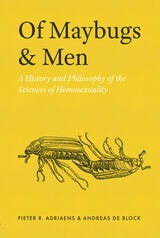
Of Maybugs and Men
A History and Philosophy of the Sciences of HomosexualityPieter R. Adriaens and Andreas De Block
University of Chicago Press, 2022
Questions about the naturalness or unnaturalness of homosexuality are as old as the hills, and the answers have often been used to condemn homosexuals, their behaviors, and their relationships. In the past two centuries, a number of sciences have involved themselves in this debate, introducing new vocabularies, theories, arguments, and data, many of which have gradually helped tip the balance toward tolerance and even acceptance. In this book, philosophers Pieter R. Adriaens and Andreas De Block explore the history and philosophy of the gay sciences, revealing how individual and societal values have colored how we think about homosexuality.
The authors unpack the entanglement of facts and values in studies of male homosexuality across the natural and human sciences and consider the extent to which science has mitigated or reinforced homonegative mores. The focus of the book is on homosexuality’s assumed naturalness. Geneticists rephrased naturalness as innateness, claiming that homosexuality is innate—colloquially, that homosexuals are born gay. Zoologists thought it a natural affair, documenting its existence in myriad animal species, from maybugs to men. Evolutionists presented homosexuality as the product of natural selection and speculated about its adaptive value. Finally, psychiatrists, who initially pathologized homosexuality, eventually appealed to its naturalness or innateness to normalize it.
Discussing findings from an array of sciences—comparative zoology, psychiatry, anthropology, evolutionary biology, social psychology, developmental biology, and machine learning—this book is essential reading for anyone interested in what science has to say about homosexuality.
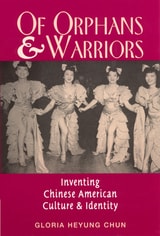
Of Orphans and Warriors
Inventing Chinese American Culture and IdentityChun, Gloria Heyung
Rutgers University Press, 1999
"We were as American as can be," states Jadin Wong in recalling the days when she used to dance at a San Francisco nightclub during the 1940s. Wong belonged to an all-Chinese chorus line at a time when all East Asians were called "Orientals." In this context, then, what did it mean for Wong, an American-born Chinese, to say that she thought of herself as an "American"? Of Orphans and Warriors explores the social and cultural history of largely urban, American-born Chinese from the 1930s through the 1990s, focusing primarily on those living in California. Chun thus opens a window onto the ways in which these Americans born of Chinese ancestry negotiated their identity over a half century.
Past scholarship has portrayed these individuals as desiring to assimilate into mainstream American culture, but being prevented from doing so by the immigrant parent generation. Taking a new approach, Chun uses memoirs, autobiographies, and fictional writings to unravel complex issues of ethnic identity as both culturally defined and individually negotiated. She concludes that, while indeed many Chinese Americans were caught between the lures of mainstream American culture and their parents' old-world values, this liminal position offered them unprecedented opportunities to carve out new identities for themselves from a position of strength.
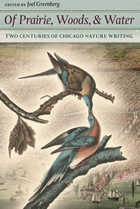
Of Prairie, Woods, and Water
Two Centuries of Chicago Nature WritingEdited by Joel Greenberg
University of Chicago Press, 2008
These writings tell the tale of a land in transition—one with abundant, unique, and incredibly lush flora and fauna, a natural history quite elusive today. Drawing on archives he uncovered while writing his acclaimed A Natural History of the Chicago Region, Greenberg hand-selected these first-person narratives, all written between 1721 and 1959. Not every author is familiar, but every contribution is distinctive. From a pioneer’s hilarious notes on life in the Kankakee marsh to Theodore Drieser’s poignant plea for conservation of the Tippecanoe River to infamous murderer Nathan Leopold’s charming description of a pet robin he kept in prison, the sources included are as diverse as the nature they describe.
Of Red Dragons and Evil Spirits
Post-Communist Historiography between Democratization and the New Politics of HistoryOto Luthar
Central European University Press, 2017
Of Revelation and Revolution, Volume 1
Christianity, Colonialism, and Consciousness in South AfricaJean Comaroff and John L. Comaroff
University of Chicago Press, 1991
Of Revelation and Revolution, Volume 2
The Dialectics of Modernity on a South African FrontierJohn L. Comaroff and Jean Comaroff
University of Chicago Press, 1997
The Comaroffs trace many of the major themes of twentieth-century South African history back to these formative encounters. The relationship between the British evangelists and the Southern Tswana engendered complex exchanges of goods, signs, and cultural markers that shaped not only African existence but also bourgeois modernity "back home" in England. We see, in this volume, how the colonial attempt to "civilize" Africa set in motion a dialectical process that refashioned the everyday lives of all those drawn into its purview, creating hybrid cultural forms and potent global forces which persist in the postcolonial age.
This fascinating study shows how the initiatives of the colonial missions collided with local traditions, giving rise to new cultural practices, new patterns of production and consumption, new senses of style and beauty, and new forms of class distinction and ethnicity. As noted by reviewers of the first volume, the Comaroffs have succeeded in providing a model for the study of colonial encounters. By insisting on its dialectical nature, they demonstrate that colonialism can no longer be seen as a one-sided relationship between the conquering and the conquered. It is, rather, a complex system of reciprocal determinations, one whose legacy is very much with us today.
Of Spies and Spokesmen
My Life as a Cold War CorrespondentNicholas Daniloff
University of Missouri Press, 2008
An American reporter of Russian heritage assigned to Soviet-era Moscow might seem to have an edge on his colleagues, but when he’s falsely accused of spying, any advantage quickly evaporates. . . . .
As a young UPI correspondent in Moscow during the early 1960s, Nicholas Daniloff hoped to jump-start his career in his father’s homeland, but he soon learned that the Cold War had its own rules of engagement. In this riveting memoir, he describes the reality of journalism behind the Iron Curtain: how Western reporters banded together to thwart Soviet propagandists, how their “official sources” were almost always controlled by the KGB—and how those sources would sometimes try to turn newsmen into collaborators.
Leaving Moscow for Washington in 1965, Daniloff honed his skills at the State Department, then returned to Moscow in 1981 to find a more open society. But when the FBI nabbed a Soviet agent in 1986, Daniloff was arrested in retaliation and thrown into prison as a spy—an incident that threatened to undo the Reykjavik summit until top aides to Reagan and Gorbachev worked out a solution.
In addition to recounting a career in the thick of international intrigue, Of Spies and Spokesmen is brimming with inside information about historic events. Daniloff tells how the news media played a crucial role in resolving the Cuban Missile Crisis, recalls the emotional impact of the JFK assassination on Soviet leadership, and describes the behind-the-scenes struggles that catapulted Mikhail Gorbachev to power. He even shares facts not told to the public: how the SAC would warn Moscow that its submarines were too close to American shores, why the Soviets shot down the KAL airliner without visual identification, and how American reporters in Moscow sometimes did dangerous favors for our government that could easily have been mistaken for espionage.
Daniloff sheds light not only on prominent figures such as Nikita Khrushchev and Henry Kissinger but also on suspected spies Frederick Barghoorn, John Downey, and ABC correspondent Sam Jaffe—unfairly branded a Soviet agent by the FBI. In addition, he assesses the performance of Henry Shapiro, dean of American journalists in Moscow, whose forty years in the adversary’s capital often provoke questions about his role and reputation.
In describing how the Western press functioned in the old Soviet Union—and how it still functions in Washington today—Daniloff shows that the Soviet Russia he came to know was far more complex than the “evil empire” painted by Ronald Reagan: a web of propaganda and manipulation, to be sure, but also a place of hospitality and friendship. And with Russia still finding its way toward a new social and political order, he reminds us that seventy years of Communist rule left a deep impression on its national psyche. As readable as it is eye-opening, Of Spies and Spokesmenprovides a new look at that country’s heritage—and at the practice of journalism in times of crisis.
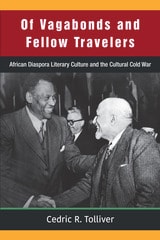
Of Vagabonds and Fellow Travelers
African Diaspora Literary Culture and the Cultural Cold WarCedric R. Tolliver
University of Michigan Press, 2019
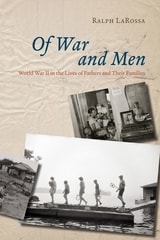
Of War and Men
World War II in the Lives of Fathers and Their FamiliesRalph LaRossa
University of Chicago Press, 2011
Fathers in the fifties tend to be portrayed as wise and genial pipe-smokers or distant, emotionless patriarchs. This common but limited stereotype obscures the remarkable diversity of their experiences and those of their children. To uncover the real story of fatherhood during this transformative era, Ralph LaRossa takes the long view—from the attack on Pearl Harbor up to the election of John F. Kennedy—revealing the myriad ways that World War II and its aftermath shaped men.
Offering compelling accounts of people both ordinary and extraordinary, Of War and Men digs deep into the terrain of fatherhood. LaRossa explores the nature and aftereffects of combat, the culture of fear during the Cold War, the ways that fear altered the lives of racial and sexual minorities, and how the civil rights movement affected families both black and white. Overturning some calcified myths, LaRossa also analyzes the impact of suburbanization on fathers and their kids, discovering that living in the suburbs often strengthened their bond. And finally, looking beyond the idealized dad enshrined in TV sitcoms, Of War and Men explores the brutal side of family life in the postwar years. LaRossa’s richly researched book dismantles stereotypes while offering up a fascinating and incisive chronicle of fatherhood in all its complexity.
Of Whales and Dinosaurs
The Story of Singapore's Natural History MuseumKevin Y. L. Tan
National University of Singapore Press, 2015
Of the Plurality of Worlds
A facsimile of the first edition of 1853; plus previously unpublished material excised by the author just before the book went to press; and Whewell's dialogue rebutting his critics, reprinted from the second editionWilliam Whewell
University of Chicago Press, 2001
The publication of Plurality in 1853 ignited a bitter Victorian debate on science and religion. This book reprints the first edition in facsimile, together with a vigorous response to his critics that Whewell added later and new introductory and bibliographic material by noted Darwin scholar Michael Ruse. This edition also includes 84 typeset pages—never before published—that Whewell cut from the original book at the last moment. Showing clearly the theological underpinnings of Whewell's thinking, these chapters also reveal the difficulties facing any Victorian who tried to reconcile traditional Christian thought with the findings of modern science.
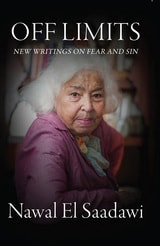
Off Limits
New Writings on Fear and SinNawal El Saadawi
Gingko, 2018
Off Limits presents a selection of El Saadawi’s most recent recollections and reflections in which she considers the role of women in Egyptian and wider Islamic society, the inextricability of imperialism from patriarchy, and the meeting points of East and West. These thoughtful and wide-reaching pieces leave no stone unturned and no view unchallenged, and the essays collected here offer further insight into this profound author’s ideas about women, society, religion, and national identity.
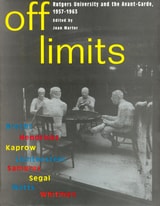
Off Limits
Rutgers University and the Avant-Garde, 1957-1963Marter, Joan
Rutgers University Press, 1999
Off Limits is the first examination of the Rutgers group, artists who came together on the Rutgers University, New Brunswick campus during the 1950s and revolutionized art practices and pedagogy. Based on interviews with artists, critics, and dealers from the period, the book connects the initiation of major trends such as Happenings, Pop Art, and Fluxus to the faculty, students, art curriculum, and events at the university. It is the first book to look not only at the work of individual artists, but to consider how interactions between these artists influenced their groundbreaking work.
Rutgers was clearly the place to be for experimental artists during the late 1950s and early 1960s. Allan Kaprow’s first Happening was presented at Rutgers. Roy Lichtenstein’s first Pop paintings, George Segal’s earliest figurative tableaux, Lucas Samaras’s radical exploration of media, and proto-Fluxus events by Robert Watts and George Brecht all took place on and around the campus. The innovative group rejected Abstract Expressionism for art based on the immediate experience of urban and industrial life, creating startling new artforms which remain startling and provocative.
Led by the theoretical writings and art practice of Kaprow, the group created a New Art—art beyond the limits of the conventional and predictable, even beyond accepted notions of progressive trends. Lichtenstein recalls in an interview, “Kaprow showed us that art didn’t have to look like art.” Along with Lichtenstein, Kaprow, Segal, and Watts taught at Rutgers and challenged one another to take art “Off Limits” — beyond the limits of the conventional, the predictable — even beyond the progressive, as defined by Abstract Expressionist gesturalism. Their art incorporated the gritty environs, the technological, the everyday, making art radical, outrageous, disturbing, and humorous.
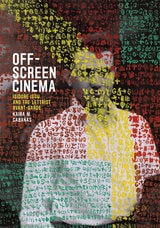
Off-Screen Cinema
Isidore Isou and the Lettrist Avant-GardeKaira M. Cabañas
University of Chicago Press, 2015
Off-Screen Cinema is the first monograph in English of the Lettrists. Offering a full portrait of the avant-garde scene of 1950s Paris, it focuses on the film works of key Lettrist figures like Gil J Wolman, Maurice Lemaître, François Dufrêne, and especially the movement's founder, Isidore Isou, a Romanian immigrant whose “discrepant editing” deliberately uncoupled image and sound. Through Cabañas's history, we see not only the full scope of the Lettrist project, but also its clear influence on Situationism, the French New Wave, the New Realists, as well as American filmmakers such as Stan Brakhage.
Oglethorpe in Perspective
Georgia's Founder after Two Hundred YearsEdited by Phinizy Spalding and Harvey H. Jackson, III
University of Alabama Press, 1989
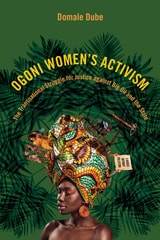
Ogoni Women's Activism
The Transnational Struggle for Justice against Big Oil and the StateDomale Dube
University of Illinois Press, 2025
Dube’s account examines and documents the issues that drew women into the movement, from concerns for themselves and their communities to grander visions for the Ogoni. As she shows, these issues not only influenced organizing in Nigeria but also the diaspora in general and the United States in particular. Ogoni women relied upon nonviolent protest to realize their aims. Dube looks at their campaigns and how their actions reflected their concerns, values, interests, and priorities. The result is a rare account of Black women and transnational organizing for women’s, climate, and environmental justice that merges a history of their involvement with an in-depth analysis of the racial, gender, and ethnic dimensions of the Ogoni Struggle.
Oh, Say, Can You See
The Semiotics of the Military in Hawai’iKathy E. Ferguson
University of Minnesota Press, 1998
Considers what the military presence in Hawai’i tells us about colonialism, gender, race, and class.
Everywhere you look in Hawai’i, you might see the military. And yet, in daily life few residents see the military at all-it is hidden in plain sight. This paradox of invisibility and visibility, of the available and the hidden, is the subject of Oh, Say, Can You See?, which maps the power relations involving gender, race, and class that define Hawai’i in relation to the national security state.
Western intruders into Hawai’i-from the early explorers, missionaries, and sugar planters to the military, tourists, and foreign investors-have seen the island nation as a feminine place, waiting to embrace those who come to penetrate, protect, mold, and develop, yet conveniently lacking whatever the newcomers claim to possess. Thus feminized, this book contends, the islands and the people have been reinscribed with meanings according to the needs, fears, and desires of outsiders. Authors Kathy E. Ferguson and Phyllis Turnbull locate and “excavate” sites of memory, such as cemeteries, memorials, monuments, and museums, to show how the military constructs its gendered narrative upon prior colonial discourses. Among the sites considered are Fort DeRussy, Pearl Harbor, and Punchbowl Cemetery, as well as the practices of citizenship that are produced or foreclosed by the narratives of order and security written upon Hawai’i by the military.This semiotic investigation of ways the military marks Hawai’i necessarily explores the intersection of immigration, colonialism, military expansion, and tourism on the islands. Attending to the ways in which the military represents itself and others represent the military, the authors locate the particular representational elements that both conceal and reveal the military’s presence and power; in doing so, they seek to expand discursive space so that other voices can be heard. ISBN 0-8166-2978-1 Cloth $49.95xxISBN 0-81662979-X Paper $19.95x240 pages 5 7/8 x 9 DecemberBorderlines Series, Volume 10Translation inquiries: University of Minnesota Press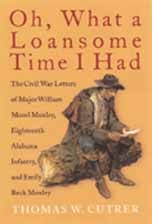
Oh, What a Loansome Time I Had
The Civil War Letters of Major William Morel Moxley, Eighteenth Alabama Infantry, and Emily Beck MoxleyEmily Beck Moxley
University of Alabama Press, 2002
Most surviving correspondence of the Civil War period was written by members of a literate, elite class; few collections exist in which the woman's letters to her soldier husband have been preserved. Here, in the exchange between William and Emily Moxley, a working-class farm couple from Coffee County, Alabama, we see vividly an often-neglected aspect of the Civil War experience: the hardships of civilian life on the home front.
Emily's moving letters to her husband, startling in their immediacy and detail, chronicle such difficulties as a desperate lack of food and clothing for her family, the frustration of depending on others in the community, and her growing terror at facing childbirth without her husband, at the mercy of a doctor with questionable skills. Major Moxley's letters to his wife reveal a decidedly unromantic side of the war, describing his frequent encounters with starvation, disease, and bloody slaughter.
Ohio Canal Era
A Case Study of Government and the Economy, 1820–1861Harry N. Scheiber
Ohio University Press, 2012
Ohio Canal Era, a rich analysis of state policies and their impact in directing economic change, is a classic on the subject of the pre–Civil War transportation revolution. This edition contains a new foreword by scholar Lawrence M. Friedman, Professor of Law, Stanford Law School, and a bibliographic note by the author.
Professor Scheiber explores how Ohio—as a “public enterprise state,” creating state agencies and mobilizing public resources for transport innovation and control—led in the process of economic change before the Civil War. No other historical account of the period provides so full and insightful a portrayal of “law in action.” Scheiber reveals the important roles of American nineteenth-century government in economic policy-making, finance, administration, and entrepreneurial activities in support of economic development.
His study is equally important as an economic history. Scheiber provides a full account of waves of technological innovation and of the transformation of Ohio’s commerce, agriculture, and industrialization in an era of hectic economic change. And he tells the intriguing story of how the earliest railroads of the Old Northwest were built and financed, finally confronting the state-owned canal system with a devastating competitive challenge.
Amid the current debate surrounding “privatization,” “deregulation,” and the appropriate use of “industrial policy” by government to shape and channel the economy. Scheiber’s landmark study gives vital historical context to issues of privatization and deregulation that we confront in new forms today.
Ohio Farm
Wheeler McMillen
The Ohio State University Press, 1997
Uncomplicated when compared with the task of managing today's highly mechanized agricultural complexes, life on the early twentieth-century small farm entailed hard work and afforded simple pleasures that brought satisfaction and enjoyment to the farm and family. Farming on that scale and in the same manner has now become almost completely infeasible, yet in those times a good farmer could prosper and become independent. Wheeler McMillen’s father, Lewis, did both.
Relying frequently on his father’s account books and concise diaries, for this is primarily his father’s story, McMillen recounts the immense labor that farming demanded before the advent of the tractor and the combine harvester. He evokes the special excitements of having company for Sunday dinner, attending the annual oyster supper at the Grange Hall, and gathering on the Fourth of July with the interminable wait for darkness to fall. McMillen also portrays the quiet peace and ineffable joy of private moments, such as resting the horses during spring plowing to watch bronzed grackles search for food in the freshly turned furrows.
Wheeler McMillen’s slice of history will speak to those interested in what rural life was once like in the Midwest and to Ohioans who would like to learn more about their state’s recent past.
Ohio Hopewell Ceramics
An Analysis of the Extant CollectionsOlaf H. Prufer
University of Michigan Press, 1968

Ohio On The Move
Transportation in the Buckeye StateH. Roger Grant
Ohio University Press, 1999
Few American states can match the rich and diverse transportation heritage of Ohio. Every major form of public conveyance eventually served the Buckeye state. From the “Canal Age” to the “Interurban Era,” Ohio emerged as a national leader. The state’s central location, abundant natural resources, impressive wealth, shrewd business leadership, and episodes of good fortune explain the dynamic nature of its transport past.
Ohio on the Move is the first systematic scholarly account of the transportation history of Ohio. To date, little has appeared on several subjects discussed here, including intercity bus and truck operations and commercial aviation. The more familiar topics of river and lake transport, canals, steam railroads, electric interurbans, and mass transit are extensively explored in the Ohio context.
In this inaugural volume of Ohio University Press’s Ohio Bicentennial Series, Professor Grant demonstrates the truth of the slogan that Ohio is “the heart of it all” - not solely by location but also in the impressive network of transportation arteries that have linked the state, whether natural waterways and air space or various artificial land-travel routes.

Ohio State Athletics, 1879–1959
James E. Pollard
The Ohio State University Press, 0
Besides turning to the archives of the Lantern and the Makio to research the book, Pollard also relied on conversations with past Board of Trustees Secretary Carl E. Steeb, Professor Charles W. Foulk who actually competed for Ohio State as a student on the university’s first basketball team, and then current Athletic Director, Richard C. Larkins. Because many of the university’s earliest records were lost or destroyed, a significant amount of information also came from Columbus newspapers, Alumni Monthly, and official records of the faculty, trustees, and presidents.
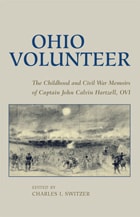
Ohio Volunteer
The Childhood and Civil War Memoirs of Captain John Calvin Hartzell, OVICharles I. Switzer
Ohio University Press, 2005
Edited and introduced by Charles Switzer, Ohio Volunteer: The Childhood and Civil War Memoirs of Captain John Calvin Hartzell, OVI documents military strategy, the life of the common soldier, the intense excitement and terror of battle, and the wretchedness of the wounded.
Hartzell’s family implored him to set down his life story, including his experiences in the Civil War from 1862 to 1866. Hartzell did so diligently, taking more than two years to complete his manuscript. The memoir reveals a remarkable memory for vivid details, the ability to see larger and more philosophical perspectives, and a humorous outlook that helped him bear the unbearable.
He also depicted the changing rural economy, the assimilation of the Pennsylvania Dutch, and the transformations wrought by coal mining and the iron industry. Hartzell felt individualism was threatened by the Industrial Revolution and the cruelties of the war. He found his faith in humanity affirmed—and the dramatic tension in his memoir resolved—when 136,000 Union soldiers reenlisted and assured victory for the North. The common soldier, he wrote, was “loyal to the core.”
Ohio and the World, 1753–2053
ESSAYS TOWARD A NEW HISTORY OF OHIOEdited by Geoffrey Parker, Richard Sisson, and William Russell Coil
The Ohio State University Press, 2005
Ohio canal era
a case study of government and the economy, 1820-1861Harry N. Scheiber
Ohio University Press, 1987
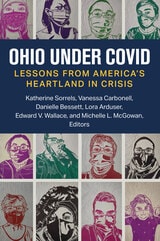
Ohio under COVID
Lessons from America's Heartland in CrisisKatherine Sorrels, Vanessa Carbonell, Danielle Bessett, Lora Arduser, Edward Wallace, and Michelle L. McGowan, Editors
University of Michigan Press, 2023
In early March of 2020, Americans watched with uncertain terror as the novel coronavirus pandemic unfolded. One week later, Ohio announced its first confirmed cases. Just one year later, the state had over a million cases and 18,000 Ohioans had died. What happened in that first pandemic year is not only a story of a public health disaster, but also a story of social disparities and moral dilemmas, of lives and livelihoods turned upside down, and of institutions and safety nets stretched to their limits.
Ohio under COVID tells the human story of COVID in Ohio, America’s bellwether state. Scholars and practitioners examine the pandemic response from multiple angles, and contributors from numerous walks of life offer moving first-person reflections. Two themes emerge again and again: how the pandemic revealed a deep tension between individual autonomy and the collective good, and how it exacerbated social inequalities in a state divided along social, economic, and political lines. Chapters address topics such as mask mandates, ableism, prisons, food insecurity, access to reproductive health care, and the need for more Black doctors. The book concludes with an interview with Dr. Amy Acton, the state’s top public health official at the time COVID hit Ohio. Ohio under COVID captures the devastating impact of the pandemic, both in the public discord it has unearthed and in the unfair burdens it has placed on the groups least equipped to bear them.
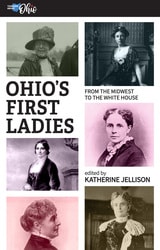
Ohio's First Ladies
From the Midwest to the White HouseKatherine Jellison
Ohio University Press, 0
This engaging collection of essays explores the lives and legacies of six Ohio-born First Ladies: Lucy Webb Hayes, Lucretia Rudolph Garfield, Caroline Scott Harrison, Ida Saxton McKinley, Helen Herron Taft, and Florence Kling Harding. With contributions by leading scholars, the volume moves beyond traditional biography to examine how each woman’s Ohio roots shaped her public role and influenced her husband’s political career at both state and national levels. Connecting Ohio history to the broader narrative of nineteenth- and early twentieth-century US history, these essays draw on rich primary and secondary sources to illuminate the intersection of regional identity and national politics. Accessible and insightful, Ohio’s First Ladies invites readers of all backgrounds—from high school students to lifelong learners—to discover how the Midwest helped mold women who would leave their mark on the White House. Contributors Benjamin T. Arrington Jennifer Capps Annette B. Dunlap Kara M. French Michelle Gullion Katherine Jellison Katherine A. S. Sibley

Ohio
A HISTORYWalter Havighurst
University of Illinois Press, 1976
From Harvey Firestone's rubber rims for buggy wheels to John Leon Bennet's wire flyswatter, from O. C. Barber's first book matches to Dr. Edwin Beeman's flavored chewing gum, Ohio has buzzed with inventive drive and creativity. The Wright brothers flew a winged crate over a Dayton cow pasture; Stephen Foster allegedly wrote "Oh Susanna" while working as a bookkeeper in a Cincinnati riverfront shipping office; and Ohio native Victoria Claflin Woodhull declared herself the first woman presidential candidate. The state also produced some of the Civil War's greatest leaders, including Ulysses S. Grant and William T. Sherman.
Havighurst gives a moving portrayal of Welsh inventor Samuel Milton Jones, who made his fortune with a device used in oil production and then turned his energies to creating his own "new deal" for his factory workers and, as mayor of Toledo, for his constituency. At the other end of the scale, shrewd, autocratic George B. Cox ruled Cincinnati through a sticky web of back-room corruption.
Focusing on the people who stamped the state with their vision, Havighurst captures the vibrancy and ingenuity of Ohio's inventors, manufacturers, leaders and dreamers, as well as the consequences, for the land and its inhabitants, of unchecked industrial excesses.
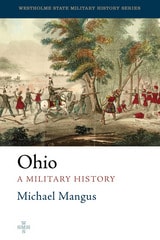
Ohio
A Military HistoryMichael Mangus
Westholme Publishing, 2016
Complete with a list of historical sites and a comprehensive bibliography, Ohio: A Military History is an important reference for those interested in the role of the Buckeye State in our nation’s history.
Westholme State Military History Series
Each state in the United States of America has a unique military history. The volumes in this series seek to provide a portrait of the richness of each state’s military experience, primarily defined by its borders, as well as the important contributions the state has made to the nation’s military history. Written by historians for the general reader, the volumes trace the history of conflict from the original native populations to today. The volumes are well illustrated and include specially commissioned maps, extensive bibliographies, lists of national and state historical sites, and a detailed index.
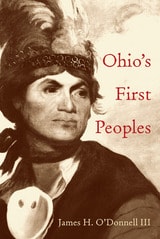
Ohio’s First Peoples
James H. O'Donnell
Ohio University Press, 2004
Although founders of the state like Rufus Putnam pointed to the remaining prehistoric earthworks at Marietta as evidence that the architects were a people of “ingenuity, industry, and elegance,” their words did not prevent a rivalry with the area’s Indian inhabitants that was settled only through decades of warfare and treaty-making.
Native American armies managed to win battles with Josiah Harmar and Arthur St. Clair, but not the war with Anthony Wayne. By the early nineteenth century only a few native peoples remained, still hoping to retain their homes. Pressures from federal and state governments as well as the settlers‘ desire for land, however, left the earlier inhabitants no refuge. By the mid-1840s they were gone, leaving behind relatively few markers on the land.
Ohio’s First Peoples depicts the Native Americans of the Buckeye State from the time of the well-known Hopewell peoples to the forced removal of the Wyandots in the 1840s.
Professor James O’Donnell presents the stories of the early Ohioans based on the archaeological record. In an accessible narrative style, he provides a detailed overview of the movements of Fort Ancient peoples driven out by economic and political forces in the seventeenth century. Ohio’s plentiful game and fertile farmlands soon lured tribes such as the Wyandots, Shawnees, and Delawares, which are familiar to observers of the historic period.
In celebrating the bicentennial of Ohio, we need to remember its earliest residents. Ohio’s First Peoples recounts their story and documents their contribution to Ohio’s full heritage.
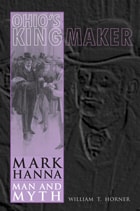
Ohio’s Kingmaker
Mark Hanna, Man and MythWilliam T. Horner
Ohio University Press, 2010
For a decade straddling the turn of the twentieth century, Mark Hanna was one of the most famous men in America. Portrayed as the puppet master controlling the weak-willed William McKinley, Hanna was loved by most Republicans and reviled by Democrats, in large part because of the way he was portrayed by the media of the day. Newspapers and other media outlets that supported McKinley reported positively about Hanna, but those sympathetic to William Jennings Bryan, the Democrats’ presidential nominee in 1896 and 1900, attacked Hanna far more aggressively than they attacked McKinley himself. Their portrayal of Hanna was wrong, but powerful, and this negative image of him survives to this day.
In this study of Mark Hanna’s career in presidential politics, William T. Horner demonstrates the flaws inherent in the ways the news media cover politics. He deconstructs the myths that surround Hanna and demonstrates the dangerous and long-lasting effect that inaccurate reporting can have on our understanding of politics. When Karl Rove emerged as the political adviser to George W. Bush’s presidential campaigns, the reporters quickly began to compare Rove to Hanna even a century after Hanna’s death. The two men played vastly different roles for the presidents they served, but modern reporters consistently described Rove as the second coming of Mark Hanna, another political Svengali.
Ohio’s Kingmaker is the story of a fascinating character in American politics and serves to remind us of the power of (mis)perceptions.
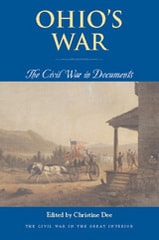
Ohio’s War
The Civil War in DocumentsChristine Dee
Ohio University Press, 2006
In 1860, Ohio was among the most influential states in the nation. As the third-most-populous state and the largest in the middle west, it embraced those elements that were in concert-but also at odds-in American society during the Civil War era. Ohio’s War uses documents from that vibrant and tumultuous time to reveal how Ohio’s soldiers and civilians experienced the Civil War. It examines Ohio’s role in the sectional crises of the 1850s, its contribution to the Union war effort, and the war’s impact on the state itself. In doing so, it provides insights into the war’s meaning for northern society.
Ohio’s War introduces some of those soldiers who left their farms, shops, and forges to fight for the Union. It documents the stories of Ohio’s women, who sustained households, organized relief efforts, and supported political candidates. It conveys the struggles and successes of free blacks and former slaves who claimed freedom in Ohio and the distinct wartime experiences of its immigrants. It also includes the voices of Ohioans who differed over emancipation, freedom of speech, the writ of habeas corpus, the draft, and the war’s legacy for American society.
From Ohio’s large cities to its farms and hamlets, as the documents in this volume show, the war changed minds and altered lives but left some beliefs and values untouched. Ohio’s War is a documentary history not only of the people of one state, but also of a region and a nation during the pivotal epoch of American history.
Oikonomia
Ancient Greek Philosophers on the Meaning of Economic LifeÉtienne Helmer
University of Chicago Press, 2024
In this book, Étienne Helmer offers a comprehensive analysis of oikonomia in ancient Greek philosophy. Despite its similarity to the word “economy,” for the ancients, oikonomia named a branch of knowledge—the science of management—that was aimed at studying the practices we engage in to satisfy our needs. This began with the domestic sphere, but it radiated outward from the oikos (house) to encompass broader issues in the polis (city) as well. Helmer explores topics such as gender roles and marriage, property and the household, the acquisition and preservation of material goods, and how Greek philosophers addressed the issue of slavery in the ancient world. Even if we are not likely to share many of ancient thinkers’ beliefs today, Helmer shows that there was once a way of thinking of “economic life” that went beyond the mere accumulation of wealth, representing a key point of departure for understanding how to inhabit the world with others.