Results by title
3785 books match the query 'Poetry' and 116 start with o
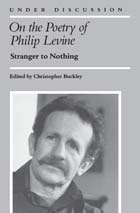
On the Poetry of Philip Levine
Stranger to NothingChristopher Buckley, Editor
University of Michigan Press, 1990
Readers and critics alike have applauded Philip Levine's poems for their eloquent and elegiac narrative and their vivas for the dignity of the human spirit. In 1987 Levine received the esteemed Ruth Lilly Prize, given by the Modern Poetry Association and the American Council for the Arts in recognition of outstanding poetic achievement. On the Poetry of Philip Levine, the first critical collection to focus on this original and highly acclaimed poet, selects essays and reviews that span three decades. Included are pieces by Richard Howard, Stephen Yenser, Ralph J. Mills, Jr., and Dave Smith.
UNDER DISCUSSION Donald Hall, General Editor
On the Wing
American Poems of Air and Space FlightOlsen, Karen Yelena
University of Iowa Press, 2005
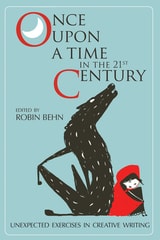
Once Upon a Time in the Twenty-First Century
Unexpected Exercises in Creative WritingEdited by Robin Behn
University of Alabama Press, 2020
Inspiring writers through creativity, experimentation, and unexpected discovery.
Once Upon a Time in the Twenty-First Century: Unexpected Exercises in Creative Writing is a unique creative writing text that will appeal to a wide range of readers and writers—from grade nine through college and beyond. Successful creative writers from numerous genres constructed these exercises, including poetry, fiction, and creative nonfiction to one-act plays, song lyrics, genre fiction, travel guides, comics and beyond. The exercises use a broad range of creative approaches, aesthetics, and voices, all with an emphasis on demystifying the writing process and having fun.
Editor Robin Behn has divided the book into three writing sections: Genres and Forms, Sources and Methods, and Style and Subject. In each section, Behn offers a brief introduction which explains how to get started and specific ways to develop one’s writing. Each introduction is followed by extensive exercises that draw on literature from classic to contemporary, as well as other art forms and popular culture. Examples range from Flannery O’Connor and Langston Hughes to Allen Ginsberg and Gertrude Stein, from Jamaica Kincaid and James Joyce to Arlo Guthrie and Harryette Mullen. Integrated within the exercises are apt examples of student writings that have emerged from actual use of the exercises in both the classroom and in writing groups. The book concludes with general advice and direction on how to get published.
Based on years of hands-on experiences in the teaching of creative writing in high schools, colleges, and after-school writing clubs, this volume of exercises offers inestimable value to students and teachers in the traditional classroom, as well as a growing number of homeschoolers, those who are part of a writing club or group, and independent writers and learners of all ages.
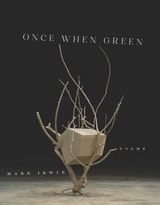
Once When Green
PoemsMark Irwin
University of Massachusetts Press, 2025
“We breathe, and then / vanish,” proclaims a speaker in Once When Green, a new collection by accomplished poet Mark Irwin. While deeply personal, the book engages the earth, “gulls, / gray, quarreling air, their ha-ha-ha-ing at our trace / of garbage and carbon,” and addresses mortality as well as the consequences of global warming—how it impacts humans, animals, and the plant life that sustains us all. Poems here accent the lateness of our attempt to control pollution, while interrogating the natural world through myth and the voicings of different creatures, beings displaced or relegated to other spaces, including apes, birds, and an arcade bear that reflects: “I once thought that was freedom— / but how in a receding wilderness no longer mine?”
Sighting those areas where metropolis and wilderness collide, Irwin conveys the tension between the natural and digital world as a speaker laments: “I am so lonely for a river’s one rushing / minute with scuttling crayfish, nymphs, and eddies blurring clouds, not its / imagined thousand pixels changing colors toward forms / on a screen.” These poems remind us how forms of the spirit cannot be bound by technology and capitalism, imploring “how to become explorers, cartographers / again.”
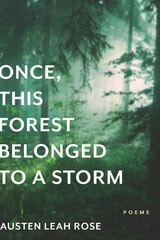
Once, This Forest Belonged to a Storm
Austen Leah Rose
University of Massachusetts Press, 2023
Does history live inside of us? Are we capable of transcending the past or are we destined to repeat it? With understated humor and grace, Once, This Forest Belonged to a Storm wrestles with questions of inheritance, spiritual unrest, the integrity of the self, and humanity’s relationship to the natural world. Excavating both personal and historical trauma and the rippling effects of the Holocaust, Austen Leah Rose writes of “the silence that follows after silence.” The poems in this debut collection map a surreal journey from alienation to belonging, as our speaker floats across the night sky over Los Angeles, communes with Shakespeare in a hotel room, attends a dinner party in outer space, and drifts down a river for fourteen years with her sister.
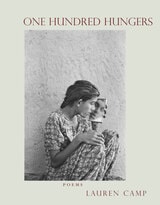
One Hundred Hungers
Lauren Camp
Tupelo Press, 2016
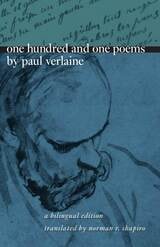
One Hundred and One Poems by Paul Verlaine
A Bilingual EditionPaul Verlaine
University of Chicago Press, 1999
"Shapiro's skillfully rhymed formal translations are outstanding." —St. Louis Post-Dispatch "Best Book of 1999"
"Paul Verlaine's rich, stylized, widely-variable oeuvre can now be traced through his thirty years of published volumes, from 1866 to 1896, in a set of luminous new translations by Norman Shapiro. . . . [His] unique translations of this whimsical, agonized music are more than adequate to bring the multifarious Verlaine to a new generation of English speakers." —Genevieve Abravanel, Harvard Review
"Shapiro demonstrates his phenomenal ability to find new rhymes and always follows Verlaine's rhyme schemes." —Carrol F. Coates, ATA Chronicle
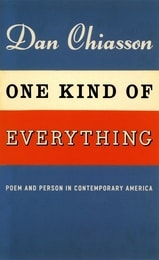
One Kind of Everything
Poem and Person in Contemporary AmericaDan Chiasson
University of Chicago Press, 2007
One Kind of Everything elucidates the uses of autobiography and constructions of personhood in American poetry since World War II, with helpful reference to American literature in general since Emerson. Taking on one of the most crucial issues in American poetry of the last fifty years, celebrated poet Dan Chiasson explores what is lost or gained when real-life experiences are made part of the subject matter and source material for poetry. In five extended, scholarly essays—on Robert Lowell, Elizabeth Bishop, Frank Bidart, Frank O’Hara, and Louise Glück—Chiasson looks specifically to bridge the chasm between formal and experimental poetry in the United States. Regardless of form, Chiasson argues that recent American poetry is most thoughtful when it engages most forcefully with autobiographical material, either in an effort to embrace it or denounce it.
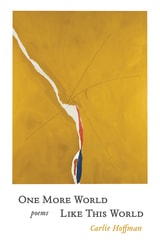
One More World Like This World
Carlie Hoffman
Four Way Books, 2025
Approaching adaptation as a coping mechanism against perpetual exile, Hoffman recasts female archetypes as contemporary women, drawing a throughline between the narrative past and present circumstances. Persephone follows her captor “deeper inside the replica of girlhood,” and Eurydice in New Jersey “knew where she was going” as she made her way to death across “the parking lot and graveyard’s / fertile grass.” Rather than simply retelling a familiar tale, Hoffman’s poems illuminate mythology as a discourse with time and recognize solidarity between women as a conversation that continues beyond the grave.
The timeless wisdom of this collection is how it unveils the constant and concurrent tragedies taking place everywhere around us while salvaging the irreducible pleasure of living from the wrecks of perception. Despite it all, we want to live. Perhaps, Hoffman seems to say, we were expelled from the garden not once but again and again, and, each time we exit, we go out searching for one more world like this world. “The apple’s a for-sale sign swaying from the tree,” she writes in the collection’s final poem “Borges Sells Me the Apple, Sells Me the World.” Or, to revisit the stage set in “Teaching the Persona Poem at Ramapo College of New Jersey,” “Outside the classroom window, snow falls, unencumbered / by a wind from nowhere the night Eurydice chooses to stay.”
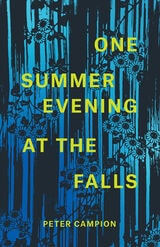
One Summer Evening at the Falls
Peter Campion
University of Chicago Press, 2021
That charge of summer nights, that edge, like everyone’s checking
everyone out. Lingering a moment in the crowd
gathered to watch the rush and crash and let the mist
drift upward to our faces, I’m here: the future feels
open again. Even alone tonight—still: open.
Campion’s poems introduce us to a range of people, all of whom are rendered with distinctiveness and intimacy. Their voices proliferate through the collection, with lyric folding into speech, autobiography becoming dramatic monologue, and casual storytelling taking on a ritualistic intensity. The poems in One Summer Evening at the Falls show how each character and each moment can be worthy of love and that this love both undoes us and makes us who we are. In narrative and lyric, in formal verse and free, Campion brings contemporary playfulness together with his classical talent to create this far-reaching and tender collection.
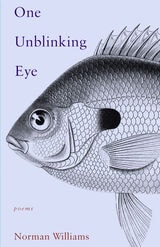
One Unblinking Eye
PoemsNorman Williams
Ohio University Press, 2003
The poems in One Unblinking Eye cast a steady and serious gaze at life outside the beltways. Whether testifying at a prayer meeting in Indiana, tramping the backwoods of northern New England, or working on an oil derrick in the Gulf, the inhabitants of these poems live on the margins of society. “They are the left-behind, odd-manneredones/Who speak in starts,” Norman Williams writes of the last residents of a West Virginia mining town. Describing the woods of central Maine, he speaks of “lives … scraped from sides/Of deer and garden plots; where double-wides,/On concrete pads abut a hard-pan road.”
It is the art of these poems to convince the reader that these lives matter. There is desperation here, and madness, but there is an equal measure of determination and faith. In one poem, Mr. Williams writes of a fisherman haunted by his daughter’s death, who “casts his line/In hopes a flash and strike will draw him back.” These words describe the poet’s method as well. The work in this collection is built on a supple metrical foundation; it is filled with glancing rhymes and wordplay; and it is touched off by striking images. It is, in other words, composed with care, and it richly rewards a careful reading.
Norman Williams writes in Burlington, Vermont, where he works as an attorney. His first book, The Unlovely Child, was published by Alfred A. Knopf to enthusiastic reviews. Anthony Hecht wrote that “the voice of these poems is marvelously modulated, low-key in its acceptances, modest in its exultations, steady and unintoxicated in its long vision. It is my fixed conviction that with his first book he has fashioned a landmark in our literature, and sounded a uniquely American note with beautiful certainty.”
With his second book, more than fifteen years in the making, Norman Williams reafirms the truth of that assessment.
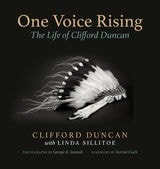
One Voice Rising
The Life of Clifford DuncanClifford Duncan with Linda Sillitoe, Photographs by George R. Janecek
University of Utah Press, 2019
“Everything was Indian then, when I was a boy. They had to explain to us about the white man's side. Now everything is in the white man's world and we teach Indian ways.”
—Clifford Duncan (from the book)
One Word
Marc Straus
Northwestern University Press, 1994
Only
Rebecca Foust
Four Way Books, 2022
Only the Road / Solo el Camino
Eight Decades of Cuban PoetryMargaret Randall, editor and translator
Duke University Press, 2016
Open Gate
An Anthology of Haitian Creole PoetryEdited by Paul Laraque and Jack Hirschman
Northwestern University Press, 2001
The editors focus on contemporary Creole poetry that reflects the struggle for human rights in Haiti. The book is divided into three sections: Pioneers of Modern Haitian Creole poetry, beginning with the founder of modern Haitian Creole literature, Felix Morisseu-Leroy (19131998); the flowering of Haitian poetry as represented by the literary movement, "Society of Butterflies," some of whose members were jailed or exiled by the bloody Duvalier dictatorship; and the New Generation featuring primarily those poets in the Diaspora whose work has been published in the last 15 years.
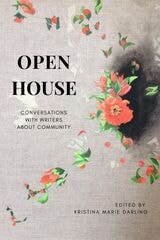
Open House
Essays on Community in Literary ArtsEdited by Kristina Marie Darling
Tupelo Press, 2025
This book offers a practical guide to building community, fostering collaboration, and inspiring generosity through the creative arts. This collection of original essays features an accomplished roster of contributors with backgrounds in diverse fields, including literary translation, magazine editing, publishing, higher education, and curriculum design. By featuring successful writers who represent such a wide range of skillsets and career paths, this book helps students envision themselves as leaders in the university and well beyond its boundaries.
In a cultural moment where graduates often seek meaningful careers outside of academia, this essay collection also offers an introduction to alt-ac career paths and the unique opportunities for effecting social change in these roles. Focusing on techniques that have broad applications for high school teachers, nonprofit leaders, community outreach organizations, and college classrooms, each chapter includes an original essay from a contemporary writer, editor, or nonprofit leader in the arts, culminating in a set of exercises for individuals and groups, which focus on empathy, citizenship, and community stewardship.
Contributors include Traci Brimhall, Chris Campanioni, Wendy Chen, Kristina Marie Darling, Ming Lauren Holden, John James, Dean Rader, and Zach Savich.

Opera
Christine Byrne
University of Iowa Press, 2027

Or, Gone
PoemsDeborah Flanagan
Tupelo Press, 2015

Oracles of Empire
Poetry, Politics, and Commerce in British America, 1690-1750David S. Shields
University of Chicago Press, 1990
British America's poetry of empire was dominated by three issues: mercantilism's promise that civilization and wealth would be transmitted from London to the provinces; the debate over the extent of metropolitan prerogatives in law and commerce when they obtruded upon provincial rights and interests; and the argument that Britain's imperium pelagi was an ethical empire, because it depended upon the morality of trade, while the empires of Spain and France were immoral empires because they were grounded upon conquest. In discussing these issues, Shields provides a virtual anthology of poems long lost to students of American literature.
Oral Poetry
An IntroductionPaul Zumthor
University of Minnesota Press, 1990
Orange Alert
essays on poetry, art, and the architecture of silenceKazim Ali
University of Michigan Press, 2010
"Orange Alert is a poetic and yogic salvo across the bows of our defensive imperial posturing. Kazim Ali's essays leap deftly from homages to avant-garde artists (Yoko Ono, Agnes Martin, John Cage) to awestruck meditations on ancient architecture, from analyses of poets (Jane Cooper, Agha Shahid Ali, Mahmoud Darwish, Lucille Clifton) to twitter aphorisms. Orange Alert is a revelation, a salve, an invitation to breathe again."
---Philip Metres, Associate Professor, Department of English, John Carroll University
"With their delicacy of attention and bold range of subjects, Kazim Ali's essays hold many quiet surprises. In each art he searches for insight and craft---the virtues of his own patient writing."
---Susan Stewart, Chancellor, Academy of American Poets; and Professor, Princeton University
"Kazim Ali's essays, like his poems, are alive with curiosity and humanity. . . . Orange Alert makes a compelling case for the necessity of poetry on a planet wracked by war and devastation."
---Timothy Yu, Associate Professor, English and Asian American Studies, University of Wisconsin-Madison
A volume in the Poets on Poetry series, which collects critical works by contemporary poets, gathering together the articles, interviews, and book reviews by which they have articulated the poetics of a new generation.
Whether he is discussing the way cell phones have altered physical intimacy and introduced new verb forms, or the way Emily Dickinson's mysteries are more clearly revealed in French translation, Kazim Ali is at once clear and complex, rigorous and charming, accessible and demanding.
In Orange Alert, Ali discusses poets including Agha Shahid Ali, Jane Cooper, Bhanu Kapil, Semezdin Mehmedinovic, and Samuel Beckett. He considers painters Agnes Martin and Piet Mondrian, musicians Alice Coltrane and Yoko Ono, and philosophers Slavoj Žižek and Jean Baudrillard. Ali links the poetic endeavor to such diverse texts as Moby-Dick, Battlestar Galactica, and Marilyn Buck's prison journals.
Ali discusses contemporary poetry in relation to other art forms and to contemporary television; film; and electronic media, including the Internet, YouTube, and Facebook.
He shines a light on the intersections between cultures in these essays on the craft of poetry, offering a hand to poets either geographically or metaphorically outside the mainstream of Western culture.
Kazim Ali is the author of two books of poetry, The Far Mosque and The Fortieth Day; two novels, Quinn's Passage and The Disappearance of Seth; and a memoir, Bright Felon: Autobiographyand Cities. He is Assistant Professor of Creative Writing at Oberlin College. He has been a regular columnist for American Poetry Review.
Ordinary Misfortunes
Emily Yoon
Tupelo Press, 2017
Ore Choir
The Lava on IcelandKaty Didden
Tupelo Press, 2022
Orientalism and Modernism
The Legacy of China in Pound and WilliamsZhaoming Qian
Duke University Press, 1995
Consulting rare and unpublished materials, Qian traces Pound’s and Williams’s remarkable dialogues with the great Chinese poets—Qu Yuan, Li Bo, Wang Wei, and Bo Juyi—between 1913 and 1923. His investigation reveals that these exchanges contributed more than topical and thematic ideas to the Americans’ work and suggests that their progressively modernist style is directly linked to a steadily growing contact and affinity for similar Chinese styles. He demonstrates, for example, how such influences as the ethics of pictorial representation, the style of ellipsis, allusion, and juxtaposition, and the Taoist/Zen–Buddhist notion of nonbeing/being made their way into Pound’s pre-Fenollosan Chinese adaptations, Cathay, Lustra, and the Early Cantos, as well as Williams’s Sour Grapes and Spring and All. Developing a new interpretation of important work by Pound and Williams, Orientalism and Modernism fills a significant gap in accounts of American Modernism, which can be seen here for the first time in its truly multicultural character.
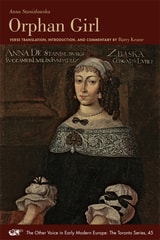
Orphan Girl
A Transaction, or an Account of the Entire Life of an Orphan Girl by way of Plaintful Threnodies in the Year 1685. The Aesop EpisodeAnna Stanislawska
Iter Press, 2016
Barry Keane's idiomatic and inventive verse translation brings to life this half-forgotten poetic account of a remarkable tale of triumph in the face of overwhelming oppression and allows Anna Stanislawska to take her place among the women poets of early modern Europe.
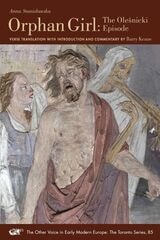
Orphan Girl
The Olesnicki Episode: One Body with Two Souls Entwined: An Epic Tale of Married Love in Seventeenth-Century PolandAnna Stanislawska
Iter Press, 2021
Written in 1685, Transaction or the Description of the Entire Life of an Orphan by Way of Plaintful Threnodies, often referred to as Orphan Girl, is a valuable, long-lost, seventeenth-century poetic text that documents women’s writing in the early modern period. In this autobiographical account, Anna Stanislawska speaks confessionally and unsparingly about her life, from her infancy to her widowhood and withdrawal from the world. Stanislawska was an incomparable memoirist, revealing the depths of her private life in a manner not to be matched until modern times. One Body with Two Souls Entwined brings together this spirited poetic account with an in-depth introductory and literary commentary by Barry Keane. Together the book offers a remarkable piece of scholarly, translational, and dramaturgical work and puts it in context amid the backdrop of Polish history.
Orpheus and Company
Contemporary Poems on Greek MythologyEdited by Deborah De Nicola
Brandeis University Press, 1999
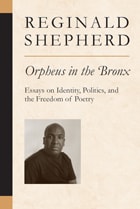
Orpheus in the Bronx
Essays on Identity, Politics, and the Freedom of PoetryReginald Shepherd
University of Michigan Press, 2010
"Orpheus in the Bronx not only extols the freedom language affords us; it embodies that freedom, enacting poetry's greatest gift---the power to recognize ourselves as something other than what we are. These bracing arguments were written by a poet who sings."
---James Longenbach
A highly acute writer, scholar, editor, and critic, Reginald Shepherd brings to his work the sensibilities of a classicist and a contemporary theorist, an inheritor of the American high modernist canon, and a poet drawing and playing on popular culture, while simultaneously venturing into formal experimentation.
In the essays collected here, Shepherd offers probing meditations unified by a "resolute defense of poetry's autonomy, and a celebration of the liberatory and utopian possibilities such autonomy offers." Among the pieces included are an eloquent autobiographical essay setting out in the frankest terms the vicissitudes of a Bronx ghetto childhood; the escape offered by books and "gifted" status preserved by maternal determination; early loss and the equivalent of exile; and the formation of the writer's vocation. With the same frankness that he brings to autobiography, Shepherd also sets out his reasons for rejecting "identity politics" in poetry as an unnecessary trammeling of literary imagination. His study of the "urban pastoral," from Baudelaire through Eliot, Crane, and Gwendolyn Brooks, to Shepherd's own work, provides a fresh view of the place of urban landscape in American poetry.
Throughout his essays---as in his poetry---Shepherd juxtaposes unabashed lyricism, historical awareness, and in-your-face contemporaneity, bristling with intelligence.
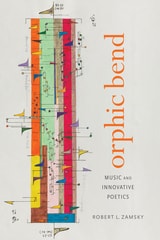
Orphic Bend
Music and Innovative PoeticsRobert L. Zamsky
University of Alabama Press, 2021
WINNER OF THE ELIZABETH AGEE PRIZE IN AMERICAN LITERATURE
Exploring how music reshapes the possibilities of poetry.
Orphic Bend: Music and Innovative Poetics explores the impact of music on recent pioneering literary practices in the United States. Adopting the myth of Orpheus as its framework, Robert L. Zamsky argues that works by Charles Bernstein, Robert Creeley, John Taggart, Tracie Morris, and Nathaniel Mackey restage ancient debates over the relationship between poetry and music even as they develop work that often sharply diverges from traditional literary forms. Opening each chapter with a consideration of the orphic roots of lyric, Zamsky integrates contemporary debates over the prospects and limitations of humanism, the meaningfulness of gesture and performance, and the nature of knowledge with the poetics of the writers under consideration, grounding his analysis in close readings of their work.
The myth of Orpheus is used as a lens throughout the book, its different facets illuminating sometimes dramatically different aspects of the shared framework of poetry and music. In the case of Bernstein, for instance, Zamsky highlights Ezra Pound’s meditations on the relationship between poetry and music (the ground upon which Pound seeks to recapture the lost possibilities of the Renaissance) and Bernstein’s incisive critique of Pound. For her part, Morris emphasizes the performative power of spoken language, foregrounding the fact that all spoken language bears cultural, communal, and personal marks of the speaker, improving an ensemble self even within the most elemental features of language. Meanwhile, in Mackey’s work, the orphic voice of the poet powerfully reaches toward an order of knowledge in which poetry and music are nearly indecipherable from one another. In this sense, music and the musicality of poetic language are the gateways for Mackey’s Gnosticism, the mechanisms of initiation into a realm, not of secrets to be learned, but of visionary knowing that continuously unfolds.
The text explores a range of musical influences on the writers under consideration, from opera to different iterations of jazz, and underscores the variety of ways in which music informs their work. Many of these writers effectively present a theory of music in their invocations of it as an inspiration for, or as an analog to, poetic practice. Zamsky’s focus on poetry and music echoes important interdisciplinary studies on literary modernism, a period for which the importance of music to literary practice is well established and extends that discussion to the contemporary context. In doing so, Orphic Bend provides an important opportunity to consider both the specific legacy of modernism, and to situate contemporary writers in broader historical contexts.

Orphic Songs
Dino Campana
Oberlin College Press, 1984
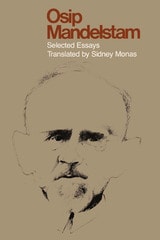
Osip Mandelstam
Selected EssaysTranslated by Sidney Monas
University of Texas Press, 1977
Osip Mandelstam, who died anonymously in a Siberian transit-camp in 1938, is now generally considered to be among the four or five greatest Russian poets of the twentieth century. The essays in this volume, presented in an exceptionally scrupulous and true translation, were selected because they represent Mandelstam's major poetic themes and his thought on literature, language and culture, and the work and place of the poet. Mandelstam's views on literature are profound and original, and they are expressed in striking and dramatic, if sometimes difficult, prose. These essays deal with such topics as the poetic process and the relationship of poetry to politics, culture, the traditions of the past, and the demands of the present.
Sidney Monas's lively introduction to the work and life of Mandelstam combines the virtues of both the critical essay and detached scholarship. Keeping biographical detail to a minimum, Monas concentrates on the pattern that runs through the essays and lends them that coherence often noted in Mandelstam's poetry.
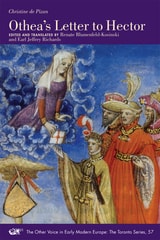
Othea’s Letter to Hector
Christine de Pizan
Iter Press, 2017
Other Edens
Ash Bowen
University of North Texas Press, 2026
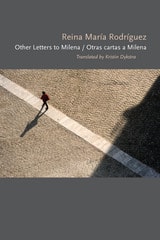
Other Letters to Milena / Otras cartas a Milena
Reina María Rodríguez
University of Alabama Press, 2014
A parallel translation of a mixed-genre work by acclaimed Cuban writer Reina María Rodríguez in which poetry merges into creative nonfiction, culminating in a series of essays.
Published in Spanish as Otras cartas a Milena, Other Letters to Milena shows Rodríguez confronting pressing issues at the turn of the twenty-first century. These involve a new post-Soviet world and the realities of diasporic existence, which have a profound effect even on people like Rodríguez who have not migrated but continue to live and work in their home nation. The book’s title references Franz Kafka, whose Letters to Milena was published after his death in 1952. This signals that Rodríguez participates in her city’s long cosmopolitan tradition asserted by Cuban writers and scholars of Cuban literature. Rodríguez’s youngest daughter, featured most prominently in the letters making up the collection’s centerpiece, “A Girl’s Story,” was named after Milena Jesenská, the recipient of Kafka’s letters.
With the poems provided in a bilingual format, the collection will be of interest both to English readers in general (this will be the first English translation of a complete Rodríguez collection not excerpted from a larger work) and to Spanish readers unable to obtain the collection in any form, given the difficulty of distributing Cuban literature outside that country.
As an introduction to the book, Dykstra has included a critical commentary. It clarifies many of the author’s references, such as details pertaining to her family history—items Dykstra learned during lengthy discussions with the author about her work—and influences about her choices in the translation.

Other Paths for Shahrazad
an Arabic/English Anthology of Contemporary Poetry by Arab WomenEdited by Jennifer Jean
Tupelo Press, 2026
A project of the Her Story Is (HSI) collective, led by Iraqi and American women writers and artists, Other Paths for Shahrazad features poems curated by the Iraqi contingent of HSI. Each poem was cotranslated by HSI members and collaborators from Iraq, Syria, Jordan, Egypt, Canada, and the United States.
The anthology is arranged so that the poems are in dialogue with each other, rather than separated into stark sections according to theme, region, or author, so that the reader experiences it as they experience a standard collection of poetry: as a potent journey, as poems speaking to poems.
Contributors include Muna Alaasi, Laila Alahdab, Marwa Abo Daif, Omaima Abd Shafy, Samia Abdulrahman, Violette Abu Jalad, Huda Aldaghfaq, Hanaa Ahmed, Souzan Ali, Huda Almubark, Iman Alsebaiy, Samira Baghdadi, Salwa ben Rhouma, Fatima Bennis, Suzanne Chakaroun, Mejda Dhahri, Rasha Fadhil, Hannan Haddad, Susana Hajjar, Jackleen Salam, Salma Abdul Hussein al-Harba, Faleeha Hassan, Azhar Ali Hussein, Asmaa Hussin, Ataf Janem, Nadia Al-Katib, Nesrin Ekram Khoury, Dima Mahmod, Hoda AbdelKader Mahmoud, Fatima Mansor, Zakia Al-Marmuq, Eman Masrweh, Raghda Mostafa, Nermeen Al Mufti, Khawla Jasim Alnahi, Amira Salameh, Layla Al Sayed, Sumia al Shaybani, Zizi Shosha, Mariam Soliman, and Elham Nasser Al-Zabedy.
Other People
Peter Campion
University of Chicago Press, 2005
Fast transparency that explodes the fuel and air
in the cylinder and shuts the intake valves and thrusts
down on the piston so the crankshaft spins and spins
you cut through all material that blocks your way
so fast that driving now past rushes and billboards
this pull to her could be your own impersonal presence
cloaked in the day to day of the malls and condos
all those wired sensors keeping on guard for you
except you flicker even inside the wet wall
where papillary muscle makes that sweet pulsation
in whatever room she's moving through this moment
under the cotton and the cool smoothness tinted blue
In this debut collection, Peter Campion explores both the gaps and the connections between the self and others. Like the "night blooming jasmine leaving its warm trace," these poems arise out of the dark. A man awakens in a hotel room to find the neighboring voices merging with the anguished souls of his nightmare. A woman living alone beside the ocean hears the words of the dead echo in the crashing waves. But if these poems convey a feeling of an enduring emptiness, they also offer us the most vital intimacies. In one poem, two lovers traverse the industrial sweep of strip malls and office towers to arrive at their rendezvous. In another, the seemingly simple memory of a mother playing with her sons at a park bridges a chasm of pain and loss.
With great poise, keen insight, and formal skill, Campion moves between shared experience and interior life in the shifting textures of Other People. Whether writing in rhymed couplets or free verse, he matches a deep understanding of the poetic tradition with his own imaginative feel for structure.
"The 'other people' of the title of this extraordinary book are fully alive in the life of its language; and so is the poet observing them, and observing himself, as one of them. The book is a sympathetic and unsentimental instrument of truth."—David Ferry
Other People's Troubles
Jason Sommer
University of Chicago Press, 1997
Other Than They Seem
Allan Peterson
Tupelo Press, 2016
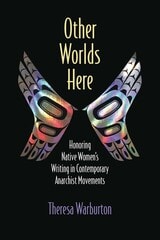
Other Worlds Here
Honoring Native Women’s Writing in Contemporary Anarchist MovementsTheresa Warburton
Northwestern University Press, 2021
All is not lost, however. Rather than centering a critical indictment of contemporary anarchist politics, Other Worlds Here maintains that a defining characteristic of New Anarchism is its ability to adapt and transform. Through close readings of texts by Native women authors, Warburton argues that anarchists must shift the paradigm that another world is possible to one that recognizes other worlds already here: stories, networks, and histories that lay out methods of building reciprocal relationships with the land and its people. Analyzing memoirs, poetry, and novels by writers including Deborah Miranda, Elissa Washuta, Heid E. Erdrich, Janet Rogers, and Leslie Marmon Silko, Other Worlds Here extends the study of Native women’s literatures beyond ethnographic analysis of Native experience to advance a widely applicable, contemporary political critique.

Otherwise
Eleanor Wilner
University of Chicago Press, 1993
"Otherwise is ambitious and patient, built on the spider's stratagem: the poet throws out a long tentative thread, then spins carefully outward until we see the new shape standing on air."—Carol Muske, The New York Times Book Review
"In a book of poems, one is happy to find half a dozen remarkable performances—poems worth rereading and even committing to memory. In Otherwise—which is splendid from the title on—it would be hard to find half a dozen which failed to equal Wilner's stratospheric standard."—David Slavit, Seven Arts
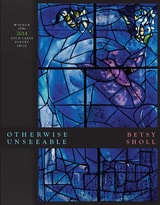
Otherwise Unseeable
Betsy Sholl
University of Wisconsin Press, 2014
The poems in Otherwise Unseeable examine such questions. It is a poetry full of music and surprise, in voices that are personal, invented, and historical, sometimes belonging to the poet and sometimes to others. Betsy Sholl probes what there is still to learn from the devastations of the twentieth century, and she explores the roots of human envy, greed, and generosity in lively, unexpected ways, enacting the kinds of arguments we have with ourselves: between control and relinquishment, grief and ecstasy, regret and acceptance, faith and skepticism. The end result is a book of verbal wrestling, a girl-Jacob mixing it up with one kind of angel or another, limping for sure, but still blessed.
Winner, Maine Literary Award, Maine Writers and Publishers Alliance
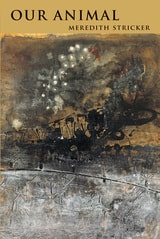
Our Animal
Meredith Stricker
Omnidawn, 2016
Our Animal is the winner of the 2014 Omnidawn Poetry Open Book Contest, selected by Mary Jo Bang.
Our Bearings
PoemsMolly McGlennen; Foreword by Ben Burgess
University of Arizona Press, 2020
While working with both traditional and contemporary form, McGlennen’s unique use of space and rhythm creates poetry that is both captivating and accessible. Our Bearings does not attempt to speak for a population; rather it offers vibrant stories and moments that give voice to pieces of a large and complex tapestry of experiences. Through keen observation and a deep understanding of Native life in Minneapolis, McGlennen has created a timely collection that contributes beautifully to the important conversation about contemporary urban Native life in North America and globally.
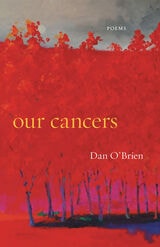
Our Cancers
PoemsDan O'Brien
Acre Books, 2021
On the fourteenth anniversary of 9/11—an event that caused their downtown apartment to become “suffused with the World Trade Center’s carcinogenic dust”—Dan O’Brien’s wife discovers a lump in her breast. Surgery and chemotherapy soon follow, and on the day of his wife’s final infusion, O’Brien learns of his own diagnosis. He has colon cancer and will need to undergo his own intensive treatment over the next nine months.
Our Cancers is a compelling account of illness and commitment, of parenthood and partnership. This spare and powerful sequence creates an intimate mythology that seeks meaning in illness while also celebrating the resilience of sufferers, caregivers, and survivors.
As O’Brien explains in an introduction, “The consecutiveness of our personal disasters, with a daughter not yet two years old at the start of it, was shattering and nearly silencing. At hospital bedsides, in hospital beds myself, and at home through the cyclical assaults of our therapies, these poems came to me in fragments, as if my unconscious were attempting to reassemble our lives, our identities and memories . . . as if I were in some sense learning how to speak again.”
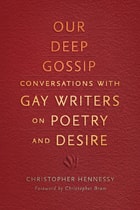
Our Deep Gossip
Conversations with Gay Writers on Poetry and DesireChristopher Hennessy; Foreword by Christopher Bram
University of Wisconsin Press, 2013
Our Earliest Tattoos
PoemsPeter Twal
University of Arkansas Press, 2018

Our Lady of Thread
Patterson, Dayna
Signature Books, 2027
In Dayna Patterson’s third collection, she weaves together three threads: poems in the voice of God the Mother, prayer poems in the Catholic “Our Lady” tradition, and poems about mothering her own two kids through these fluctuating and anxious times. Our Lady of Thread pushes the boundaries of what a poetry collection can be—it includes embroidered collages, poembroideries (poem + embroidery), and a QR code that links readers to a stop-motion videopoem. In these inventive and experimental pieces, Patterson continues to wrestle with Mormon theology and history as she meditates on the feminine divine, motherhood, and the urgencies of our complex world.
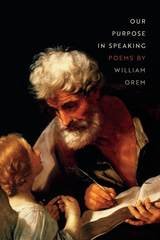
Our Purpose in Speaking
William Orem
Michigan State University Press, 2018
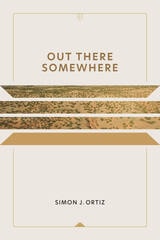
Out There Somewhere
Simon J. Ortiz
University of Arizona Press, 2002
Simon Ortiz, one of our finest living poets, has been a witness, participant, and observer of interactions between the Euro-American cultural world and that of his Native American people for many years. In this collection of haunting new work, he confronts moments and instances of his personal past—and finds redemption in the wellspring of his culture.
A writer known for deeply personal poetry, Ortiz has produced perhaps his most personal work to date. In a collage of journal entries, free-verse poems, and renderings of poems in the Acoma language, he draws on life experiences over the past ten years—recalling time spent in academic conferences and writers' colonies, jails and detox centers—to convey something of the personal and cultural history of dislocation. As an American Indian artist living at times on the margins of mainstream culture, Ortiz has much to tell about the trials of alcoholism, poverty, displacement. But in the telling he affirms the strength of Native culture even under the most adverse conditions and confirms the sustaining power of Native beliefs and connections: "With our hands, we know the sacred earth. / With our spirits, we know the sacred sky."
Like many of his fellow Native Americans, Ortiz has been "out there somewhere"—Portland and San Francisco, Freiburg, Germany, and Martinique—away from his original homeland, culture, and community. Yet, as these works show, he continues to be absolutely connected socially and culturally to Native identity: "We insist that we as human cultural beings must always have this connection," he writes, "because it is the way we maintain a Native sense of existence." Drawing on this storehouse of places, times, and events, Out There Somewhere is a rich fusion taking readers into the heart and soul of one of today's most exciting and original American poets.