Results by title
8812 books match the query 'Political Science' and 161 start with o

On Record
Files and Dossiers in American LifeStanton Wheeler
Russell Sage Foundation, 1970

On Revolution
Jean-Paul Sartre
Seagull Books, 2021
Iconic French novelist, playwright, and essayist Jean-Paul Sartre is widely recognized as one of the most important philosophers of the twentieth century, and his work has remained relevant and thought-provoking through the decades. The Seagull Sartre Library now presents some of his most incisive philosophical, cultural, and literary critical essays in twelve newly designed and affordable editions.
On Revolution consists of a long essay in two parts in which Sartre dwells upon the “myth” of revolution and goes on to analyze revolutionary ideas in fascism and, especially, Marxism. In the second essay, Sartre examines the figure of the artist and his conscience, especially in relation to communism.

On Television and Journalism
Pierre Bourdieu
Pluto Press, 1998

On The Bowery
Homelessness In SocietyBenedict Giamo
University of Iowa Press, 1989
As both theme and place, the Bowery has been rich in meaning, evocative in association, long in development, and representative of the inherent conflict between culture and subculture. This award-winning interdisciplinary study puts in perspective the social meaning and cultural significance of the Bowery from both historical and contemporary outlooks, spanning the fields of American literature and social history, culture studies, symbolic anthropology, ethnography, and social psychology. On the Bowery has special relevance in providing continuity for the systems of thought and methods of intervention that influence responses to the modern condition of homelessness in American cities today.
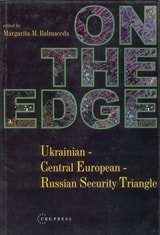
On The Edge
Ukrainian - Central European - Russian Security TriangleMargarita M. Balmaceda
Central European University Press, 2001
A new globally significant relationship arising after the break-up of the Soviet Union is the main topic of this unparalleled volume – the geopolitical link between Russia, Ukraine and the three bordering ‘Central European’ states, Hungary, Poland and Slovakia. On the Edge is a path-breaking analysis of this triangular relationship with an in-depth focus on economic, political and, more importantly, security issues.
The expansion of NATO up to Ukraine’s borders is likely to leave Ukraine in a delicate position vis-à-vis Russia. On the Edge addresses key questions, such as: how are events in Ukraine affecting the security calculations of the Central European states; Central European relations with Russia and NATO; and relations among Central European states themselves? The volume examines what Central European states can do to solidify Ukraine’s independence and help it avoid international isolation.
On the Edge gives a Central European perspective on all these issues and suggests concrete forms of co-operation.
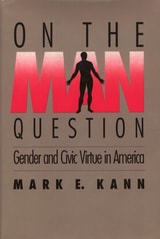
On The Man Question
Gender and Civic Virtue in AmericaMark E. Kann
Temple University Press, 1991
Focusing on Seventeenth-Century English political philosophy and Nineteenth-Century American culture, Mark Kann challenges the widely-held view that American political institutions are grounded in the primacy of individualism. Liberal thinkers have long been concerned that men are too passionate and selfish to exercise individual rights without causing social chaos. Kann demonstrates how a desperate search to answer the man question began to revolutionize gender relations He examines "the other liberal tradition in America" which downplays the value of individualism, elevates the ongoing significance of an "engendered civic virtue," and incorporates classical republicanism into the fabric of modern political discourse.
The author traces the cultural conditioning of the white middle class that produced the ideal of self-sacrificing wives whose lives were devoted to creating a haven for their husbands and a school of virtue for their sons. Upon leaving home, these young men were to be schooled in manliness in the military in order to be capable of assuming positions of power as they were vacated by their fathers’ generation. Thus, in the norms of fatherhood, fraternity, womanhood, and militarism, the male’s individualism was conditioned with a strong dose of civic virtue.
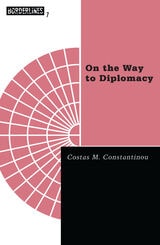
On The Way To Diplomacy
Costas M. Constantinou
University of Minnesota Press, 1996
A deconstruction of the idea of diplomacy that explores the links between its theory and practice.
What does theory have to do with the concept-let alone the practice-of diplomacy? More than we might think, as Costas M. Constantinou amply demonstrates in this ambitious reconsideration of both the concept of diplomacy and the working of theory. Here, Constantinou focuses on the language that underwrites and directs theory and diplomacy, and shows that such a critical approach is actually a way of practicing politics.
Constantinou underscores the original intertextual association between theory and diplomacy by employing the ancient Greek term theoria. Theoria once referred to both philosophical thinking and a sacred embassy sent to discharge a religious duty. The use of the term in this book leads to a new view of theory and diplomacy. Constantinou considers the structures of diplomacy and theory together with the notion of representation that is peculiar to Western metaphysical thought. A deconstruction of diplomacy itself, this work bridges classical and contemporary philosophy, ancient and modern political practice, and, ultimately, politics and the arts in general. It will alter the study, understanding, and practice of diplomacy.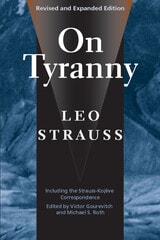
On Tyranny
Leo Strauss
University of Chicago Press, 2000
"Through [Strauss's] interpretation Xenophon appears to us as no longer the somewhat dull and flat author we know, but as a brilliant and subtle writer, an original and profound thinker. What is more, in interpreting this forgotten dialogue, Strauss lays bare great moral and political problems that are still ours." —Alexandre Kojève, Critique
"On Tyranny is a complex and stimulating book with its 'parallel dialogue' made all the more striking since both participants take such unusual, highly provocative positions, and so force readers to face substantial problems in what are often wholly unfamiliar, even shocking ways." —Robert Pippin, History and Theory
"Every political scientist who tries to disentangle himself from the contemporary confusion over the problems of tyranny will be much indebted to this study and inevitably use it as a starting point."—Eric Voegelin, The Review of Politics
Leo Strauss (1899-1973) was the Robert Maynard Hutchins Distinguished Service Professor of Political Science at the University of Chicago.
On Tyranny
Corrected and Expanded Edition, Including the Strauss-Kojève CorrespondenceLeo Strauss
University of Chicago Press, 2013

On Violence
A ReaderBruce B. Lawrence and Aisha Karim, eds.
Duke University Press, 2007
On Violence is divided into five sections. Underscoring the connection between violence and economic world orders, the first section explores the dialectical relationship between domination and subordination. The second section brings together pieces by political actors who spoke about the tension between violence and nonviolence—Gandhi, Hitler, and Malcolm X—and by critics who have commented on that tension. The third grouping examines institutional faces of violence—familial, legal, and religious—while the fourth reflects on state violence. With a focus on issues of representation, the final section includes pieces on the relationship between violence and art, stories, and the media. The editors’ introduction to each section highlights the significant theoretical points raised and the interconnections between the essays. Brief introductions to individual selections provide information about the authors and their particular contributions to theories of violence.
With selections by: Hannah Arendt, Walter Benjamin, Osama bin Laden, Pierre Bourdieu, André Breton, James Cone, Robert M. Cover, Gilles Deleuze, Friedrich Engels, Frantz Fanon, Michel Foucault, Sigmund Freud, Mohandas Gandhi, René Girard, Linda Gordon, Antonio Gramsci, Félix Guattari, G. W. F. Hegel, Adolf Hitler, Thomas Hobbes, Bruce B. Lawrence, Elliott Leyton, Catharine MacKinnon, Malcolm X, Dorothy Martin, Karl Marx, Chandra Muzaffar, James C. Scott, Kristine Stiles, Michael Taussig, Leon Trotsky, Simone Weil, Sharon Welch, Raymond Williams
On Western Terrorism - New Edition
From Hiroshima to Drone WarfareNoam Chomsky and Andre Vltchek
Pluto Press, 2017
“Noam Chomsky is a global phenomenon.”—New York Review of Books
In On Western Terrorism, world-renowned intellectual Noam Chomsky discusses Western power and propaganda with filmmaker and investigative journalist Andre Vltchek. Together they touch on colonialism, propaganda, and the media, and cover topics from the Soviet Union to Latin America to the Arab Spring.
Here is the perfect introduction to Chomsky's political thought and provides an accessible approach for anyone who wishes to better understand the West's fraught role in the world. Admired by some, condemned by others, and feared by all—the military might of the West is undeniably colossal.
Beginning with stories of the New York newsstand where Chomsky started his political education as a teenager, the discussion broadens out to encompass colonialism, imperial control, propaganda, and drone warfare.
Chomsky and Vltchek offer a powerful critique of the legacy of colonialism, touching upon many countries including Syria, Nicaragua, Cuba, China, Chile, and Turkey. The Table of Contents:
1. The Murderous Legacy of Colonialism
2. Concealing the Crimes of the West
3. Propaganda and the Media
4. The Soviet Bloc
5. India and China
6. Latin America
7. The Middle East and the Arab Spring
8. Hope in the Most Devastated Places on Earth
9. The Decline of U.S. Power Timeline
With a fresh design and a new foreword by Chomsky, this edition of On Western Terrorism stands as an influential and powerful critique of the West's role in the world, inspiring all who read it to think independently and critically.

On Your Marx
Relinking Socialism and the LeftRandy Martin
University of Minnesota Press, 2001
Reclaims Marx for today through a fundamental reconsideration of how his works should be read.
Why-and how-does Marx speak to our day? Seeking to reestablish the link between Marx, socialism, and the Left, this book negotiates the common ground between orthodox marxism and postmarxism to show how Marx can elaborate the present. More than a claim for his relevance, this book is also a forceful statement about how theory relates to political project and organization.
What, Randy Martin asks, does Marx have to say to the discourses of radical democracy, postmodernism, and globalization-all of which purport to solve problems that emerge in Marx’s writings? A reading of Marx can in fact disclose the limitations of the contemporary modes of criticism, identifying the difficult conceptual problems that cannot be avoided or overcome. Using readings of Marx to restage contemporary political discussions, On Your Marx reengages orthodox and postmarxist understandings in a critical and constructive conversation. In doing so, the book points to powerful new alliances between cultural and political theorists and activists, opening new possibilities for mobilization and social justice.
On the Back of an Envelope
A Life in WritingPeter Hennessy
Haus Publishing, 2025
As one of Britain’s foremost constitutional experts and contemporary historians, Peter Hennessy has spent his professional life unpicking the arcane world of Whitehall and Westminster. He began his career as a journalist for the Times, the Economist, and the Financial Times, developing a network of insider contacts who helped him shine a light on some of the dustiest corners of the British establishment. As a journalist, prize-winning contemporary historian, and political commentator, he has chronicled the workings of the British state with wit, affection, and a healthy sense of the absurd over a five-decade career. Now a crossbench peer, he has, in his own words, “moved in with his exhibits.” Hennessy is also a stalwart of BBC election night coverage and a regular commentator on BBC Radio 4, bringing a historical and constitutional perspective on current events.
In this new volume, he brings together selected journalism, unpublished lectures, and new writing alongside personal recollections and reflections on his time observing postwar Britain, how it is governed, and those who do the governing. He reflects on the making and unmaking of prime ministers from Attlee to Truss, life in the House of Lords, and the changing constitutional landscape in the wake of Brexit and amid uncertainty about the future of the Union. Interspersed with lectures, journalism, and new pieces, Hennessy also looks back at a fascinating career, reflecting on his own experiences as a young green graduate navigating the hard-nosed world of Fleet Street in the 1970s, bringing to life a cast of characters from a world now largely gone. He revisits his time as a public historian, academic, and crossbench peer with a levity reflected in his belief that history is “gossip with footnotes.”
On the Current Situation in the Ukraine
Serhii Mazlakh and Vasyl' Shakhrai
University of Michigan Press, 2025
On the East-West Slope
Globalization, Nationalism, Racism and Discourses on Eastern EuropeAttila Melegh
Central European University Press, 2006
On the Happiness of the Philosophic Life
Reflections on Rousseau's "Rêveries" in Two BooksHeinrich Meier
University of Chicago Press, 2016
On the Happiness of the Philosophic Life presents Heinrich Meier’s confrontation with Rousseau’s Rêveries, the philosopher’s most beautiful and daring work, as well as his last and least understood. Bringing to bear more than thirty years of study of Rousseau, Meier unfolds his stunningly original interpretation in two parts.
The first part of On the Happiness of the Philosophic Life approaches the Rêveries not as another autobiographical text in the tradition of the Confessions and the Dialogues, but as a reflection on the philosophic life and the distinctive happiness it provides. The second turns to a detailed analysis of a work referred to in the Rêveries, the “Profession of Faith of the Savoyard Vicar,” which triggered Rousseau’s political persecution when it was originally published as part of Émile. In his examination of this most controversial of Rousseau’s writings, which aims to lay the foundations for a successful nonphilosophic life, Meier brings to light the differences between natural religion as expressed by the Vicar and Rousseau’s natural theology. Together, the two reciprocally illuminating parts of this study provide an indispensable guide to Rousseau and to the understanding of the nature of the philosophic life.
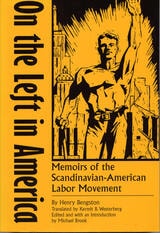
On the Left in America
Memoirs of the Scandinavian-American Labor MovementHenry Bengston. Translated by Kermit B. Westerberg. Edited and with an Introduction by Michael Brook
Southern Illinois University Press, 1999
Previously available only in an out-of-print Swedish edition published in 1955, Henry Bengston's firsthand account deals with what historian Dag Blanck calls the "other Swedish America."
Swedish immigrants in general were conservative, but Bengston and others—most notably Joe Hill—joined the working-class labor movement on the left, primarily as Debsian socialists, although their ranks included other socialists, communists, and anarchists. Involved in the radical labor movement on many fronts, Bengston was the editor of Svenska Socialisten from 1912 until he dropped out of the Scandinavian Socialist Federation in 1920. Even after 1920, however, his sympathies remained with the movement he had once strongly espoused.
On the Line
Harvey Swados
University of Illinois Press, 1957
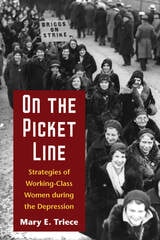
On the Picket Line
Strategies of Working-Class Women during the DepressionMary Triece
University of Illinois Press, 2006
Bonnie Ritter Book Award, National Communication Association's Feminist and Women Studies Division, 2008.
On the Picket Line uncovers the voices of working-class women, particularly those active in the Communist Party, U.S.A., in order to examine how these individuals confronted the tensions between their roles as workers, wives, mothers, and consumers. Combining critical analysis, Marxist and feminist theory, and labor history, Mary E. Triece analyzes the protest tactics employed by working class women to challenge dominant ideologies surrounding domesticity.
She details the rhetorical strategies used by women to argue for their rights as workers in the paid labor force and as caregivers in the home. Their overtly coercive tactics included numerous sit-ins, strikes, and boycotts that won tangible gains for working poor and unemployed women. The book also gives voice to influential figures in the 1930s labor movement (many of whom were members of the Communist Party, U.S.A.), such as Ella Reeve Bloor, Margaret Cowl, Anna Damon, Ann Burlak, and Grace Hutchins. Triece ultimately argues that these confrontational protest tactics of the 1930s remain relevant in today’s fights for more humane workplaces and better living conditions.
On the Rural
Economy, Sociology, GeographyHenri Lefebvre
University of Minnesota Press, 2022
A collection of previously untranslated writings by Henri Lefebvre on rural sociology, situating his research in relation to wider Marxist work
On the Rural is the first English collection to translate Lefebvre’s crucial but lesser-known writings on rural sociology and political economy, presenting a wide-ranging approach to understanding the historical and rural sociology of precapitalist social forms, their endurance today, and conditions of dispossession and uneven development.
In On the Rural, Stuart Elden and Adam David Morton present Lefebvre’s key works on rural questions, including the first half of his book Du rural à l’urbain and supplementary texts, two of which are largely unknown conference presentations published outside France. On the Rural offers methodological orientations for addressing questions of economy, sociology, and geography by deploying insights from spatial political economy to decipher the rural as a terrain and stake of capitalist transformation. By doing so, it reveals the production of the rural as a key site of capitalist development and as a space of struggle.
This volume delivers a careful translation—supplemented with extensive notes and a substantive introduction—to cement Lefebvre’s central contribution to the political economy of rural sociology and geography.

On the Semicivilized
Coloniality, Finance, and Embodied Sovereignty in CairoJulia Elyachar
Duke University Press, 2025
On the Spirit of Rights
Dan Edelstein
University of Chicago Press, 2018
In On the Spirit of Rights, Dan Edelstein answers this question by examining the complex genealogy of the rights that regimes enshrined in the American and French Revolutions. With a lively attention to detail, he surveys a sprawling series of debates among rulers, jurists, philosophers, political reformers, writers, and others who were all engaged in laying the groundwork for our contemporary systems of constitutional governance. Every seemingly new claim about rights turns out to be a variation on a theme, as late medieval notions were subtly repeated and refined to yield the talk of “rights” we recognize today. From the Wars of Religion to the French Declaration of the Rights of Man and of the Citizen to the 1948 Universal Declaration of Human Rights, On the Spirit of Rights is a sweeping tour through centuries of European intellectual history and an essential guide to our ways of thinking about human rights today.
On the Stump
Campaign Oratory and Democracy in the United States, Britain, and AustraliaSean Scalmer
Temple University Press, 2017
"Stumping," or making political speeches in favor of a candidate, cause, or campaign has been around since before the 1800s, when speechmaking was frequently portrayed as delivered from the base of a tree. The practice, which has been strongly associated with the American frontier, British agitators, and colonial Australia, remains an effective component of contemporary democratic politics.
In his engaging book On the Stump, Sean Scalmer provides the first comprehensive, transnational history of the "stump speech." He traces the development and transformation of campaign oratory, as well as how national elections and public life and culture have been shaped by debate over the past century.
Scalmer presents an eloquent study of how "stumping" careers were made, sustained, remembered, and exploited, to capture the complex rhythms of political change over the years. On the Stump examines the distinctive dramatic and performative styles of celebrity orators including Davy Crockett, Henry Clay, and William Gladstone. Ultimately, Scalmer recovers the history of the stump speech and its historical significance in order to better understand how political change is forged.
On the Waves of Empire
U.S. Imperialism and Merchant Sailors, 1872-1924William D. Riddell
University of Illinois Press, 2023
Sophisticated and innovative, On the Waves of Empire reveals how maritime labor and shipping capital stitched together, tore apart, and re-stitched the seams of empire.
On the Wings of Modernism
The United States Air Force AcademyRobert Allen Nauman
University of Illinois Press, 2003
The United States Air Force Academy stands as one of the most extensive architectural projects of the cold war era. Key to a full understanding of American modernism, the project was also a volatile battleground involving competing ideas about aesthetics and politics. Arguing that the academy's production was squarely grounded in bureaucratic and political processes, Robert Allen Nauman demonstrates that selection of both the site and the design firm was the result of political maneuverings involving U.S. military leadership.
In the academy’s iconic design, myths and metaphors of flight and the American West were interwoven with those of modernism, both to justify the plan and to free it from any lingering socialist or European associations. Skidmore, Owings, and Merrill’s first public exhibition of plans and models for the project was designed by the former Bauhaus master Herbert Bayer, and it incorporated photographs of the Colorado Springs site by Ansel Adams and William Garnett. Using previously unexplored resources of the U.S. Air Force Academy, SOM, and the Air Force Academy Construction Agency, Nauman uncovered materials such as negatives of Adams’s original photographs of the sites. He also conducted extensive interviews with SOM’s project director for the academy, Walter Netsch, in tracing the complete history of the academy's construction, from its earliest conception to eventual completion.
Once Upon a Time in Texas
A Liberal in the Lone Star StateBy David Richards
University of Texas Press, 2002
Once upon a time in Texas...there were liberal activists of various stripes who sought to make the state more tolerant and more tolerable. David Richards was one of them. In this fast-paced, often humorous memoir, he remembers the players, the strategy sessions, the legal and political battles, and the wins and losses that brought significant gains in civil rights, voter rights, labor law, and civil liberties to the people of Texas from the 1950s to the 1990s.
In his work as a lawyer, Richards was involved in cases covering voters' rights, school finance reform, and a myriad of civil liberties and free speech cases. In telling these stories, he vividly evokes the "glory days" of Austin liberalism, when a who's who of Texas activists plotted strategy at watering holes such as Scholz Garden and the Armadillo World Headquarters. Likewise, he offers vivid portraits of liberal politicians from Ralph Yarborough to Ann Richards (his former wife), progressive journalists such as Molly Ivins and the Texas Observer staff, and the hippies, hellraisers, and musicians who all challenged Texas's conservative status quo.

Once the American Dream
Inner-Ring Suburbs of the Metropolitan United StatesBernadette Hanlon
Temple University Press, 2012
Once the American Dream analyzes this downward trend, examining 5,000 suburbs across 100 different metropolitan areas and census regions in 1980 and 2000. Hanlon defines the suburbs’ geographic boundaries and provides a ranking system for assessing and acting upon inner-ring suburban decline. She also illuminates her detailed statistical analysis with vivid case studies. She demonstrates how other suburbs, particularly those in the outer reaches of cities, flourished during the 1980s and 1990s. Once the American Dream closes with a discussion of policy implications and recommendations for policymakers and planners who deal with suburbs of various stripes.
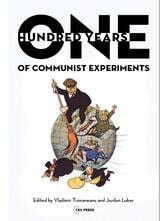
One Hundred Years of Communist Experiments
Vladimir Tismaneanu
Central European University Press, 2021
Why has communism’s humanist quest for freedom and social justice without exception resulted in the reign of terror and lies? The authors of this collective volume address this urgent question covering the one hundred years since Lenin’s coup brought the first communist regime to power in St. Petersburg, Russia in November 1917. The first part of the volume is dedicated to the varieties of communist fantasies of salvation, and the remaining three consider how communist experiments over many different times and regions attempted to manage economics, politics, as well as society and culture. Although each communist project was adapted to the situation of the country where it operated, the studies in this volume find that because of its ideological nature, communism had a consistent penchant for totalitarianism in all of its manifestations.
This book is also concerned with the future. As the world witnesses a new wave of ideological authoritarianism and collectivistic projects, the authors of the nineteen essays suggest lessons from their analyses of communism’s past to help better resist totalitarian projects in the future.
One Less Car
Bicycling and the Politics of AutomobilityAuthored by Zack Furness
Temple University Press, 2010
Although millions of people in the United States love to ride bicycles for exercise or leisure, statistics show that only 1% of the total U.S. population ride bicycles for transportation—and barely half as many use bikes to commute to work. In his original and exciting book, One Less Car, Zack Furness examines what it means historically, culturally, socioeconomically, and politically to be a bicycle transportation advocate/activist.
Presenting an underground subculture of bike enthusiasts who aggressively resist car culture, Furness maps out the cultural trajectories between mobility, technology, urban space and everyday life. He connects bicycling to radical politics, public demonstrations, alternative media production (e.g., ‘zines), as well as to the development of community programs throughout the world.
One Less Car also positions the bicycle as an object with which to analyze and critique some of the dominant cultural and political formations in the U.S.—and even breaks down barriers of race, class and gender privilege that are interconnected to mobility. For Furness, bicycles not only liberate people from technology, they also support social and environmental justice. So, he asks, Why aren’t more Americans adopting them for their transportation needs?

One Small Farm
Photographs of a Wisconsin Way of LifeCraig Schreiner
Wisconsin Historical Society Press, 2013
“People’s lives are written on the fields of old farms. The rows of the fields are like lines on a page, blank and white in winter, filled in with each year’s story of happiness, disappointment, drought, rain, sun, scarcity, plenty. The chapters accumulate, and people enter and leave the narrative. Only the farm goes on.”—From the Introduction
In One Small Farm, Craig Schreiner’s evocative color photographs capture one family as they maintain the rhythms and routines of small farm life near Pine Bluff, Wisconsin. “Milk in the morning and milk at night. Feed the cows and calves. Plant crops. Grind feed. Chop and bale hay. Cut wood. Clean the barn. Spread manure on the fields. Plow snow and split wood in winter. In spring, pick rocks from the fields. Cultivate corn. Pick corn. Harvest oats and barley. Help calves be born. Milk in the morning and milk at night.”
There’s much more to life on the farm than just chores, of course, and Schreiner captures the rhythms and richness of everyday life on the farm in all seasons, evoking both the challenges and the joys and providing viewers a window into a world that is quickly fading. In documenting the Lamberty family’s daily work and life, these thoughtful photos explore larger questions concerning the future of small farm agriculture, Wisconsin cultural traditions, and the rural way of life.
Ontology of Production
Three EssaysNishida KitarM
Duke University Press, 2012
Agreeing with Marx that ontology is production and production is ontology, Nishida in these three essays—"Expressive Activity" (1925), "The Standpoint of Active Intuition" (1935), and "Human Being" (1938)—addresses sense and reason, language and thought, intuition and appropriation, ultimately arguing that in this concept of production, ideality and materiality are neither mutually exclusive nor oppositional but, rather, coimmanent. Nishida's forceful articulation of the radical nature of Marx's theory of production is, Haver contends, particularly timely in today's speculation-driven global economy. Nishida's reading of Marx, which points to the inseparability of immaterial intellectual labor and material manual labor, provokes a reconsideration of Marxism's utility for making sense of—and resisting—the logic of contemporary capitalism.

Open Government, Open Diplomacy
Conversations with a Former American Diplomat M. André GoodfriendIstván Hargittai
Central European University Press, 2023
André Goodfriend was Deputy Chief of Mission from 2013 to 2015 at the US Embassy in Budapest. In the absence of an ambassador, most of the time he was Chargé d’Affaires. Goodfriend represented his country, and for that matter, liberal democracy, in the early period of the increasingly autocratic Orbán regime. This tenure was distinguished by an unusually high public visibility and broad-based popularity. This book contains the distilled essence of conversations recorded in the fall of 2015 and in the years after his departure.
Aside from Goodfriend’s reflections on his personal history, the main focus of the deliberations is on open government: its characteristics, preconditions, benefits, and its relation to modern diplomacy. The mindset of a democracy-rooted diplomat with a working experience in an increasingly autocratic regime lends a particular perspective to the topics discussed. These topics include the fight against corruption, the protection of civil society, crisis prevention, education, economy, international relations, applied humanities, and the use of the social and traditional media to achieve policy goals.
This book presents modern, “people-friendly” diplomacy in an era in which public officials are increasingly expected to be transparent and engaged.
Open Marxism 1
Dialectics and HistoryWerner Bonefeld
Pluto Press, 1992
In this study, distinguished international contributors project an ‘open’ Marxism - a rejection of the determinism and positivism which characterise so much of contemporary left-wing thought. Topics covered in the two volumes include Marxism and political economy, historical materialism, dialectics, state theory, class, fetishism and the periodisation of capitalist development.
Open Marxism 2
Theory and PracticeWerner Bonefeld
Pluto Press, 1992
Open Marxism 3
Emancipating MarxKosmas Psychopedis
Pluto Press, 1995
The contributors argue that sociological heritage which grew up under the banner of scientific Marxism has had a detrimental effect on the movement of socialist thinking. The 'emancipation of Marx' implies both freeing Marx from the understanding of the 20th century and the freeing of the human spirit from the control of capital.
Open Marxism 4
Against a Closing WorldAna Cecilia Dinerstein
Pluto Press, 2019
Open Marxism 4
Against a Closing WorldAna Cecilia Dinerstein
Pluto Press, 2019
Open Secrets
Israeli Foreign and Nuclear PoliciesIsrael Shahak
Pluto Press, 1997
‘As a critic of Zionism and as an opponent of Jewish exclusivity, Israel Shahak is special. He possesses in-depth knowledge of Israeli society, Jewish culture and the history of his people. His humanitarian concerns and commitments are extensive; his work as a human rights campaigner ... is enormous ... Shahak provides insights [in Open Secrets] that are often far more penetrating than what has been written by others ... Little of the information and few of the insights in Open Secrets can be found in other books that focus on Israel and the Middle East ... Open Secrets is an excellent book for required reading in History, political science and/or international affairs courses in which there is consideration of Israel in the Middle East.’ The Washington Report on Middle East Affairs
Open Society Unresolved
The Contemporary Relevance of a Contested IdeaChristof Royer
Central European University Press, 2023
Is the concept of open society still relevant in the 21st century? Do the current social, moral, and political realities call for a drastic revision of this concept? Here fifteen essays address real-world contemporary challenges to open society from a variety of perspectives. What unites the individual authors and chapters is an interest in open society’s continuing usefulness and relevance to address current problems. And what distinguishes them is a rich variety of geographical and cultural backgrounds, and a wide range of academic disciplines and traditions.
While focusing on probing the contemporary relevance of the concept, several chapters approach it historically. The book features a comprehensive introduction to the history and current ‘uses’ of the theory of open society. The authors link the concept to contemporary themes including education, Artificial Intelligence, cognitive science, African cosmology, colonialism, and feminism. The diversity of viewpoints in the analysis reflects a commitment to plurality that is at the heart of this book and of the idea of open society itself.

Opera and the Political Imaginary in Old Regime France
Olivia Bloechl
University of Chicago Press, 2018
In Opera and the Political Imaginary in Old Regime France, however, Olivia Bloechl reveals another layer of French opera’s political theater. The make-believe worlds on stage, she shows, involved not just fantasies of sovereign rule but also aspects of government. Plot conflicts over public conduct, morality, security, and law thus appear side-by-side with tableaus hailing glorious majesty. What’s more, opera’s creators dispersed sovereign-like dignity and powers well beyond the genre’s larger-than-life rulers and gods, to its lovers, magicians, and artists. This speaks to the genre’s distinctive combination of a theological political vocabulary with a concern for mundane human capacities, which is explored here for the first time.
By looking at the political relations among opera characters and choruses in recurring scenes of mourning, confession, punishment, and pardoning, we can glimpse a collective political experience underlying, and sometimes working against, ancienrégime absolutism. Through this lens, French opera of the period emerges as a deeply conservative, yet also more politically nuanced, genre than previously thought.
Operation Defensive Shield
Witnesses to Israeli War CrimesEdited by Muna Hamzeh and Todd June
Pluto Press, 2003
On March 29, 2002 the Israeli army launched Operation Defensive Shield, the largest military offensive against Palestinian civilians since the 1948 Arab-Israeli War. During the operation, the military used the most advanced weaponry at its disposal: Merkava tanks, Apache attack helicopters and F-15 fighter jets. When the operation ended on April 21, Israel had destroyed the Palestinian economic and social infrastructure, leveled large swathes of residential area, killed 220 people, injured hundreds more and arrested thousands.
This book documents these events through a collection of electronic witness narratives written by Palestinians who were under attack and by Israeli and international peace activists who witnessed the results of these attacks. Deeply moving and courageous, these narratives offer a uniquely powerful and intimate account of the daily reality for Palestinians who endured Ariel Sharon's military strategy, and the death and destruction that strategy has caused throughout the Occupied Territories.
Most important, the witnesses' voices bring to life the aggressive nature of this strategy -- they belie the noble motives ascribed to Sharon and those in his government and military who designed and carried it out. The editors argue that Operation Defensive Shield is a prelude to Israel's ethnic cleansing of the Palestinians. They provide historical context, a chronology, and an analysis of the conflict that situates the horror of these days in their proper perspective.
Operation Defensive Shield: Witnesses to Israeli War Crimes is an essential record for those who want to understand what happened in the West Bank in the spring of 2002, and what it portends for the future of the region.

Operation Mind
A Brief Documentary Account of the House Committee on Un-American Activities. And Why It Matters Now.Natalie Zemon Davis and Elizabeth Douvan
Disobedience Press, 2025
The 2025 reprint of Operation Mind offers a foreword by comparatist Silke-Maria Weineck, an essay by historian Alan Wald connecting Operation Mind’s history of McCarthyism with present-day attacks on academic freedom, and a new (2023) introduction to the text by Natalie Zemon Davis.
Opposing Democracy in the Digital Age
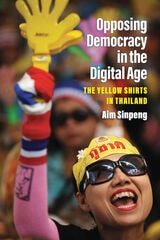
The Yellow Shirts in ThailandAim Sinpeng
University of Michigan Press, 2021
Opposing Democracy in the Digital Age is about why ordinary people in a democratizing state oppose democracy and how they leverage both traditional and social media to do so. Aim Sinpeng focuses on the people behind popular, large-scale antidemocratic movements that helped bring down democracy in 2006 and 2014 in Thailand. The yellow shirts (PAD—People’s Alliance for Democracy) that are the focus of the book are antidemocratic movements grown out of democratic periods in Thailand, but became the catalyst for the country’s democratic breakdown. Why, when, and how supporters of these movements mobilize offline and online to bring down democracy are some of the key questions that Sinpeng answers. While the book primarily uses a qualitative methodological approach, it also uses several quantitative tools to analyze social media data in the later chapters. This is one of few studies in the field of regime transition that focuses on antidemocratic mobilization and takes the role of social media seriously.
Opposing Power
Building Opposition Alliances in Electoral AutocraciesElvin Ong
University of Michigan Press, 2022

Opposition and Intimidation
The Abortion Wars and Strategies of Political HarassmentAlesha E. Doan
University of Michigan Press, 2007
The abortion fight has long been a crucible of political tactics, with both sides employing strategies ranging from litigation to civil disobedience to outright violence. Anti-abortion activists have arguably been more tactically innovative than their pro-choice peers. Opposition and Intimidation looks at how their use of political harassment fits—or doesn't—with more conventional political efforts in the struggle over abortion.
Alesha Doan's insightful interviews and observations powerfully portray anti-abortion activists' relationship to the objects of their protest. Her portrait is augmented by thorough quantitative analysis of harassment's role within the movement's multitiered strategy—a strategy that Doan shows has forced a decline in the availability and popularity of abortions. Using her unique study of the anti-abortion movement as a model, Doan extends her findings to propose a novel and valuable theory of the new politics of harassment.
"An interesting and sophisticated account. Seamlessly weaves narrative and analysis, tying local action to national strategy. Explores uncharted territory in the abortion controversy and expands our understanding of political action."
—Deborah R. McFarlane, University of New Mexico
"For 40 years, abortion politics have been endlessly fascinating to American scholars and journalists alike because they generate unique political phenomena that challenge traditional theories of political behavior. In this book, Doan goes straight to the heart of the matter by describing, evaluating, and explaining one of the most characteristic and complex of these phenomena—political harassment. In a well-written narrative that weaves qualitative and quantitative data, she gives us the first scholarly look at this political tactic, whose relevance and use go well beyond American abortion politics."
—Chris Mooney, University of Illinois at Springfield
"The book contributes to political theory and knowledge by adding new empirical data gathered from interviews with those in the front lines of the struggle over abortion. The author refines and develops a category of unconventional political participation—political harassment of nongovernmental actors—and explains why it is particularly effective in undermining the rights of women seeking abortions, as well as the rights of abortion service providers."
—Nikki R. Van Hightower, Texas A&M University
Alesha E. Doan is Assistant Professor of Political Science at the University of Kansas.
Opposition by Imitation
The Economics of Italian Anti-Mafia ActivismChristina Jerne
University of Minnesota Press, 2025
Defying the mafia with everyday acts of resistance
For more than 150 years, Italy has been home to a resilient and evolving resistance against the pervasive influence of mafias. While these criminal organizations are renowned for their vast international business enterprises, the collective actions taken to oppose them are less known. In Opposition by Imitation, Christina Jerne explores anti-mafia activism, revealing how ordinary people resist, counter, and prevent criminal economies from proliferating.
Drawing on ethnographic fieldwork among anti-mafia alliances in Campania, Sicily, and other parts of Italy, Jerne details a particular aspect of mafia activities: providing cash relief and other forms of patronage to individuals and groups. Her research shows how activism has evolved to imitate this sustaining role. Activists are increasingly challenging mafia control both by creating alternative economies—from producing food that interrupts mafia labor practices to organizing tourism that supports anti-mafia hospitality—and by subversively adopting business tactics similar to the mafia’s to compete with their social influence and legitimacy. Exposing the political implications of this mimetic opposition, Jerne points to its potential impact on crime prevention and criminalization, both in Italy and globally.
Opposition by Imitation shows how these modern-day Robin Hoods are redefining collective action, taking what was controlled by the mafias and returning it to the collective. This contentious economic turn, against the backdrop of broader social movements, reveals significant political possibilities afforded by imitative opposition.
Retail e-book files for this title are screen-reader friendly with images accompanied by short alt text and/or extended descriptions.
Oppositional Consciousness
The Subjective Roots of Social ProtestEdited by Jane J. Mansbridge and Aldon Morris
University of Chicago Press, 2001
Each essay employs a recent historical case to demonstrate how oppositional consciousness actually worked in the experience of a subordinate group. Based on participant observation and interviews, chapters focus on the successful social movements of groups such as African Americans, people with disabilities, sexually harassed women, Chicano workers, and AIDS activists. Ultimately, Oppositional Consciousness sheds new light on the intricate mechanisms that drive the important social movements of our time.
Contributors: Naomi Braine, Sharon Groch, Fredrick C. Harris, Jane Mansbridge, Anna-Maria Marshall, Aldon Morris, Marc Simon Rodriguez, Brett C. Stockdill, Lori G. Waite
Optimism at All Costs
Black Attitudes, Activism, and Advancement in Obama's AmericaLessie B. Branch
University of Massachusetts Press, 2018
Lessie B. Branch confronts the tension between black Americans' economic realities and the hope many felt for the future, looking at survey data alongside the rhetoric of leading black figures, including President Obama. This disparity has caused a dangerous resistance to social activism, as discourses of optimism privilege individual success over the need for collective action. Branch sees the emergence of the Black Lives Matter movement as a constructive change in this dynamic. As Americans continue to grapple with complicated questions of race and progress in classrooms, in the media, and in legislatures, this short, provocative book will inform and enrich these important discussions.

Oral Arguments and Coalition Formation on the U.S. Supreme Court
A Deliberate DialogueRyan C. Black, Timothy R. Johnson, and Justin Wedeking
University of Michigan Press, 2014
The U.S. Supreme Court, with its controlled, highly institutionalized decision-making practices, provides an ideal environment for studying coalition formation. The process begins during the oral argument stage, which provides the justices with their first opportunity to hear one another's attitudes and concerns specific to a case. This information gathering allows them eventually to form a coalition.
In order to uncover the workings of this process, the authors analyze oral argument transcripts from every case decided from 1998 through 2007 as well as the complete collection of notes kept during oral arguments by Justice Lewis F. Powell and Justice Harry A. Blackmun. Both justices clearly monitored their fellow justices' participation in the discussion and used their observations to craft opinions their colleagues would be likely to support. This study represents a major step forward in the understanding of coalition formation, which is a crucial aspect of many areas of political debate and decision making.
Orange Parades
The Politics of Ritual, Tradition and ControlDominic Bryan
Pluto Press, 2000