Results by title
4743 books match the query 'Religion' and 90 start with o
On the Virtues
Jean Capreolus
Catholic University of America Press, 2001
Once Out of Nature
Augustine on Time and the BodyAndrea Nightingale
University of Chicago Press, 2011
Once a Peacock, Once an Actress
Twenty-Four Lives of the Bodhisattva from Haribhatta's "Jatakamala"Haribhatta
University of Chicago Press, 2017
Haribhatta’s Jåtakamålå is a sophisticated and personal adaptation of popular stories, mostly non-Buddhist in origin, all illustrating the future Buddha’s single-minded devotion to the good of all creatures, and his desire, no matter what his incarnation—man, woman, peacock, elephant, merchant, or king—to assist others on the path to nirvana. Haribhatta’s insight into human and animal behavior, his astonishing eye for the details of landscape, and his fine descriptive powers together make this a unique record of everyday life in ancient India as well as a powerful statement of Buddhist ethics. This translation will be a landmark in the study of Buddhism and of the culture of ancient India.
Once the Buddha Was a Monkey
Arya Sura's "Jatakamala"Arya Sùra
University of Chicago Press, 1989
Written most probably in the fourth century A.D., the Jatakamala is generally considered the masterpiece of Buddhist literature in Sanskrit. In elegant, courtly style, Arya Sura retells thirty-four traditional stories about the Buddha in his previous incarnations, human and animal. Whether as a king, a brahmin, a monkey, or a hare, the Great One is shown in assiduous pursuit of virtue and compassion. Though primarily intended as exemplary tales illustrating the Buddhist virtues, these stories also provide a vivid picture of life at a high point in ancient Indian culture—city life in ordinary households or at the royal court, and country life against a backdrop of mountain, desert, and jungle.
Fresh study of the Sanskrit manuscripts, now scattered in libraries all over the world, has enabled Peter Khoroche to make this new translation faithful to the original in both style and content. His explanatory notes will assist student and general reader alike in appreciating this classic from an ancient and exotic civilization.
“One would be a fool not to welcome the chance to read this book.”—Richard Gombrich, Journal of the Royal Asiatic Society
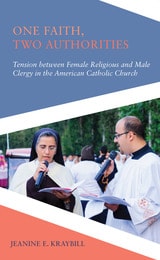
One Faith, Two Authorities
Tension between Female Religious and Male Clergy in the American Catholic ChurchJeanine E. Kraybill
Temple University Press, 2019
While female religious have grown to possess a sense of personal authority in issues impacting the laity, and have come to engage in social-issue-oriented activities, religious institutions have traditionally viewed men as the decision-makers. One Faith, Two Authorities examines the tensions of policy and authority within the gendered nature of the Catholic Church.
Jeanine Kraybilllooks at the influence of Catholic elites—specifically within the U.S. Conference of Catholic Bishops and the Leadership Conference of Women Religious—and their opinions on public policy and relevant gender dynamics with regard to healthcare, homosexuality, immigration, and other issues. She considers the female religious’ inclusive positions as well as their opposition to ACA for bills that would be rooted in institutional positions on procreation, contraception, or abortion. Kraybill also systematically examines the claims of the 2012 Doctrinal Assessment against the Leadership Conference of Women Religious.
One Faith, Two Authorities considerswhether the sisters and the male clergy are in fact in disagreement about social justice and healthcare issues and/or if women religious have influence.
One God, One People
Oneness and Unity in Early ChristianityStephen C. Barton
SBL Press, 2023
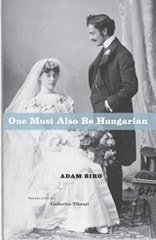
One Must Also Be Hungarian
Adam Biro
University of Chicago Press, 2006
The only country in the world with a line in its national anthem as desperate as “this people has already suffered for its past and its future,” Hungary is a nation defined by poverty, despair, and conflict. Its history, of course, took an even darker and more tragic turn during the Holocaust. But the story of the Jews in Hungary is also one of survival, heroism, and even humor—and that is the one acclaimed author Adam Biro sets out to recover in One Must Also Be Hungarian, an inspiring and altogether poignant look back at the lives of his family members over the past two hundred years.
A Hungarian refugee and celebrated novelist working in Paris, Biro recognizes the enormous sacrifices that his ancestors made to pave the way for his successes and the envious position he occupies as a writer in postwar Europe. Inspired, therefore, to share the story of his family members with his grandson, Biro draws some moving pictures of them here: witty and whimsical vignettes that convey not only their courageous sides, but also their inner fears, angers, jealousies, and weaknesses—traits that lend an indelible humanity to their portraiture. Spanning the turn of the nineteenth century, two destructive world wars, the dramatic rise of communism, and its equally astonishing fall, the stories here convey a particularly Jewish sense of humor and irony throughout—one that made possible their survival amid such enormous adversity possible.
Already published to much acclaim in France, One Must Also Be Hungarian is a wry and compulsively readable book that rescues from oblivion the stories of a long-suffering but likewise remarkable and deservedly proud people.
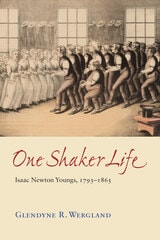
One Shaker Life
Isaac Newton Youngs, 1793-1865Glendyne R. Wergland
University of Massachusetts Press, 2006
A member of the United Society of Believers, better known as the Shakers, Isaac Newton Youngs spent most of his life in New Lebanon, New York, home of the society's central Ministry. As both a private diarist and the official village scribe, he kept meticulous records throughout those years of both his own experience and that of the community. All told, more than four thousand pages of Brother Isaac's journals have survived, documenting the history of the Shakers during the period of their greatest success and providing a revealing view of the daily life of a rank-and-file Believer.
In this deeply researched biography, Glendyne R. Wergland draws on Youngs's writings to tell his story and to explore “the tension between desire and discipline” at the center of his life. She follows Youngs from childhood and adolescence to maturity, through years of demanding responsibility into his fatal decline. In each of these stages, he remained a talented and committed yet independent Shaker, one who chose to stay with the community but often struggled to abide by its stringent rules, including the vow of celibacy. Perhaps above all, he was a man who spent most of his waking hours working diligently at a succession of tasks, making clocks, sewing clothes, fixing roofs, writing poetry, chronicling his daily acts and thoughts.
In his journals, Brother Isaac writes at length of his efforts to control his lust as a young man, and he complains repeatedly about overwork as he grows older. He defines the rules of his community and identifies transgressors, while enciphering his critical entries (and those chronicling his own sexual desires) to avoid detection and uphold the demand for conformity. At times he admits doubt, but without ever relinquishing the belief that he is on the straight and narrow path to salvation. What emerges in the end is the complex portrait of an ordinary man striving to live up to the imperatives of his faith.
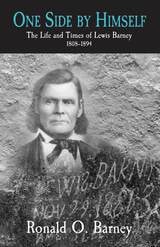
One Side By Himself
Ronald Barney
Utah State University Press, 2002
One State Under God
A History of Religion in TexasJoseph L. Locke
University of Texas Press, 2026
A broad and accessible history of religion in Texas, from prehistory to the present.
From sprawling megachurches to religious billboards and towering steel crosses, religion quite literally looms over Texas. Christian nationalism determines the state’s politics and, every school day, more than five million Texas children pledge allegiance to “one state under God.” But it wasn’t always this way.
In this wide-ranging chronicle, Joseph Locke uncovers the breadth of Texas’s religious history, from Indigenous painters of cosmological cave art and Spanish invaders who constructed missions to irreligious Anglo colonists, freethinking frontiersmen, Tejano folk saints, evangelical culture warriors, and Muslim immigrants. Locke traces the state’s religious transformations across the centuries, bringing them to life through his depiction of compelling figures, like enslaved preacher Anderson Edwards, fighting fundamentalist J. Frank Norris, and celebrated humanitarian Sister Norma Pimentel, and gripping moments, such as the murder of atheist newspaperman William Cowper Brann and the siege of the Branch Davidian compound in Waco. Comprehensive, fast-paced, and highly readable, One State Under God reveals how the Lone Star State’s spiritual path was blazed.
One Text, A Thousand Methods
Studies in Memory of Sjef van TilborgPatrick Chatelion Counet
SBL Press, 2016
A Brill classic now in paperback from SBL Press
Essays in this volume describe the shift in biblical exegesis within the last several decades from the interpretation of biblical texts as the outcome of historical development, or diachronic methodology, to the exploration of the text as the result of a reading process rather than a historical process, or synchronic methodology. The methods discussed include ideology criticism, semantic and poetic analysis, cognitive linguistics, drama theory, narratology, deconstruction, and anthropology, and intertextuality. The authors of this work challenge biblical scholars not to just perform exegesis, but to explore the methods and aims underlying their interpretations.
Features:
- Essays examine texts from the Old or New Testament through the lens of one of the many modern synchronic methods used in postmodern literary interpretation
- Fifteen essays from top scholars in the field
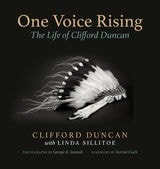
One Voice Rising
The Life of Clifford DuncanClifford Duncan with Linda Sillitoe, Photographs by George R. Janecek
University of Utah Press, 2019
“Everything was Indian then, when I was a boy. They had to explain to us about the white man's side. Now everything is in the white man's world and we teach Indian ways.”
—Clifford Duncan (from the book)
One World
The Interaction of Science and TheologyJohn C. Polkinghorne
Templeton Press, 2007
Open Canon
Scriptures of the Latter Day Saint TraditionEdited by Christine Elyse Blythe, Christopher James Blythe, and Jay Burton
University of Utah Press, 2022
Chapters cover both well-studied and lesser-studied works, introducing readers to scripture dictated by nineteenth- and twentieth-century revelators such as James Strang, Lucy Mack Smith, Sidney Rigdon, Harry Edgar Baker, and Charles B. Thompson, among others. Contributors detail how various Latter Day Saint denominations responded to scriptures introduced during the ministry of Joseph Smith and how churches have employed the Book of Mormon, the Doctrine and Covenants, and the Lectures of Faith over time. Bringing together studies from across denominational boundaries, this book considers what we can learn about Latter Day Saint resistance to the closed canon and the nature of a new American scriptural tradition.
Open Your Hand
Teaching as a Jew, Teaching as an AmericanIlana M. Blumberg
Rutgers University Press, 2019
Opening Scripture
Bible Reading and Interpretive Authority in Puritan New EnglandLisa M. Gordis
University of Chicago Press, 2003
What role did the Bible really play in Puritan New England? Many have treated it as a blunt instrument used to cudgel dissenters into submission, but Lisa M. Gordis reveals instead that Puritan readings of the Bible showed great complexity and literary sophistication—so much complexity, in fact, that controversies over biblical interpretation threatened to tear Puritan society apart.
Drawing on Puritan preaching manuals and sermons as well as the texts of early religious controversies, Gordis argues that Puritan ministers did not expect to impose their views on their congregations. Instead they believed that interpretive consensus would emerge from the process of reading the Bible, with the Holy Spirit assisting readers to understand God's will. Treating the conflict over Roger Williams, the Antinomian Controversy, and the reluctant compromises of the Halfway Covenant as symptoms of a crisis that was as much literary as it was social or spiritual, Opening Scripture explores the profound consequences of Puritan negotiations over biblical interpretation for New England's literature and history.
Opening Your Heart with Psalm 27
A Spiritual Practice for the Jewish New YearRabbi Debra J. Robbins
Central Conference of American Rabbis, 2019
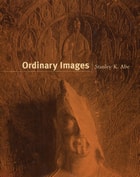
Ordinary Images
Stanley K. Abe
University of Chicago Press, 2002
Situating his study in the gaps between conventional categories such as Buddhism, Daoism, and Chinese popular art, Abe examines works—including some of the earliest known examples of Buddha-like images in China—that were commissioned by patrons of modest standing and produced by nameless artists and artisans. Sophisticated and lucidly written, Ordinary Images offers an unprecedented exploration of the lively and diverse nature of image making and popular practices.
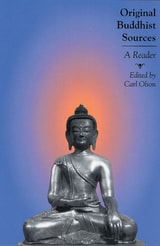
Original Buddhist Sources
A ReaderOlson, Carl
Rutgers University Press, 2005
Bringing together essential materials on the origins and development of Buddhist traditions from India, Sri Lanka, Tibet, China, and Japan, this anthology provides the broadest selection of primary source Buddhist literature available to date.
The volume is divided into two major parts: Theravada and Mahayana forms of Buddhism. The first section presents selections that explore major themes in Buddhist thought such as causality, Four Noble Truths, the doctrine of non-self, nibbana, meditation, and ethics, as well as literature about monastic life and regulations, women, and hagiography.
The second part includes selections from so-called wisdom literature and texts that represent the three major schools of Mahayana Buddhism: Pure Land, Madhyamika, and Yogacara. Selections also include sources from some of the major Chinese Buddhist schools such as Hua-yen, T'ien T'ai, Pure Land, and Ch'an. Readings by thinkers such as Tantric Buddhist reformer Tsong Khapa, Pure Land leaders Honen, Shinran, and Nichiren, as well as Zen Buddhists Dogen and Hakuin provide a perspective on regional and national traditions.
In addition to the general introduction, each major section is introduced by an essay that places the selections within the context of Buddhist history. This comprehensive reader stands on its own as an indispensable anthology of original textual sources for courses in Buddhism, while also serving as a companion volume to the text The Different Paths of Buddhism: A Narrative-Historical Introduction.
Orphism and Tragedy
Myth TransfiguredGianni Carchia
Seagull Books, 2026
A reimagining of the ancient Greek mystical movement Orphism.
What does it mean to step outside the civic order through poetry? Ever since it first emerged in Greece around the sixth century BC, Orphic doctrine has marked a powerful rupture with the ancient world. Its salvific practices, closely tied to a belief in the soul’s immortality, its resolute rejection of sacrificial ritual and embrace of vegetarianism, and its distinctive conception of time and memory all defined a way of life, the bios orphikos, that was at once poetic and political.
In this brief yet densely layered text, Gianni Carchia returns to Orphism in all its implications. It becomes clear that, for Carchia, Orphism is not merely a historiographical concern, but an aesthetic and political one. If tragedy constitutes one of the central pillars around which the polis was formed, Orphism represents a radically different path—an alternative to the polis itself—by placing the poetic word, in all its autonomous power, at its core. And if the relationship between philosophy and tragedy has long been a central theme in the history of Western thought, Carchia’s reflections here ask a different question: Is the Orphic path still accessible to us today?

Orthodoxy
A Modern DenominationJoshua Shanes
Rutgers University Press, 2027
Orthodox Judaism is often perceived simply as the continuation of pre-modern Jewish tradition. In fact, Orthodoxy represents a diverse range of self-conscious attempts to promote new forms of Jewishness that are cast as unchanging over time, filling an urgent need in an age of constant change. In the midst of a tumultuous era, marked by the new values of Enlightenment, Orthodoxy emerged as a new term and movement, struggling to gain stability in a world of conflict and adaptation. Quite unlike its public reputation, Orthodoxy does not convey fixity; rather, it is an elastic term that embraces different and evolving sub-groups of Jews who do not necessarily embrace each other as they struggle to police their boundaries.
In this first comprehensive history of Orthodoxy, Joshua Shanes argues that Orthodox Jews are not traditional, but traditionalist. As the great historian Jacob Katz explained, traditionalists consciously attempt to recreate a pre-modern system in a new context and with decidedly modern tools, and in an environment that does not take its values as self-evident or authoritative. Even beyond the ritual and theological innovations of Orthodoxy – which are many - its awareness that other options are available produces a counter-intuitive break between Orthodoxy and the world it seeks to perpetuate.
This book traces the emergence and evolution of the term “Orthodoxy” in Judaism and the communities that claimed it, from Western and Central Europe into Eastern Europe, America, Israel and other parts of the Jewish Diaspora. It unpacks an intriguing historical irony: how a traditional culture evolved into a voluntary religio-political community maintained by a determined minority that viewed itself as the sole carriers of Jewish authenticity in the modern world.

Os Praesens Ciceronis Epistularis
The Immedaite Mouth of Cicero in His LettersReginald Foster
Catholic University of America Press, 0
Osho Rajneesh
Studies in Contemporary ReligionJudith M. Fox
Signature Books, 2002
Highly unorthodox, he courted controversy and was condemned for being a “sex guru.” His Oregon headquarters, Rajneeshpuram, proved to be a short-lived utopia that provoked antagonism and only added to his notoriety. But his ashram in Poona, India, continues to thrive, as do Osho centers in Europe and elsewhere. His adherents number in the thousands. His books have become bestsellers around the globe.

Osiris, Volume 16
Science in Theistic Contexts: Cognitive DimensionsEdited by John Hedley Brooke, Margaret J. Osler, and Jitse M. van der Meer
University of Chicago Press, 2001
Reflecting the fecundity of contemporary scholarship, the current volume should be of extraordinary interest to historians of science, scientists, as well as anyone intrigued by the many ways in which relations between religion and science have been constructed.
Contributors include:
Peter Barker,
John Hedley Brooke,
Geoffrey Cantor,
Margaret G. Cook,
Michael J. Crowe,
Thomas Dixon,
Noah J. Efron,
Richard England,
Martin Fichman,
Maurice A. Finocchiaro,
Menachem Fish,
Bernard R. Goldstein,
Bernard Lightman,
Margaret J. Osler
F. Jamil Ragep,
Phillip R. Sloan,
Stephen Snobelen,
Jitse M. van der Meer,
Stephen J. Wykstra,
Ossium Carnes Multae e Marci Tullii Ciceronis Epistulis / The Bones’ Meats Abundant from the Epistles of Marcus Tullius Cicero
Reginaldus Thomas Foster
Catholic University of America Press, 2021
Other Peoples' Myths
The Cave of EchoesWendy Doniger O'Flaherty
University of Chicago Press, 1995
Ottoman Empire and Islamic Tradition
Norman Itzkowitz
University of Chicago Press, 1972
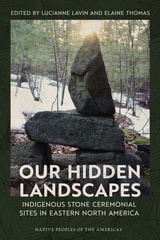
Our Hidden Landscapes
Indigenous Stone Ceremonial Sites in Eastern North AmericaLucianne Lavin
University of Arizona Press, 2023
This volume introduces readers to eastern North America’s Indigenous ceremonial stone landscapes (CSLs)—sacred sites whose principal identifying characteristics are built stone structures that cluster within specific physical landscapes. Our Hidden Landscapes presents these often unrecognized sites as significant cultural landscapes in need of protection and preservation.
In this book, Native American authors provide perspectives on the cultural meaning and significance of CSLs and their characteristics, while professional archaeologists and anthropologists provide a variety of approaches for better understanding, protecting, and preserving them. The chapters present overwhelming evidence in the form of oral tradition, historic documentation, ethnographies, and archaeological research that these important sites created and used by Indigenous peoples are deserving of protection.
This work enables archaeologists, historians, conservationists, foresters, and members of the general public to recognize these important ritual sites.
Contributors
Nohham Rolf Cachat-Schilling
Robert DeFosses
James Gage
Mary Gage
Doug Harris
Julia A. King
Lucianne Lavin
Johannes (Jannie) H. N. Loubser
Frederick W. Martin
Norman Muller
Charity Moore Norton
Paul A. Robinson
Laurie W. Rush
Scott M. Strickland
Elaine Thomas
Kathleen Patricia Thrane
Matthew Victor Weiss
Our Lady Of Victorian Feminism
The Madonna in the Work of Anna Jameson, Margaret Fuller, and George EliotKimberly VanEsveld Adams
Ohio University Press, 2000
Our Lady of Victorian Feminism is about three nineteenth-century women, Protestants by background and feminists by conviction, who are curiously and crucially linked by their extensive use of the Madonna in arguments designed to empower women.
In the field of Victorian studies, few scholars have looked beyond the customary identification of the Christian Madonna with the Victorian feminine ideal—the domestic Madonna or the Angel in the House. Kimberly VanEsveld Adams shows, however, that these three Victorian writers made extensive use of the Madonna in feminist arguments. They were able to see this figure in new ways, freely appropriating the images of independent, powerful, and wise Virgin Mothers.
In addition to contributions in the fields of literary criticism, art history, and religious studies, Our Lady of Victorian Feminism places a needed emphasis on the connections between the intellectuals and the activists of the nineteenth-century women's movement. It also draws attention to an often neglected strain of feminist thought, essentialist feminism, which proclaimed sexual equality as well as difference, enabling the three writers to make one of their most radical arguments, that women and men are made in the image of the Virgin Mother and the Son, the two faces of the divine.
Our Own Way in This Part of the World
Biography of an African Community, Culture, and NationKwasi Konadu
Duke University Press, 2019
Our Primary Expertise
A Future for the Study of ReligionRussell T. McCutcheon
Rutgers University Press, 2026
Our Southern Zion
A History of Calvinism in the South Carolina Low Country, 1690-1990Erskine Clarke
University of Alabama Press, 1996
Three centuries of faith, intellect, and resilience—Calvinism’s quiet power in the Southern low country.
The South Carolina low country has long been regarded—not only in popular imagination and paperback novels but also by respected scholars—as a region dominated by what earlier historians called “a cavalier spirit” and by what later historians have simply described as “a wholehearted devotion to amusement and the neglect of religion and intellectual pursuits.” Such images of the low country have been powerful interpreters of the region because they have had some foundation in social and cultural realities. It is a thesis of this study, however, that there has been a strong Calvinist community in the Carolina low country since its establishment as a British colony and that this community (including in its membership both whites and after the 1740s significant numbers of African Americans) contradicts many of the images of the "received version" of the region. Rather than a devotion to amusement and a neglect of religion and intellectual interests, this community has been marked throughout most of its history by its disciplined religious life, its intellectual pursuits, and its work ethic.
Our Women Are Free
Gender and Ethnicity in the HindukushWynne Maggi
University of Michigan Press, 2001
Yet despite their obvious religious differences with nearby communities, when asked what makes the Kalasha unique, both men and women often reply, "Our women are free" (homa istrizia azat asan). The concept that Kalasha women are "free" (azat), that they have "choice" (chit), is a topic of spirited conversation among the Kalasha. It touches at the heart of both individual women's identities and the collective identity of the community.
Our Women are Free introduces the historical and cultural landscape of the Kalasha and describes the role that "women's freedom" plays as an ethnic marker for the entire community. Throughout the narrative, Wynne Maggi stays close to conversations and events that illustrate the daily life of the community, focusing particularly on the Kalasha people's sense of humor; on the pleasure they take in work, children, ritual, and relationships; as well as on the complexity and seriousness of their social lives.
Accessible and thought-provoking, Our Women are Free will be of interest to professional anthropologists, area scholars, and other social scientists.
Wynne Maggi teaches anthropology and women's studies at the University of Colorado.
Out of Brownsville
Encounters with Nobel Laureates and Other Jewish Writers: A Cultural MemoirJules Chametzky
University of Massachusetts Press, 2012
Outlawed Pigs
Law, Religion, and Culture in IsraelDaphne Barak-Erez
University of Wisconsin Press, 2007
Daphne Barak-Erez specifically traces the course of two laws, one that authorized municipalities to ban the possession and trading in pork within their jurisdiction and another law that forbids pig breeding throughout Israel, except for areas populated mainly by Christians. Her analysis offers a comprehensive, decade-by-decade discussion of the overall relationship between law and culture since the inception of the Israeli nation-state.
By examining ever-fluctuating Israeli popular opinion on Israel's two laws outlawing the trade and possession of pigs, Barak-Erez finds an interesting and accessible way to explore the complex interplay of law, religion, and culture in modern Israel, and more specifically a microcosm for the larger question of which lies more at the foundation of Israeli state law: religion or cultural tradition.
Outrage
The Rise of Religious Offence in Contemporary South AsiaEdited by Paul Rollier, Kathinka Frøystad, and Arild Engelsen Ruud
University College London, 2019
An interdisciplinary study of this trend, Outrage brings together researchers in anthropology, religious studies, and South Asian studies with rich experience in the varied ways religion and politics intersect in this region. Each chapter focuses on a recent case of alleged blasphemy or desecration in India, Pakistan, Bangladesh and Myanmar, unpacking the religious sensitivities and political concerns. Collectively, the chapters explore common denominators across national and religious differences, such as the introduction of social media and smartphones, the possible political gains of initiating blasphemy accusations, and the growing self-assertion of marginal communities.
Outsiders in a Promised Land
Religious Activists in Pacific Northwest HistoryDale Soden
Oregon State University Press, 2015
As communities grew in population, early activists found common ground in a desire to protect women and children, and make their towns more hospitable to religious values. Protestants, Catholics, and Jews worked together to transform communities. Together they introduced public and private schools, health care institutions, libraries and orphanages, and lobbied for the prohibition of alcohol.
Beginning in the 1930s, religious activism played a crucial role in the emerging culture wars between liberals and conservatives. Liberals rallied around the protection of civil rights and the building of social safety nets, while conservatives decried the rise of secularism, liberalism, and communism. Today, religious activists of many faiths are deeply engaged in matters related to women’s and gay rights, foreign policy, and environmental protection.
Outsiders in a Promised Land is a meticulously researched, comprehensive treatment of religion in Pacific Northwest public life from the middle of the nineteenth century to the present. The first book of its kind, it is destined to be an essential reference for scholars, activists, and religious leaders of all faiths.
Over The Rim
The Parley P. Pratt Exploring Expedition to Southern Utah, 1849-50edited by William B. Smart and Donna T. Smart
Utah State University Press, 1999
Over the Rim is the first book about an important but little-known expedition sent by Brigham Young to explore southern Utah. Led by Mormon apostle Parley P. Pratt, the party traveled from Salt Lake City south across the rim of the Great Basin to the Virgin River near future St. George. They brought back to Mormon leaders their first detailed portrait of the country to the south that the church planned to settle.

Overcoming Zionism
Creating a Single Democratic State in Israel/PalestineJoel Kovel
Pluto Press, 2007
Joel Kovel argues that the inner contradictions of Zionism have led Israel to a ‘state-sponsored racism’ fully as incorrigible as that of apartheid South Africa and deserving of the same resolution. Only a path toward a single-state secular democracy can provide the justice essential to healing the wounds of the Middle East.
Kovel is well-known writer on the Middle East conflict. This book draws on his detailed knowledge to show that Zionism and democracy are essentially incompatible. He offers a thoughtful account of the emergence and disintegration of Zionism that integrates psychological, political, cultural, economic, and ideological levels.
Ultimately, Kovel argues, a two-state solution is essentially hopeless as it concedes too much to the regressive forces of nationalism, wherein lie the roots of continued conflict.
Owen Lovejoy and the Coalition for Equality
Clergy, African Americans, and Women United for AbolitionJane Ann Moore and William F. Moore
University of Illinois Press, 2019
Owen Lovejoy and the Coalition for Equality examines how these three distinct groups merged their agendas into a single antislavery, religious, political campaign for equality with Lovejoy at the helm. Combining scholarly biography, historiography, and primary source material, Jane Ann Moore and William F. Moore demonstrate Lovejoy's crucial role in nineteenth-century politics, the rise of antislavery sentiment in religious spaces, and the emerging congressional commitment to end slavery. Their compelling account explores how the immorality of slavery became a touchstone of political and religious action in the United States through the efforts of a synergetic coalition led by an essential abolitionist figure.