Results by title
5550 books match the query 'Biography & Autobiography' and 118 start with o

Out of the Frame
The Struggle for Academic Freedom in IsraelIlan Pappe
Pluto Press, 2010
Even before he wrote his bestselling book The Ethnic Cleansing of Palestine, historian Ilan Pappe was a controversial figure in Israel. In Out of the Frame, he gives a full account of his break with mainstream Israeli scholarship and its consequences.
Here he traces his journey of discovery from the whispers of Palestinian classmates to his realisation that the 'enemy's' narrative of the events of 1948 was correct. After completing his thesis at Oxford University in the early 1980s, he returned to Palestine determined to protect the memory of the Nakbah. For the first time he gives the details of the formidable opposition he faced in Israel, including death threats fed by the media, denunciations by the Knesset and calls for him to be sacked from his post at Haifa university.
This revealing work, written with dignity and humour, highlights Israel's difficulty in facing up to its past and forging a peaceful, inclusive future in Palestine.
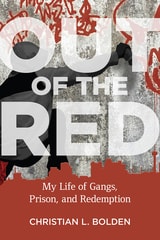
Out of the Red
My Life of Gangs, Prison, and RedemptionChristian L. Bolden
Rutgers University Press, 2020
Faculty Senate Award for Research from Loyola University New Orleans
Out of the Red is one man’s pathbreaking story of how social forces and personal choices combined to deliver an unfortunate fate. After a childhood of poverty, institutional discrimination, violence, and being thrown away by the public education system, Bolden's life took him through the treacherous landscape of street gangs at the age of fourteen. The Bloods offered a sense of family, protection, excitement, and power. Incarcerated during the Texas prison boom, the teenage former gangster was thrust into a fight for survival as he navigated the perils of adult prison. As mass incarceration and prison gangs swallowed up youth like him, survival meant finding hope in a hopeless situation and carving a path to his own rehabilitation. Despite all odds, he forged a new path through education, ultimately achieving the seemingly impossible for a formerly incarcerated ex-gangbanger.
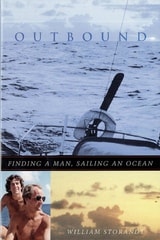
Outbound
Finding a Man, Sailing an OceanWilliam Storandt
University of Wisconsin Press, 2001
is the story of two voyages: an Atlantic crossing in the 33-foot cutter
Clarity, bound for Scotland; and the hard voyage of self-discovery that finally brought Bill Storandt to his life partner.
Storandt’s account of the adventure he had carefully planned with longtime partner Brian Forsyth and their friend Bob soon turns into a white-knuckled sailing tale, as they encounter a fierce storm four hundred miles from the Irish coast that tests their courage and all their sailing skills. The sea story, vividly evoking life in a small boat on a big ocean, is interwoven with Storandt’s flashbacks to his earlier life. Outbound delivers its share of excitement, but it’s also a moving reflection on how circuitous our paths can be, even when the destination is clear and beckoning.
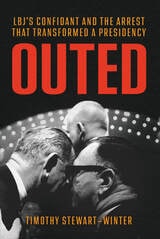
Outed
LBJ’s Confidant and the Arrest That Transformed a PresidencyTimothy Stewart-Winter
University of Chicago Press, 2026
The story of the scandal in the LBJ administration that first brought queer life into the national political conversation in the 1960s.
In 1964, Lyndon B. Johnson’s longest-serving and most trusted advisor, Walter Jenkins, was arrested for soliciting sex in a YMCA bathroom near the White House. The scandal blasted across the front pages of major US newspapers, was dissected and analyzed by the FBI, and became a watershed in making straight America aware of queer life. In Outed, historian Timothy Stewart-Winter reveals that the effects of antigay policing were felt not only by the men but by their colleagues, families, and, in this case, the First Family.
Walter Jenkins’s political banishment had long-ranging effects, from how Johnson conducted the remainder of his presidency to how media coverage of political and sexual scandals became more explicit and salacious. Stewart-Winter reveals Jenkins’s influence and legacy, encompassing but also looking beyond the scandal. Jenkins had a significant impact on Johnson’s career and how it is remembered, including both his signal accomplishment—the programs and laws that constituted the Great Society—and his signal failure: his catastrophic judgment, after Jenkins’s exile, regarding the Vietnam War.
Drawing on Jenkins’s previously unexamined personal papers, including hundreds of letters he received in the aftermath from ordinary Americans and government officials alike, Stewart-Winter shows how antigay policies and the revelations around them continue to reverberate today.
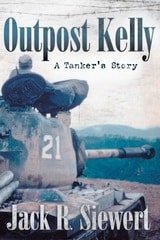
Outpost Kelly
A Tanker's StoryJack R. Siewert, with a foreword by Paul M Edwards
University of Alabama Press, 2006
Heavy rains turned the mountainous terrain around Outpost Kelly into shin-deep mud and muck. At the height of the fighting, Siewert was able to bring to bear the guns of only one of his five tanks against the enemy. Forced to abandon traditional tank warfare doctrine, he improvised. Allowing members of the 15th Infantry to retake Outpost Kelly, Siewert offers an excellent analysis of how theory and experience come together in a point-of-the-spear military situation.
Outpost Kelly also paints a fascinating picture of the type of fighting, often overlooked, that characterized the second and third years of the Korean War. With truce talks proceeding in Panmunjom, both sides fought to claim incremental pieces of real estate along the demarcation line between North and South.
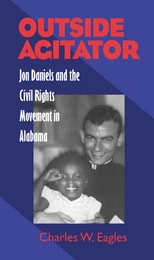
Outside Agitator
Jon Daniels and the Civil Rights Movement in AlabamaCharles Eagles
University of Alabama Press, 2000
WINNER OF THE LILLIAN SMITH BOOK AWARD
The story of faith, sacrifice, and moral courage in Alabama's fight for civil rights.
Outside Agitator tells the powerful, largely forgotten story of Jonathan Daniels—a white Episcopal seminarian from New England who answered the call of the civil rights movement and paid for that commitment with his life. In 1965, Daniels left the safety of Harvard and Cambridge for Selma and Alabama’s Black Belt, where he worked alongside Black activists to challenge segregation, register voters, and confront the moral failures of church and state. His murder by a white segregationist shocked the nation and exposed the deadly cost of racial injustice—and of moral courage.
More than a biography, this book asks urgent questions that still resonate: What does it mean to act on conscience in a society structured by inequality? What responsibilities do faith, citizenship, and privilege impose? Historian Charles W. Eagles places Daniels’s life within the turbulent final phase of the southern civil rights movement, revealing the everyday fears, ethical dilemmas, and racial tensions behind the iconic events of Selma and Lowndes County.
Outside Agitator will appeal to readers interested in civil rights history, religious activism, Southern history, and the moral dimensions of political struggle. It is essential reading for students, scholars, clergy, and general readers seeking to understand how individual lives can illuminate—and challenge—the ongoing fight for justice and equality.
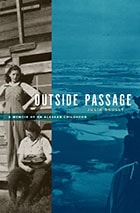
Outside Passage
A Memoir of an Alaskan ChildhoodJulia Scully
University of Alaska Press, 2010
Outside Passage is a lyrical and affecting memoir of those years, simultaneously an emotional account of a young girl’s first steps into adulthood and a unique portrait of a vanished frontier life.
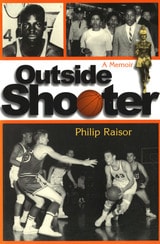
Outside Shooter
A MemoirPhilip Raisor
University of Missouri Press, 2003
Philip Raisor was on the losing side in two of the most storied basketball games ever played. He started at guard for the Muncie Central Bearcats, who fell in the 1954 Indiana state final to tiny Milan, the David-over-Goliath event that inspired the movie Hoosiers. On a basketball scholarship to the University of Kansas, he watched his Wilt Chamberlain–led Jayhawks lose the 1957 NCAA championship in triple overtime to North Carolina. In Outside Shooter, Raisor recounts the hard knocks and hard-won triumphs of a basketball odyssey across 1950s America, from Indiana to Kansas to Louisiana, and from adolescence to adulthood.
This was an era in which a racially divided society was taking halting steps toward integration, and few places held more tension than the sports arena. Raisor saw firsthand the toll of racism in the inner rage and sorrow of Muncie’s star player, John Casterlow, whose life followed a trajectory from playing the legendary Oscar Robertson to a draw—almost—to death in the streets of Detroit at age twenty-three. Later, at Louisiana State University after having transferred from Kansas, Raisor, spurred by the memory of Casterlow, would join in hazardous early attempts to integrate the LSU campus. From Indiana to Louisiana, he sees the ordeal of racism reveal character—including his own—at depths beyond the illumination even of competitive sport.
Devoted though Raisor was to basketball, Outside Shooter captures the period of his life in which he gradually stopped defining himself in terms of the game. As the rise and fall of his fortunes on the basketball court become overshadowed by the shifting patterns of his larger life—the competing measures of acceptance and expectation from his family and companions; the courage and challenge offered by a young woman equally bent on accomplishment; his struggles with failure and doubt juxtaposed with his awakening intellect and conscience—he discovers the sense of purpose that will carry him beyond his playing days and into adulthood as a budding writer.

Outside the Box
Interviews with Contemporary CartoonistsHillary L. Chute
University of Chicago Press, 2014
For nearly a decade Hillary L. Chute has been sitting down for extensive interviews with the leading figures in comics, and with Outside the Box she offers fans a chance to share her ringside seat. Chute’s in-depth discussions with twelve of the most prominent and accomplished artists and writers in comics today reveal a creative community that is richly interconnected yet fiercely independent, its members sharing many interests and approaches while working with wildly different styles and themes. Chute’s subjects run the gamut of contemporary comics practice, from underground pioneers like Art Spiegelman and Lynda Barry, to the analytic work of Scott McCloud, the journalism of Joe Sacco, and the extended narratives of Alison Bechdel, Charles Burns, and more. They reflect on their experience and innovations, the influence of peers and mentors, the reception of their art and the growth of critical attention, and the crucial place of print amid the encroachment of the digital age.
Beautifully illustrated in full-color, and featuring three never-before-published interviews—including the first published conversation between Art Spiegelman and Chris Ware—Outside the Box will be a landmark volume, a close-up account of the rise of graphic storytelling and a testament to its vibrant creativity.
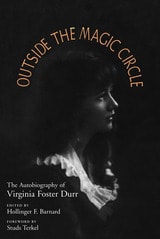
Outside the Magic Circle
The Autobiography of Virginia Foster DurrHollinger F. Barnard
University of Alabama Press, 1990
Winner of the Alabama Library Author Award
Outside the Magic Circle tells the remarkable story of Virginia Foster Durr, a southern white woman born into privilige who (along with her husband Clifford Durr, a lawyer best known for defending Rosa Parks), nonetheless devoted her life to Civil Rights activism.
Outside the Magic Circle is the powerful and deeply personal autobiography of Virginia Foster Durr, a Southern woman who defied the expectations of her privileged upbringing to become one of the most courageous voices for civil rights and social justice in 20th-century America. Born into a wealthy, white Alabama family, Durr was raised in a world steeped in segregation and conservative values. Yet through a journey marked by moral reckoning, intellectual awakening, and political activism, she stepped outside the “magic circle” of Southern gentility to confront the injustices that shaped her world.
With a foreword by renowned oral historian Studs Terkel, this memoir captures Durr’s transformation from reluctant conformist to outspoken advocate. Her story spans decades of American history—from the Great Depression and New Deal politics to the McCarthy era and the Civil Rights Movement. Alongside her husband, attorney Clifford Durr, Virginia became a key figure in progressive circles, working to abolish the poll tax, defend civil liberties, and support Black activists in the segregated South.
Told in Durr’s own voice, the narrative is rich with anecdotes, reflections, and encounters with historical figures such as Eleanor Roosevelt, Rosa Parks, and Martin Luther King Jr. It is both a personal reckoning and a political document, offering rare insight into the inner conflicts of white Southern liberals and the cost of dissent in a deeply divided society.
Outside the Magic Circle is more than a memoir—it is a testament to the power of conscience, the courage of transformation, and the enduring fight for justice. It remains a vital resource for readers interested in civil rights history, feminist thought, and the complexities of Southern identity.
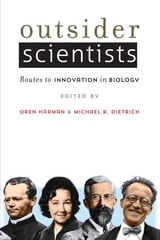
Outsider Scientists
Routes to Innovation in BiologyEdited by Oren Harman and Michael R. Dietrich
University of Chicago Press, 2013
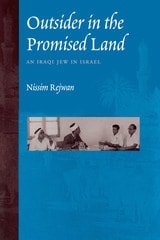
Outsider in the Promised Land
An Iraqi Jew in IsraelBy Nissim Rejwan
University of Texas Press, 2006
In 1951, Israel was a young nation surrounded by hostile neighbors. Its tenuous grip on nationhood was made slipperier still by internal tensions among the various communities that had immigrated to the new Jewish state, particularly those between the politically and socially dominant Jewish leadership hailing from Eastern Europe and the more numerous Oriental Jews from the Middle East and North Africa. Into this volatile mix came Nissim Rejwan, a young Iraqi Jewish intellectual who was to become one of the country's leading public intellectuals and authors.
Beginning with Rejwan's arrival in 1951 and climaxing with the tensions preceding Israel's victory in the Six-Day War of 1967, this book colorfully chronicles Israel's internal and external struggles to become a nation, as well as the author's integration into a complex culture. Rejwan documents how the powerful East European leadership, acting as advocates of Western norms and ideals, failed to integrate Israel into the region and let the country take its place as a part of the Middle East. Rejwan's essays and occasional articles are an illuminating example of how minority groups use journalism to gain influence in a society. Finally, the letters and diary entries reproduced in Outsider in the Promised Land are full of lively, witty meditations on history, literature, philosophy, education, and art, as well as one man's personal struggle to find his place in a new nation.
Outsiders Within
Writing on Transracial AdoptionJane Jeong Trenka
University of Minnesota Press, 2020
Confronting trauma behind the transnational adoption system—now back in print
Many adoptees are required to become people that they were never meant to be. While transracial adoption tends to be considered benevolent, it often exacts a heavy emotional, cultural, and economic toll on those who directly experience it. Outsiders Within is a landmark publication that carefully explores this most intimate aspect of globalization through essays, fiction, poetry, and art. Moving beyond personal narrative, transracially adopted writers from around the world tackle difficult questions about how to survive the racist and ethnocentric worlds they inhabit, what connects the countries relinquishing their children to the countries importing them, why poor families of color have their children removed rather than supported—about who, ultimately, they are. In their inquiry, the contributors unseat conventional understandings of adoption politics, reframing the controversy as a debate that encompasses human rights, peace, and reproductive justice.
Contributors: Heidi Lynn Adelsman; Ellen M. Barry; Laura Briggs, U of Massachusetts, Amherst; Catherine Ceniza Choy, U of California, Berkeley; Gregory Paul Choy, U of California, Berkeley; Rachel Quy Collier; J. A. Dare; Kim Diehl; Kimberly R. Fardy; Laura Gannarelli; Shannon Gibney; Mark Hagland; Perlita Harris; Tobias Hübinette, Stockholm U; Jae Ran Kim; Anh Đào Kolbe; Mihee-Nathalie Lemoine; Beth Kyong Lo; Ron M.; Patrick McDermott, Salem State College, Massachusetts; Tracey Moffatt; Ami Inja Nafzger (aka Jin Inja); Kim Park Nelson; John Raible; Dorothy Roberts, Northwestern U; Raquel Evita Saraswati; Kirsten Hoo-Mi Sloth; Soo Na; Shandra Spears; Heidi Kiiwetinepinesiik Stark; Kekek Jason Todd Stark; Sunny Jo; Sandra White Hawk; Indigo Williams Willing; Bryan Thao Worra; Jeni C. Wright.

Outspoken
The Olly Neal StoryOlly Neal
Butler Center for Arkansas Studies, 2020
His road to success was not a smooth one, and Neal tells his unique story with humor, candor, and hard-earned wisdom, explaining his rocky journey from hardscrabble beginnings in rural Lee County to the role of prosecutor to the judicial bench. Along the way, many whites saw him as a threat to the established order and many blacks saw him as a traitor who was prosecuting and sitting in judgment of his own people. But Neal emphasized fairness and equal treatment at every opportunity, saying, “The way I got past all of this was by talking to my people about what I did and why, and by telling them how difficult it was for me. And I think that many folks understood me.” Looking back on these years and the people he met along the way, he offers insights into the traumas of the time and the toll they took on his mental and physical health, as well as the relationships that helped him face these challenges.
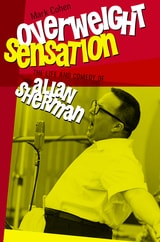
Overweight Sensation
The Life and Comedy of Allan ShermanMark Cohen
Brandeis University Press, 2013
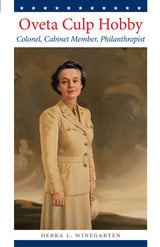
Oveta Culp Hobby
Colonel, Cabinet Member, PhilanthropistBy Debra L. Winegarten
University of Texas Press, 2014
This young adult biography introduces middle school readers to a remarkable woman who founded the Women’s Army Corps, served as Secretary of Health, Education, and Welfare, and ran a media empire that included the Houston Post newspaper and radio and TV stations.
Winner, Gold Medal for Biography, Military Writers Society of America, 2015
Oveta Culp Hobby (1905–1995) had a lifetime of stellar achievement. During World War II, she was asked to build a women’s army from scratch—and did. Hobby became Director of the Women’s Army Corps and the first Army woman to earn the rank of colonel. President Eisenhower chose her as Secretary of Health, Education, and Welfare, making her the second woman in history to be appointed to a president’s cabinet. When she wasn’t serving in the government, Hobby worked with her husband, former Texas governor William P. Hobby, to lead a media empire that included the Houston Post newspaper and radio and TV stations. She also supported the Houston community in many ways, from advocating for civil rights for African Americans to donating generously to the Houston Symphony and the Museum of Fine Arts.
Oveta Culp Hobby is the first biography of this important woman. Written for middle school readers, it traces her life from her childhood in Killeen to her remarkable achievements in Washington, DC, and Houston. Debra Winegarten provides the background to help young adult readers understand the times in which Hobby lived and the challenges she faced as a woman in nontraditional jobs. She shows how Hobby opened doors for women to serve in the military and in other professions that still benefit women today. Most of all, Oveta Culp Hobby will inspire young adults to follow their own dreams and turn them into tangible reality.
Owning a Piece of the Minors
Jerry Klinkowitz. Foreword by Mike Veeck
Southern Illinois University Press, 1999
Owning a Piece of the Minors is by and about a man who lived his dream and acquired a baseball team. When Jerry Klinkowitz joined the group that ran the Waterloo, Iowa, Diamonds in the 1970s, ownership of a minor league baseball franchise conferred little mystique. Neglected for a half century, minor league baseball was at best obscure. Yet in the purchase of fantasy, what difference if your desire is out of style?
Klinkowitz continued his work with the Diamonds through the 1980s and much of the 1990s. In Owning a Piece of the Minors, he maps out his personal journey through baseball and probes his fluctuating fortunes and those of his team as he evolves from a fan to a team executive and, most important, to a writer writing about baseball. This baseball story begins with a nine-year-old Klinkowitz who is elated when Milwaukee lures the Braves from Boston; this story of a love affair with baseball might have died—and in fact suffered a ten-year hiatus—when the apostate Braves fled to Atlanta in 1965.
Klinkowitz rediscovered the joy of being at the baseball park when, as a middle-aged professor, he took his own children to the Waterloo Diamonds games. Gradually his involvement with the Diamonds grew deeper until he owned the team. His immersion into team activities was complete, from shagging batting practice and working the beer bar to struggling with the Cleveland Indians and then the San Diego Padres as minor league affiliates to accommodate baseball's resurgence.
Klinkowitz writes of loss—first the Braves and later the Diamonds; of writing baseball fiction; of attending the 1982 World Series back in Milwaukee; of the great old ballparks around the country, including Wrigley, Fenway, and old Comiskey Park; of fictional and factual accounts of how the Diamonds franchise was lost; of friendships among season ticket holders in "Box 28"; and of Mildred Boyenga, the club president and Baseball Woman of the Year. A first-rate stylist, Klinkowitz shows the problems and perks and, most rewarding, the priceless relationships made possible in the world of baseball.
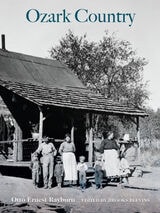
Ozark Country
Otto Ernest Rayburn
University of Arkansas Press, 2021
Published just days before America’s entry into World War II, Ozark Country is Otto Ernest Rayburn’s love letter to his adopted region. One of several chronicles of the Ozarks that garnered national attention during the Depression and war years, when many Americans craved stories about people and places seemingly untouched by the difficulties of the times, Rayburn’s colorful tour takes readers from the fictional village of Woodville into the backcountry of a region teeming with storytellers, ballad singers, superstitions, and home remedies.
Rayburn’s tales—fantastical, fun, and unapologetically romantic—portray a world that had already nearly disappeared by the time they were written. Yet Rayburn’s depiction of the Ozarks resonates with notions of the region that have persisted in the American consciousness ever since.