Results by title
4127 books match the query 'Science' and 133 start with o
Osiris, Volume 30
Scientific MasculinitiesEdited by Erika Lorraine Milam and Robert A. Nye
University of Chicago Press Journals, 2015
Osiris, Volume 31
History of Science and the EmotionsEdited by Otniel E. Dror, Bettina Hitzer, Anja Laukötter, and Pilar León-Sanz
University of Chicago Press Journals, 2016
Osiris, Volume 32
Data HistoriesEdited by Elena Aronova, Christine von Oertzen, and David Sepkoski
University of Chicago Press Journals, 2017
Osiris, Volume 33
Science and Capitalism: Entangled HistoriesEdited by Lukas Rieppel, William Deringer, and Eugenia Lean
University of Chicago Press Journals, 2018
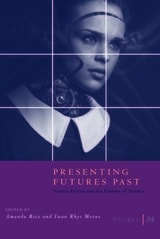
Osiris, Volume 34
Presenting Futures Past: Science Fiction and the History of ScienceEdited by Amanda Rees and Iwan Rhys Morus
University of Chicago Press Journals, 2019
The protagonists of these two enterprises have a lot in common. Both SF and the history of science are oriented towards the (re)construction of unfamiliar worlds; both are fascinated by the ways in which natural and social systems interact; both are critically aware of the different ways in which the social (class, gender, race, sex, species) has inflected the experience of the scientific. Taking a global approach, Presenting Futures Past examines the ways in which SF can be used to investigate the cultural status and authority afforded to science at different times and in different places. The essays consider the role played by SF in the history of specific scientific disciplines, topics, or cultures, as well as the ways in which it has helped to move scientific concepts, methodologies, and practices between wider cultural areas. Ultimately, Presenting Futures Past explores what SF can tell us about the histories of the future, how different communities have envisaged their futures, and how SF conveys the socioscientific claims of past presents.
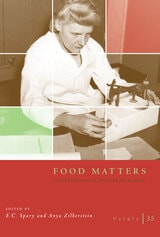
Osiris, Volume 35
Food Matters: Critical Histories of Food and the SciencesEdited by E. C. Spary and Anya Zilberstein
University of Chicago Press Journals, 2020
The essays delve into a range of topics, from early modern dietetics and debates about cannibalism to modern ready-to-eat rations and Ayurvedic recipes, from analyses of hungry model organisms to the dining rituals of Silicon Valley entrepreneurs and their patrons. As Food Matters shows, the history of knowledge about food has always raised debates about the shifting definition and boundaries of expertise: between traditional recipes and experimental protocols; between domestic craft skill and laboratory procedure; between the management and redistribution of resources for the social body on the one hand, and the subjective experiences of individual bodies on the other. At a moment when the authority of science is being questioned by a variety of publics, Food Matters is a timely reminder that such tensions, always present in food-related domains, reflect broader historical developments through which science became a prevalent force in shaping all aspects of public and private life.
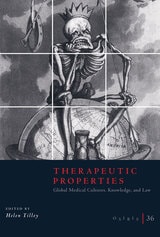
Osiris, Volume 36
Therapeutic Properties: Global Medical Cultures, Knowledge, and LawEdited by Helen Tilley
University of Chicago Press Journals, 2021
The contributions draw upon source material from the Americas, Africa, Western Europe, the Caribbean, and Asia to trace the influence of penal and civil codes, courts and constitutions, and patents and intellectual properties on not only health practices but also the very foundations of state-sanctioned medicine. The authors explore, too, how institutions of global governance, including those underpinning empires and trade, have historically created feedback loops that enabled laws and regulatory regimes to spread, amplifying their effects and standardizing approaches to diseases, drugs, professions, personhood, and well-being along the way. Highlighting the payoff of interdisciplinary and transnational analyses, this volume adroitly teases apart how different actors fought to write the rules of global health, rendering certain approaches to life and death irrelevant and invisible, others pathological and punishable by law, and others still, normal and natural.
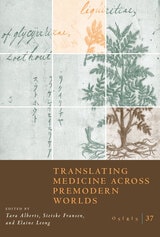
Osiris, Volume 37
Translating Medicine across Premodern WorldsEdited by Tara Alberts, Sietske Fransen, and Elaine Leong
University of Chicago Press Journals, 2022
This volume of Osiris turns the analytical lens of translation onto medical knowledge and practices across the premodern world. Understandings of the human body, and of diseases and their cures, were influenced by a range of religious, cultural, environmental, and intellectual factors. As a result, complex systems of translation emerged as people crossed linguistic and territorial boundaries to share not only theories and concepts, but also materials, such as drugs, amulets, and surgical tools. The studies here reveal how instances of translation helped to shape and, in some cases, reimagine these ideas and objects to fit within local frameworks of medical belief.
Translating Medicine across Premodern Worlds features case studies located in geographically and temporally diverse contexts, including ninth-century Baghdad, sixteenth-century Seville, seventeenth-century Cartagena, and nineteenth-century Bengal. Throughout, the contributors explore common themes and divergent experiences associated with a variety of historical endeavors to “translate” knowledge about health and the body across languages, practices, and media. By deconstructing traditional narratives and de-emphasizing well-worn dichotomies, this volume ultimately offers a fresh and innovative approach to histories of knowledge.
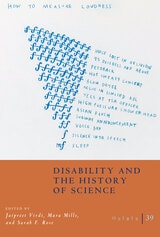
Osiris, Volume 39
Disability and the History of ScienceEdited by Jaipreet Virdi, Mara Mills, and Sarah F. Rose
University of Chicago Press Journals, 2024
Disability has been a central—if unacknowledged—force in the history of science, as in the scientific disciplines. Across historical epistemology and laboratory research, disability has been “good to think with”: an object of investigation made to yield generalizable truths. Yet disability is rarely imagined to be the source of expertise, especially the kind of expertise that produces (rational, neutral, universal) scientific knowledge.
This volume of Osiris places disability history and the history of science in conversation to foreground disability epistemologies, disabled scientists, and disability sciencing (engagement with scientific tools and processes). Looking beyond paradigms of medicalization and industrialization, the volume authors also examine knowledge production about disability from the ancient world to the present in fields ranging from mathematics to the social sciences, resulting in groundbreaking histories of taken-for-granted terms such as impairment, infirmity, epidemics, and shōgai.
Some contributors trace the disabling impacts of scientific theories and practices in the contexts of war, factory labor, insurance, and colonialism; others excavate racial and settler ableism in the history of scientific facts, protocols, and collections; still others query the boundaries between scientific, lay, and disability expertise. Contending that disability alters method, authors bring new sources and interpretation techniques to the history of science, overturn familiar narratives, apply disability analyses to established terms and archives, and discuss accessibility issues for disabled historians. The resulting volume announces a disability history of science.
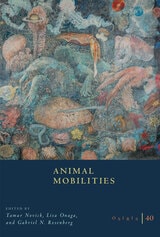
Osiris, Volume 40
Animal MobilitiesEdited by Tamar Novick, Lisa Onaga, and Gabriel N. Rosenberg
University of Chicago Press Journals, 2025
Human societies often come to know the natural world by examining animals, even as animals, frequently both willful and animate, can elude human grasp and challenge human aims. Animals and their movements have underpinned many methodological, moral, and epistemic dilemmas that generatively trouble the field. Featuring a range of geographies, species, languages, and cultures, the contributions in this volume broaden the view of the historical roles animals play in knowledge production processes. Organized according to three scales of animal movement (individuals, groups, systems), the twelve richly illustrated inquiries are situated in different time periods, from the sixteenth-century Ottoman Empire to the recent globalized past, and introduce varied forms, capacities, and politics of movement associated with animals. The analytic attention to animal mobility deepens comprehension of animal agency and human–animal interactions in unexpected spaces, including airports, entertainment venues, living rooms, dirt roads, and waterways. Taken together, the case studies in this volume reconsider how, where, and by whom science is done.
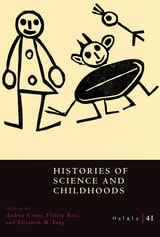
Osiris, Volume 41
Histories of Science and ChildhoodsEdited by Andrea Graus, Violeta Ruiz, and Elisabeth M. Yang
University of Chicago Press Journals, 2026
Converges the fields of childhood studies and the histories of science, medicine, and technology, foregrounding and investigating the entangled histories of the "child" and childhood and science.
Building on the premise that neither childhood nor science are natural, essential, or universalizable entities, this Osiris volume examines the interrelation of these two categories, tracing back to the Middle Ages and up until the present. Organized around three major themes—theorizing and historicizing the category of childhood and child agency, the technologies and politics of child health, and the co-constitutive relationship between the concept of the child and childhood and the realm of science—the issue traverses time, space, cultures, bodies, and disciplines. The contributions explore the role that science, technology, and medicine played in constructing how the ideology of childhood shaped ideas about scientific thinking and practices, e.g., the psy-sciences, sexology, filmology, medicine, health technology; and how the entanglement between the “child” and science influenced the formation of national identity, selfhood, colonial rule, resistance, and the notions of “progress” and the “future.” Using the “child” as an analytical category and considering children as fully-fledged historical actors allows us to retell and re-present (the history of) science through a wide range of sources, and in turn, reimagine our understandings of agency, governance, subjectivity, human nature, and what science owes the “child” and children.

Osiris, Volume 7
Science after '40Edited by Arnold Thackray
University of Chicago Press, 1992
Osiris, Volume 9
InstrumentsEdited by Albert Van Helden and Thomas L. Hankins
University of Chicago Press, 1994
Contributors include Albert Van Helden on telescopes and authority, Jan Golinski on the demonstrative order of proof in Lavoisier's chemistry, Bruce J. Hunt on the development of electrical standards, Deborah Warner on terrestrial magnetism, Bruce Hevly on Stanford's supervoltage X-ray tube, Robert W. Smith and Jose h N. Tatarewicz on devices and black boxes, Thatcher Deane on the imperial astronomical bureau in the Ming dynasty, Thomas L. Hankins on Louis-Bertrand Castel's ocular harpsichord, Simon Schaffer on demonstration devices in Georgian mechanics, Timothy Lenoir on Helmholtz and the materialities of communication, and Robert Frank on instruments, biological techniques, and the "all-or-none" principle.
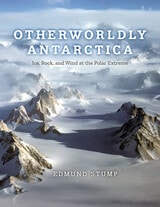
Otherworldly Antarctica
Ice, Rock, and Wind at the Polar ExtremeEdmund Stump
University of Chicago Press, 2024
The interior of Antarctica is an utterly pristine wilderness, a desolate landscape of ice, wind, and rock; a landscape so unfamiliar as to seem of another world. This place has been known to only a handful of early explorers and the few scientists fortunate enough to have worked there. Edmund Stump is one of the lucky few. Having climbed, photographed, and studied more of the continent-spanning Transantarctic Mountains than any other person on Earth, this geologist, writer, and photographer is uniquely suited to share these alien sights.
With stories of Stump’s forty years of journeys and science, Otherworldly Antarctica contains 130 original color photographs, complemented by watercolors and sketches by artist Marlene Hill Donnelly. Over three chapters—on the ice, the rock, and the wind—we meet snowy paths first followed during Antarctica’s Heroic Age, climb the central spire of the Organ Pipe Peaks, peer into the crater of the volcanic Mount Erebus, and traverse Liv Glacier on snowmobile, while avoiding fatal falls into the blue interiors of hidden crevasses. Along the way, we see the beauty of granite, marble, and ice-cored moraines, meltwater ponds, lenticular clouds, icebergs, and glaciers. Many of Stump’s breathtaking images are aerial shots taken from the planes and helicopters that brought him to the interior. More were shot from vantages gained by climbing the mountains he studied. Some were taken from the summits of peaks. Many are of places no one had set foot before—or has since. All seem both permanent and precarious, connecting this otherworld to our fragile own.
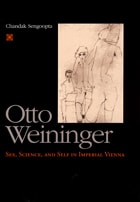
Otto Weininger
Sex, Science, and Self in Imperial ViennaChandak Sengoopta
University of Chicago Press, 2000
This provocative, enlightening study explores the milieu in which the philosopher Otto Weininger (1880-1903) wrote his controversial book Sex and Character. Shortly after its publication, Weininger committed suicide at the age of twenty-three. His book, which argued that women and Jews were mere sexual beings who lacked individuality, became a bestseller.
Hailed as a genius by intellectuals such as Ludwig Wittgenstein and Karl Kraus, Weininger was admired, not for his prejudices, but for his engagement with the central issues of the time—the nature and meanings of identity. Sengoopta pays particular attention to how Weininger appropriated scientific language and data to defend his views and examines the scientific theories themselves.
Our Energy Future
Lincoln Davies
University of Utah Press, 2025
In Our Energy Future, Lincoln Davies shines a bright light on the challenges the transition presents, including energy equity, political partisanship, the need for holistic solutions, and adaptability in the face of change. Our Energy Future makes the case for why the United States’ current transition to clean energy provides our world with something we so desperately need today: hope.
Our Intelligent Bodies
Gary F. Merrill
Rutgers University Press, 2020
In Our Intelligent Bodies, physiology professor Gary F. Merrill takes you on a guided tour through the human body. You’ll learn how our eyes are designed to detect unimaginably small bursts of light and how our ears contain bundles of tiny hairs, each one attuned to different sound frequencies. You’ll also discover how our hearts are smart enough to compensate for skipped beats and irregular rhythms and how our pulmonary system adjusts for low oxygen levels. You’ll even find out why the gut is sometimes called the “second brain,” its reflexes controlled by millions of neurons.
Written in a fun, easy-to-comprehend style and filled with illuminating analogies, Our Intelligent Bodies also brings readers up to date on cutting-edge research into the wonders of human physiology. It will give you a new appreciation for the smart decisions our bodies are making when our brains aren’t paying attention.
Our Magnetic Earth
The Science of GeomagnetismRonald T. Merrill
University of Chicago Press, 2010
But as Ronald T. Merrill reveals in Our Magnetic Earth, geomagnetism really is an enduring, vibrant area of science, one that offers answers to some of the biggest questions about our planet’s past—and maybe even its future. In a clear and careful fashion, he lays out the physics of geomagnetism and magnetic fields, then goes on to explain how Earth’s magnetic field provides crucial evidence for our understanding of continental drift and plate tectonics; how and why animals, ranging from bacteria to mammals, sense and use the magnetic field; how changes in climate over eons can be studied through variations in the magnetic field in rocks; and much more. Throughout, Merrill peppers his scientific account with bizarre anecdotes and fascinating details, from levitating pizzas to Moon missions to blackmailing KGB agents—a reminder that real science can at times be stranger, and more amusing, than fiction.
A winning primer for anyone who has ever struggled with a compass or admired a ragged V of migrating geese, Our Magnetic Earth demonstrates that education and entertainment need not be polar opposites.
Our Marvelous Bodies
An Introduction to the Physiology of Human HealthMerrill, Gary F
Rutgers University Press, 2008
Our Marvelous Bodies offers a unique perspective on the structure, function, and care of the major systems of the human body. Unlike other texts that use a strictly scientific approach, physiologist Gary F. Merrill relays medical facts alongside personal stories that help students relate to and apply the information.
Readers learn the basics of feedback control systems, homeostasis, and physiological gradients. These principles apply to an understanding of the body’s functioning under optimal, healthy conditions, and they provide insight into states of acute and chronic illness. Separate chapters are devoted to each of the body’s systems in detail: nervous, endocrine, cardiovascular, respiratory, renal, gastrointestinal, musculoskeletal, reproductive, and immune. Through a series of real-life examples, the book also shows the importance of maintaining careful medical records for health care professionals, scientists, and patients alike.
Our Oldest Task
Making Sense of Our Place in NatureEric T. Freyfogle
University of Chicago Press, 2017
Passionate and pragmatic, extraordinarily well read and eloquent, Freyfogle details a host of forces that have produced our self-defeating ethos of human exceptionalism. It is this outlook, he argues, not a lack of scientific knowledge or inadequate technology, that is the primary cause of our ecological predicament. Seeking to comprehend both the multifaceted complexity of contemporary environmental problems and the zeitgeist as it unfolds, Freyfogle explores such diverse topics as morality, the nature of reality (and the reality of nature), animal welfare, social justice movements, and market politics. The result is a learned and inspiring rallying cry to achieve balance, a call to use our knowledge to more accurately identify the dividing line between living in and on the world and destruction. “To use nature,” Freyfogle writes, “but not to abuse it.”
Our Once and Future Planet
Restoring the World in the Climate Change CenturyPaddy Woodworth
University of Chicago Press, 2013
But that paints an unbalanced—and overly disheartening—picture of what’s going on with environmental stewardship today. There are success stories, and Our Once and Future Planet delivers a fascinating account of one of the most impressive areas of current environmental experimentation and innovation: ecological restoration. Veteran investigative reporter Paddy Woodworth has spent years traveling the globe and talking with people—scientists, politicians, and ordinary citizens—who are working on the front lines of the battle against environmental degradation. At sites ranging from Mexico to New Zealand and Chicago to Cape Town, Woodworth shows us the striking successes (and a few humbling failures) of groups that are attempting to use cutting-edge science to restore blighted, polluted, and otherwise troubled landscapes to states of ecological health—and, in some of the most controversial cases, to particular moments in historical time, before widespread human intervention. His firsthand field reports and interviews with participants reveal the promise, power, and limitations of restoration.
Ecological restoration alone won’t solve the myriad problems facing our environment. But Our Once and Future Planet demonstrates the role it can play, and the hope, inspiration, and new knowledge that can come from saving even one small patch of earth.
Our Planetary Mirror
Earth Science and the Reimagining of HumanityBoris Shoshitaishvili
University of Chicago Press, 2026
A philosophical analysis of three scientific visions of humanity: the noosphere, the Anthropocene, and Gaia theory.
How can we explain humanity’s unique relationship to the Earth? In Our Planetary Mirror, cultural theorist Boris Shoshitaishvili considers the three major forms of thought Earth scientists have posited in recent years: the noosphere (humans as a layer of thought and culture covering the Earth), the Anthropocene (humans as a geological force), and Gaia theory (humans as part of a superorganism comprising life on Earth).
To explore how these concepts extend beyond contemporary science, Shoshitaishvili traces the metaphors at the heart of each framework through their ancient predecessors, including Babylonian myth, Greek philosophy, Aztec metaphysics, and medieval European theology. Using this approach, Shoshitaishvili develops fresh responses to pressing global issues such as geoengineering, artificial intelligence, and the balance between cosmopolitanism and a world of intensified nationalism.
Our Science, Ourselves
How Gender, Race, and Social Movements Shaped the Study of ScienceChrista Kuljian
University of Massachusetts Press, 2024
When Christa Kuljian arrived on the Harvard College campus as a first-year student in the fall of 1980 with copies of Our Bodies, Ourselves and Ms. magazine, she was concerned that the women’s movement had peaked in the previous decade. She soon learned, however, that there was a long way to go in terms of achieving equality for women and that social movements would continue to be a critical force in society. She began researching the history of science and gender biases in science, and how they intersect with race, class, and sexuality.
In Our Science, Ourselves, Kuljian tells the origin story of feminist science studies by focusing on the life histories of six key figures—Ruth Hubbard, Rita Arditti, Evelyn Fox Keller, Evelynn Hammonds, Anne Fausto-Sterling, and Banu Subramaniam. These women were part of a trailblazing network of female scientists in the 1970s, 80s, and 90s who were drawn to the Boston area—to Harvard, MIT, and other universities—to study science, to network with other scientists, or to take a job. Inspired by the social and political activism of the women’s movement and organizations such as Science for the People, the Genes and Gender Collective, and the Combahee River Collective, they began to write and teach about women in science, gender and science, and sexist and racist bias and exclusion. They would lead the critiques of E. O. Wilson’s sociobiology in 1975 and Larry Summers’ comments about women in science thirty years later. The book also explores how these contributions differed from those of Nancy Hopkins’, author of the 1999 MIT report on women in science, and a “reluctant feminist.”
Drawing on a rich array of sources that combines published journal articles and books with archival materials and interviews with major luminaries of feminist science studies, Kuljian chronicles and celebrates the contributions that these women have made to our collective scientific knowledge and view of the world.
Our Way Or The Highway
Inside The Minnehaha Free StateMary Losure
University of Minnesota Press, 2002
An eyewitness account of this controversial environmental action.
Construction plans for the reroute of Highway 55 through south Minneapolis sparked an environmental movement that pitted activists against public authorities in one of the most dramatic episodes in the city’s history. Mary Losure was there; as a reporter for Minnesota Public Radio she witnessed the neighborhood’s transformation from a quiet street to the center of an emotionally charged standoff. Fueled by idealism and anger, a diverse coalition banded together to try to stop the highway expansion. Beginning in 1998, this group sustained protests for more than one year and eventually faced an unprecedented show of force by law enforcement.
In Our Way or the Highway Losure offers an inside view of the activist subculture that converged into a makeshift encampment dubbed the "Minnehaha Free State." Here, a retired stenographer befriended EarthFirst! members and appeared in the organization’s national journal, fist raised in protest of the destruction of her home. A pipe fitter abandoned his old life to defend what he believed to be the sacred sites of his Dakota ancestors. A dreamy, dreadlocked seeker hitchhiked to Minneapolis and spent days perched in a doomed cottonwood tree. A police lieutenant watched the trees fall and felt surprising sympathy for the activists’ beliefs. Engagingly written, Our Way or the Highway reveals the motivations, perceptions, and dynamics of those involved in this conflict of wills and ideals.Among the issues Losure explores are the roles of ecoanarchism and grassroots activism in the age of globalization. This fascinating subculture, brought to the spotlight during protests over the World Trade Organization in Seattle and Genoa, has been largely undocumented in the mainstream press. With a practiced reporter’s eye, Mary Losure shows the activists’ world and the way the establishment views them, and ultimately she lays bare the power of the existing order and the fragility and absolute necessity of dissent.
Out Doing Science
LGBTQ STEM Professionals and Inclusion in Neoliberal TimesTom Waidzunas, Ethan Czuy Levine, and Brandon Fairchild
University of Massachusetts Press, 2025
Winner of the American Sociological Association’s Section on the Sociology of Sexualities Distinguished Book Award
Over the past 50 years, lesbian, gay, bisexual, transgender, and queer professionals have organized to achieve greater inclusion into the fields of science, technology, engineering, and mathematics (STEM). This inclusion, however, has come at a cost. In the 1970s, these professionals sought to radically transform STEM fields by confronting the homophobia and sexism embedded within them. Instead, these fields became more corporatized and privatized, and STEM institutions and workspaces—particularly in the spheres of government and business—became dominated by a focus on individualism, self-improvement/advancement, and meritocracy, which are hallmarks of neoliberalism. For many LGBTQ STEM professionals, inclusion now required becoming more apolitical, pro-capital, and focused on professional development.
In Out Doing Science, Tom Waidzunas, Ethan Czuy Levine, and Brandon Fairchild explore this transformation of LGBTQ STEM professionals from oppositional outsiders to assimilationist insiders. Drawing on historical archives, oral interviews, and participant observation of professional societies and workspaces, the authors interrogate the meanings of “inclusion” and why some LGBTQ STEM professionals have benefited from it more than others. They also advocate for a “queer STEM” that challenges and transforms the racism, classism, sexism, cisheterosexism, and imperialism of these fields, institutions, and workspaces. Written in an accessible and engaging style, Out Doing Science will appeal to readers interested in LGBTQ studies, and science and technology studies, as well as anyone who wants to create a more diverse and inclusive work environment.
Out of Nature
Why Drugs from Plants Matter to the Future of HumanityKara Rogers
University of Arizona Press, 2012
About half of all species under threat of extinction in the world today are plants. The loss of plant biodiversity is disturbing for many reasons, but especially because it is a reflection of the growing disconnect between humans and nature. Plants have been used for millennia in traditional systems of healing and have held a significant place in drug development for Western medicine as well. Despite the recent dominance of synthetic drug production, natural product discovery remains the backbone of drug development. As the diversity of life on Earth is depleted and increasing numbers of species become lost to extinction, we continue to lose opportunities to achieve advances in medicine.
Through stories of drug revelation in nature and forays into botany, human behavior, and conservation, Kara Rogers sheds light on the multiple ways in which humans, medicine, and plants are interconnected. With accessible and engaging writing, she explores the relationships between humans and plants, relating the stories of plant hunters of centuries past and examining the impact of human activities on the environment and the world's biodiversity. Rogers also highlights the role that plant-based products can play in encouraging conservation and protecting the heritage and knowledge of indigenous peoples.
Out of Nature provides a fresh perspective on modern drug innovation and its relationship with nature. The book delves into the complexity of biophilia—the innate human attraction to life in the natural world—and suggests that the reawakening of this drive is fundamental to expanding conservation efforts and improving medicine. Rogers's examination of plants, humans, and drug discovery also conveys a passionate optimism for the future of biodiversity and medicine. Including a collection of hand-drawn maps and plant illustrations created by the author, this well-researched narrative will inspire as well as inform.
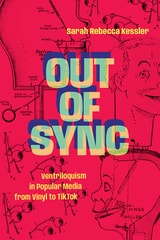
Out of Sync
Ventriloquism in Popular Media from Vinyl to TikTokSarah Rebecca Kessler
Duke University Press, 2026

Out of the Ash
Historical Ecology of Mesoamerica in the Late Antique Little Ice Age (536–660 CE)Joel D. Gunn
University of Utah Press, 2027
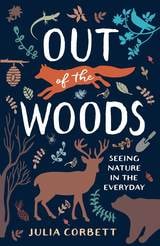
Out of the Woods
Seeing Nature in the EverydayJulia Corbett
University of Nevada Press, 2018
Have you ever wondered about society’s desire to cultivate the perfect lawn, why we view some animals as “good” and some as “bad,” or even thought about the bits of nature inside everyday items–toothbrushes, cell phones, and coffee mugs? In this fresh and introspective collection of essays, Julia Corbett examines nature in our lives with all of its ironies and contradictions by seamlessly integrating personal narratives with morsels of highly digestible science and research. Each story delves into an overlooked aspect of our relationship with nature—insects, garbage, backyards, noise, open doors, animals, and language—and how we cover our tracks.
With a keen sense of irony and humor and an awareness of the miraculous in the mundane, Julia recognizes the contradictions of contemporary life. She confronts the owner of a high-end market who insists on keeping his doors open in all temperatures. Takes us on a trip to a new mall with a replica of a trout stream that once flowed nearby. The phrase “out of the woods” guides us through layers of meaning to a contemplation of grief, remembrance, and resilience.
Out of the Woods leads to surprising insights into the products, practices, and phrases we take for granted in our everyday encounters with nature and encourages us all to consider how we might re-value or reimagine our relationships with nature in our everyday lives.
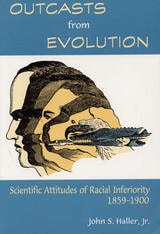
Outcasts from Evolution
Scientific Attitudes of Racial Inferiority, 1859 - 1900John S. Haller, Jr.
Southern Illinois University Press, 1996
In the only book to date to explore the period between the 1859 publication of Darwin’s Origin of Species and the discovery in 1900 of Gregor Mendel’s experiments in genetics, John S. Haller, Jr., shows the relationship between scientific "conviction" and public policy. He focuses on the numerous liberally educated American scientists who were caught up in the triumph of evolutionary ideas and who sought to apply those ideas to comparative morality, health, and the physiognomy of nonwhite races.
During this period, the natural and social scientists of the day not only accepted without question the genetic and cultural superiority of the Caucasian; they also asserted that the Caucasian race held a monopoly on evolutionary progress, arguing that "inferior races" were no more than evolutionary survivors doomed by their genetic legacy to remain outcasts from evolution.
Hereditarians and evolutionists believed that "less fit" human races were perishing from the rigors of civilization’s struggle and competition. Indeed, racial inferiority lay at the very foundation of the evolutionary framework and, remaining there, rose to the pinnacle of "truth" with the myth of scientific certainty.

Outside Agitator
Jon Daniels and the Civil Rights Movement in AlabamaCharles Eagles
University of Alabama Press, 2000
WINNER OF THE LILLIAN SMITH BOOK AWARD
The story of faith, sacrifice, and moral courage in Alabama's fight for civil rights.
Outside Agitator tells the powerful, largely forgotten story of Jonathan Daniels—a white Episcopal seminarian from New England who answered the call of the civil rights movement and paid for that commitment with his life. In 1965, Daniels left the safety of Harvard and Cambridge for Selma and Alabama’s Black Belt, where he worked alongside Black activists to challenge segregation, register voters, and confront the moral failures of church and state. His murder by a white segregationist shocked the nation and exposed the deadly cost of racial injustice—and of moral courage.
More than a biography, this book asks urgent questions that still resonate: What does it mean to act on conscience in a society structured by inequality? What responsibilities do faith, citizenship, and privilege impose? Historian Charles W. Eagles places Daniels’s life within the turbulent final phase of the southern civil rights movement, revealing the everyday fears, ethical dilemmas, and racial tensions behind the iconic events of Selma and Lowndes County.
Outside Agitator will appeal to readers interested in civil rights history, religious activism, Southern history, and the moral dimensions of political struggle. It is essential reading for students, scholars, clergy, and general readers seeking to understand how individual lives can illuminate—and challenge—the ongoing fight for justice and equality.
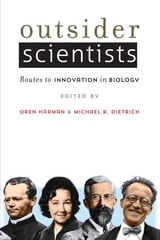
Outsider Scientists
Routes to Innovation in BiologyEdited by Oren Harman and Michael R. Dietrich
University of Chicago Press, 2013
Overpotential
Fuel Cells, Futurism, and the Making of a Power PanaceaEisler, Matthew
Rutgers University Press, 2012
It sounds so simple. Just combine oxygen and hydrogen in an electrochemical reaction that produces water and electricity, and you’ll have a clean, efficient power source. But scientists have spent decades—and billions of dollars in government and industry funding—developing the fuel cell. There have been successes and serendipitous discoveries along the way, but engineering a fuel cell that is both durable and affordable has proved extraordinarily difficult.
Overpotential charts the twists and turns in the ongoing quest to create the perfect fuel cell. By exploring the gap between the theory and practice of fuel cell power, Matthew N. Eisler opens a window into broader issues in the history of science, technology, and society after the Second World War, including the sociology of laboratory life, the relationship between academe, industry, and government in developing advanced technologies, the role of technology in environmental and pollution politics, and the rise of utopian discourse in science and engineering.