Results by title
60 books match the query '1947-' and 4 start with p
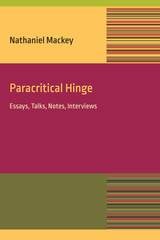
Paracritical Hinge
Essay, Talks, Notes, InterviewsNathaniel Mackey
University of Iowa Press, 2018
Paracritical Hinge is a collection of varied yet interrelated pieces highlighting Nathaniel Mackey’s multifaceted work as writer and critic. It embraces topics ranging from Walt Whitman’s interest in phrenology to the marginalization of African American experimental writing; from Kamau Brathwaite’s “calibanistic” language practices to Federico García Lorca’s flamenco aesthetic of duende and its continuing repercussions; from H. D.’s desert measure and coastal way of knowing to the altered spatial disposition of Miles Davis’s trumpet sound; from Robert Duncan’s serial poetics to diasporic syncretism; from the lyric poem’s present-day predicaments to gnosticism. Offering illuminating commentary on these and other artists including Amiri Baraka, Mississippi Fred McDowell, Wilson Harris, Jack Spicer, John Coltrane, Jay Wright, and Bob Kaufman, Paracritical Hinge also sheds light on Mackey’s own work as a poet, fiction writer, and editor.
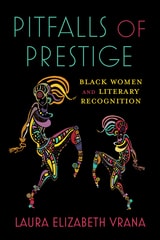
Pitfalls of Prestige
Black Women and Literary RecognitionLaura Elizabeth Vrana
The Ohio State University Press, 2024
Winner, 2025 College Language Association Book Award
From 1987, when Rita Dove won the Pulitzer Prize for Poetry, to 2021, when Amanda Gorman skyrocketed to celebrity status after performing during Biden’s inauguration and the Super Bowl, Black women have seemingly attained secure, stable positions at the forefront of American poetry. But this prominence comes at a price. As figures like Dove and Elizabeth Alexander have become well known, receiving endorsements and gaining visible platforms from major prizes, academic institutions, and publishing houses, the underlying terms of evaluation that greet Black women’s poetics often remain superficial, reflecting efforts to co-opt and contain rather than meaningfully consider new voices and styles. In Pitfalls of Prestige, Laura Elizabeth Vrana surveys how developments in American literary institutions since 1980 have shaped—and been shaped by—Black women poets. Grappling with the refulgent works of the most acclaimed contemporary figures alongside those of lesser-known poets, Vrana both elucidates how seeming gestures of inclusion can actually result in constraining Black women poets’ works and also celebrates how these writers draw on a rich lineage and forge alternative communities in order to craft continually innovative modes of transgressing such limits, on the page and in life.
Poetic Investigations
Singing the Holes in HistoryPaul Naylor
Northwestern University Press, 1999
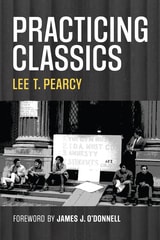
Practicing Classics
A MemoirLee T. Pearcy
University of Michigan Press, 2026
Practicing Classics is a memoir about education in America between the end of WWII and the early 21st century. Not only does it consider memory, its truths, and its deceptions, but it also unravels the complexities of class, race, gender, and social positioning in education. Lee Pearcy’s story begins with the 1957 desegregation crisis at Little Rock Central High School and its aftermath, describing how growing up in this environment shaped his academic and personal life.
As he came to study Latin and then Classics, Pearcy’s education intersected with the student disturbances at Columbia University in 1968 and a feminist revolution that brought significant numbers of women into the classical professoriate. He gives a first-hand account of a scandalous episode in the toxic administrative culture that characterized the classics department at the University of Texas in the 1980s. Against the background of these events, he unfolds his own education as a classicist and his development from apprentice to journeyman to confident teacher of Latin and Greek. Practicing Classics will engage readers who care about American education, classical studies, or the ways that choices, chances, and contingencies shaped one man’s life.