Results by title
196 books match the query 'Activism & Social Justice' and 18 start with p
Paper Pusher
Power and Protest in Higher EducationKathryn J. Gindlesparger
University of Minnesota Press, 2027
Paperwork is the new protest: leveraging bureaucracy for progressive action
In contemporary higher education, power increasingly circulates through documents rather than debate, making paperwork one of the most consequential sites of protest. Yet as universities become more corporatized and subject to authoritarian influence, bureaucratic writing is often treated as passive, procedural, or politically neutral. Paper Pusher shows how paperwork is a central mechanism of governance and therefore a formidable, underused medium for democratic action and protest within bureaucracies.
Kathryn J. Gindlesparger reframes the “paper pusher” from a symbol of compliance into an agent of institutional accountability and resistance. She develops four avenues for protesting through bureaucracy—voice, filing, circulation, and stasis-seeking—showing how everyday documents such as meeting minutes, policy drafts, budgets, and accreditation reports can be used to push back against authoritarian and corporate forces that undermine an institution’s mission. Rather than emphasizing visible confrontation, Paper Pusher demonstrates how activism can operate quietly and credibly from within systems where overt protest may carry professional risk.
Grounded in story and lived experience, this book is a love letter to office workers, staff, and middle managers whose labor sustains institutions and whose expertise is often overlooked. It foregrounds feminist, working-class, queer, disabled, Black, and brown voices, highlighting how marginalized workers have long used bureaucratic knowledge to create access, protection, and change. Practical and people-centered, Paper Pusher calls for bureaucratic literacy to be taught wherever writing is taught, insisting that paperwork is not grunt work but power work.
Retail e-book files for this title are screen-reader friendly with images accompanied by short alt text and/or extended descriptions.
Para Power
How Paraprofessional Labor Changed EducationNick Juravich
University of Illinois Press, 2024
Understanding paras as key players in Black and Latino struggles for jobs and freedom, Nick Juravich details how the first generation of paras in New York City transformed work in public schools and the relationships between schools and the communities they served. Paraprofessional programs created hundreds of thousands of jobs in working-class Black and Latino neighborhoods. These programs became an important pipeline for the training of Black and Latino teachers in the1970s and early 1980s while paras’ organizing helped drive the expansion and integration of public sector unions.
An engaging portrait of an invisible profession, Para Power examines the lives and practices of the first generation of paraprofessional educators against the backdrop of struggles for justice, equality, and self-determination.

Pedagogies of Interconnectedness
Feminist-Queer Collaborative TransformationEdited by Isis Nusair and Barbara Shaw
University of Illinois Press, 2025
The contributors describe ways of building communities within and beyond academic programs and examine what it means to engage in community-building work and action across institutional boundaries. In Part One, the essayists focus on the centrality of community building and reinterpreting bodies of knowledge with students, staff, faculty, and community members. Part Two looks at bringing transnational approaches to feminist collaborations in ways that challenge the classroom’s central place in knowledge production. Part Three explores organic collaborations in and beyond the classroom.
A practical and much-needed resource, Pedagogies of Interconnectedness offers cutting-edge ideas for collaboration in pedagogy, education justice, community-based activities, and liberatory worldmaking.
Contributors: Jordyn Alderman, Leen Al-Fatafta, Meryl Altman, María Claudia André, Andrea N. Baldwin, Carolyn Beer, Luisa Bieri, Rebecca Dawson, Misty De Berry, Danielle M. DeMuth, Emily Fairchild, Sara Youngblood Gregory, Letizia Guglielmo, Jeremy Hall, K. Melchor Hall, Linh U. Hua, Christine Keating, Charlotte Meehan, Brayden Milam, Isis Nusair, Montserrat Pérez-Toribio, Andrea Putala, Ariella Rotramel, Ann Russo, Kimberly Sanchez, Barbara L. Shaw, M. Gabriela Torres, Ayana K. Weekley, and Sharon R. Wesoky
Performance Beyond the Pale
Meditations on Art, Activism, and Bodies in ExtremisJames M. Harding
University of Michigan Press, 2026
The metaphor “beyond the pale” refers to something that’s unacceptable and, as James M. Harding argues in this book, “almost always refers to something—an activity, an action, or an act—that is performed.” In this book, Harding recalls that historically the pale marked contested political boundaries and that what lay beyond the pale was considered to be a dangerous frontier. Siding with seemingly excessive and unreasonable acts and with the artists and activists who produce them, Harding brings together a series of ideas and performances that operate beyond the pale and asks readers to examine them on their own terms.
Drawing on political science, critical theory, and philosophy, Harding investigates instances of self-immolation, life-threatening journeys across deserts and seas, radical political hoaxes, extreme speech acts, and anti-police activism. The book’s five chapters consist of a series of meditations, each with an easily identifiable scholarly logic and clear argument, though the connections between the meditations are left up to the reader. Together these meditations urge readers to understand that “beyond the pale” acts are frequently the product of a sense of urgency that preempts the dictates of accepted reason, conventional logic, and safety.
Performing Citizenship in Postdictatorship Chile
Cultural Policy and the Making of Political DramaturgiesJennifer Joan Thompson
Northwestern University Press, 2025
Offering a nuanced understanding of the performing arts’ relationship to politics
Through careful readings of key political performances in Chile's transition from military dictatorship to neoliberal democracy, Jennifer Joan Thompson examines how the production and aesthetics of theater are intertwined in processes of democratization, enactments of citizenship, and the development of cultural policy. Performing Citizenship in Postdictatorship Chile: Cultural Policy and the Making of Political Dramaturgies reveals how artists performed changing models of democratic citizenship. Thompson traces the ways artists confronted and resisted the military dictatorship of Augusto Pinochet, how they then reimagined the body politic during the early transitional period and challenged official constructions of history and memory as the transition to democracy progressed, how they critiqued Chile’s neoliberal economic model and its violence, and, finally, how they have made claims for feminist and Indigenous citizen subjectivities throughout Chile’s current social crisis. Incorporating archival and ethnographic research alongside readings of theatrical and political performances, this study offers a nuanced understanding of the performing arts’ relationship to politics, one that accounts for the ways artists and the state collaborate in the production of the political imagination.
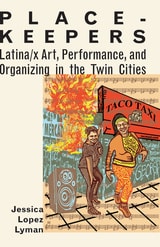
Place-Keepers
Latina/x Art, Performance, and Organizing in the Twin CitiesJessica Lopez Lyman
University of Minnesota Press, 2025
An in-depth look at how Latina/x artists transform art into activism and reclaim space in the Twin Cities
In Place-Keepers, Jessica Lopez Lyman examines how Latina/x artists in the Twin Cities navigate and challenge the region’s deep-seated racial injustices. Using “Inter-Latina movidas”—subtle yet strategic actions through which Latina/x artists forge solidarities, mobilize for justice, and reclaim space—these artists respond to systemic oppression through public performances and behind-the-scenes negotiations with the state, nonprofits, and other institutions.
Centering Latina/x women and gender nonconforming artists from Chicana/Mexicana, U.S. Central American, and Caribbean backgrounds, Place-Keepers confronts reductionist theories of Latinidad that flatten ethnic and racial identities. It demonstrates how the creative and activist practices of these cultural organizers address urgent social struggles from resisting gentrification and environmental destruction to opposing police violence. Lopez Lyman situates these efforts within the broader history of racial justice organizing in Minnesota, tracing a lineage of resistance that long precedes the 2020 Minneapolis uprising following the murder of George Floyd.
Through firsthand accounts and revealing case studies, Place-Keepers charts how these artists harness aesthetics as a tool for movement-building, strategically redistributing resources and transforming policy. Expanding the foundational concept of “movidas” in Chicana/o/x and Latina/o/x studies by highlighting maneuvers of infiltration, improvisation, individual ritual, and interdependence, Lopez Lyman establishes a crucial framework for understanding art as activism.

Playful Protest
The Political Work of Joy in Latinx MediaKristie Soares
University of Illinois Press, 2023
Joy is a politicized form of pleasure that goes beyond gratification to challenge norms of gender, sexuality, race, and class. Kristie Soares focuses on the diasporic media of Puerto Rico and Cuba to examine how music, public activist demonstrations, social media, sitcoms, and other areas of culture resist the dominant stories told about Latinx joy. As she shows, Latinx creators compose versions of joy central to social and political struggle and at odds with colonialist and imperialist narratives that equate joy with political docility and a lack of intelligence. Soares builds her analysis around chapters that delve into gozando in salsa music, precise joy among the New Young Lords Party, choteo in the comedy ¿Qué Pasa U.S.A.?, azúcar in the life and death of Celia Cruz, dale as Pitbull’s signature affect, and Alexandria Ocasio-Cortez’s use of silliness to take seriously political violence.
Daring and original, Playful Protest examines how Latinx creators resist the idea that joy only exists outside politics and activist struggle.

Playing Patriot
Inside Florida’s Alt-RightAlexander Lowie
Rutgers University Press, 2027
What draws ordinary Americans into extremist political movements, and why do they stay? Playing Patriot takes readers inside the contemporary Patriot Movement through immersive ethnographic fieldwork conducted with members of the Patriot Movement in Central Florida (including those active in the Proud Boys and Three-Percenters) following January 6. Over months of participant observation, conversations, and firsthand experiences, anthropologist Alexander Lowie explores how humor, play, alternative media, conspiracy narratives, and performances of masculinity shape political belonging. Rather than portraying these organizations as collections of abstract beliefs alone, the book reveals them as communities built through everyday relationships, shared rituals, and stories about national decline and renewal. Written as a first-person narrative ethnography, Playing Patriot offers an accessible, deeply human account of political extremism while providing fresh insight into the emotional and cultural forces shaping contemporary American populism.
Policing Black Lives
State Violence in Canada from Slavery to the PresentRobyn Maynard
Duke University Press, 2025
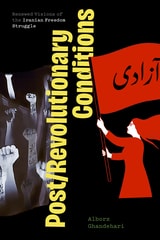
Post/Revolutionary Conditions
Renewed Visions of the Iranian Freedom StruggleAlborz Ghandehari
Northwestern University Press, 2025
An exploration of how the Iranian people have renewed their longtime struggle for freedom
The Woman, Life, Freedom uprising is only the latest manifestation of a century-long struggle for liberation in Iran. This ongoing movement for justice has encompassed two revolutions against domestic dictatorship and foreign imperialism, as well as a series of uprisings since the 1979 Iranian Revolution, which was followed by a new era of repression. Post/Revolutionary Conditions: Renewed Visions of the Iranian Freedom Struggle offers an intersectional analysis of how progressive and radical movement builders have reenvisioned liberation in the post-’79 era, despite new forms of oppression under the Islamic Republic and from US and other foreign imperial powers. Bringing together a diverse array of sources, including oral histories with Iranian labor, student, and gender justice organizers, as well as resistance literature and art, Alborz Ghandehari challenges narratives that treat working-class, feminist, queer, and oppressed ethnic minorities’ movements as separate from one another. Post/Revolutionary Conditions demonstrates how such potent reimaginings of collective liberation and a radically democratic future have been shaped by multiple generations of protest and kindred struggles globally.
Powerless
The People's Struggle for EnergyDiana Hernández
Russell Sage Foundation, 2025
Approximately one in ten households in the U.S. are energy insecure and four in ten are at risk for energy insecurity. These statistics alone do not convey the acute pain of utility shutoffs, or the relentless toll of chronic energy hardships marked by difficult choices and harsh living conditions. Drawing on survey data and interviews with one hundred energy-insecure individuals and families, Hernández and Laird detail the experience of energy insecurity. Individuals and families suffering from energy insecurity endure economic hardships, such as difficulty paying utility bills, utility debt, and disconnection from utility services. They also struggle with physical challenges, such as poor housing conditions and poor or dysfunctional heating and cooling systems. They are often forced to make difficult choices about what bills to pay. These decisions are sometimes referred to as “heat or eat?” choices, as families cannot afford to pay for heating and food at the same time. Energy insecure individuals and families employ a variety of strategies to keep energy costs down to avoid having to make these hard choices. This includes deliberate underconsumption of energy, enduring physical discomfort, and using dangerous alternatives such as open flames, ovens, or space heaters to try to maintain a comfortable temperature in their home. To be energy insecure is to suffer. Despite the heavy toll of energy insecurity, most people confront these difficulties behind closed doors, believing it is a private matter. Thus, the enormous social crisis of energy insecurity goes unnoticed.
Hernández and Laird argue that household energy is a basic human right and detail policies and practices that would expand access to consistent, safe, clean, and affordable energy. Their proposals include improving the current energy safety net, which is limited and often does not serve the most energy insecure due to stringent program requirements and administrative burdens. They also suggest redesigning rates to accommodate income, promoting enrollment and expansion of discount programs, reforming utility disconnection policies, improving energy literacy, and ensuring an equitable shift to renewable energy resources.
Powerless creates a comprehensive picture of the complex social and environmental issue of energy insecurity and shows how energy equity is not just an aspiration but an achievable reality.
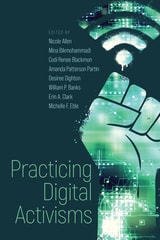
Practicing Digital Activisms
Nicole E. Allen
Utah State University Press, 2027
Practicing Digital Activisms reframes digital activism as embodied, situated work that extends across classrooms, communities, institutions, streets, and ecosystems. It develops frameworks for studying and practicing activism in an era shaped by social media, datafication, and artificial intelligence. At the heart of the collection is a rethinking of digital activism for the twenty-first century that traces activism through networks of people, platforms, infrastructures, and material practices.
Bringing together scholars in rhetoric, writing studies, technical communication, and community engagement, contributors show how activism now unfolds across interconnected media ecologies, through affective and material infrastructures, and at multiple tempos ranging from viral moments to the quieter practices of organizing, care, and persistence. Through case studies of food activism, environmental advocacy, reproductive health, social media movements, and emerging data practices, contributors demonstrate digital activism as a sustained practice of coalition building, circulation, documentation, and persistence. The chapters provide theoretical tools for making infrastructures visible, negotiating ethical responsibility, and designing interventions responsive to local needs and broader struggles for justice.
Attending to the risks that shape contemporary digital life—including surveillance, commodification, algorithmic bias, harassment, platform control, and unequal access—the collection offers language, methods, and examples for understanding how communities build power, sustain movements, and imagine just futures through digital practice. For scholars, teachers, students, organizers, and readers interested in digital rhetoric and social change, Practicing Digital Activisms invites attention to digital participation as a vital site where collective action is imagined, contested, and practiced.
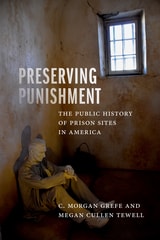
Preserving Punishment
The Public History of Prison Sites in AmericaC. Morgan Grefe and Megan Cullen Tewell
University of Massachusetts Press, 2027
Examining how former prisons became tourist destinations and what that means for past, present, and future carceral spaces
Beginning in the 1970s, the U.S. War on Drugs and tougher crime policies drove incarceration rates to unprecedented levels, leading to severe prison overcrowding and a surge in prison construction. As new facilities opened, many older prisons, some dating to the nineteenth century, were closed and abandoned. Communities faced difficult decisions about their future. Demolition was expensive, and adaptive reuse was often constrained by the distinctive architecture of confinement.
One response, often inspired by the success of institutions such as Alcatraz Island and Eastern State Penitentiary, has been to preserve former prisons as historic sites and tourist attractions, welcoming visitors and using tours and exhibits to shape public understanding of incarceration. Today former prisons operating as such exist in every region of the United States. For many visitors, these sites provide a primary point of contact with the history and realities of imprisonment.
Yet transforming places of confinement into destinations for tourism and heritage raises important questions. How should these sites interpret difficult histories? For whom? What responsibilities do they have to the formerly incarcerated, previous staff, and affected communities? How can they balance education, commemoration, entertainment, and economic development?
Preserving Punishment offers the first sustained historical study of prison museums in the United States. Examining how these institutions preserve, interpret, and present the history of incarceration, C. Morgan Grefe and Megan Cullen Tewell highlight the role of preservationists and public historians in shaping narratives, addressing ethical challenges, and fostering critical engagement with America's past and present systems of punishment. Grounded in local and regional contexts, they argue that historic prison sites are uniquely positioned to encourage informed public conversations about incarceration, memory, and criminal justice.

Prison Song
Music and Incarceration in the United StatesDavid Metzer
University of Michigan Press, 2026
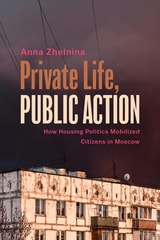
Private Life, Public Action
How Housing Politics Mobilized Citizens in MoscowAnna Zhelnina
Temple University Press, 2026
Private Life, Public Action traces how residents impacted by the relocation plan became activists despite having little to no experience organizing or even forming political affiliations and opinions. Author Anna Zhelnina details the ways in which neighbors engaged in collective action, as well as the individual and structural changes these interactions caused.
Zhelnina develops the concept of “housing strategies” to explain how residents’ debates with their neighbors about housing were shaped by their private life strategies. She applies her findings about housing in Moscow to ongoing questions about political mobilization, demonstrating how public engagement is shaped by historical and social contexts.
Examining the intersection of housing, politics, and citizenship in contemporary Russia, Private Life, Public Action offers a new way to look at urban change.
In the series Politics, History, and Social Change
Processes of Collective Action
Edited by Lorenzo Bosi and Stefan Malthaner
Temple University Press, 2027
Whether collective action takes the form of protest campaigns, social movements, political violence or strikes, there is a dynamic nature to the shared goal of effecting change. But whereas most studies look at when collective action begins, the editors and contributors to Processes of Collective Action take a processual approach, looking at how collective action emerges, proceeds, what is achieved, and how different collective actors react to what unfolds.
Bringing together leading scholars of contentious politics, this volume seeks to explore and advance process analysis across different forms of political conflicts, types of actors, and varieties of collective action. Featuring theoretical concepts, methodological tools, and global cutting-edge research, Processes of Collective Action offers a series of case studies and conceptual essays that reflect on crucial issues in and current transformations of collective action.
Contributors: Irina Aguiari, Kenneth T. Andrews, Javier Auyero, Mark R. Beissinger, Kathleen Blee, Donatella della Porta, Mario Diani, Jennifer Earl, Olivier Fillieule, Sarah Gaby, Thomas Hoebel, Chaeyoon Lim, James M. Jasper, Doug McAdam, Anna Milewski, Pamela Oliver, elena pavan, Anastasia Shesterinina, Katherine Sobering, Mary Ellen Stitt, Sidney Tarrow, Katrin Uba, Mattias Wahlström
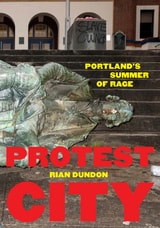
Protest City
Portland's Summer of RageRian Dundon
Oregon State University Press, 2023
In the months leading up to the 2020 presidential election, Portland made national news with nightly social justice protests, often met with violent response by counter protestors and law enforcement. Though frequently regarded as a progressive hub, Portland has a long history of racial inequality and oppression, and the city’s entrenched divisions gained new attention during the Trump years. The photos in Protest City present a visceral visual record of this significant moment in Portland’s history.
Rian Dundon, who has been photographing the rise of extreme politics on the West Coast since 2016, lived only a short walk from the protests that erupted after the murder of George Floyd. For one hundred days, Dundon enmeshed himself in the demonstrations with an unobtrusive point-and-shoot camera. The result is a graphic portrayal of how social movements become politicized, how spectacle serves as a subtext to change in the digital age, and how modern protests blur distinctions among performance, ritual, and surveillance. As he follows the progress of Portland’s conflicts, Dundon draws connections to Oregon’s legacy as a stronghold of white supremacist extremism and interrogates the role of whiteness in racial justice movements.
Most of the photographs in the book were taken between May and October 2020, but the collection also includes photos from protests in late 2020 and 2021 around various related issues, including the Red House eviction blockade, rightwing demonstrations on January 6 and 17, and the one-year anniversary of George Floyd’s murder. Dundon’s striking photos recreate the immediacy and impact of the protests, while essays by historian Carmen Thompson and journalist Donnell Alexander contextualize the uprising’s sociopolitical background. A chronology and author’s note are also featured.
The publisher and author would like to thank the Magnum Foundation, Documentary Arts, and the Economic Hardship Reporting Project for their generous support of this publication. Additional funding has been provided by Furthermore: a program of the J. M. Kaplan Fund.
Pursuing Justice in Africa
Competing Imaginaries and Contested PracticesJessica Johnson
Ohio University Press, 2018
Pursuing Justice in Africa focuses on the many actors pursuing many visions of justice across the African continent—their aspirations, divergent practices, and articulations of international and vernacular idioms of justice. The essays selected by editors Jessica Johnson and George Hamandishe Karekwaivanane engage with topics at the cutting edge of contemporary scholarship across a wide range of disciplines. These include activism, land tenure, international legal institutions, and postconflict reconciliation.
Building on recent work in sociolegal studies that foregrounds justice over and above concepts such as human rights and legal pluralism, the contributors grapple with alternative approaches to the concept of justice and its relationships with law, morality, and rights. While the chapters are grounded in local experiences, they also attend to the ways in which national and international actors and processes influence, for better or worse, local experiences and understandings of justice. The result is a timely and original addition to scholarship on a topic of major scholarly and pragmatic interest.
Contributors:
Felicitas Becker, Jonathon L. Earle, Patrick Hoenig, Stacey Hynd, Fred Nyongesa Ikanda, Ngeyi Ruth Kanyongolo, Anna Macdonald, Bernadette Malunga, Alan Msosa, Benson A. Mulemi, Holly Porter, Duncan Scott, Olaf Zenker.