Results by title
935 books match the query 'Ancient' and 54 start with p
PLOTINUS Ennead VI.4 and VI.5
On the Presence of Being, One and the Same, Everywhere as a Whole: Translation with an Introduction and CommentaryEyjólfur K. Emilsson
Parmenides Publishing, 2015
Pagans and Christians in the Late Roman Empire
New Evidence, New Approaches (4th–8th centuries)Marianne Sághy
Central European University Press, 2017
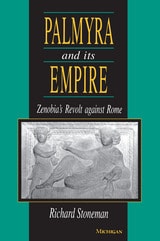
Palmyra and Its Empire
Zenobia's Revolt against RomeRichard Stoneman
University of Michigan Press, 1995
This volume is the first comprehensive historical treatment in any language of Roman Syria, the revolt of Zenobia, and the city of Palmyra. Drawing on discoveries in archaeology, the history of the Silk Road, numismatics, and Roman and Persian history, Richard Stoneman has assembled a rich collage of knowledge about this intriguing period. As he tells the story of this major revolt and its leader, the author surveys the history of the spice trade in antiquity, the religious ferment of third- century Syria, early modern travelers to Palmyra, and in particular Zenobia's changing image through the ages.
The lucid text and numerous illustrations will attract all who are intrigued by the third- century Roman Empire and its frontiers, by pre-Islamic Arab culture, by Roman Syria and Palmyra itself, and by the fascinating Queen Zenobia.
". . . an excellent synthesis of current knowledge and a sound introduction to the third cen-tury, especially in the East. . . ."--Journal of Military History
". . . Stoneman provides an excellent and readable introduction to what is known about Palmyra, and particularly the astonishing period in the mid-third century A.D. . . . [He] marshalls recent reinterpretations of the politics of the eastern frontier by both historians and archaeologists, as well as the inspiration of his own visits to Syria, to underline Palmyra's unique commercial position and the ability over the centuries of Roman rule of its ethnically and religiously highly heterogeneous ruling class to exploit the caravan trade from East and South Asia to their economic and political advantage."--Greece & Rome
Richard Stoneman has published numerous books on the ancient world and on travel in the Eastern Mediterranean. He is Senior Editor at Routledge.
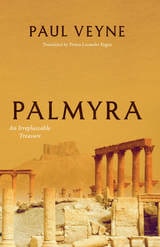
Palmyra
An Irreplaceable TreasurePaul Veyne
University of Chicago Press, 2017
In this concise and elegiac book, Paul Veyne, one of Palmyra’s most important experts, offers a beautiful and moving look at the history of this significant lost city and why it was—and still is—important. Today, we can appreciate the majesty of Palmyra only through its pictures and stories, and this book offers a beautifully illustrated memorial that also serves as a lasting guide to a cultural treasure.
Papyri from Karanis
The Granary C123W. Graham Claytor and Arthur Verhoogt, editors
University of Michigan Press, 2018
The documents are presented with an introduction, transcription of the original Greek or Latin, translation, commentary, and images. A unique community prayer to the emperor and gods (827) is the volume’s most notable contribution. The other papyri are a mix of private and public documents (petitions, declarations, letters, lists, etc.) that date from between the first century BCE and the fourth century CE. The typological and chronological mix of texts shows that they do not form an undisturbed archive but were rather a dump of wastepaper and other household objects.
Michigan’s excavated papyri are here presented for the first time on the basis of their archaeological find spot rather than being organized according to content. The volume’s introduction provides a possible model for analyzing legacy data from the Karanis excavations stored at the University of Michigan. The book will be of interest to papyrologists, ancient historians, and archaeologists of Greco- Roman Egypt.
Paradosis and Survival
Three Chapters in the History of Epicurean PhilosophyDiskin Clay
University of Michigan Press, 1998
The first series of essays concentrates on the mechanisms Epicurus devised to assure the survival of the philosophy beyond its Athenian roots. Clay presents social history on an equal footing with doctrine, and offers for the first time evidence for hero cults among philosophers who believed that the soul died with the body. The second set of essays concentrates Epicureanism in the age of Cicero, Philodemus, and Lucretius. In the four essays on De Rerum Natura, Lucretius is viewed not as a transparency through which we can view the Greek of Epicurus, but a Roman philosopher in control of both doctrine and rhetoric. The book concludes with the study of the philosophy in Oenoanda, Lycia, in which the author brilliantly situates post-1968 discoveries from Oenoanda and the Villa de Papiri in Herculaneum in the context of the second-century mountain city.
This study of Epicureanism as a social movement will be of interest to students of ancient philosophy and the philosophy of early modern Europe, when Epicureanism was revived. In addition, scholars of the New Testament will find parallels to the rise and spread of Christianity.
Diskin Clay is the R. J. R. Nabisco Distinguished Professor of Classical Studies, Duke University.
Parody in the Middle Ages
The Latin TraditionMartha Bayless
University of Michigan Press, 1996
Bayless' study shows with great clarity that parody was a significant and vibrant literary form in the Middle Ages. In addition, her research sheds new light on clerical culture. The clerics who composed these parodies were far from meddling guardians of somber piety; rather, they appeared to see no contradiction between merriment and devotion. The wide dissemination and long life of these drolleries--some circulated for a thousand years--indicate a taste for clerical amusement that challenges conventional views of medieval solemnity.
Parody in the Middle Ages surveys in detail five of the most common traditions of parody. It provides a complete list of all known medieval Latin parodies, and also provides twenty complete texts in an appendix in the original Latin, with English translations. These texts have been collated from over a hundred manuscripts, many previously unknown. The study brings to light both a form and many texts that have remained obscure and inaccessible until now.
Parody in the Middle Ages appeals to the modern audience not only for its cultural value but also for the same reason the parodies appealed to the medieval audience: they are simply very funny. This welcome new volume will be of particular interest to students of medieval satire and literary culture, to medieval Latinists, and to those who want to explore the breadth of medieval culture.
Martha Bayless is Assistant Professor of English, University of Oregon.
Pedagogy in Ancient Judaism and Early Christianity
Karina Martin Hogan
SBL Press, 2017
Engage fourteen essays from an international group of experts
There is little direct evidence for formal education in the Bible and in the texts of Second Temple Judaism and early Christianity. At the same time, pedagogy and character formation are important themes in many of these texts. This book explores the pedagogical purpose of wisdom literature, in which the concept of discipline (Hebrew musar) is closely tied to the acquisition of wisdom. It examines how and why the concept of musar came to be translated as paideia (education, enculturation) in the Greek translation of the Hebrew Bible (Septuagint), and how the concept of paideia was deployed by ancient Jewish authors writing in Greek. The different understandings of paideia in wisdom and apocalyptic writings of Second Temple Judaism are this book's primary focus. It also examines how early Christians adapted the concept of paideia, influenced by both the Septuagint and Greco-Roman understandings of this concept.
Features
Penelope’s Bones
A New History of Homer's World through the Women Written Out of ItEmily Hauser
University of Chicago Press, 2025
Weaving together literary and archaeological evidence, Emily Hauser illuminates the rich, intriguing lives of the real women behind Homer’s Iliad and Odyssey.
Achilles. Agamemnon. Odysseus. Hector. The lives of these and many other men in the greatest epics of ancient Greece have been pored over endlessly in the past three millennia. But these are not just tales about heroic men. There are scores of women as well—complex, fascinating women whose stories have gone unexplored for far too long.
In Penelope’s Bones, award-winning classicist and historian Emily Hauser pieces together compelling evidence from archaeological excavations and scientific discoveries to unearth the richly textured lives of women in Bronze Age Greece—the era of Homer’s heroes. Here, for the first time, we come to understand the everyday lives and experiences of the real women who stand behind the legends of Helen, Briseis, Cassandra, Aphrodite, Circe, Athena, Hera, Calypso, Penelope, and more. In this captivating journey through Homer’s world, Hauser explains era-defining discoveries, such as the excavation of Troy and the decipherment of Linear B tablets that reveal thousands of captive women and their children; more recent finds like the tomb of the Griffin Warrior at Pylos, whose tomb contents challenge traditional gender attributes; DNA evidence showing that groups of warriors buried near the Black Sea with their weapons and steeds were, in fact, Amazon-like female fighters; a prehistoric dye workshop on Crete that casts fresh light on “women’s work” of dyeing, spinning, and weaving textiles; and a superbly preserved shipwreck off the coast of Turkey whose contents tell of the economic and diplomatic networks crisscrossing the Bronze Age Mediterranean.
Essential reading for fans of Madeline Miller or Natalie Haynes, this riveting new history brings to life the women of the Bronze Age Aegean as never before, offering a groundbreaking reassessment of the ancient world.
Penelope’s Bones
A New History of Homer’s World through the Women Written Out of ItEmily Hauser
University of Chicago Press, 2025
Achilles. Agamemnon. Odysseus. Hector. The lives of these and many other men in the greatest epics of ancient Greece have been pored over endlessly in the past three millennia. But these are not just tales about heroic men. There are scores of women as well—complex, fascinating women whose stories have gone unexplored for far too long.
In Penelope’s Bones, award-winning classicist and historian Emily Hauser pieces together compelling evidence from archaeological excavations and scientific discoveries to unearth the richly textured lives of women in Bronze Age Greece—the era of Homer’s heroes. Here, for the first time, we come to understand the everyday lives and experiences of the real women who stand behind the legends of Helen, Briseis, Cassandra, Aphrodite, Circe, Athena, Hera, Calypso, Penelope, and more. In this captivating journey through Homer’s world, Hauser explains era-defining discoveries, such as the excavation of Troy and the decipherment of Linear B tablets that reveal thousands of captive women and their children; more recent finds like the tomb of the Griffin Warrior at Pylos, whose tomb contents challenge traditional gender attributes; DNA evidence showing that groups of warriors buried near the Black Sea with their weapons and steeds were, in fact, Amazon-like female fighters; a prehistoric dye workshop on Crete that casts fresh light on “women’s work” of dyeing, spinning, and weaving textiles; and a superbly preserved shipwreck off the coast of Turkey whose contents tell of the economic and diplomatic networks crisscrossing the Bronze Age Mediterranean.
Essential reading for fans of Madeline Miller or Natalie Haynes, this riveting new history brings to life the women of the Bronze Age Aegean as never before, offering a groundbreaking reassessment of the ancient world.
People, Personal Expression, and Social Relations in Late Antiquity, Volume II
Selected Latin Texts from Gaul and Western EuropeRalph W. Mathisen
University of Michigan Press, 2003
Late Antiquity, which lies between Classical Antiquity and the Middle Ages (ca. A.D. 250-750), heralded the gradual decline of Mediterranean classical civilization, and the initial formation of a strictly western European, Christian society. During this period, three momentous developments threatened the paternalistic Roman social system: the rise of the Christian church, the disintegration of the Roman Empire in the west, and the establishment of the barbarian kingdoms.
The first of its type, this volume presents a collection of Latin source documents illustrating the social upheaval taking place in the Late Roman and early medieval worlds. The texts included in this volume provide the original Latin for the selections that are translated in People, Personal Expression, and Social Relations in Late Antiquity, Volume I. The 140 selected texts gathered from 70 different sources offer the reader firsthand experience with the ways that the Latin language was being used during the transformative period of Late Antiquity.
Ralph W. Mathisen is Professor of Ancient and Byzantine History; Louise Fry Scudder Professor of Humanities; and Director, Biographical Database for Late Antiquity at the University of South Carolina.
Perfidy and Passion
Reintroducing the IliadMark Buchan
University of Wisconsin Press, 2012
Homer’s Iliad is often considered a poem of blunt truthfulness, his characters’ motivation pleasingly simple. A closer look, however, reveals a complex interplay of characters who engage in an awful lot of lies. Beginning with Achilles, who hatches a secret plot to destroy his own people, Mark Buchan traces motifs of deception and betrayal throughout the poem. Homer’s heroes offer bluster, their passion linked to and explained by their lack of authenticity. Buchan reads Homer’s characters between the lies, showing how the plot is structured individual denial and what cannot be said.
Performing the Greek Crisis
Navigating National Identity in the Age of AusterityNatalie Zervou
University of Michigan Press, 2024
Winner of the 2025 Dance Studies Association de la Torre Bueno Book Prize
Performing the Greek Crisis explores the impact of the Greek financial crisis (2009–19) on the performing arts sector in Greece, and especially on contemporary concert dance. When Greece became the first European Union member to be threatened with default, the resulting budget cuts pushed dance to develop in unprecedented directions. The book examines the repercussions that the crisis had on artists’ daily lives and experiences, weaving the personal with the political to humanize a phenomenon that, to date, had been examined chiefly through economic and statistical lenses. Informed by the author’s experience of growing up in Greece and including interviews and rich descriptions of performances, the book offers a glimpse into a pivotal moment in Greek history.
In Greece, dance (and, by extension, the body) has historically held a central role in the process of national identity construction. When the crisis broke out, artists had to navigate through a precariously fluctuating landscape, with their bodies as their only stable referent. By centering the analysis of the Greek crisis on the dancing bodies, Performing the Greek Crisis is able to examine the various ways that artists reconceptualized their history and reframed ideas of national belonging, race, citizenship, and immigration.
Perfumed
The Story of Fragrance in the Ancient MediterraneanAnnette Giesecke
J. Paul Getty Trust, The, 0
A heady look at the fascinating world of perfumes, incense, and other aromatics in the ancient Mediterranean and their vibrant and sometimes violent history.
Perfumed invites you to breathe deeply and inhale the incense burning on the altars of the Greeks, perfumes sprinkled on spectators in Roman amphitheaters or wafting from the robes of Persian kings, and unguents filling Egyptian tombs. Though we don’t know who first burned a fragrant branch to perfume their dwelling or rubbed an aromatic petal against their skin, evidence demonstrates that such practices were ubiquitous by the Bronze Age.
- Opens with a richly illustrated overview of aromatics in Mesopotamia, Persia, Egypt, Greece, and Roman Italy.
- Explores the role fragrance played in all aspects of daily life and details major ingredients, including balsam, frankincense, rose, myrrh, saffron, and more.
- Features vivid passages from ancient sources, including perfume recipes and intriguing anecdotes such as the historian Herodotus’s account of winged serpents guarding frankincense trees in Arabia or Pliny the Elder’s claim that the emperor Nero burned a year’s harvest of frankincense for his wife’s funeral (after likely murdering her).
- Contains over 80 images drawn from a diverse range of ancient sources and archaeological evidence.
Experience the ancient world through its most evocative sense. Best-selling author Annette Giesecke’s Perfumed is essential reading for anyone with an interest in plants, perfumes, and other aromatics, as well as the rich, interrelated cultures of the Mediterranean.
Pericles on Stage
Political Comedy in Aristophanes' Early PlaysBy Michael Vickers
University of Texas Press, 1996
Since the eighteenth century, classical scholars have generally agreed that the Greek playwright Aristophanes did not as a matter of course write "political" plays. Yet, according to an anonymous Life of Aristophanes, when Dionysius the tyrant of Syracuse wanted to know about the government of Athens, Plato sent him a copy of Aristophanes' Clouds.
In this boldly revisionist work, Michael Vickers convincingly argues that in his earlier plays, Aristophanes in fact commented on the day-to-day political concerns of Athenians. Vickers reads the first six of Aristophanes' eleven extant plays in a way that reveals the principal characters to be based in large part on Pericles and his ward Alcibiades.
According to Vickers, the plays of Aristophanes—far from being nonpolitical—actually allow us to gauge the reaction of the Athenian public to the events that followed Pericles' death in 429 B.C., to the struggle for the political succession, and to the problems presented by Alcibiades' emergence as one of the most powerful figures in the state. This view of Aristophanes reaffirms the central role of allegory in his work and challenges all students of ancient Greece to rethink long-held assumptions about this important playwright.
Periklean Athens and Its Legacy
Problems and PerspectivesEdited by Judith M. Barringer and Jeffrey M. Hurwit
University of Texas Press, 2005
The late fifth century BC was the golden age of ancient Athens. Under the leadership of the renowned soldier-statesman Perikles, Athenians began rebuilding the Akropolis, where they created the still awe-inspiring Parthenon. Athenians also reached a zenith of artistic achievement in sculpture, vase painting, and architecture, which provided continuing inspiration for many succeeding generations.
The specially commissioned essays in this volume offer a fresh, innovative panorama of the art, architecture, history, culture, and influence of Periklean Athens. Written by leading experts in the field, the articles cover a wide range of topics, including:
- An evaluation of Perikles' military leadership during the early stages of the Peloponnesian War.
- Iconographical and iconological studies of vase paintings, wall paintings, and sculpture.
- Explorations of the Parthenon and other monuments of the Athenian Akropolis.
- The legacy of Periklean Athens and its influence upon later art.
- Assessments of the modern reception of the Akropolis.
As a whole, this collection of essays proves that even a well-explored field such as Periklean Athens can yield new treasures when mined by perceptive and seasoned investigators.
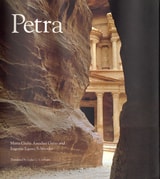
Petra
Maria Giulia Amadasi Guzzo and Eugenia Equini Schneider
University of Chicago Press, 2002
In this lavishly illustrated book, Maria Giulia Amadasi Guzzo and Eugenia Equini Schneider provide an accessible overview of the history and culture of the Nabateans, including their language, religion, politics, and economy, as well as a detailed guide to the city of Petra and its art and architecture. A major stop on the spice trade route, Petra attracted wealth and culture from across the Arabic and classical worlds and was abundantly furnished with more than 800 monuments. Perhaps the most well known of these is the Khazneh el-Faroun, or Treasury, a royal tomb more than 130 feet high with a magnificent Hellenistic facade carved from the salmon pink sandstone of the surrounding cliffs. But no less impressive were Petra's advanced achievements in hydraulic engineering, including elaborate water conservation systems and dams.
For anyone who has felt the lure and wonder of ancient cities and civilizations in exotic locations, Petra will be a delightful and invaluable resource.
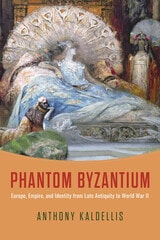
Phantom Byzantium
Europe, Empire, and Identity from Late Antiquity to World War IIAnthony Kaldellis
University of Chicago Press, 2026
Unveiling the ideological foundations of Byzantine studies, Phantom Byzantium is a pioneering survey of western European perceptions of the eastern Roman empire (also known as Byzantium) spanning late antiquity to World War II. Through ten chronological chapters, Anthony Kaldellis makes the case that western Europe gradually formed its identity by adopting prestigious cultural elements from the eastern empire but simultaneously portraying the east as inferior. The West modeled its Roman imperial style on Constantinople while minimizing the latter as Greek rather than Roman; appropriated a host of Christian traditions from the east while casting the east as schismatic, heretical, or treacherous; and, during the Renaissance, used classical Hellenic philology from Greek scholars before marginalizing them as unworthy bearers of that tradition. This orientalizing impulse worked to buttress western exceptionalism and resulted in the fictitious construction of “Byzantium” as Europe’s evil doppelgänger, embodying the worst versions of traditions fundamental to European identity and casting the region as despotic, superstitious, and degenerate.
Explaining the creation, history, and functions of the ideological construct of Byzantium in the western imagination and European self-fashioning, this book has critical implications for contemporary views of European history.
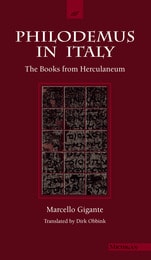
Philodemus in Italy
The Books from HerculaneumMarcello Gigante
University of Michigan Press, 2002
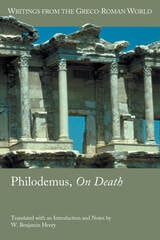
Philodemus, On Death
W. Benjamin Henry
SBL Press, 2009
Phoenician Aniconism in Its Mediterranean and Ancient Near Eastern Contexts
Brian R. Doak
SBL Press, 2015
The Hebrew Bible contains a prohibition against divine images (Exod 20:2-5a). Explanations for this command are legion, usually focusing on the unique status of Israel's deity within the context of the broader Near Eastern and Mediterranean worlds. Doak explores whether or not Israel was truly alone in its severe stance against idols. This book focuses on one particular aspect of this iconographic context in Israel's Iron Age world: that of the Phoenicians. The question of whether Phoenicians employed aniconic (as opposed to iconic) representational techniques has significance not only for the many poorly understood aspects of Phoenician religion generally, but also for the question of whether aniconism can be considered a broader trend among the Semitic populations of the ancient Near East.
Features:
- More than fifty images and illustrations
- Examination of textual and archaeological evidence
- Application of art historical methods
Phoenician Inscriptions
Robert D. Holmstedt
SBL Press, 2026
Physics Or Natural Hearing
Glen Aristotle
St. Augustine's Press, 2005
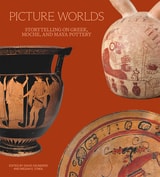
Picture Worlds
Storytelling on Greek, Moche, and Maya PotteryDavid Saunders
J. Paul Getty Trust, The, 2024
Satyrs and sphinxes, violent legumes, and a dancing maize deity figure in the stories painted on the pottery produced by the ancient Greek, Moche, and Maya cultures, respectively. Picture Worlds is the first book to examine the elaborately decorated terracotta vessels of these three distinct civilizations. Although the cultures were separated by space and time, they all employed pottery as a way to tell stories, explain the world, and illustrate core myths and beliefs. Each of these painted pots is a picture world. But why did these communities reach for pottery as a primary method of visual communication? How were the vessels produced and used? In this book, experts offer introductions to the civilizations, exploring these foundational questions and examining the painted imagery. Readers will be rewarded with a better understanding of each of these ancient societies, fascinating insights into their cultural commonalities and differences, and fresh perspectives on image making and storytelling, practices that remain vibrant to this day.
This volume is published to accompany an exhibition on view at the J. Paul Getty Museum at the Getty Villa from April 10 to July 29, 2024, and at the Michael C. Carlos Museum at Emory University from September 14 to December 15, 2024.

Place Names of Southwest Peloponnesus
Register and IndexesDemetrius J. Georgacas and William A. McDonald
University of Minnesota Press, 1969
Place Names of Southwest Peloponnesus was first published in 1969. Minnesota Archive Editions uses digital technology to make long-unavailable books once again accessible, and are published unaltered from the original University of Minnesota Press editions.
This work contains listings, in Greek, of nearly 10,000 place names collected in approximately 300 settlements of regions in Peloponnesus, the southern peninsula of Greece. In their introduction the authors point out that the present-day toponyms reflect historical and linguistic developments through the ages and thus provide important source material for scholarly studies. Inhabitants of the region whose language was ancient Greek, Koine Greek, Byzantine Greek, South Slavic, Frankish, Venetian, Albanian, Turkish, or Neo-Greek have all left discernible traces in the local place names. The book will be useful not only to specialists in onomastics and linguistics but also to historians, archaeologists, geographers, and other researchers in Greek and comparative studies.
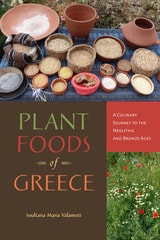
Plant Foods of Greece
A Culinary Journey to the Neolithic and Bronze AgesSoultana Maria Valamoti
University of Alabama Press, 2023
2024 INAUGURAL MARY BEAUDRY BOOK AWARD FOR THE ARCHAEOLOGY OF FOOD
A synthesis of culinary practices of prehistoric Greece based on plant food ingredients
In Plant Foods of Greece, Greek archaeologist Soultana Maria Valamoti takes readers on a culinary journey, reconstructing the plant foods and culinary practices of Neolithic and Bronze Age Greece. For more than thirty years, she has been analyzing a large body of archaeobotanical data that was retrieved from nearly twenty sites in mainland Greece and the Greek islands, with an additional analysis of other sites as referenced by published colleagues. Plant foods were the main ingredients of daily meals in prehistoric Greece and most likely of special dishes prepared for feasts and rituals.
Valamoti’s approach allows an exploration of culinary variability through time. The thousands of charred seeds identified from occupation debris correspond to minuscule time capsules. She is able to document changes from the cooking of the first farmers to the sophisticated cuisines of the elites who inhabited palaces in the first cities of Europe in the south of Greece during the Late Bronze Age. Along the way, she explains the complex processes for the addition of new ingredients (such as millet and olives), condiments, sweet tastes, and complex recipes. Valamoti also addresses regional variability and diversity as well as detailing experimentation and research using occasional input from ancient written sources.
Comprehensive and synthetic coverage encompasses bread/cereals, pulses, oils, fruit and nuts, fermented brews, healing foods, cooking, and identity. In addition, Valamoti offers insight into engaging in public archaeology and provides recipes that incorporate ancient plant ingredients and connect prehistory to the present in a critical way. A definitive source for a range of food scientists and scholars, it will also appeal to foodies.
Plautus' Poenulus
A Student CommentaryErin K. Moodie
University of Michigan Press, 2015
—Radd Ehrman, Kent State University
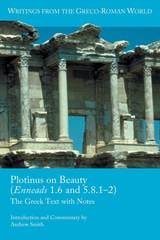
Plotinus on Beauty (Enneads 1.6 and 5.8.1–2)
The Greek Text with NotesAndrew Smith
SBL Press, 2019
A Greek edition of Plotinus's philosophical works with notes for students of Classical Greek
Plotinus, the father of Neoplatonism, composed the treatise On Beauty (Ennead 1.6) as the first of a series of philosophical essays devoted to interpreting and elucidating Platonic ideas. This treatise is one of the most accessible and influential of Plotinus's works, and it provides a stimulating entrée into the many facets of his philosophical activity. In this volume Andrew Smith first introduces readers to the Greek of Plotinus and to his philosophy in general, then provides the Greek text of and English notes on Plotinus's systematic argument and engaging exhortation to foster the inner self. The volume ends with the text of and notes on Plotinus's complementary statements in On Intelligible Beauty (Ennead 5.8.1–2).
Features:
- An overview of Plotinus's life
- Background discussion of Plotinus's thought and outline of his philosophical system
- Analysis of the relationship of Plotinus's thought to Plato’s
Poems from the Greek Anthology
Expanded EditionTranslated, with a Foreword, by Kenneth Rexroth
University of Michigan Press, 1999
Friend to the Beats, organizer of the Six Gallery poetry reading in 1955, and iconoclastic poet extraordinare, Kenneth Rexroth here turns his imagination to a selection of verses from the Greek Anthology. In his lively style he successfully captures the spirit of the originals by such poets as Sappho, Anyte, Glykon, Antipatros, Leonidas, Askelpiades, and Ammianos. Students of the classics as well as poets and translators will welcome this collection for the insight and dexterity of its unconventional editor.
Kenneth Rexroth (1905-1982), poet, critic, and translator, is also noted for his translations from the Chinese and Japanese. Widely prolific, he helped usher in the Beat movement in the 1950s and is widely considered to have invented the idea of San Francisco as a center of literary innovation. David Mulroy is Associate Professor in the Department of Foreign Languages and Linguistics, University of Wisconsin, Milwaukee. He is the translator of Early Greek Lyric Poetry and Horace's Odes and Epodes.
Poetics
Aristotle
University of Michigan Press, 1967
In his masterful translation and accompanying notes, Dr. Else makes a special effort to achieve maximum clarity, while remaining faithful to the original. His constant aim is to provide -- for all readers -- a "way in" to Aristotle's processes of thinking about literature.
This important modern translation is made form the 1965 Oxford Classical Text edition of the Poetics by Rudolf Kassel and thus reflects the latest and most authoritative textual scholarship. Not only the translation but the valuable fund of commentary will delight anyone -- literary critic, philosopher, classicist, or general reader -- who want to learn what Aristotle really said.
Poetics of the First Punic War
Thomas Biggs
University of Michigan Press, 2020
Poetry and the Cult of the Martyrs
The Liber Peristephanon of PrudentiusMichael Roberts
University of Michigan Press, 1993
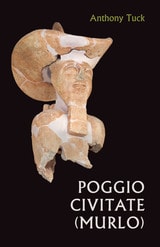
Poggio Civitate (Murlo)
By Anthony Tuck
University of Texas Press, 2021
Poggio Civitate in Murlo, Tuscany, is home to one of the best-preserved Etruscan communities of the eighth through the sixth centuries BCE. In this book, Anthony Tuck, the director of excavations, provides a broad synthesis of decades of data from the site.
The results of many years of excavation at Poggio Civitate tell a story of growth, urbanization, ancient industrialization, and dissolution. The site preserves traces of aristocratic domestic buildings, including some of the most evocative and enigmatic architectural sculpture in the region, along with remnants of non-elite domestic spaces, enabling illuminating comparisons across social strata. The settlement also features evidence of large-scale production systems, including tools and other objects that reflect the daily experiences of laborers. Finally, the site contains the story of its own destruction. Tuck finds in the data clear indications that Poggio Civitate was methodically dismantled, and he posits hypotheses concerning the circumstances around this violent social and political act.

Political Memory in and after the Persian Empire
Jason M. Silverman
SBL Press, 2015
An interdisciplinary study of the Persian Period
Various disciplines that deal with Achaemenid rule offer starkly different assessments of Persian kingship. While Assyriologists treat Cyrus's heirs as legitimate successors of the Babylonian kings, biblical scholars often speak of a "kingless era" in which the priesthood took over the function of the Davidic monarch. Egyptologists see their land as uniquely independently minded despite conquests, while Hellenistic scholarship tends to evaluate the interface between Hellenism and native traditions without reference to the previous two centuries of Persian rule. This volume brings together in dialogue a broad array of scholars with the goal of seeking a broader context for assessing Persian kingship through the anthropological concept of political memory.
Features
- Articles present the results of an international symposium held in Leiden, the Netherlands, 2014
- More than twenty illustrations
- Seventeen articles, an introduction, and a summary response
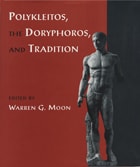
Polykleitos, the Doryphoros, and Tradition
Warren G. Moon
University of Wisconsin Press, 1995
Polykleitos of Argos, who flourished between 450 and 420 BC, is one of the most celebrated sculptors of classical Greece. A philosopher and theoretician as well as a sculptor, Polykleitos sought to capture in his statues the ideal proportions of the human body, and his work was frequently copied by later artists. This richly illustrated volume of superb essays by art historians, classical scholars, and archaeologists discusses Polykleitos’ life and influence, his intellectual and cultural milieu, and his best-known work, the Doryphoros, or “Spearbearer.”
Polykleitos, the Doryphoros, and Tradition displays an impressive range of approaches, beginning with commentary on the artistic and philosophical antecedents that influenced Polykleitos’ own aesthetic, as well as the role of contemporary Greek anatomical knowledge in his representation of the human form. Many of the essays offer extended analysis and detailed illustration of his surviving sculptures, later copies of his work, and reflections of his style in sculpture, paintings, coins, and other art in Greece, Italy, and Asia Minor. Several essays offer an extended discussion of Polykleitos’ original bronze Doryphoros, its pose, its relation to other spearbearer sculptures, and the fine Roman marble copy of it now at the Minneapolis Institute of Arts.
The volume as a whole is a visually and intellectually appealing work that will interest not only specialists but general readers interested in the art of ancient Greece. This volume resulted from a 1989 symposium held at the University of Wisconsin–Madison and the Minneapolis Institute of Arts.
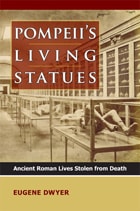
Pompeii's Living Statues
Ancient Roman Lives Stolen from DeathEugene Dwyer
University of Michigan Press, 2010
In AD 79, Mt. Vesuvius erupted in two stages. While the first stage was incredibly destructive, it was the second stage, a so-called pyroclastic flow, that inundated Pompeii with a combination of superheated gases, pumice, and rocks, killing tens of thousands of people and animals and burying them in ash and mud.
During excavations of the town in 1863, Giuseppe Fiorelli, the director of the dig, poured plaster of paris into a cavity under the soil revealed by a workman's pick. When the plaster set and the mound was uncovered, all were amazed to see the secret that the ground had held for 1,800 years: a detailed cast of an ancient Pompeian such as no one had seen before, frozen in the instant of dying and complete in every respect, including outlines of the clothes he was wearing at the time of the destruction. The bodies, photographed and exhibited in the specially built Pompeii Museum, completely changed the world's ideas of life in ancient Italy.
Pompeii's Living Statues is a narrative account, supported by contemporary documents, of the remarkable discovery of those ancient victims preserved in the volcanic mud of Vesuvius.
Eugene Dwyer examines these casts and related records, the originals of a number of which (along with their museum) were lost in World War II bombing. As he considers the casts as archaeological and cultural pieces, he also discusses Pompeii and its artifacts in the context of Italian unification and party politics, the development of modern excavation methods, and the challenges of maintaining a very large archaeological site. Dwyer's clear organization and writing style, combined with a collection of photographs and engravings, make for a fascinating exploration of Pompeii and its victims.
Pompeis Difficile Est
Studies in the Political Life of Imperial PompeiiJames L. Franklin, Jr.
University of Michigan Press, 2001
By collecting, sifting, and cross-referencing these varied documents, Franklin proves it possible to trace the major political alliances of the times, explore the remains of their houses, and find traces of their personalities. A few families, like the powerful Holconii, developers of the region's most famous grape vine, prove to have been steady players throughout Pompeii's history; but most families rose and fell within two generations at most. Chapters examine the men and families most prominent in each imperial period, including an analysis of their houses, and concludes with family trees. The documents themselves, elsewhere difficult to access, are prominently featured and translated in the text, making these discussions available and vivid to all readers.
This book is the first such attempt to cross-reference and animate all kinds of writing found at this legendary site. Outside of the city of Rome itself, this is the largest collection of writing from Roman antiquity, and it has lain mostly unexamined in the course of three centuries of excavations at Pompeii. This volume will interest not only students of Pompeii and classical scholars, but also historians, political scientists, sociologists, and enthusiasts of human behavior of all eras.
James L. Franklin is Professor of Classical Studies, Indiana University.
Pomponius Mela's Description of the World
F. E. Romer
University of Michigan Press, 1998
F.E. Romer is Professor and Chair of the Department of Foreign Languages and Literatures, East Carolina University. He is the author of numerous articles and has received awards for both his writing and teaching.
Popular Tyranny
Sovereignty and Its Discontents in Ancient GreeceEdited by Kathryn A. Morgan
University of Texas Press, 2003
The nature of authority and rulership was a central concern in ancient Greece, where the figure of the king or tyrant and the sovereignty associated with him remained a powerful focus of political and philosophical debate even as Classical Athens developed the world's first democracy. This collection of essays examines the extraordinary role that the concept of tyranny played in the cultural and political imagination of Archaic and Classical Greece through the interdisciplinary perspectives provided by internationally known archaeologists, literary critics, and historians.
The book ranges historically from the Bronze and early Iron Age to the political theorists and commentators of the middle of the fourth century B.C. and generically across tragedy, comedy, historiography, and philosophy. While offering individual and sometimes differing perspectives, the essays tackle several common themes: the construction of authority and of constitutional models, the importance of religion and ritual, the crucial role of wealth, and the autonomy of the individual. Moreover, the essays with an Athenian focus shed new light on the vexed question of whether it was possible for Athenians to think of themselves as tyrannical in any way. As a whole, the collection presents a nuanced survey of how competing ideologies and desires, operating through the complex associations of the image of tyranny, struggled for predominance in ancient cities and their citizens.
Populus
Living and Dying in Ancient RomeGuy de la Bédoyère
University of Chicago Press, 2024
Frenzied crowds, talking ravens, the stench of the Tiber River: life in ancient Rome was stimulating, dynamic, and often downright dangerous. The Romans relaxed and gossiped in baths, stole precious water from aqueducts, and partied and dined to excess. Everyone from senators to the enslaved crowded into theaters and circuses to watch their favorite singers, pantomime, and comedies and scream their approval at charioteers. The lucky celebrated their accomplishments with elaborate tombs. Amid pervasive inequality and brutality, beauty also flourished through architecture, poetry, and art.
From the smells of fragrant cookshops and religious sacrifices to the cries of public executions and murderous electoral mobs, Guy de la Bédoyère’s Populus draws on a host of historical and literary sources to transport us into the intensity of daily life at the height of ancient Rome.
Portraits of the Vestal Virgins, Priestesses of Ancient Rome
Molly M. Lindner
University of Michigan Press, 2015
Postclassicisms
The Postclassicisms Collective
University of Chicago Press, 2020
Structured around three primary concepts—value, time, and responsibility—and nine additional concepts, Postclassicisms asks scholars to reflect upon why they choose to work in classics, to examine how proximity to and distance from antiquity has been—and continues to be—figured, and to consider what they seek to accomplish within their own scholarly practices. Together, the authors argue that a stronger critical self-awareness, an enhanced sense of the intellectual history of the methods of classics, and a greater understanding of the ethical and political implications of the decisions that the discipline makes will lead to a more engaged intellectual life, both for classicists and, ultimately, for society. A timely intervention into the present and future of the discipline, Postclassicisms will be required reading for professional classicists and students alike and a model for collaborative disciplinary intervention by scholars in other fields.
Poverty and Leadership in the Later Roman Empire
Peter Brown
Brandeis University Press, 2001
Power & Persuasion Late Antiquity
Towards A Christian EmpirePeter Brown
University of Wisconsin Press, 1992
Praise of Folly
Desiderius Erasmus; Translated by John Wilson
University of Michigan Press, 1958
Predicting the Past in the Ancient Near East
Mantic Historiography in Ancient Mesopotamia, Judah, and the Mediterranean WorldMatthew Neujahr
SBL Press, 2012
Present Shock in Late Fifth-Century Greece
Francis M. Dunn
University of Michigan Press, 2010
Francis M. Dunn's Present Shock in Late Fifth-Century Greece examines the widespread social and cultural disorientation experienced by Athenians in a period that witnessed the revolution of 411 B.C.E. and the military misadventures in 413 and 404---a disturbance as powerful as that described in Alvin Toffler's Future Shock. The late fifth century was a time of vast cultural and intellectual change, ultimately leading to a shift away from Athenians' traditional tendency to seek authority in the past toward a greater reliance on the authority of the present. At the same time, Dunn argues, writers and thinkers not only registered the shock but explored ways to adjust to living with this new sense of uncertainty. Using literary case studies from this period, Dunn shows how narrative techniques changed to focus on depicting a world in which events were no longer wholly predetermined by the past, impressing upon readers the rewards and challenges of struggling to find their own way forward.
Although Present Shock in Late Fifth-Century Greece concentrates upon the late fifth century, this book's interdisciplinary approach will be of broad interest to scholars and students of ancient Greece, as well as anyone fascinated by the remarkably flexible human understanding of time.
Francis M. Dunn is Professor of Classics at the University of California, Santa Barbara. He is author of Tragedy's End: Closure and Innovation in Euripidean Drama (Oxford, 1996), and coeditor of Beginnings in Classical Literature (Cambridge, 1992) and Classical Closure: Reading the End in Greek and Latin Literature (Princeton, 1997).
"In this fascinating study, Francis Dunn argues that in late fifth-century Athens, life became focused on the present---that moving instant between past and future. Time itself changed: new clocks and calendars were developed, and narratives were full of suspense, accident, and uncertainty about things to come. Suddenly, future shock was now."
---David Konstan, John Rowe Workman Distinguished Professor of Classics and the Humanistic Tradition and Professor of Comparative Literature, Brown University
"In this fascinating work, Dunn examines the ways in which the Greeks constructed time and then shows how these can shed new light on various philosophical, dramatic, historical, scientific and rhetorical texts of the late fifth century. An original and most interesting study."
---Michael Gagarin, James R. Dougherty, Jr., Centennial Professor of Classics, the University of Texas at Austin
"Interesting, clear, and compelling, Present Shock in Late Fifth-Century Greece analyzes attitudes toward time in ancient Greece, focusing in particular on what Dunn terms 'present shock,' in which rapid cultural change undermined the authority of the past and submerged individuals in a disorienting present in late fifth-century Athens. Dunn offers smart and lucid analyses of a variety of complex texts, including pre-Socratic and sophistic philosophy, Euripidean tragedy, Thucydides, and medical texts, making an important contribution to discussions about classical Athenian thought that will be widely read and cited by scholars working on Greek cultural history and historiography."
---Victoria Wohl, Associate Professor, Department of Classics, University of Toronto
Princes and Political Cultures
The New Tiberian Senatorial DecreesGreg Rowe
University of Michigan Press, 2002
Prophets Male and Female
Gender and Prophecy in the Hebrew Bible, the Eastern Mediterranean, and theJonathan Stökl
SBL Press, 2013
Prophets and Prophecy in the Ancient Near East
Martti Nissinen
SBL Press, 2019
A new, expanded edition of a classic reference tool
This volume of more than 170 documents of prophecy from the ancient Near East brings together a representative sample of written documents from Mesopotamia, the Levant, and Egypt dating to the second and first millennia BCE. Nissinen's collection provides nonspecialist readers clear translations, transliterations, and discussions of oracles reports and collections, quotations of prophetic messages in letters and literature, and texts that reference persons with prophetic titles. This second edition includes thirty-four new texts.
Features:
- Modern, idiomatic, and readable English translations
- Thirty-four new translations
- Contributions of West Semitic, Egyptian, and Luwian sources from C. L. Seow, Robert K. Ritner, and H. Craig Melchert