Results by title
76 books match the query 'Animal rights' and 5 start with p
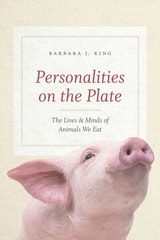
Personalities on the Plate
The Lives and Minds of Animals We EatBarbara J. King
University of Chicago Press, 2017
Yet that realization hasn’t yet made its presence felt to any great degree in our most intimate relationship with animals: at the dinner table. Sure, there are vegetarians and vegans all over, but at the same time, meat consumption is up, and meat remains a central part of the culinary and dining experience for the majority of people in the developed world.
With Personalities on the Plate, Barbara King asks us to think hard about our meat eating--and how we might reduce it. But this isn’t a polemic intended to convert readers to veganism. What she is interested in is why we’ve not drawn food animals into our concern and just what we do know about the minds and lives of chickens, cows, octopuses, fish, and more. Rooted in the latest science, and built on a mix of firsthand experience (including entomophagy, which, yes, is what you think it is) and close engagement with the work of scientists, farmers, vets, and chefs, Personalities on the Plate is an unforgettable journey through the world of animals we eat. Knowing what we know--and what we may yet learn--what is the proper ethical stance toward eating meat? What are the consequences for the planet? How can we life an ethically and ecologically sound life through our food choices?
We could have no better guide to these fascinatingly thorny questions than King, whose deep empathy embraces human and animal alike. Readers will be moved, provoked, and changed by this powerful book.
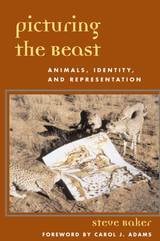
Picturing the Beast
Animals, Identity, and RepresentationSteve Baker
University of Illinois Press, 1993
Baker provides an animated discussion of how animals enter into the iconography of power through wartime depictions of the enemy, political cartoons, and sports symbolism. He examines a phenomenon he calls the "disnification" of animals, meaning a reduction of the animal to the trivial and stupid, and shows how books featuring talking animals underscore human superiority. He also discusses how his findings might inform the strategies of animal rights advocates seeking to call public attention to animal suffering and abuse. Until animals are extricated from the baggage of imposed images, Baker maintains, neither they nor their predicaments can be clearly seen.
For this edition, Baker provides a new introduction, specifically addressing an American audience, that touches on such topics as the Cow Parade, animal imagery in the presidential race, and animatronic animals in recent films.
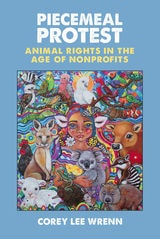
Piecemeal Protest
Animal Rights in the Age of NonprofitsCorey Lee Wrenn
University of Michigan Press, 2019
Given their tendency to splinter over tactics and goals, social movements are rarely unified. Following the modern Western animal rights movement over thirty years, Corey Lee Wrennapplies the sociological theory of Bourdieu, Goffman, Weber, and contemporary social movement researchers to examine structural conditions in the animal rights movement, facilitating factionalism in today’s era of professionalized advocacy.
Modern social movements are dominated by bureaucratically oriented nonprofits, a special arrangement that creates tension between activists and movement elites who compete for success in a corporate political arena. Piecemeal Protest examines the impact of nonprofitization on factionalism and a movement’s ability to mobilize, resonate, and succeed. Wrenn’sexhaustive analysis of archival movement literature and exclusive interviews with movement leaders illustrate how entities with greater symbolic capital are positioned to monopolize claims-making, disempower competitors, and replicate hegemonic power, eroding democratic access to dialogue and decision-making essential for movement health.
Piecemeal Protest examines social movement behavior shaped by capitalist ideologies and state interests. As power concentrates to the disadvantage of marginalized factions in the modern social movement arena, Piecemeal Protest shines light on processes of factionalism and considers how, in the age of nonprofits, intra-movement inequality could stifle social progress.
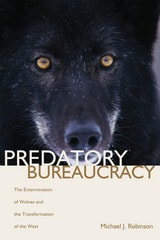
Predatory Bureaucracy
The Extermination of Wolves and the Transformation of the WestMichael Robinson
University Press of Colorado, 2005
Robinson follows wolves' successful adaptation to the arrival of explorers, mountain men, and bounty hunters, through their disastrous century-long entanglement with the federal government. He shares the parallel story of the Biological Survey's rise, detailing the personal, social, geographic, and political forces that allowed it to thrive despite opposition from hunters, animal lovers, scientists, environmentalists, and presidents.
Federal predator control nearly eliminated wolves throughout the United States and Mexico and radically changed American lands and wildlife populations. It undercut the livelihoods of countless homestead families in order to benefit an emerging western elite of livestock owners. The extermination of predators led to problems associated with prey overpopulation, but, as Robinson reveals, extermination and control programs still continue. Predatory Bureaucracy will fascinate readers interested in wildlife, ecosystems, agriculture, and environmental politics.
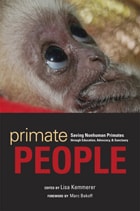
Primate People
Saving Nonhuman Primates through Education, Advocacy, and SanctuaryLisa Kemmerer
University of Utah Press, 2012
In the last 30 years the bushmeat trade has led to the slaughter of nearly 90 percent of West Africa’s bonobos, perhaps our closest relatives, and has recently driven Miss Waldron’s red colobus monkey to extinction. Earth was once rich with primates, but every species—except one—is now extinct or endangered because of one primate—Homo sapiens. How have our economic and cultural practices pushed our cousins toward destruction? Would we care more about their fate if we knew something of their individual lives and sufferings? Would we help them if we understood how our choices threaten their existence? This anthology helps to answer these questions.
The first section of Primate People introduces forces that threaten nonhuman primates, such as the entertainment and “pet” industries, the bushmeat trade, habitat destruction, and logging. The second section exposes the exploitation of primates in research facilities, including the painful memories of an undercover agent, and suggests models of more enlightened scientific methods. The final section tells the stories of those who lobby for change, educate communities, and tenderly care for our displaced cousins in sanctuaries.
Sometimes shocking and disturbing, sometimes poignant and encouraging, Primate People always draws the reader into the lives of nonhuman primates. Activists around the world reveal the antics and pleasures of monkeys, the tendencies and idiosyncrasies of chimpanzees, and the sufferings and fears of macaques. Charming, difficult, sensitive—these testimonies demonstrate that nonhuman primates and human beings are, indeed, closely related. Woven into the anthology’s lucid narratives are the stories of how we harm and create the conditions that endanger primates, and what we can and must do to prevent their ongoing suffering and fast-approaching extinction.