Results by title
490 books match the query 'Asian' and 23 start with p

Paintings from Mughal India
Andrew Topsfield
Bodleian Library Publishing, 2008
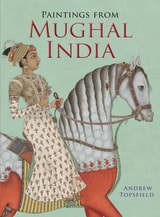
One of the great kingdoms of human history, the Mughal empire is now lost to the relentless sweep of time. But the wealth of art treasures the Mughals left behind is nonetheless a lasting testament to the sumptuousness of their culture. Among the most notable vestiges of their art are the lush miniature paintings of Mughal imperial life, and Andrew Topsfield explores a rich array of these painted works in Paintings from Mughal India.
Between the sixteenth and eighteenth centuries, the Mughal emperors presided over a flourishing cultural renaissance, and these miniature paintings vividly depict the splendor of this period. Topsfield examines the paintings’ unique blend of Indian, Islamic, and Persian styles and analyzes their varied subjects—ranging from hunting, royal banquets, and other scenes of imperial life to legendary tales, mythic deities, and battles. Among the paintings featured in the book’s vibrant reproductions are works created between the reign of Akbar and the fall of Shah Jehanan—an era considered to be the height of Mughal painting—and illustrations from the celebrated Baharistan manuscript of 1595. A fascinating and gorgeously illustrated study, Paintings from Mughal India will be an invaluable resource for all art scholars and anyone interested in the legacy of the Mughal Empire.
Paintings from Mughal India
Andrew Topsfield
Bodleian Library Publishing, 2008
Andrew Topsfield examines these paintings that bear the influence of Indian, Islamic, and Persian styles and portray a variety of subjects, from hunting, royal banquets, and other scenes of imperial life to legends, battles, and mythic deities. Among the paintings featured in the book’s vibrant reproductions are illustrations from the celebrated Baharistan manuscript of 1595 and works created between the reign of Akbar and the fall of Shah Jahan in 1658—an era considered to be the height of Mughal art. For this new edition, Topsfield has made corrections and revisions reflecting new research.
Paris and the Art of Transposition
Early Twentieth Century Sino-French EncountersAngie Chau
University of Michigan Press, 2023
While previous studies of Chinese modernism have focused on how Western modernist aesthetics were adapted or translated to the Chinese context, Angie Chau does the opposite by turning to Paris in the Chinese imaginary and discussing the literary and visual artwork of five artists who moved between France and China: the painter Chang Yu, the poet Li Jinfa, the art critic Fu Lei, the painter Pan Yuliang, and the writer Xu Xu. Chau draws the idea of transposition from music theory where it refers to shifting music from one key or clef to another, or to adapting a song originally composed for one instrument to be played by another. Transposing transposition to the study of art and literature, Chau uses the term to describe a fluid and strategic art practice that depends on the tension between foreign and familiar, new and old, celebrating both novelty and recognition—a process that occurs when a text gets placed into a fresh context.
People's Wars in China, Malaya, and Vietnam
Marc Opper
University of Michigan Press, 2020
People’s Wars in China, Malaya, and Vietnam explains why some insurgencies collapse after a military defeat while under other circumstances insurgents are able to maintain influence, rebuild strength, and ultimately defeat the government. The author argues that ultimate victory in civil wars rests on the size of the coalition of social groups established by each side during the conflict. When insurgents establish broad social coalitions (relative to the incumbent), their movement will persist even when military defeats lead to loss of control of territory because they enjoy the support of the civilian population and civilians will not defect to the incumbent. By contrast, when insurgents establish narrow coalitions, civilian compliance is solely a product of coercion. Where insurgents implement such governing strategies, battlefield defeats translate into political defeats and bring about a collapse of the insurgency because civilians defect to the incumbent. The empirical chapters of the book consist of six case studies of the most consequential insurgencies of the 20th century including that led by the Chinese Communist Party from 1927 to 1949, the Malayan Emergency (1948–1960), and the Vietnam War (1960–1975). People’s Wars breaks new ground in systematically analyzing and comparing these three canonical cases of insurgency. The case studies of China and Malaya make use of Chinese-language archival sources, many of which have never before been used and provide an unprecedented level of detail into the workings of successful and unsuccessful insurgencies. The book adopts an interdisciplinary approach and will be of interest to both political scientists and historians.
Planetarity from Below
Decolonial Ecopoetics of Migration and DiasporaEmily Yu Zong
University of Michigan Press, 2026
Through short stories, memoirs, speculative fiction, poetry, and documentary films, Zong unpacks a decolonial migrant ecopoetics, revealing a pluralist method of worldmaking—from Australia’s oceanic refugee camps, Indigenous Canadian land, and Chinese migrant worker sweatshops, to climate futures. These migrant ecologies imagine freedom “from below” not simply as individual survival or assimilation but as an unruly and contingent process of shared creativity with animals, waters, minerals, waste, and technology.
Shifting environmental ethics from individual morality to a political ecology of sustaining life in precarity, Zong introduces decolonial knowledges, imaginations, and praxes that help us expand justice and freedom beyond the human, asking how borderland subjectivities can open new possibilities for multispecies flourishing.
Playing in the Shadows
Fictions of Race and Blackness in Postwar Japanese LiteratureWilliam Bridges
University of Michigan Press, 2020
Pluralist Universalism
An Asian Americanist Critique of U.S. and Chinese MulticulturalismsWen Jin
The Ohio State University Press, 2012
Pluralist Universalism: An Asian Americanist Critique of U.S. and Chinese Multiculturalisms by Wen Jin is an extended comparison of U.S. and Chinese multiculturalisms during the post–Cold War era. Her book situates itself at the intersection of Asian American literary critique and the growing field of comparative multiculturalism. Through readings of fictional narratives that address the issue of racial and ethnic difference in both national contexts simultaneously, the author models a “double critique” framework for U.S.–Chinese comparative literary studies.

Poems from Captured Documents
A Bilingual EditionThanh T. Nguyen
University of Massachusetts Press, 1994
Written in journals and notebooks by ordinary soldiers who fought against American forces in Vietnam, the poems collected in this volume fill a longstanding void in the literature of that war. In addition to offering a revealing window into another culture – a culture that prizes poetry as an integral part of social life – the pieces provide a rare look at the conflict from the perspective of those who served in the National Liberation Front, the People’s Armed Forces, and the People’s Army of Vietnam.
The format of this edition is bilingual, to enable both Vietnamese and American readers to share and appreciate these poignant and deeply personal documents, which were often written under fire and always in the face of death.
Poems of a Penisist
Mutsuo Takahashi
University of Minnesota Press, 2012
“In the name of / Man, member, / and the holy fluid, / Amen,” begins Mutsuo Takahashi’s epic one-thousand-line erotic fantasy poem, “Ode,” the centerpiece of his groundbreaking collection of queer poetry, Poems of a Penisist. Takahashi’s work, reminiscent of Walt Whitman’s, is a celebration of the male body, treating homosexual desire as something sacred. Stunningly beautiful and passionate, Poems of a Penisist is one of the most important compilations of homoerotic poetry written in the twentieth century.
Poetry, History, Memory
Wang Jingwei and China in Dark TimesZhiyi Yang
University of Michigan Press, 2023
Wang Jingwei, poet and politician, patriot and traitor, has always been a figure of major academic and popular interest. Until now, his story has never been properly told, let alone critically investigated. The significance of his biography is evident from an ongoing war on cultural memory: modern mainland China prohibits serious academic research on wartime collaboration in general, and on Wang Jingwei in particular. At this critical juncture, when the recollection of World War II is fading from living memory and transforming into historical memory, this knowledge embargo will undoubtedly affect how China remembers its anti-fascist role in WWII. In Poetry, History, Memory: Wang Jingwei and China in Dark Times, Zhiyi Yang brings us a long overdue reexamination of Wang’s impact on cultural memory of WWII in China.
In this book, Yang brings disparate methodologies into a fruitful dialogue, including sophisticated methods of poetic interpretation. The author argues that Wang’s lyric poetry, as the public performance of a private voice, played a central role in constructing his political identity and heavily influenced the public’s posthumous memory of him. Drawing on archives (in the PRC, Taiwan, Japan, the USA, France, and Germany), memoires, historical journals, newspapers, interviews, and other scholarly works, this book offers the first biography of Wang that addresses his political, literary, and personal life in a critical light and with sympathetic impartiality.
Political Trust in China
Lianjiang Li
University of Michigan Press, 2025
Politicizing Creative Economy
Activism and a Hunger Called TheaterDia Da Costa
University of Illinois Press, 2016
As Da Costa shows, commodification, heritage, and management discussions inevitably creep into performance. Yet the ability of performance to undermine such subtle invasions make activist theater a crucial site for considering what counts as creativity in the cultural politics of creative economy. Da Costa explores the precarious lives, livelihoods, and ideologies at the intersection of heritage projects, planning discourse, and activist performance. By analyzing the creators, performers, and activists involved--individuals at the margins of creative economy as well as society--Da Costa builds a provocative argument. Their creative economy practices may survive, challenge, and even reinforce the economies of death, displacement, and divisiveness used by the urban poor to survive.
Politics and Governance in Urban Southeast Asia
Edited by Edward Aspinall, Allen Hicken, Paul D. Hutchcroft, and Meredith Weiss
National University of Singapore Press, 2026
As Southeast Asia’s cities continue to swell, this timely volume analyzes urban politics in the region.
Why have some Southeast Asian cities become laboratories of reform while others remain mired in old patterns of patronage politics and substandard public services? This has become an important question now that over half of Southeast Asia’s population lives in urban areas, transforming the politics of the region. Quintessentially urban problems—traffic congestion, sanitation, public transport, housing, and the like—increasingly preoccupy policymakers, while the region’s swelling urban middle classes expect their mayors and city governments to provide ever-better infrastructure and amenities.
Drawing on close case studies of a diverse set of seventeen urban areas across four Southeast Asian countries—Indonesia, Malaysia, the Philippines, and Thailand—this volume offers fresh insights into how the region’s urban politics are changing. It provides a new framework for understanding why some cities are flourishing and others are not. Exploring the factors that shape distinct local governance regimes in these cities, Politics and Governance in Urban Southeast Asia also throws light on how urban residents use community associations, informal networks, and other political mechanisms to access the public services they want and need.
Politics of Legitimacy
State-Society Relations and Patterns of Chinese PoliticsDingxin Zhao
University of Chicago Press, 2026
The Chinese communist state has survived massive social changes, including the introduction of capitalist markets, an ongoing explosion of technological innovation, and an unprecedented jump in wealth and education, accompanied by a major cultural transformation. How has China managed to maintain its power even as the ground has so profoundly shifted? In Politics of Legitimacy, Dingxin Zhao argues that state power can be legitimized in three ideal-typical ways: a set of values upheld by the state (ideological legitimacy), recognized political processes such as regular competitive elections (procedural legitimacy), and the state’s capacity to provide public goods (performance legitimacy).
Building on this theoretical framework, Zhao analyzes different aspects of Chinese politics, including the tragic ending of the 1989 pro-democracy movement, the weak development of mass-based nationalism in post-Mao China, the reasons behind China’s economic success, the anti-establishment tendency of the Chinese mass media and social media, and the sources of political tension in China, despite a superb economy. Moreover, Zhao’s innovative framework is widely applicable beyond China, shifting our attention from regime-type categories to the tools and relationships that determine their survival or collapse, and illuminating the current global emergence of conservatism and religious nationalism.
Politics, Ideology, and Literary Discourse in Modern China
Theoretical Interventions and Cultural CritiqueKang Liu and Xiaobing Tang, eds.
Duke University Press, 1993
With chapters by writers, scholars, and critics from mainland China, Hong Kong, and the United States, this volume explores the complexity of representing modernity within the Chinese context. Addressing the problem of finding a proper language for articulating fundamental issues in the historical experience of twentieth-century China, the authors critically re-examine notions of realism, the self/subject, and modernity and draw on perspectives from feminist criticism, ideological analysis, and postmodern theory. Among the many topics explored are subjectivity in Chinese cultural theory, Chinese gender relations, the viability of a Lacanian approach to Chinese identity, the politics of subversion in Chinese reportage, and the ambivalent status of the icon of paternity since Mao.
At the same time this book offers a probing look into the transformation that Chinese culture as well as the study of that culture is currently undergoing, it also reconfirms private discourse as an ideal site for an investigation into a real and imaginary, private and collective encounter with history.
Contributors. Liu Kang, Xiaobing Tang, Liu Zaifu, Stephen Chan, Lydia H. Liu, Wendy Larson, Theodore Huters, David Wang, Tonglin Lu, Yingjin Zhang, Yuejin Wang, Li Tuo, Leo Ou-fan Lee

Pop Against Empire
Art as Masked Critique in Japan, Okinawa, and the US DiasporaHiroko Ikegami
University of Chicago Press, 2027
How Pop artists confronted the legacies of modern Empire of Japan and post-1945 American imperialism from the 1960s to the present.
Looking at a pivotal period spanning the 1960s to the present, Hiroko Ikegami explores how artists in Japan, Okinawa, and the United States have adopted Pop strategies to critique legacies of imperialism.
Ikegami focuses on locales—Tokyo, Okinawa, Minidoka, and New York—that were deeply impacted by the complex relationship between the Japanese and American empires and considers artists across different situations and generations. The book begins with Tokyo Pop artists and graphic designers, including Shinohara Ushio and Tanaami Keiichi, who critically parodied American Pop during the long 1960s. It then turns to Okinawa, where Tom Max probed Okinawans’ convoluted reality regarding the American Occupation and the Vietnam War. Artists in the second half of the volume confronted legacies of the Asia-Pacific War as a historical condition of the present. Roger Shimomura, the third-generation Japanese American who had been incarcerated in the Minidoka camp as a child, dealt with the subject by appropriating motifs of ukiyo-e woodblock prints. Takashi Murakami, now a global art star, created otaku-inspired art and capitalized on his country’s experience of the atomic bombs in promoting his “Superflat” enterprise. The book concludes with a new generation of artists protesting repercussions of empire in the twenty-first century. This is the first study to treat artists of post-1945 Japan, Okinawa, and the US diaspora in a single volume as mutually independent yet interrelated, using Pop’s criticality as a connecting thread.
Postcolonial Biology
Psyche and Flesh after EmpireDeepika Bahri
University of Minnesota Press, 2017
Although the body has been a vast subject for postcolonial studies, few theorists have attempted to go beyond the simple mixing of races in examining the impact of colonialism on the colonized body. However, as Deepika Bahri argues, it is essential to see the postcolonial body in a variety of forms: as capable of transformation not only in psyche and outward behavior but also in flesh and blood.
European colonizers brought new ways of seeing the body in matters as basic as how to eat, speak, sit, shit, or spit. As nations decolonized, these imperialistic ideas remained, becoming part of the global economy of the body. In Postcolonial Biology, Bahri argues that the political challenges of the twenty-first century require that we deconstruct these imperial notions of the body, as they are fundamental to power structures governing today’s globalized world.
Postcolonial Biology investigates how minds and bodies have been shaped by colonial contact, to create deeply embedded hierarchies among the colonized. Moving beyond “North/South” thinking, Bahri reframes the questions of postcolonial bodies to address all societies, whether developed or developing. Engaging in innovative, highly original readings of major thinkers such as Adorno, Horkheimer, Derrida, and Fanon, this book brings an important new focus to the field of postcolonial studies—one that is essential to understanding the ideas and conflicts that currently dominate the global order.
Postcolonial Disaster
Narrating Catastrophe in the Twenty-First CenturyPallavi Rastogi
Northwestern University Press, 2020
Rastogi creates a narratology for postcolonial disaster fiction and brings concepts from Disaster Studies into the realm of literary analysis.
Postmodern Advertising in Japan
Seduction, Visual Culture, and the Tokyo Art Directors ClubOry Bartal
Dartmouth College Press, 2015
Postmodernism and Japan
Masao Miyoshi and H. D. Harootunian, eds.
Duke University Press, 1989
Precarious Eating
Narrating Environmental Harm in the Global SouthBen Jamieson Stanley
University of Minnesota Press, 2024
The role of food and hunger in contemporary South African and Indian environmental writing
From GMOs to vegetarianism and veganism, questions of what we should (and shouldn’t) eat can be frequent sources of debate and disagreement. In Precarious Eating, Ben Jamieson Stanley asks how recentering global South representations of food might shift understandings of environmental precarity.
Precarious Eating follows the lead of writers and thinkers in South Africa and India who are tracing the production and consumption of food, exploring ways to reconnect our narratives about climate change, global capitalism, and social justice. Taking up a diverse range of novels, films, scholar/activist writings, intellectual histories, and cookbooks, Stanley connects the ethics of eating to histories of empire and apartheid, uneven globalization, gender and sexuality, and global South experiences of climate change. They shift the lens of environmental humanities from climate-focused paradigms developed in the global North to food-focused environmental culture and activism in the South, addressing topics that range from foraging and farmer suicides to disordered eating and queer intimacy.
By highlighting authors, activists, and environments of the global South, Precarious Eating joins with scholarship from postcolonial, decolonial, Indigenous, and Black studies to underscore how capitalism and empire shape our planetary environmental crisis.
Retail e-book files for this title are screen-reader friendly with images accompanied by short alt text and/or extended descriptions.
Pride, Not Prejudice
National Identity as a Pacifying Force in East AsiaEunbin Chung
University of Michigan Press, 2022
As shown by China’s relationship to Japan, and Japan’s relationship to South Korea, even growing regional economic interdependencies are not enough to overcome bitter memories grounded in earlier wars, invasions, and periods of colonial domination. Although efforts to ease historical animosity have been made, few have proven to be successful in Northeast Asia. In previous research scholars anticipated an improvement in relations through thick economic interdependence or increased societal contact. In economic terms, however, Japan and China already trade heavily: Japan has emerged as China’s largest trading partner and China as second largest to Japan. Societal contact is already intense, as millions of Chinese, Koreans, and Japanese visit one another’s countries annually as students, tourists, and on business trips. But these developments have not alleviated international distrust and negative perception, or resolved disagreement on what constitutes “adequate reparation” regarding the countries’ painful history.
Noticing clashes of strong nationalisms around the world in areas like Northeast Asia, numerous studies have suggested that more peaceful relations are likely only if countries submerge or paper over existing national identities by promoting universalism. Pride, Not Prejudice argues, to the contrary, that affirmation of national identities may be a more effective way to build international cooperation. If each national population reflects on the values of their national identity, trust and positive perception can increase between countries. This idea is consistent with the theoretical foundation that those who have a clear, secure, and content sense of self, in turn, can be more open, evenhanded, and less defensive toward others. In addition, this reduced defensiveness also enhances guilt admission by past “inflictors” of conflict and colonialism. Eunbin Chung borrows the social psychological theory of self-affirmation and applies it to an international context to argue that affirmation of a national identity, or reflecting on what it means to be part of one’s country, can increase trust, guilt recognition, and positive perception between countries.
Probing Arts and Emergent Forms of Life
Michael M. J. Fischer
Duke University Press, 2023