Results by title
200 books match the query 'Asian American & Pacific Islander' and 8 start with p
Penury
Myung Mi Kim
Omnidawn, 2009

Phyla of Joy
Karen An-hwei Lee
Tupelo Press, 2012
There’s an undeniable audacity in a poet using the word “joy” in our beleaguered world. In her new book, Karen An-hwei Lee combines scientific precision and an appetite for far-flung vocabularies with a fascination for the sources of rapturous emotion.
In poems that roam from the intimacy of prayer to the art of brewing tea, from bamboo-related famine to quasars, the globe’s minor seas, and the nuptial flight of ants, Phyla of Joy reaches toward ecstasy.

Pink Waves
Sawako Nakayasu
Omnidawn, 2021
Written in loose sonata form, Pink Waves is a poem of radiant elegy and quiet protest. Moving through the shifting surfaces of inarticulable loss, and along the edges of darkness and sadness, Pink Waves was completed in the presence of audience members over the course of a three-day durational performance. Sawako Nakayasu accrues lines written in conversation with Waveform by Amber DiPietro and Denise Leto, and micro-translations of syntax in the Black Dada Reader by Adam Pendleton, itself drawn from Ron Silliman’s Ketjak. Pink Waves holds an amalgamation of texts, constructing a shimmering haunting of tenderness, hunger, and detritus.
Plum Wine
A NovelAngela Davis-Gardner
University of Wisconsin Press, 2006
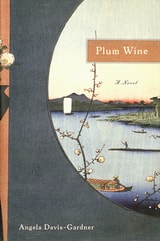
Barbara Jefferson, a young American teaching in Tokyo in the 1960s, is set on a life-changing quest when her Japanese surrogate mother, Michi, dies, leaving her a tansu of homemade plum wines wrapped in rice paper. Within the papers Barbara discovers writings in Japanese calligraphy that comprise a startling personal narrative. With the help of her translator, Seiji Okada, Barbara begins to unravel the mysteries of Michi's life, a story that begins in the early twentieth century and continues through World War II and its aftermath.
As Barbara and Seiji translate the plum wine papers they form an intimate bond, with Michi a ghostly third in what becomes an increasingly uneasy triangle. Barbara is deeply affected by the revelation that Michi and Seiji are hibakusha, survivors of the atomic bombing in Hiroshima, and even harder for her to understand are the devastating psychological effects wrought by war. Plum Wine examines human relationships, cultural differences, and the irreparable consequences of war in a story that is both original and timeless.
Pluralist Universalism
An Asian Americanist Critique of U.S. and Chinese MulticulturalismsWen Jin
The Ohio State University Press, 2012
Pluralist Universalism: An Asian Americanist Critique of U.S. and Chinese Multiculturalisms by Wen Jin is an extended comparison of U.S. and Chinese multiculturalisms during the post–Cold War era. Her book situates itself at the intersection of Asian American literary critique and the growing field of comparative multiculturalism. Through readings of fictional narratives that address the issue of racial and ethnic difference in both national contexts simultaneously, the author models a “double critique” framework for U.S.–Chinese comparative literary studies.

Pop Against Empire
Art as Masked Critique in Japan, Okinawa, and the US DiasporaHiroko Ikegami
University of Chicago Press, 2027
How Pop artists confronted the legacies of modern Empire of Japan and post-1945 American imperialism from the 1960s to the present.
Looking at a pivotal period spanning the 1960s to the present, Hiroko Ikegami explores how artists in Japan, Okinawa, and the United States have adopted Pop strategies to critique legacies of imperialism.
Ikegami focuses on locales—Tokyo, Okinawa, Minidoka, and New York—that were deeply impacted by the complex relationship between the Japanese and American empires and considers artists across different situations and generations. The book begins with Tokyo Pop artists and graphic designers, including Shinohara Ushio and Tanaami Keiichi, who critically parodied American Pop during the long 1960s. It then turns to Okinawa, where Tom Max probed Okinawans’ convoluted reality regarding the American Occupation and the Vietnam War. Artists in the second half of the volume confronted legacies of the Asia-Pacific War as a historical condition of the present. Roger Shimomura, the third-generation Japanese American who had been incarcerated in the Minidoka camp as a child, dealt with the subject by appropriating motifs of ukiyo-e woodblock prints. Takashi Murakami, now a global art star, created otaku-inspired art and capitalized on his country’s experience of the atomic bombs in promoting his “Superflat” enterprise. The book concludes with a new generation of artists protesting repercussions of empire in the twenty-first century. This is the first study to treat artists of post-1945 Japan, Okinawa, and the US diaspora in a single volume as mutually independent yet interrelated, using Pop’s criticality as a connecting thread.
Postcolonial Grief
The Afterlives of the Pacific Wars in the AmericasJinah Kim
Duke University Press, 2019
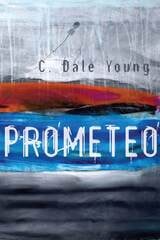
Prometeo
C. Dale Young
Four Way Books, 2021
“Some men find nothing, and others / find omens everywhere,” writes C. Dale Young in Prometeo, a collection whose speaker is a proverbial “child of fire.” In poems that thrive off of their distinct voice, the speaker confronts generational and lived trauma and their relationship to his multi-ethnicity. We are presented with the idea of the past’s burial in the body and its constellatory manifestations—both in the speaker and those around him—in disease and pain, but also in strength and a capacity for intimacy with others and nature. Grounded in precise language, Young’s examination of the past and its injuries turns into a celebration of the self. In stark, exuberant relief, the speaker proclaims “…I was splendidly blended, genetically engineered / for survival.” Resilient, Young’s poems find beauty in landscape, science, and meditation.