Results by title
379 books match the query 'Botany' and 28 start with p
People, Plants, and Landscapes
Studies in PaleoethnobotanyKristen J. Gremillion
University of Alabama Press, 1997
Discover how ancient peoples and plants shaped one another across generations and landscapes.
People, Plants, and Landscapes showcases the potential of modern paleoethnobotany, an interdisciplinary field that explores the interactions between human beings and plants by examining archaeological evidence. Using different methods and theoretical approaches, the essays in this work apply botanical knowledge to studies of archaeological plant remains and apply paleoethnobotany to nonarchaeological sources of evidence. The resulting techniques often lie beyond the traditional boundaries of either archaeology or botany.
With this ground-breaking work, the technically and methodologically enhanced paleoethnobotany of the 1990s has joined forces with ecological and evolutionary theory to forge explanations of changing relationships between human and plant populations.
Perfumed
The Story of Fragrance in the Ancient MediterraneanAnnette Giesecke
J. Paul Getty Trust, The, 0
A heady look at the fascinating world of perfumes, incense, and other aromatics in the ancient Mediterranean and their vibrant and sometimes violent history.
Perfumed invites you to breathe deeply and inhale the incense burning on the altars of the Greeks, perfumes sprinkled on spectators in Roman amphitheaters or wafting from the robes of Persian kings, and unguents filling Egyptian tombs. Though we don’t know who first burned a fragrant branch to perfume their dwelling or rubbed an aromatic petal against their skin, evidence demonstrates that such practices were ubiquitous by the Bronze Age.
- Opens with a richly illustrated overview of aromatics in Mesopotamia, Persia, Egypt, Greece, and Roman Italy.
- Explores the role fragrance played in all aspects of daily life and details major ingredients, including balsam, frankincense, rose, myrrh, saffron, and more.
- Features vivid passages from ancient sources, including perfume recipes and intriguing anecdotes such as the historian Herodotus’s account of winged serpents guarding frankincense trees in Arabia or Pliny the Elder’s claim that the emperor Nero burned a year’s harvest of frankincense for his wife’s funeral (after likely murdering her).
- Contains over 80 images drawn from a diverse range of ancient sources and archaeological evidence.
Experience the ancient world through its most evocative sense. Best-selling author Annette Giesecke’s Perfumed is essential reading for anyone with an interest in plants, perfumes, and other aromatics, as well as the rich, interrelated cultures of the Mediterranean.
Peyote
The Divine CactusEdward F. Anderson
University of Arizona Press, 1996
What is it in peyote that causes such unusual effects? Can modern medical science learn anything from Native Americans’ use of peyote in curing a wide variety of ailments? What is the Native American Church, and how do its members use peyote? Does anyone have the legal right to use drugs or controlled substances in religious ceremonies?
Within this volume are answers to these and dozens of other questions surrounding the controversial and remarkable cactus. Greatly expanded and brought up-to-date from the 1980 edition, these pages describe peyote ceremonies and the users’ experiences, and also cover the many scientific and legal aspects of using the plant. Well written, informative, comprehensive, and enlightening, the book will be welcomed by counselors, anthropologists, historians, physicians, chemists, lawyers, and observers of the contemporary drug scene, as well as by interested general readers.
Phylogeny and Evolution of the Angiosperms
Revised and Updated EditionDouglas Soltis, Pamela Soltis, Peter Endress, Mark Chase, Steven Manchester, Walter Judd, Lucas Majure, and Evgeny Mavrodiev
University of Chicago Press, 2018
This fully revised edition of Phylogeny and Evolution of the Angiosperms provides an up-to-date, comprehensive overview of the evolution of and relationships among these vital plants. Incorporating molecular phylogenetics with morphological, chemical, developmental, and paleobotanical data, as well as presenting a more detailed account of early angiosperm fossils and important fossil information for each evolutionary branch of the angiosperms, the new edition integrates fossil evidence into a robust phylogenetic framework. Featuring a wealth of new color images, this highly synthetic work further reevaluates long-held evolutionary hypotheses related to flowering plants and will be an essential reference for botanists, plant systematists, and evolutionary biologists alike.
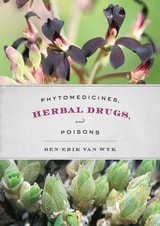
Phytomedicines, Herbal Drugs, and Poisons
Edited by Ben-Erik van Wyk and Michael Wink
University of Chicago Press, 2015
In Phytomedicines, Herbal Drugs, and Poisons, Ben-Erik van Wyk offers a richly illustrated, scientific guide to medicinal and poisonous plants, including those used for their mind-altering effects. Van Wyk covers approximately 350 species—from Aloe vera and Ephedra sinica to Cannabis sativa and Coffea arabica—detailing their botanical, geographical, pharmacological, and toxicological data as well as the chemical structures of the active compounds in each. Readers learn, for example, that Acacia senegal, or gum acacia, is used primarily in Sudan and Ethiopia as a topical ointment to protect the skin and mucosa from bacterial and fungal infections, and that Aconitum napellus, more commonly known as aconite, is used in cough syrups but can be psychedelic when smoked or absorbed through the skin.
With 350 full-color photographs featuring the plants and some of their derivative products, Phytomedicines, Herbal Drugs, and Poisons will be an invaluable reference not only for those in the health care field but also for those growing their own medicinal herb gardens, as well as anyone who needs a quick answer to whether a plant is a panacea or a poison.
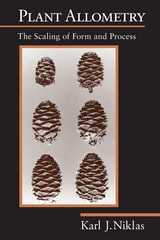
Plant Allometry
The Scaling of Form and ProcessKarl J. Niklas
University of Chicago Press, 1994
Niklas covers a broad spectrum of plant life, from unicellular algae to towering trees, including fossil as well as extant taxa. He examines the relation between organic size and variations in plant form, metabolism, reproduction, and evolution, and draws on the zoological literature to develop allometric techniques for the peculiar problems of plant height, the relation between body mass and body length, and size-correlated variations in rates of growth. For readers unfamiliar with the basics of allometry, an appendix explains basic statistical methods.
For botanists interested in an original, quantitative approach to plant evolution and function, and for zoologists who want to learn more about the value of allometric techniques for studying evolution, Plant Allometry makes a major contribution to the study of plant life.
Plant Biomechanics
An Engineering Approach to Plant Form and FunctionKarl J. Niklas
University of Chicago Press, 1992
This volume emphasizes not only methods of biomechanical analysis but also the ways in which it allows one to ask, and answer, a host of interesting questions. As Niklas points out in the first chapter, "From the archaic algae to the most derived multicellular terrestrial plants, from the spectral properties of light-harvesting pigments in chloroplasts to the stacking of leaves in the canopies of trees, the behavior of plants is in large part responsive to and intimately connected with the physical environment. In addition, plants tend to be exquisitely preserved in the fossil record, thereby giving us access to the past." Its biomechanical analyses of various types of plant cells, organs, and whole organisms, and its use of the earliest fossil records of plant life as well as sophisticated current studies of extant species, make this volume a unique and highly integrative contribution to studies of plant form, evolution, ecology, and systematics.
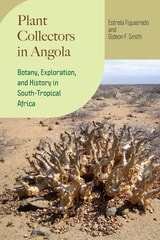
Plant Collectors in Angola
Botany, Exploration, and History in South-Tropical AfricaEstrela Figueiredo and Gideon F. Smith
University of Chicago Press, 2024
For any region, cataloging, interpreting, and understanding the history of botanical exploration and plant collecting, and the preserved specimens that were amassed as a result, are critically important for research and conservation. In this book, published in cooperation with the International Association for Plant Taxonomy, Estrela Figueiredo and Gideon F. Smith, both botanists with expertise in the taxonomy of African plants, provide the first comprehensive, contextualized account of plant collecting in Angola, a large country in south-tropical Africa. An essential book for anyone concerned with the biodiversity and history of Africa, this authoritative work offers insights into the lives, times, and endeavors of 358 collectors. In addition, the authors present analyses of the records that accompanied the collectors’ preserved specimens. Illustrated in color throughout, the book fills a large gap in the current knowledge of the botanical and exploration history of Africa.

Plant Communities of Southern Illinois
Robert H. Mohlenbrock and John C. Voigt
Southern Illinois University Press, 1964
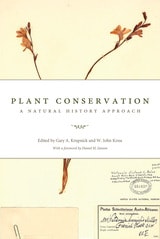
Plant Conservation
A Natural History ApproachEdited by Gary A. Krupnick and W. John Kress
University of Chicago Press, 2005
Plant Conservation opens with a broad view of plant biodiversity and then considers evolutionary and taxonomic threats and consequences of habitat alteration; specific threats to plant diversity, such as invasive species and global climate change; consequences of plant population decline at the ecological, evolutionary, and taxonomic levels; and, finally, management strategies that protect plant biodiversity from further decline. With a unique perspective on biodiversity and scientific collections, Plant Conservation ultimately emphasizes the role museums and botanical gardens will play in future conservation.
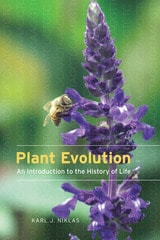
Plant Evolution
An Introduction to the History of LifeKarl J. Niklas
University of Chicago Press, 2016
Tapping such wide-ranging topics as genetics, gene regulatory networks, phenotype mapping, and multicellularity, as well as paleobotany, Karl J. Niklas’s Plant Evolution offers fresh insight into these differences. Following up on his landmark book The Evolutionary Biology of Plants—in which he drew on cutting-edge computer simulations that used plants as models to illuminate key evolutionary theories—Niklas incorporates data from more than a decade of new research in the flourishing field of molecular biology, conveying not only why the study of evolution is so important, but also why the study of plants is essential to our understanding of evolutionary processes. Niklas shows us that investigating the intricacies of plant development, the diversification of early vascular land plants, and larger patterns in plant evolution is not just a botanical pursuit: it is vital to our comprehension of the history of all life on this green planet.
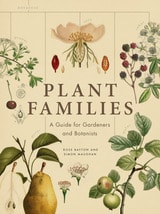
Plant Families
A Guide for Gardeners and BotanistsRoss Bayton and Simon Maughan
University of Chicago Press, 2017
Plant Families is an easy-to-use, beautifully illustrated guide to the more than one hundred core plant families every horticulturist, gardener, or budding botanist needs to know. It introduces the basics of plant genealogy and teaches readers how to identify and understand the different structures of flowers, trees, herbs, shrubs, and bulbs. It then walks through each family, explaining its origins and range, and describing characteristics such as size, flowers, and seeds. Each family is accompanied by full-color botanical illustrations and diagrams. “Uses For” boxes planted throughout the book provide practical gardening tips related to each family.
We have much to gain by learning about the relationships between plant families. By understanding how botanists create these groupings, we can become more apt at spotting the unique characteristics of a plant and identify them faster and more accurately. Understanding plant families also helps us to make sense of—and better appreciate—the enormous biological diversity of the plant kingdom.
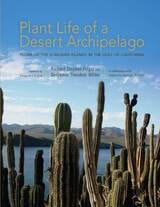
Plant Life of a Desert Archipelago
Flora of the Sonoran Islands in the Gulf of CaliforniaRichard Stephen Felger and Benjamin Theodore Wilder, in collaboration with Humberto Romero-Morales; Foreword by Exequiel Ezcurra
University of Arizona Press, 2012
The desert islands of the Gulf of California are among the world's best-preserved archipelagos. The diverse and unique flora, from the cardón forests of Cholludo to the agave-dominated slopes of San Esteban remain much as they were centuries ago, when the Comcaac (Seri people) were the only human presence in the region. Almost 400 plant species exist here, with each island manifesting a unique composition of vegetation and flora. For thousands of years, climatic and biological forces have sculpted a set of unparalleled desert worlds.
Plant Life of a Desert Archipelago is the first in-depth coverage of the plants on islands in the Gulf of California found in between the coasts of Baja California and Sonora. The work is the culmination of decades of study by botanist Richard Felger and recent investigations by Benjamin Wilder, in collaboration with Sr. Humberto Romero-Morales, one of the most knowledgeable Seris concerning the region's flora. Their collective effort weaves together careful and accurate botanical science with the rich cultural and stunning physical setting of this island realm.
The researchers surveyed, collected, and studied thousands of plants—seen here in meticulous illustrations and stunning color photographs—providing the most precise species accounts of the islands ever made. To access remote parts of the islands the authors worked directly with the Comcaac, an indigenous community who have lived off marine and terrestrial life in this coastal desert region for centuries. Invaluable information regarding indigenous names and distributions are an intrinsic part of this work.
The flora descriptions are extraordinarily detailed and painstakingly crafted for field biologists. Conservationists, students, and others who are interested in learning about the natural wealth of the Gulf of California, desert regions, or islands in general are sure to be captivated by this rich and fascinating volume.
Plant Physics
Karl J. Niklas and Hanns-Christof Spatz
University of Chicago Press, 2012
From Galileo, who used the hollow stalks of grass to demonstrate the idea that peripherally located construction materials provide most of the resistance to bending forces, to Leonardo da Vinci, whose illustrations of the parachute are alleged to be based on his study of the dandelion’s pappus and the maple tree’s samara, many of our greatest physicists, mathematicians, and engineers have learned much from studying plants.
Plant Resistance to Herbivores and Pathogens
Ecology, Evolution, and GeneticsEdited by Robert S. Fritz and Ellen L. Simms
University of Chicago Press, 1992
Plant Resistance to Herbivores and Pathogens not only reviews the literature pertaining to plant resistance from a number of traditionally separate fields but also examines significant questions that will drive future research. Among the topics explored are selection for resistance in plants and for virulence in phytophages; methods for studying natural variation in plant resistance; the factors that maintain intraspecific variation in resistance; and the ecological consequences of within-population genetic variation for herbivorous insects and fungal pathogens.
"A comprehensive review of the theory and information on a large, rapidly growing, and important subject."—Douglas J. Futuyma, State University of New York, Stony Brook
Plant Sensing and Communication
Richard Karban
University of Chicago Press, 2015
In Plant Sensing and Communication, Richard Karban provides the first comprehensive overview of what is known about how plants perceive their environments, communicate those perceptions, and learn. Facing many of the same challenges as animals, plants have developed many similar capabilities: they sense light, chemicals, mechanical stimulation, temperature, electricity, and sound. Moreover, prior experiences have lasting impacts on sensitivity and response to cues; plants, in essence, have memory. Nor are their senses limited to the processes of an individual plant: plants eavesdrop on the cues and behaviors of neighbors and—for example, through flowers and fruits—exchange information with other types of organisms. Far from inanimate organisms limited by their stationary existence, plants, this book makes unquestionably clear, are in constant and lively discourse.
Plant-Pollinator Interactions
From Specialization to GeneralizationEdited by Nickolas M. Waser and Jeff Ollerton
University of Chicago Press, 2005
Nickolas M. Waser and Jeff Ollerton bring together experts from around the world to offer a comprehensive analysis of pollination, including the history of thinking about specialization and generalization and a comparison of pollination to other mutualisms. An overview of current thinking and of future research priorities, Plant-Pollinator Interactions covers an important theme in evolutionary ecology with far-reaching applications in conservation and agriculture. This book will find an eager audience in specialists studying pollination and other mutualisms, as well as with biologists who are interested in ecological, evolutionary, and behavioral aspects of the specialization and generalization of species.
Plantlore/Dena'ina K'et'una
An Ethnobotany of the Dena'ina People of Southcentral AlaskaPriscilla N. Russell
University of Alaska Press, 2020
This book is the culmination of more than a decade of ethnobotanical study and provides accounts of the traditional lore associated with these plants based on a wealth of interviews with Dena’ina people. This new edition includes new graphical content consolidating practical plant information and traditional uses.
Plants That We Eat
Nauriat Nigiñaqtaut - From the traditional wisdom of the Iñupiat Elders of Northwest AlaskaAnore Jones
University of Alaska Press, 2010
Plants for Food and Medicine
Edited by H. D. V. Prendergast, N. L. Etkin, D. R. Harris, and P. J. Houghton
Royal Botanic Gardens, Kew, 2000
Plants from the Past
Works Of Leonard W. Blake & Hugh C. CutlerLeonard W. Blake and Hugh C. Cutler; With an Introduction by Gayle J. Fritz and Patty Jo Watson
University of Alabama Press, 2001
Plants from the Past is a fascinating, comprehensive record of the work of two dedicated plant scientists who were instrumental in the establishment of archaeobotany and paleoethnobotany as vigorous subdisciplines within American archaeology. Hugh Carson Cutler and Leonard Watson Blake worked together for many decades at the Missouri Botanical Garden in St. Louis, identifying and interpreting plant remains from archaeological sites all over North America.
Covering a period of 30 years and tracing the development of the study of plant remains from archaeological sites, the volume will give archaeologists access to previously unavailable data and interpretations. It features the much-sought-after extensive inventory "Plants from Archaeological Sites East of the Rockies," which serves as a reference to archaeobotanical collections curated at the Illinois State Museum. The chapters dealing with protohistory and early historic foodways and trade in the upper Midwest are especially relevant at this time of increasing attention to early Indian-white interactions.
The editors' introduction provides coherence and historical context for the papers and points to the book's potential as a resource for future research. Graced by Dr. Blake's brief introductions to each chapter, Plants from the Past neatly compiles the earliest research in archaeobotany by two originators of the science.
Plants of the World
Maarten J. M. Christenhusz, Michael F. Fay, and Mark W. Chase
Royal Botanic Gardens, Kew, 2017
Plants of the World
An Illustrated Encyclopedia of Vascular PlantsMaarten J. M. Christenhusz, Michael F. Fay, and Mark W. Chase
University of Chicago Press, 2017
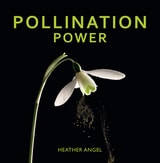
Pollination Power
Heather Angel
University of Chicago Press, 2016
In stunning full-color images, employing the latest photographic techniques, esteemed photographer Heather Angel has captures the intimate interactions of plants with their floral pollinators. The plants come not only from Angel’s Surrey backyard and the Royal Botanic Garden at Kew, but from twenty countries where Angel has travelled—from the rich floral kingdoms of the Cape of South Africa to the diversity of China and the Americas. The photos illustrate the varied techniques that flowers use to communicate with their pollinators. Some, for example, change color when the flower no longer has rewards to offer. Others control precisely when pollinators enter or leave by timing when they open and close their petals or when they emit a scent. This fascinating array of pollination repertoires crossfertilizes Angel’s photos with a descriptive text.
Featuring both common and exotic plants and temperate and tropical floral, Pollination Power will entice anyone with a passion for botanicals, from gardeners to botanists alike.
Practical Botany for Gardeners
Over 3,000 Botanical Terms Explained and ExploredGeoff Hodge
University of Chicago Press, 2013
Practical Botany for Gardeners provides an elegant and accessible introduction to the world of botany. It presents the essentials that every gardener needs to know, connecting explanations of scientific facts with useful gardening tips. Flip to the roots section and you’ll not only learn how different types of roots support a plant but also find that adding fungi to soil aids growth. The pruning section both defines “lateral buds” and explains how far back on a shoot to cut in order to propagate them.
The book breaks down key areas and terminology with easy-to-navigate chapters arranged by theme, such as plant types, plant parts, inner workings, and external factors. “Great Botanists” and “Botany in Action” boxes delve deeper into the fascinating byways of plant science. This multifaceted book also includes two hundred botanical illustrations and basic diagrams that hearken to the classic roots of botany.
Part handbook, part reference, Practical Botany for Gardeners is a beautifully captivating read. It’s a must for garden lovers and backyard botanists who want to grow and nurture their own plant knowledge.
Preliminary List of the Compositae in Northeastern Brazil
D. J. Nicholas Hind and Elaine B. Miranda
Royal Botanic Gardens, Kew, 2000
Preliminary List of the Cyperaceae in Northeastern Brazil
A. C. Araujo, E. César, and D. Simpson
Royal Botanic Gardens, Kew, 2000
Preliminary List of the Leguminosae in Northeastern Brazil
Edgley A. César, Fabricio S. Juchum, and Gwilym Lewis
Royal Botanic Gardens, Kew, 2006
For the purposes of this checklist, the second in the series, 9,066 specimens were examined and 869 species are recorded in 135 genera.