Results by title
62 books match the query 'British' and 4 start with p

Picturing Empire
Photography and the Visualization of the British EmpireJames R. Ryan
University of Chicago Press, 1997
But as James R. Ryan argues in Picturing Empire, Victorian photographs reveal as much about the imaginative landscapes of imperial culture as they do about the "real" subjects captured within their frames. Ryan considers the role of photography in the exploration and domestication of foreign landscapes, in imperial warfare, in the survey and classification of "racial types," in "hunting with the camera," and in teaching imperial geography to British schoolchildren.
Ryan's careful exposure of the reciprocal relation between photographic image and imperial imagination will interest all those concerned with the cultural history of the British Empire.
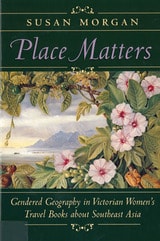
Place Matters
Morgan, Susan
Rutgers University Press, 1996
"Morgan has written an important and original work that presents a well-substantiated challenge to many recent studies of 'colonial discourse'."--Nancy L. Paxton,
Susan Morgan's study of materials and regions, previously neglected in contemporary postcolonial studies, begins with the transforming premise that "place matters." Concepts derived from writings about one area of the world cannot simply be transposed to another area, in some sort of global theoretical move. Moreover, place in the discourse of Victorian imperialism is a matter of gendered as well as geographic terms. Taking up works by Anna Forbes and Marianne North on the Malay Archipelago, by Margaret Brooke and Harriette McDougall on Sarawak, by Isabella Bird and Emily Innes on British Malaya, by Anna Leonowens on Siam, Morgan also makes extensive use of theorists whose work on imperialism in Southeast Asia is unfamiliar to most American academics.
This vivid examination of a different region and different writings emphasizes that in Victorian literature there was no monolithic imperialist location, authorial or geographic. The very notion of a ‘colony’ or an ‘imperial presence’ in Southeast Asia is problematic. Morgan is concerned with marking the intersections of particular Victorian imperial histories and constructions of subjectivity. She argues that specific places in Southeast Asia have distinctive, and differing, masculine imperial rhetorics. It is within these specific rhetorical contexts that women’s writings, including their moments of critique, can be read.
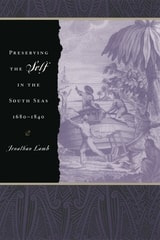
Preserving the Self in the South Seas, 1680-1840
Jonathan Lamb
University of Chicago Press, 2001
Lamb contends that European exploration of the South Seas was less confident and mindful than we have assumed. It was, instead, conducted in moods of distraction and infatuation that were hard to make sense of and difficult to narrate, and it prompted reactions among indigenous peoples that were equally passionate and irregular. Preserving the Self in the South Seas also examines these common crises of exploration in the context of a metropolitan audience that eagerly consumed narratives of the Pacific while doubting their truth. Lamb considers why these halting and incredible journals were so popular with the reading public, and suggests that they dramatized anxieties and bafflements rankling at the heart of commercial society.
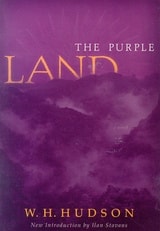
Purple Land
W. H. Hudson; With a new introduction by Ilan Stavans; Illustrated by Keith Henderson
University of Wisconsin Press, 2002
First published in 1885, The Purple Land was the first novel of William Henry Hudson, author of Green Mansions. The Anglo-Argentine naturalist distinguished himself both as one of the finest craftsmen of prose in English literature and as a thinker on ecological matters far ahead of his time.
The Purple Land is the exuberant, often wryly comic, first-person account of a young Englishman’s imprudent adventures, set against a background of political strife in nineteenth-century Uruguay. Eloping with an Argentine girl, young Richard Lamb makes an implacable enemy of his teenage bride’s father. Leaving her behind, he goes ignorantly forth into the interior of the country to seek his fortune and is eventually imprisoned and persecuted by the vengeful father. His narrative closes as he sets off on still another impetuous quest.
This facsimile of the 1904 Three Sirens Press edition includes striking woodcuts by Keith Henderson illustrating the characters in the novel and the fauna of Uruguay. Ilan Stavans’s introduction offers an opportunity to revisit The Purple Land as a "road novel" in which an outsider offers reflections on nationality and diasporic identity.