Results by title
547 books match the query 'California' and 19 start with p
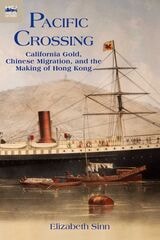
Pacific Crossing
California Gold, Chinese Migration, and the Making of Hong KongElizabeth Sinn
Hong Kong University Press, 2014
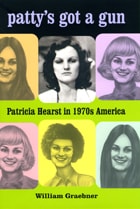
Patty's Got a Gun
Patricia Hearst in 1970s AmericaWilliam Graebner
University of Chicago Press, 2008
Perspectives from the Disciplines
Stanford Online High SchoolJeffrey Scarborough and Raymond Ravaglia
CSLI, 0
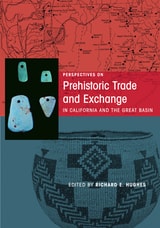
Perspectives on Prehistoric Trade and Exchange in California and the Great Basin
Richard E. Hughes
University of Utah Press, 2011
How does prehistoric material get from its place of origin to its location of archaeological recovery? While this question may seem basic, a moment’s reflection suggests that the answers carry important implications for arc-haeological interpretation about social organization, settlement, and subsistence practices. Archaeologists know much about the temporal and spatial distribution of materials in prehistoric western North America, but comparatively little has emerged regarding the causes of such distributions. Trade and exchange, mobility, and direct access all have been credited with observed distributions, but the reasons for settling on specific behavioral linkages is rarely made clear.
This volume investigates the circumstances and conditions under which trade/exchange, direct access, and/or mobility best account for material conveyance across varying distances at different times in the past. Each chapter contextualizes distributional and chemical data, evaluates competing distribution hypotheses, and addresses the reasoning and inferences employed to arrive at conclusions about the human behaviors responsible for the distributions of materials. Contributors showcase a range of diverse and creative ways of thinking about these issues in the California and Great Basin archaeological record, and why it matters.
Pinoy Capital
The Filipino Nation in Daly CityBenito M. Vergara, Jr.
Temple University Press, 2009
Home to 33,000 Filipino American residents, Daly City, California, located just outside of San Francisco, has been dubbed “the Pinoy Capital of the United States.” In this fascinating ethnographic study of the lives of Daly City residents, Benito Vergara shows how Daly City has become a magnet for the growing Filipino American community.
Vergara challenges rooted notions of colonialism here, addressing the immigrants’ identities, connections and loyalties. Using the lens of transnationalism, he looks at the “double lives” of both recent and established Filipino Americans. Vergara explores how first-generation Pinoys experience homesickness precisely because Daly City is filled with reminders of their homeland’s culture, like newspapers, shops and festivals. Vergara probes into the complicated, ambivalent feelings these immigrants have—toward the Philippines and the United States—and the conflicting obligations they have presented by belonging to a thriving community and yet possessing nostalgia for the homeland and people they left behind.
Playing with Fish and Other Lessons from the North
Robert J. Wolfe
University of Arizona Press, 2006
Poetry Los Angeles
Reading the Essential Poems of the CityLaurence Goldstein
University of Michigan Press, 2014
One chapter is devoted to Charles Bukowski, the celebrity face of the city’s poetry. Other chapters discuss the ways that poets explore “Interiors” and “Exteriors” throughout the cityscape. Goldstein also provides ample connections to the novels, films, art, and politics of Southern California. In clear prose, Poetry Los Angeles examines the strategies by which poets make significant places meaningful and memorable to readers of every region of the U.S. and elsewhere.
Police, Power, and the Production of Racial Boundaries
Muñiz, Ana
Rutgers University Press, 2015
Muñiz illuminates the degree to which the definitions of “gangs” and “deviants” are politically constructed labels born of public policy and court decisions, offering an innovative look at the process of criminalization and underscoring the ways in which a politically powerful coalition can define deviant behavior. As she does so, Muñiz also highlights the various grassroots challenges to such policies and the efforts to call attention to their racist effects. Muñiz describes the fight over two very different methods of policing: community policing (in which the police and the community work together) and the “broken windows” or “zero tolerance” approach (which aggressively polices minor infractions—such as loitering—to deter more serious crime). Police, Power, and the Production of Racial Boundaries also explores the history of the area to explain how Cadillac-Corning became viewed by outsiders as a “violent neighborhood” and how the city’s first gang injunction—a restraining order aimed at alleged gang members—solidified this negative image. As a result, Muñiz shows, Cadillac-Corning and other sections became a test site for repressive practices that eventually spread to the rest of the city.
Police
Streetcorner PoliticiansWilliam K. Muir Jr.
University of Chicago Press, 1979
"Other social scientists have observed policemen on patrol, or have interviewed them systematically. Professor Muir has brought the two together, and, because of the philosophical depth he brings to his commentaries, he has lifted the sociology of the police on to a new level. He has both observed the men and talked with them at length about their personal lives, their conceptions of society and of the place of criminals within it. His ambition is to define the good policeman and to explain his development, but his achievement is to illuminate the philosophical and occupational maturation of patrol officers in 'Laconia' (a pseudonym) . . . . His discussions of [the policemen's] moral development are threaded through with analytically suggestive formulations that bespeak a wisdom very rarely encountered in reports of sociological research."—Michael Banton, Times Literary Supplement
Policing Space
Territoriality and the Los Angeles Police DepartmentSteve Herbert
University of Minnesota Press, 1996
Policing Space is a fascinating firsthand account of how the Los Angeles Police Department attempts to control its vast, heterogeneous territory. As such, the book offers a rare, ground-level look at the relationship between the control of space and the exercise of power.
Author Steve Herbert spent eight months observing one patrol division of the LAPD on the job. A compelling story in itself, his fieldwork with the officers in the Wilshire Division affords readers a close view of the complex factors at play in how the police define and control territory, how they make and mark space. A remarkable ethnography of a powerful police department, underscored throughout with telling on-the-scene vignettes, this book is also an unusually intensive analysis of the exercise of territorial power-and of territoriality as a key component of police power. Unique in its application of fieldwork and theory to this complex subject, it should prove valuable to readers in urban and political geography, urban and political sociology, and criminology, as well as those who wonder about the workings of the LAPD.
Power Politics
Environmental Activism in South Los AngelesBrodkin, Karen
Rutgers University Press, 2009
Power Politics is a rich and readable study of a grassroots campaign where longtime labor and environmental allies found themselves on opposite sides of a conflict that pitted good jobs against good air. Karen Brodkin analyzes how those issues came to be opposed and in doing so unpacks the racial and class dynamics that shape Americans' grasp of labor and environmental issues. Power Politics' activists stood at the forefront of a movement that is building broad-based environmental coalitions and placing social justice at the heart of a new and robust vision.
Pre-Gay L.A.
A Social History of the Movement for Homosexual RightsC. Todd White
University of Illinois Press, 2008
Prismatic Metropolis
Inequality in Los AngelesLawrence D. Bobo
Russell Sage Foundation, 2000
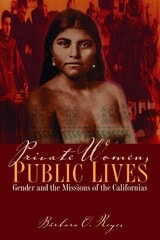
Private Women, Public Lives
Gender and the Missions of the CaliforniasBy Bárbara O. Reyes
University of Texas Press, 2009
Through the lives and works of three women in colonial California, Bárbara O. Reyes examines frontier mission social spaces and their relationship to the creation of gendered colonial relations in the Californias. She explores the function of missions and missionaries in establishing hierarchies of power and in defining gendered spaces and roles, and looks at the ways that women challenged, and attempted to modify, the construction of those hierarchies, roles, and spaces.
Reyes studies the criminal inquiry and depositions of Barbara Gandiaga, an Indian woman charged with conspiracy to murder two priests at her mission; the divorce petition of Eulalia Callis, the first lady of colonial California who petitioned for divorce from her adulterous governor-husband; and the testimonio of Eulalia Pérez, the head housekeeper at Mission San Gabriel who acquired a position of significant authority and responsibility but whose work has not been properly recognized. These three women's voices seem to reach across time and place, calling for additional, more complex analysis and questions: Could women have agency in the colonial Californias? Did the social structures or colonial processes in place in the frontier setting of New Spain confine or limit them in particular gendered ways? And, were gender dynamics in colonial California explicitly rigid as a result of the imperatives of the goals of colonization?
Production Culture
Industrial Reflexivity and Critical Practice in Film and TelevisionJohn Thornton Caldwell
Duke University Press, 2008
Drawing on interviews, observations of sets and workplaces, and analyses of TV shows, industry documents, economic data, and promotional materials, Caldwell shows how film and video workers function in a transformed, post-network industry. He chronicles how workers have responded to changes including media convergence, labor outsourcing, increasingly unstable labor and business relations, new production technologies, corporate conglomeration, and the proliferation of user-generated content. He explores new struggles over “authorship” within collective creative endeavors, the way that branding and syndication have become central business strategies for networks, and the “viral” use of industrial self-reflexivity to motivate consumers through DVD bonus tracks, behind-the-scenes documentaries, and “making-ofs.” A significant, on-the-ground analysis of an industry in flux, Production Culture offers new ways of thinking about media production as a cultural activity.
Progressive Dystopia
Abolition, Antiblackness, and Schooling in San FranciscoSavannah Shange
Duke University Press, 2019
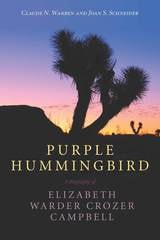
Purple Hummingbird
A Biography of Elizabeth Warder Crozer CampbellClaude N. Warren and Joan S. Schneider
University of Utah Press, 2016
Elizabeth Warder Crozer Campbell and her husband, William Campbell, found themselves forced to move to the Mojave Desert in 1924, its dry climate proving to be the best for William’s frail lungs burned by mustard gas in World War I. They camped at Twentynine Palm Oasis in what is now Joshua Tree National Park, homesteaded nearby, and became a central part of that early community. Life in the remote, stark landscape contrasted sharply with Elizabeth’s early years of wealth and privilege in Pennsylvania. Her resilient spirit made the best of what at first seemed like a bleak situation: she became an amateur archaeologist and explored the desert. A keen observer and independent thinker, she soon hypothesized that prehistoric people had lived in the California deserts along the shores of late Pleistocene lakes and waterways much earlier than was then believed. She devised a means for testing her hypothesis and found evidence to support it. Her interpretations, however, conflicted with the archaeological paradigm of the day and she was dismissed by formally trained archaeologists. Even so, she and her husband continued their work, convinced of the accuracy of her findings. Four decades later the archaeological establishment validated and accepted her ideas. Campbell’s research ultimately revolutionized archaeological thought, forming the basis of today’s landscape archaeology.
Pynchon's California
Scott McClintock and John Miller
University of Iowa Press, 2014
Contributors explore such topics as the relationship of the “California novels” to Pynchon’s more historical and encyclopedic works; the significance of California's beaches, deserts, forests, freeways, and “hieroglyphic” suburban sprawl; the California-inspired noir tradition; and the surprising connections to be uncovered between drug use and realism, melodrama and real estate, private detection and the sacred. The authors bring insights to bear from an array of critical, social, and historical discourses, offering new ways of looking not only at Pynchon’s California novels, but at his entire oeuvre. They explore both how the history, geography, and culture of California have informed Pynchon’s work and how Pynchon’s ever-skeptical critical eye has been turned on the state that has been, in many ways, the flagship for postmodern American culture.
CONTRIBUTORS: Hanjo Berressem, Christopher Coffman, Stephen Hock, Margaret Lynd, Scott MacLeod, Scott McClintock, Bill Millard, John Miller, Henry Veggian
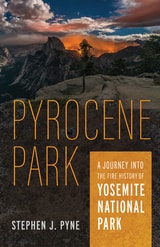
Pyrocene Park
A Journey into the Fire History of Yosemite National ParkStephen J. Pyne
University of Arizona Press, 2023
In the last decade, fire has blasted into public attention. California’s blazes have captured national and global media interest with their drama and urgency. Expand the realm of fire to include the burning of fossil fuels, and the fire story also subsumes climate change. Renowned fire historian Stephen J. Pyne argues that the relationship between fire and humans has become a defining feature of our epoch, and he reveals how Yosemite offers a cameo of how we have replaced an ice age with a fire age: the Pyrocene.
Organized around a backcountry trek to a 50-year experiment in restoring fire, Pyrocene Park describes the 150-year history of fire suppression and management that has led us, in part, to where the park is today. But there is more. Yosemite’s fire story is America’s, and the Earth’s, as it shifts from an ice-informed world to a fire-informed one. Pyrocene Park distills that epic story into a sharp miniature.
Flush with people, ideas, fires, and controversy, Pyrocene Park is a compelling and accessible window into the American fire scene and the future it promises.