Results by title
128 books match the query 'Church of Jesus Christ of Latter-day Saints' and 5 start with p
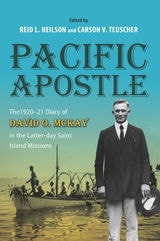
Pacific Apostle
The 1920-21 Diary of David O. McKay in the Latter-day Saint Island MissionsDavid O. McKay, Edited by Reid L. Neilson and Carson V. Teuscher
University of Illinois Press, 2020
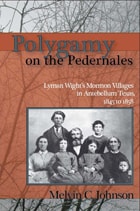
Polygamy on the Pedernales
Lyman Wight's Mormon Village in Antebellum TexasMelvin C. Johnson
Utah State University Press, 2006
In the wake of Joseph Smith Jr.’s murder in 1844, his following splintered, and some allied themselves with a maverick Mormon apostle, Lyman Wight. Sometimes called the "Wild Ram of Texas," Wight took his splinter group to frontier Texas, a destination to which Smith, before his murder, had considered moving his followers, who were increasingly unwelcome in the Midwest. He had instructed Wight to take a small band of church members from Wisconsin to establish a Texas colony that would prepare the ground for a mass migration of the membership. Having received these orders directly from Smith, Wight did not believe the former’s death changed their significance. If anything, he felt all the more responsible for fulfilling what he believed was a prophet’s intention.
Antagonism with Brigham Young and the other LDS apostles grew, and Wight refused to join with them or move to their new gathering place in Utah. He and his small congregation pursued their own destiny, becoming an interesting component of the Texas frontier, where they had a significant economic role as early millers and cowboys and a political one as a buffer with the Comanches. Their social and religious practices shared many of the idiosyncracies of the larger Mormon sect, including polygamous marriages, temple rites, and economic cooperatives. Wight was a charismatic but authoritarian and increasingly odd figure, in part because of chemical addictions. His death in 1858 while leading his shrinking number of followers on yet one more migration brought an effective end to his independent church.
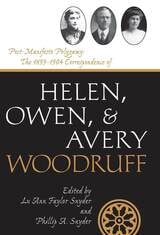
Post-Manifesto Polygamy
The 1899 to 1904 Correspondence of Helen, Owen and Avery WoodruffLu Ann Faylor Snyder and Phillip A. Snyder
Utah State University Press, 2009
These letters among two women and their husband offer a rare look into the personal dynamics of an LDS polygamous relationship. Abraham “Owen” Woodruff was a young Mormon apostle, the son of President Wilford Woodruff, remembered for the Woodruff Manifesto, which called for the divinely inspired termination of plural marriage. It eased a systematic federal judicial assault on Mormons and made Utah statehood possible. It did not end polygamy in the church. Some leaders continued to encourage and perform such marriages. Owen Woodruff himself contracted a secretive, second marriage to Avery Clark. Pressure on the LDS church revived with hearings regarding Reed Smoot’s seat in the U. S. Senate. After church president Joseph F. Smith issued the so-called Second Manifesto in 1904, polygamy and its more prominent advocates were mostly expunged from mainstream Mormonism. Owen Woodruff was not excommunicated, as a couple of his apostolic colleagues were. He and his first wife, Helen May Winters, had died suddenly that same year after contracting smallpox in Mexico. Owen Woodruff had often been “on the underground,” moving frequently, traveling under secret identities, and using code names in his letters to his wives, while still carrying out his administrative duties, which, in particular, involved supervision of the nascent Mormon colonies in the Big Horn Basin of Wyoming.
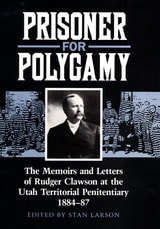
Prisoner for Polygamy
The Memoirs and Letters of Rudger Clawson at the Utah Territorial Penitentiary, 1884-87Edited by Stan Larson
University of Illinois Press, 1993
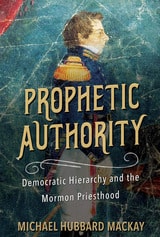
Prophetic Authority
Democratic Hierarchy and the Mormon PriesthoodMichael Hubbard MacKay
University of Illinois Press, 2020
Michael Hubbard MacKay traces the Church of Jesus Christ of Latter-day Saints' claim to religious authority and sets it within the context of its times. Delving into the evolution of the concept of prophetic authority, MacKay shows how the Church emerged as a hierarchical democracy with power diffused among leaders Smith chose. At the same time, Smith's settled place atop the hierarchy granted him an authority that spared early Mormonism the internal conflict that doomed other religious movements. Though Smith faced challenges from other leaders, the nascent Church repeatedly turned to him to decide civic plans and define the order of both the cosmos and the priesthood.