Results by title
57 books match the query 'Classification' and 4 start with p

Performance and Media
Taxonomies for a Changing FieldSarah Bay-Cheng, Jennifer Parker-Starbuck, and David Saltz
University of Michigan Press, 2015

Phylogenetic Systematics
Willi Hennig
University of Illinois Press, 1966
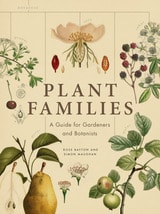
Plant Families
A Guide for Gardeners and BotanistsRoss Bayton and Simon Maughan
University of Chicago Press, 2017
Plant Families is an easy-to-use, beautifully illustrated guide to the more than one hundred core plant families every horticulturist, gardener, or budding botanist needs to know. It introduces the basics of plant genealogy and teaches readers how to identify and understand the different structures of flowers, trees, herbs, shrubs, and bulbs. It then walks through each family, explaining its origins and range, and describing characteristics such as size, flowers, and seeds. Each family is accompanied by full-color botanical illustrations and diagrams. “Uses For” boxes planted throughout the book provide practical gardening tips related to each family.
We have much to gain by learning about the relationships between plant families. By understanding how botanists create these groupings, we can become more apt at spotting the unique characteristics of a plant and identify them faster and more accurately. Understanding plant families also helps us to make sense of—and better appreciate—the enormous biological diversity of the plant kingdom.
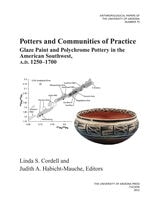
Potters and Communities of Practice
Glaze Paint and Polychrome Pottery in the American Southwest, AD 1250 to 1700Edited by Linda S. Cordell and Judith A. Habicht-Mauche
University of Arizona Press, 2012
The peoples of the American Southwest during the 13th through the 17th centuries witnessed dramatic changes in settlement size, exchange relationships, ideology, social organization, and migrations that included those of the first European settlers. Concomitant with these world-shaking events, communities of potters began producing new kinds of wares—particularly polychrome and glaze-paint decorated pottery—that entailed new technologies and new materials. The contributors to this volume present results of their collaborative research into the production and distribution of these new wares, including cutting-edge chemical and petrographic analyses. They use the insights gained to reflect on the changing nature of communities of potters as they participated in the dynamic social conditions of their world.