81 books match the query 'Composers' and 3 start with p
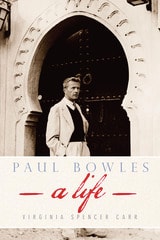
cover of Paul Bowles: A Life

Paul Bowles

A Life

Virginia Spencer Carr

Northwestern University Press, 2008
Paul Bowles, best known for his classic 1949 novel, The Sheltering Sky, is one of the most compelling yet elusive figures of twentieth-century American counterculture. In this definitive biography, Virginia Spencer Carr has captured Bowles in his many guises: gifted composer, expatriate novelist, and gay icon, to name only a few.
 
Born in New York in 1910, Bowles' brilliance was evident from early childhood. His first artistic interest was music, which he studied with the composer Aaron Copland. Bowles wrote scores for films and countless plays, including pieces by Tennessee Williams and Orson Welles. Over the course of his life, his intellectual pursuits led him around the world. He cultivated a circle of artistic friends that included Gertrude Stein, W.H. Auden, Gore Vidal, Truman Capote, Allen Ginsburg, William Burroughs, Stephen Spender, and Carson McCullers.
 
Just as fascinating for his flamboyant personality as for his literary success, Bowles' leftist politics and experimentation with drugs make him an ever-controversial character. Carr delves into Bowles' unconventional marriage to Jane Auer and his self-exile in Morocco. Close friends with him before his death in 1999, Carr's first-hand knowledge of Bowles is undeniable. This book encompasses her personal experiences plus ten years of research and interviews with some two hundred of Bowles' acquaintances.
 
Virginia Spencer Carr has written a riveting biography that tells not only the story of Paul Bowles' literary genius, but also of a crucial period of redefinition in American culture. Carr is simultaneously entertaining and precise, delivering a wealth of information on one of the most mythologized figures of mid-century literature.
[more]
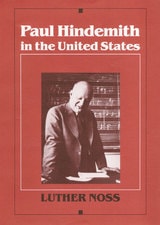
cover of Paul Hindemith in the United States

Paul Hindemith in the United States

Luther Noss

University of Illinois Press, 1989

Paul Hindemith (1895–1963) was one of the most influential musicians and composers of the twentieth century. His wide-ranging musical interests and prodigious gifts connected him to music as varied as neoclassicism, the avant garde, and chamber pieces for unusual groupings of instruments. The uncertainties of life under the Nazi regime led Hindemith to move to the United States in 1940. There, he taught at Yale University and composed celebrated works like Symphonic Metamorphosis of Themes by Carl Maria von Weber.

Concentrating upon the composer's first three US concert tours and his thirteen years at Yale, Luther Noss brings to life a observant, energetic, stubborn, and wry personality. Hindemith's journals offer detailed commentary on his experiences at Tanglewood while Noss draws on archives to describe the composer's groundbreaking Collegium concerts, classes, controversial plans to reorganize the School of Music, and other activities. Noss also delves into professional activity that included a huge number of commissions, writing four theory textbooks, an expansion of his Charles Eliot Norton Lectures, and numerous world premieres and other events.
[more]
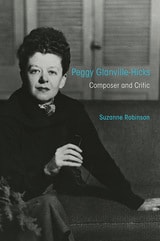
cover of Peggy Glanville-Hicks: Composer and Critic

Peggy Glanville-Hicks

Composer and Critic

Suzanne Robinson

University of Illinois Press, 2019

As both composer and critic, Peggy Glanville-Hicks contributed to the astonishing cultural ferment of the mid-twentieth century. Her forceful voice as a writer and commentator helped shape professional and public opinion on the state of American composing. The seventy musical works she composed ranged from celebrated operas like Nausicaa to intimate, jewel-like compositions created for friends. Her circle included figures like Virgil Thomson, Paul Bowles, John Cage, and Yehudi Menuhin.

Drawing on interviews, archival research, and fifty-four years of extraordinary pocket diaries, Suzanne Robinson places Glanville-Hicks within the history of American music and composers. "P.G.H." forged alliances with power brokers and artists that gained her entrance to core American cultural entities such as the League of Composers, New York Herald Tribune, and the Harkness Ballet. Yet her impeccably cultivated public image concealed a private life marked by unhappy love affairs, stubborn poverty, and the painstaking creation of her artistic works.

Evocative and intricate, Peggy Glanville-Hicks clears away decades of myth and storytelling to provide a portrait of a remarkable figure and her times.

[more]