Results by title
4531 books match the query 'Cultural & Ethnic Studies' and 188 start with p
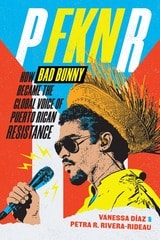
P FKN R
How Bad Bunny Became the Global Voice of Puerto Rican ResistanceVanessa Díaz and Petra R. Rivera-Rideau
Duke University Press, 2026
Global superstar Bad Bunny, born Benito Antonio Martínez Ocasio, like many other Puerto Ricans, has lived a life marked by public crises—blackouts, hurricanes, political corruption and oppression, among others—that have exposed the ongoing impacts of colonialism in Puerto Rico. Offering a portrait of the past and future of Puerto Rican resistance through one of its loudest and proudest voices, P FKN R draws on interviews with musicians, politicians, and journalists as well as ethnographic research to set Bad Bunny and Puerto Rican resistance in a historical, political, and cultural context. Authors Vanessa Díaz and Petra Rivera-Rideau—creators of the “Bad Bunny Syllabus”—demonstrate Bad Bunny’s place in a long tradition of infusing both joy and protest into music and honor the many evolving forms of daily resistance to oppression and colonialism that are part of Puerto Rican life.
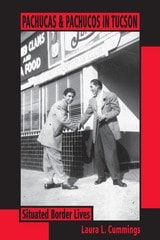
Pachucas and Pachucos in Tucson
Situated Border LivesLaura L. Cummings
University of Arizona Press, 2009
This innovative study examines the pachuco phenomenon in a new way. Exploring its growth in Tucson, Arizona, the book combines ethnography, history, and sociolinguistics to contextualize the early years of the phenomenon, its diverse cultural roots, and its language development in Tucson.
Unlike other studies, it features first-person research with men and women who—despite a wide span of ages—self-identify as pachucos and pachucas. Through these interviews and her archival research, the author finds that pachuco culture has deep roots in Tucson and the Southwest. And she discovers the importance of the pachuco/caló language variety to a shared sense of pachuquismo. Further, she identifies previously neglected pachuco ties to indigenous Indian languages and cultures in Mexico and the United States.
Cummings stresses that the great majority of people conversant with the culture and language do not subscribe to the dynamics of contemporary hardcore gangs, but while zoot suits are no longer the rage today, the pachuco language and sensibilities do live on in Mexican American communities across the Southwest and throughout the United States.
Pachuco
An American-Spanish Argot and Its Social Functions in Tucson, ArizonaGeorge Carpenter Barker
University of Arizona Press, 1969
He conducted additional field work on the social functions of language in cross-cultural situations in Tucson in 1947-48. This work centered around interviews with Mexican-American youths. Barker's quiet friendliness and understanding won the confidence of boys who were operating at the fringes, and who were his informants for this Pachuco study.
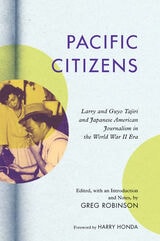
Pacific Citizens
Larry and Guyo Tajiri and Japanese American Journalism in the World War II EraEdited, with and Introduction and Notes, by Greg Robinson: Foreword by Harry Honda
University of Illinois Press, 2012
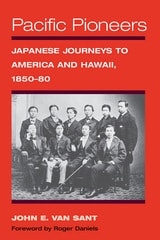
Pacific Pioneers
Japanese Journeys to America and Hawaii, 1850-80John E. Van Sant
University of Illinois Press, 2019
Although Japanese immigrants did not start arriving in substantial numbers in the West until after 1880, in the previous thirty years a handful of key encounters helped shape relations between Japan and the United States. John E. Van Sant explores the motivations and accomplishments of these resourceful, sometimes visionary individuals who made important inroads into a culture quite different from their own and paved the way for the Issei and Nisei.
Pacific Pioneers presents detailed biographical sketches of Japanese such as Joseph Heco, Niijima Jo, and the converts to the Brotherhood of the New Life and introduces the American benefactors, such as William Griffis, David Murray, and Thomas Lake Harris, who built relationships with their foreign visitors. Van Sant also examines the uneasy relations between Japanese laborers and sugar cane plantation magnates in Hawaii during this period and the shortlived Wakamatsu colony of Japanese tea and silk producers in California.
A valuable addition to the literature, Pacific Pioneers brings to life a cast of colorful, long-forgotten characters while forging a critical link between Asian and Asian American studies.
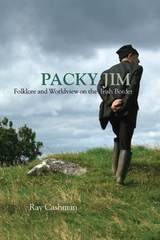
Packy Jim
Folklore and Worldview on the Irish BorderRay Cashman
University of Wisconsin Press, 2017
Ray Cashman, who has been interviewing McGrath for more than fifteen years, demonstrates how Packy Jim embellishes daily conversation with stories of ghosts and fairies, heroic outlaws and hateful landlords. Such folklore is a boundless resource that he uses to come to grips with the past and present, this world and the next. His stories reveal an intricate worldview that is both idiosyncratic and shared—a testament to individual intelligence and talent, and a window into Irish vernacular culture.
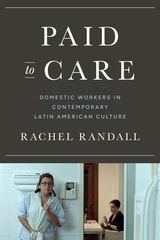
Paid to Care
Domestic Workers in Contemporary Latin American CultureRachel Randall
University of Texas Press, 2023
An insight into the struggles of paid domestic workers in Latin America through an exploration of films, texts, and digital media produced since the 1980s in collaboration with them or inspired by their experiences.
Paid domestic work in Latin America is often undervalued, underpaid, and underregulated. Exploring a wave of Latin American cultural texts since the 1980s that draw on the personal experiences of paid domestic work or intimate ties to domestic employees, Paid to Care offers insights into the struggles domestic workers face through an analysis of literary testimonials, documentary and fiction films, and works of digital media.
From domestic workers’ experiences of unionization in the 1980s to calls for their rights to be respected today, the cultural texts analyzed in Paid to Care provide additional insight into public debates about paid domestic work. Rachel Randall examines work made in Brazil, Argentina, Chile, Mexico, Peru, and Uruguay. The most recent of these texts respond to the Covid-19 pandemic, which put many domestic workers’ health and livelihoods at risk. Engaging with the legal histories of domestic work in multiple distinct national contexts, Randall demonstrates how the legacy of colonialism and slavery shapes the profession even today. Focusing on personal or coproduced cultural representations of domestic workers, Paid to Care explores complex ethical issues relating to consent, mediation, and appropriation.
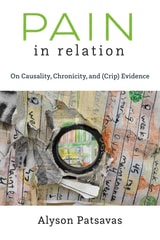
Pain in Relation
On Causality, Chronicity, and (Crip) EvidenceAlyson Patsavas
University of Michigan Press, 2026
Pain in Relation: On Causality, Chronicity, and (Crip) Evidence argues that the dominant stories circulating within contemporary US culture are marked by seemingly contradictory certainties: pain is at once subjective yet universal; that pain makes life unlivable and can be overcome with perseverance. These certainties graft onto pained people as impossible imperatives: the imperatives to live “despite” our pain and to defend the value of lives imagined to be compromised “because of” it. Alyson Patsavas outlines the harm these imperatives cause and draws on feminist, queer, and disability theory to offer alternative frameworks for making sense of and relating to pain.
The study fleshes out “crip autotheory” and experiments with evidencing practices, using anecdotes, journal entries, personal reflections, list-making, and photography to map “cripistemologies of pain,” or critical, disability-informed experiential ways of knowing pain. Equal parts cultural critique, intimate portrait of pained life, and commentary, Pain in Relation invites readers to challenge what they think they know about pain and explore new ways of relating to pain, pained life, and the futures we imagine for pained people.
Painting the City Red
Chinese Cinema and the Urban ContractYomi Braester
Duke University Press, 2010
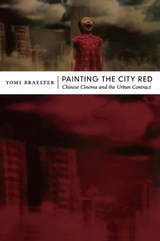
Drawing on extensive archival research, interviews with leading filmmakers and urban planners, and close readings of scripts and images, Braester describes how films and stage plays have promoted and opposed official urban plans and policies as they have addressed issues such as demolition-and-relocation plans, the preservation of vernacular architecture, and the global real estate market. He shows how the cinematic rewriting of historical narratives has accompanied the spatial reorganization of specific urban sites, including Nanjing Road in Shanghai; veterans’ villages in Taipei; and Tiananmen Square, centuries-old courtyards, and postmodern architectural landmarks in Beijing. In Painting the City Red, Braester reveals the role that film and theater have played in mediating state power, cultural norms, and the struggle for civil society in Chinese cities.
Painting the Gospel
Black Public Art and Religion in ChicagoKymberly Pinder
University of Illinois Press, 2016
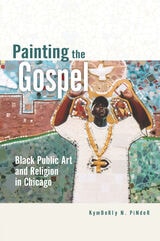
Painting the Gospel includes maps and tour itineraries that allow readers to make conceptual, historical, and geographical connections among the works.
Pakistan Desires
Queer Futures ElsewhereOmar Kasmani, editor
Duke University Press, 2023
Contributors. Ahmed Afzal, Asad Alvi, Anjali Arondekar, Vanja Hamzić, Omar Kasmani, Pasha M. Khan, Gwendolyn S. Kirk, Syeda Momina Masood, Nida Mehboob, Claire Pamment, Geeta Patel, Nael Quraishi, Abdullah Qureshi, Shayan Rajani, Jeffrey A. Redding, Gayatri Reddy, Syma Tariq
Palestinians Born in Exile
Diaspora and the Search for a HomelandBy Juliane Hammer
University of Texas Press, 2005
In the decade following the 1993 Oslo Peace Accords, some 100,000 diasporic Palestinians returned to the West Bank and Gaza. Among them were children and young adults who were born in exile and whose sense of Palestinian identity was shaped not by lived experience but rather through the transmission and re-creation of memories, images, and history. As a result, "returning" to the homeland that had never actually been their home presented challenges and disappointments for these young Palestinians, who found their lifeways and values sometimes at odds with those of their new neighbors in the West Bank and Gaza.
This original ethnography records the experiences of Palestinians born in exile who have emigrated to the Palestinian homeland. Juliane Hammer interviews young adults between the ages of 16 and 35 to learn how their Palestinian identity has been affected by living in various Arab countries or the United States and then moving to the West Bank and Gaza. Their responses underscore how much the experience of living outside of Palestine has become integral to the Palestinian national character, even as Palestinians maintain an overwhelming sense of belonging to one another as a people.
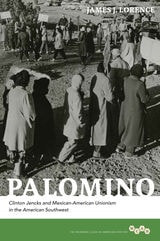
Palomino
Clinton Jencks and Mexican-American Unionism in the American SouthwestJames J. Lorence
University of Illinois Press, 2013
Pan Chao
Foremost Woman Scholar of ChinaNancy Lee Swann
University of Michigan Press, 2001
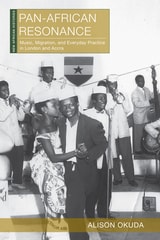
Pan-African Resonance
Music, Migration, and Everyday Practice in London and AccraAlison Okuda
Ohio University Press, 2026
As African and Caribbean nations gained independence from Britain in the 1950s and 1960s, many young musicians, students, and professionals crossed the Atlantic in search of new opportunities and built vibrant communities. Pan-African Resonance: Music, Migration, and Everyday Practice in London and Accra traces these journeys from Ghana, Trinidad and Tobago, Jamaica, Saint Lucia, Barbados, and Guyana, exploring how migrants practiced pan-Africanism through music across continents and generations. Drawing on musical recordings, newspapers, oral histories, and government documents from six countries, Alison Okuda demonstrates that pan-African solidarity thrived through the everyday creation and enjoyment of popular music. The book unfolds in two parts. Starting in the 1950s, it examines how Ghanaian highlife and Trinidadian calypso brought together musicians and young members of the independence generation, first in London and later in Accra. Even amid cultural tensions, Ghanaian and Caribbean communities expressed aspirations for freedom and unity in nightclubs, recording studios, private homes, and public streets. Before Ghana’s 1966 coup d’état, Ghanaians and diasporic Africans collaborated to shape an independent African-Atlantic world. Although the coup disrupted formal Pan-Africanist organizing, in the second part of the book Okuda shows that in the 1970s a new generation sustained dynamic networks of solidarity through highlife, reggae, and other popular styles—heard in recordings, radio broadcasts, live performances, and community events. Influenced by generational change and musical fluidity, African diasporic unity has remained central to popular music, migration, and politics in Ghana and the wider African-Atlantic world into the twenty-first century. Offering a rich interdisciplinary approach, Pan-African Resonance will appeal to readers interested in popular culture, transnational history, diaspora studies, and modern African history.
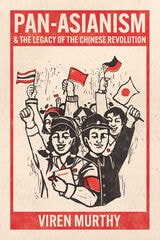
Pan-Asianism and the Legacy of the Chinese Revolution
Viren Murthy
University of Chicago Press, 2023
Recent proposals to revive the ancient Silk Road for the contemporary era and ongoing Western interest in China’s growth and development have led to increased attention to the concept of pan-Asianism. Most of that discussion, however, lacks any historical grounding in the thought of influential twentieth-century pan-Asianists. In this book, Viren Murthy offers an intellectual history of the writings of theorists, intellectuals, and activists—spanning leftist, conservative, and right-wing thinkers—who proposed new ways of thinking about Asia in their own historical and political contexts. Tracing pan-Asianist discourse across the twentieth century, Murthy reveals a stronger tradition of resistance and alternative visions than the contemporary discourse on pan-Asianism would suggest. At the heart of pan-Asianist thinking, Murthy shows, were the notions of a unity of Asian nations, of weak nations becoming powerful, and of the Third World confronting the “advanced world” on equal terms—an idea that grew to include non-Asian countries into the global community of Asian nations. But pan-Asianists also had larger aims, imagining a future beyond both imperialism and capitalism. The fact that the resurgence of pan-Asianist discourse has emerged alongside the dominance of capitalism, Murthy argues, signals a profound misunderstanding of its roots, history, and potential.
Paninian Studies
Professor S. D. Joshi Felicitation VolumeMadhav Deshpande and Saroja Bhate, Editors
University of Michigan Press, 1991

Panthers, Hulks and Ironhearts
Marvel, Diversity and the 21st Century SuperheroJeffrey A. Brown
Rutgers University Press, 2021
Panthers, Hulks, and Ironhearts offers the first comprehensive study of how Marvel has reimagined what a superhero might look like in the twenty-first century. It examines how they have revitalized older characters like Black Panther and Luke Cage, while creating new ones like Latina superhero Miss America. Furthermore, it considers the mixed fan responses to Marvel’s recasting of certain “legacy heroes,” including a Pakistani-American Ms. Marvel, a Korean-American Hulk, and a whole rainbow of multiverse Spidermen.
If the superhero comic is a quintessentially American creation, then how might the increasing diversification of Marvel’s superhero lineup reveal a fundamental shift in our understanding of American identity? This timely study answers those questions and considers what Marvel’s comics, TV series, and films might teach us about stereotyping, Orientalism, repatriation, whitewashing, and identification.
Pan–African American Literature
Signifyin(g) Immigrants in the Twenty-First CenturyLi, Stephanie
Rutgers University Press, 2018
The twenty-first century is witnessing a dynamic broadening of how blackness signifies both in the U.S. and abroad. Literary writers of the new African diaspora are at the forefront of exploring these exciting approaches to what black subjectivity means. Pan-African American Literature is dedicated to charting the contours of literature by African born or identified authors centered around life in the United States. The texts examined here deliberately signify on the African American literary canon to encompass new experiences of immigration, assimilation and identification that challenge how blackness has been previously conceived. Though race often alienates and frustrates immigrants who are accustomed to living in all-black environments, Stephanie Li holds that it can also be a powerful form of community and political mobilization.
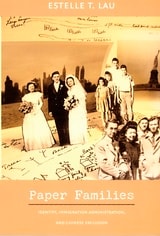
Paper Families
Identity, Immigration Administration, and Chinese ExclusionEstelle T. Lau
Duke University Press, 2006
Drawing on these documents as well as immigration case files, legislative materials, and transcripts of interviews and court proceedings, Lau reveals immigration as an interactive process. Chinese immigrants and their U.S. families were subject to regulation and surveillance, but they also manipulated and thwarted those regulations, forcing the U.S. government to adapt its practices and policies. Lau points out that the Exclusion Acts and the pseudo-familial structures that emerged in response have had lasting effects on Chinese American identity. She concludes with a look at exclusion’s legacy, including the Confession Program of the 1960s that coerced people into divulging the names of paper family members and efforts made by Chinese American communities to recover their lost family histories.
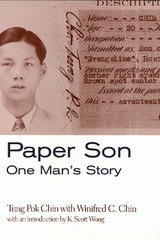
Paper Son
One Man's StoryTung Chin
Temple University Press, 2000
Chin's story begins in the early 1930s, when he followed the example of his father and countless other Chinese who bought documents that falsely identified them as children of Chinese Americans. Arriving in Boston and later moving to New York City, he worked and lived in laundries. Chin was determined to fit into American life and dedicated himself to learning English. But he also became an active member of key organizations -- a church, the Chinese Hand Laundrymen's Alliance, and the Chinese Consolidated Benevolent Association -- that anchored him in the community. A self-reflective and expressive man, Chin wrote poetry commenting on life in China and the hardships of being an immigrant in the United States. His work was regularly published in the China Daily News and brought him to the attention of the FBI, then intent on ferreting out communists and illegal immigrants. His vigorous narrative speaks to the day-to-day anxieties of living as a Paper Son as well as the more universal immigrant experiences of raising a family in modest circumstances and bridging cultures.
Historian K. Scott Wong introduces Chin's memoir, discussing the limitations on immigration from China and what is known about Exclusion-era Chinese American communities. Set in historical context, Tung Pok Chin's unique story offers and engaging account of a twentieth-century Paper Son.

Paradise in the Sea of Sorrow
Our Minamata DiseaseIshimure Michiko
University of Michigan Press, 2003
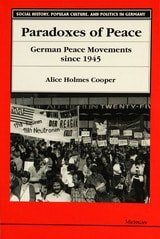
Paradoxes of Peace
German Peace Movements Since 1945Alice Holmes Cooper
University of Michigan Press, 1996
Parallel Views
Education and Access for Deaf People in France and the United StatesThe French American Foundation
Gallaudet University Press, 1994
Parcels
Memories of Salvadoran MigrationMike Anastario
Rutgers University Press, 2019
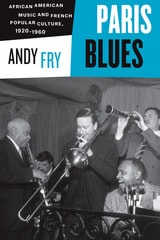
Paris Blues
African American Music and French Popular Culture, 1920-1960Andy Fry
University of Chicago Press, 2014
In Paris Blues, Andy Fry provides an alternative history of African American music and musicians in France, one that looks beyond familiar personalities and well-rehearsed stories. He pinpoints key issues of race and nation in France’s complicated jazz history from the 1920s through the 1950s. While he deals with many of the traditional icons—such as Josephine Baker, Django Reinhardt, and Sidney Bechet, among others—what he asks is how they came to be so iconic, and what their stories hide as well as what they preserve. Fry focuses throughout on early jazz and swing but includes its re-creation—reinvention—in the 1950s. Along the way, he pays tribute to forgotten traditions such as black musical theater, white show bands, and French wartime swing. Paris Blues provides a nuanced account of the French reception of African Americans and their music and contributes greatly to a growing literature on jazz, race, and nation in France.
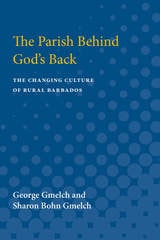
Parish behind God's Back
The Changing Culture of Rural BarbadosGeorge Gmelch and Sharon Bohn Gmelch
University of Michigan Press, 1997
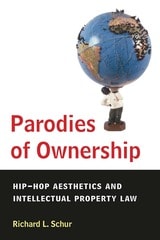
Parodies of Ownership
Hip-Hop Aesthetics and Intellectual Property LawRichard L. Schur
University of Michigan Press, 2009
"Richard Schur offers a provocative view of contemporary African American cultural politics and the relationship between African American cultural production and intellectual property law."
---Mark Anthony Neal, Duke University
"Whites used to own blacks. Now, they accomplish much the same thing by insisting that they 'own' ownership. Blacks shouldn't let them. A culture that makes all artists play by its rules will end up controlling new ideas and stifling change. Richard Schur's fine book explains why."
---Richard Delgado, Seattle University
What is the relationship between hip-hop and African American culture in the post--Civil Rights era? Does hip-hop share a criticism of American culture or stand as an isolated and unique phenomenon? How have African American texts responded to the increasing role intellectual property law plays in regulating images, sounds, words, and logos? Parodies of Ownership examines how contemporary African American writers, artists, and musicians have developed an artistic form that Schur terms "hip-hop aesthetics." This book offers an in-depth examination of a wide range of contemporary African American painters and writers, including Anna Deavere Smith, Toni Morrison, Adrian Piper, Colson Whitehead, Michael Ray Charles, Alice Randall, and Fred Wilson. Their absence from conversations about African American culture has caused a misunderstanding about the nature of contemporary cultural issues and resulted in neglect of their innovative responses to the post--Civil Rights era. By considering their work as a cross-disciplinary and specifically African American cultural movement, Schur shows how a new paradigm for artistic creation has developed.
Parodies of Ownership offers a broad analysis of post--Civil Rights era culture and provides the necessary context for understanding contemporary debates within American studies, African American studies, intellectual property law, African American literature, art history, and hip-hop studies. Weaving together law, literature, art, and music, Schur deftly clarifies the conceptual issues that unify contemporary African American culture, empowering this generation of artists, writers, and musicians to criticize how racism continues to affect our country.
Richard L. Schur is Director, Interdisciplinary Studies Center, and Associate Professor of Interdisciplinary Studies at Drury University. Visit the author's website: http://www2.drury.edu/rschur/index.htm.
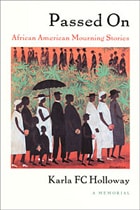
Passed On
African American Mourning Stories, A MemorialKarla FC Holloway
Duke University Press, 2002
With a focus on the “death-care” industry—black funeral homes and morticians, the history of the profession and its practices—Holloway examines all facets of the burial business, from physicians, hospital chaplains, and hospice administrators, to embalming- chemical salesmen, casket makers, and funeral directors, to grieving relatives. She uses narrative, photographs, and images to summon a painful history of lynchings, white rage and riot, medical malpractice and neglect, executions, and neighborhood violence. Specialized caskets sold to African Americans, formal burial photos of infants, and deathbed stories, unveil a glimpse of the graveyards and burial sites of African America, along with burial rituals and funeral ceremonies.
Revealing both unexpected humor and anticipated tragedy, Holloway tells a story of the experiences of black folk in the funeral profession and its clientele. She also reluctantly shares the story of her son and the way his death moved her research from page to person.
In the conclusion, which follows a sermon delivered by Maurice O. Wallace at the funeral for the author’s son, Bem, Holloway strives to commemorate—through observation, ceremony, and the calling of others to remembrance and celebration.
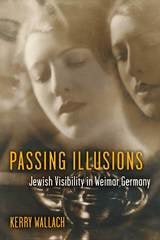
Passing Illusions
Jewish Visibility in Weimar GermanyKerry Wallach
University of Michigan Press, 2017
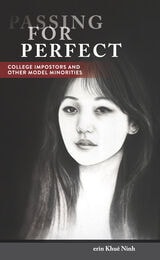
Passing for Perfect
College Impostors and Other Model Minoritieserin Khuê Ninh
Temple University Press, 2021
In her engaging study, Passing for Perfect,erin Khuê Ninh considers the factors that drove college imposters such as Azia Kim—who pretended to be a Stanford freshman—and Jennifer Pan—who hired a hitman to kill her parents before they found out she had never received her high school diploma—to extreme lengths to appear successful. Why would someone make such an illogical choice? And how do they stage these lies so convincingly, and for so long?
These outlier examples prompt Ninh to address the larger issue of the pressures and difficulties of striving to be model minority, where failure is too ruinous to admit. Passing for Perfect insists that being a “model minority” is not a “myth,” but coded into one’s programming as an identity—a set of convictions and aspirations, regardless of present socioeconomic status or future attainability—and that the true cost of turning children into high-achieving professionals may be higher than anyone can bear.
Ninh’s book codifies for readers the difference between imposters who are con artists or shysters and those who don’t know how to stop passing for perfect.
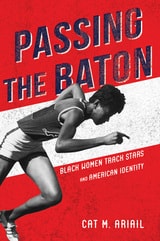
Passing the Baton
Black Women Track Stars and American IdentityCat M. Ariail
University of Illinois Press, 2020
A rare exploration of African American women athletes and national identity, Passing the Baton reveals young Black women as active agents in the remaking of what it means to be American.
Passing
Two Publics in a Mexican Border CityRihan Yeh
University of Chicago Press, 2017
Out of the nitty-gritty of quotidian talk and interaction in Tijuana, Yeh captures the dynamics of desire and denial that permeate public spheres in our age of transnational crossings and fortified borders. Original and accessible, Passing is a timely work in light of current fierce debates over immigration, Latin American citizenship, and the US-Mexico border.
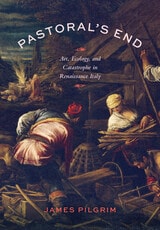
Pastoral’s End
Art, Ecology, and Catastrophe in Renaissance ItalyJames Pilgrim
University of Chicago Press, 2026
In the sixteenth century, Italian artist Jacopo Bassano painted pictures of herdsmen and animals moving through dark and muddy landscapes. But he also participated in the agricultural development of the region in which he lived, producing topographical maps of local mountains and forests, inventing new methods of drainage and irrigation, and studying the latest techniques of crop rotation and fertilization. The relationship between Bassano’s rustic art and his participation in environmental transformation has, however, never been explored.
One of the first studies of Italian Renaissance art to grapple with the connections between visual culture and the environment, Pastoral’s End explores this crucial, formative relationship. James Pilgrim looks at Bassano’s career holistically, demonstrating how his involvement in a world marked by agricultural expansion, industrialization, resource extraction, environmental degradation, social transformation, and radical philosophical development informed his paintings of country life. Introducing new archival and visual evidence of Bassano’s knowledge of hydrology, agronomy, husbandry, and architecture, Pastoral’s End argues that he transformed the more placid rustic imagery of previous Renaissance artists into visions of dangerous ecological instability.
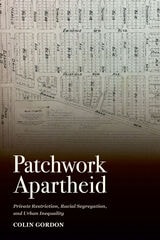
Patchwork Apartheid
Private Restriction, Racial Segregation, and Urban InequalityColin Gordon
Russell Sage Foundation, 2023
Gordon also explores the role of other policies and practices in sustaining segregation. Enforcement of private racial restrictions was held unconstitutional in 1948, and such agreements were prohibited outright in 1968. But their premises and assumptions, and the segregation they had accomplished, were accommodated by local zoning and federal housing policies. Explicit racial restrictions were replaced by the deceptive business practices of real estate agents and developers, who characterized certain neighborhoods as white and desirable and others as black and undesirable, thereby hiding segregation behind the promotion of sound property investments, safe neighborhoods, and good schools. These practices were in turn replaced by local zoning, which systematically protected white neighborhoods while targeting “blighted” black neighborhoods for commercial and industrial redevelopment, and by a tangle of federal policies that reliably deferred to local and private interests with deep investments in local segregation. Private race restriction was thus a key element in the original segregation of American cities and a source of durable inequalities in housing wealth, housing opportunity, and economic mobility.
Patchwork Apartheid exhaustively documents the history of private restriction in urban settings and demonstrates its crucial role in the ideas and assumptions that have sustained racial segregation in the United States into the twenty-first century.
Patchwork Ethnography
A Methodological GuideGökçe Günel and Chika Watanabe
University of Chicago Press, 2027
Offers an accessible new way to think critically and transparently about how researchers, especially those doing ethnographic work, can balance their personal commitments with long-term research.
For ethnographers, spending a year or longer in a faraway place conducting fieldwork is increasingly untenable amid life responsibilities, rising workloads, and constraints imposed by disability, precarity, and geopolitical factors. If ethnographic methods are to remain viable and broadly relevant for a diverse group of people in anthropology and beyond, Gökçe Günel and Chika Watanabe argue, we need to examine how our personal and professional lives intersect and shape one another.
In Patchwork Ethnography, Günel and Watanabe take seriously the conditions that render long-term fieldwork difficult for so many. Without being prescriptive, the book offers concrete ways for scholars to unpack competing commitments and make the attendant challenges more manageable. Blending theoretical analysis with practical exercises, the authors guide readers to rethink the relationship between their personal lives and their scholarship. Ultimately, they point to ways to transform limitations into catalysts for fresh insights. By highlighting how shifting labor and living conditions profoundly alter knowledge production, Patchwork Ethnography calls for a paradigm shift in ethnographic research.
Pathos and Power
Interdisciplinary Perspectives on Widowhood in Africa, Past and PresentBenjamin N. Lawrance and Joanna Davidson
Ohio University Press, 2025
The collected essays in Pathos and Power provide a critical exploration of widowhood in Africa through a series of historical and contemporary case studies. The book challenges a simplistic understanding of widowhood by highlighting how the experience varies according to age, class, race, religion, and geographic location. The contributors investigate how the category of widowhood can obscure or reveal various social dynamics while demonstrating the diversity of material, symbolic, and embodied circumstances faced by African widows. The volume considers the forces shaping the lives of widows by examining the structural and legal challenges they encounter, including discriminatory practices in social, economic, and political spheres. Through discussions of precolonial, colonial, and postcolonial contexts, it explores the intersections of custom, law, patriarchy, and feminism while delving into the potentially liberatory opportunities that widowhood sometimes presents. The book also raises broader questions about gender, personhood, marriage, autonomy, and national identity, emphasizing how widowhood informs key conceptual debates in African studies. Editors Joanna Davidson and Benjamin N. Lawrance bring together scholars across such fields as anthropology, gender studies, history, law, and political science. The authors employ a range of methodologies, including archival research, ethnography, and storytelling, to illuminate widowhood in new and innovative ways. The volume’s rich empirical studies and theoretical insights offer a valuable resource for scholars seeking to understand widowhood and its broader implications in African societies. CONTRIBUTORS Rogaia Mustafa Abusharaf Fisayo Ajala Catherine E. Bolten Abbass Braham Mariana Candido Joanna Davidson Mariana Dias Paes Ramadan El-Khouli Casey Golomski Juelma Gomes de Matos Ngãla Benjamin N. Lawrance Kenda Mutongi Richard L. Roberts Enid Schildkrout Kate Skinner Wallace Teska Benjamin Twagira Sarah J. Zimmerman
Paths to Power
Elite Mobility in Contemporary ChinaBy David M. Lampton with the assistance of Yeung Sai-cheung
University of Michigan Press, 2000
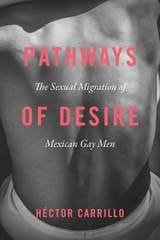
Pathways of Desire
The Sexual Migration of Mexican Gay MenHéctor Carrillo
University of Chicago Press, 2017
Further, Carrillo shows that sexual globalization must be regarded as a bidirectional, albeit uneven, process of exchange between countries in the global north and the global south. With this approach, Carrillo challenges the view that gay men from countries like Mexico would logically want to migrate to a “more sexually enlightened” country like the United States—a partial and limited understanding, given the dynamic character of sexuality in countries such as Mexico, which are becoming more accepting of sexual diversity. Pathways of Desire also provides a helpful analytical framework for the simultaneous consideration of structural and cultural factors in social scientific studies of sexuality. Carrillo explains the patterns of cross-cultural interaction that sexual migration generates and—at the most practical level—shows how the intricacies of cross-cultural sexual and romantic relations may affect the sexual health and HIV risk of transnational immigrant populations.
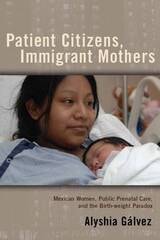
Patient Citizens, Immigrant Mothers
Mexican Women, Public Prenatal Care, and the Birth Weight ParadoxGalvez, Alyshia
Rutgers University Press, 2011
According to the Latina health paradox, Mexican immigrant women have less complicated pregnancies and more favorable birth outcomes than many other groups, in spite of socioeconomic disadvantage. Alyshia Gálvez provides an ethnographic examination of this paradox. What are the ways that Mexican immigrant women care for themselves during their pregnancies? How do they decide to leave behind some of the practices they bring with them on their pathways of migration in favor of biomedical approaches to pregnancy and childbirth?
This book takes us from inside the halls of a busy metropolitan hospital’s public prenatal clinic to the Oaxaca and Puebla states in Mexico to look at the ways Mexican women manage their pregnancies. The mystery of the paradox lies perhaps not in the recipes Mexican-born women have for good perinatal health, but in the prenatal encounter in the United States. Patient Citizens, Immigrant Mothers is a migration story and a look at the ways that immigrants are received by our medical institutions and by our society
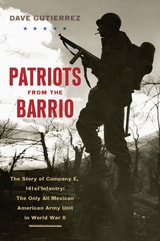
Patriots from the Barrio
The Story of Company E, 141st Infantry: The Only All Mexican American Army Unit in World War IIDave Gutierrez
Westholme Publishing, 2018
The Inspiring True Story of a Segregated Unit Whose Exploits Underscore the Forgotten Latino Contribution to the Allied Victory in World War II
As a child, Dave Gutierrez hung on every word his father recalled about his cousin Ramon, “El Sancudo” (the mosquito), and his service in World War II, where he earned a Silver Star, three Purple Hearts, and escaped from the Germans twice. Later, Dave decided to find out more about his father’s cousin, and in the course of his research he discovered that Ramon Gutierrez was a member of Company E, 141st Infantry, a part of the 36th “Texas” Division that was comprised entirely of Mexican Americans—the only such unit in the entire U.S. Army. The division landed at Salerno, Italy, in 1943, among first American soldiers to set foot in Europe. In the ensuing months, Company E and the rest of the 36th would battle their way up the mountainous Italian peninsula against some of Nazi Germany’s best troops. In addition to the merciless rain, mud, and jagged peaks, swift cold rivers crisscrossed the region, including the Rapido, where Company E would face its greatest challenge. In an infamous episode, the 36th Division was ordered to cross the Rapido despite reports that the opposite bank was heavily defended. In the ensuing debacle, the division was ripped apart, and Company E sustained appalling casualties. The company rebounded and made the storied landings at Anzio and ultimately invaded southern France for a final push into Germany. The men of Company E distinguished themselves as rugged fighters capable of warring amid the rubble of destroyed villages and in the devastated countryside.
Based on extensive archival research and veteran and family accounts, Patriots from the Barrio: The Story of Company E, 141st Infantry: The Only All Mexican American Army Unit in World War II brings to life the soldiers whose service should never have gone unrecognized for so long. With its memorable personalities, stories of hope and immigration, and riveting battle scenes, this beautifully written book is a testament to the shared beliefs of all who have fought for the ideals of the American flag.
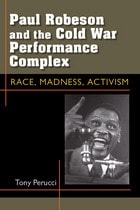
Paul Robeson and the Cold War Performance Complex
Race, Madness, ActivismTony Perucci
University of Michigan Press, 2012
Actor and singer Paul Robeson's performances in Othello, Show Boat, and The Emperor Jones made him famous, but his midcentury appearances in support of causes ranging from labor and civil rights to antilynching and American warmongering made him notorious. When Robeson announced at the 1949 Paris Peace Conference that it was "unthinkable" for blacks to go to war against the Soviet Union, the mainstream American press declared him insane.
Notions of Communism, blackness, and insanity were interchangeably deployed during the Cold War to discount activism such as Robeson's, just a part of an array of social and cultural practices that author Tony Perucci calls the Cold War performance complex. Focusing on two key Robeson performances---the concerts in Peekskill, New York, in 1949 and his appearance before the House Committee on Un-American Activities in 1956---Perucci demonstrates how these performances and the government's response to them are central to understanding the history of Cold War culture in the United States. His book provides a transformative new perspective on how the struggle over the politics of performance in the 1950s was also a domestic struggle over freedom and equality. The book closely examines both of these performance events as well as artifacts from Cold War culture---including congressional documents, FBI files, foreign policy papers, the popular literature on mental illness, and government propaganda films---to study the operation of power and activism in American Cold War culture.

Paying the Price
Ignacio Ellacuría and the Murdered Jesuits of El SalvadorTeresa Whitfield
Temple University Press, 1994
On November 16, 1989, on the campus of El Salvador's University of Central America, six Jesuits and two women were murdered by members of the Salvadoran army, an army funded and trained by the United States. One of the murdered Jesuits was Ignacio Ellacuría, the university's Rector and a key, although controversial, figure in Salvadoran public life. From an opening account of this terrible crime, Paying the Price asks, Why were they killed and what have their deaths meant? Answers come through Teresa Whitfield's detailed examination of Ellacuría's life and work. His story is told in juxtaposition with the crucial role played by the unraveling investigation of the Jesuits' murders within El Salvador's peace process.
A complex and nuanced book, Paying the Price offers a history of the Church in El Salvador in recent decades, an analysis of Ellacuría's philosophy and theology, an introduction to liberation theology, and an account of the critical importance of the University of Central America. In the end, Whitfield's comprehensive picture of conditions in El Salvador suggest that the Jesuits' murders were almost inevitable. A crime that proved a turning point in El Salvador's civil war, the murders expressed the deep tragedy of the Salvadoran people beyond suffering the heartless cruelty, violence, and deceitfulness of a corrupt military and their patrons in the U.S. government.
Whitfield draws on her extensive research of Jesuit archives and private papers, Ellacuría's diaries, documents declassified by the U.S. government, and 200 interviews conducted with sources ranging from Jesuits to Salvadoran military officers, U.S. officials and congressmen to human rights campaigners.
Pearl from the Dragon’s Mouth
Evocation of Scene and Feeling in Chinese PoetryCecile C. C. Sun
University of Michigan Press, 1995
Peasants and Capital
Dominica in the World EconomyMichel-Rolph Trouillot
HAU, 2025
Over thirty-five years ago, Michel-Rolph Trouillot’s debut ethnography, Peasants and Capital: Dominica in the World Economy, dared to regard peasants not as vestiges of premodern economies but as instrumental to, and integrated in, a capitalist world system. Combining historical ethnography with an intimate portrait of a banana-producing eastern Caribbean village, this multi-sited study demonstrates how multinational capital thrives on the surplus production of peasant cultivators. At the same time, it investigates how peasantries generate independent conceptions of value and subsistence in the process of building a new postcolonial state in Dominica. This new edition of Peasants and Capital invites anthropologists to revisit the methodological innovations of this multi-scalar study and readers to meditate on the continued vitality of peasant livelihoods in the Caribbean today.
Ryan Cecil Jobson’s new introduction situates this edition in the context of Trouillot’s remarkable life and career. Jobson reminds us of the book’s enduring theoretical and ethnographic significance and asks us to consider how the entanglement of peasants from Dominica in national and world affairs has been impacted by more recent histories, such as the end of preferential markets for Caribbean bananas, the migration of “banana children” to regional and metropolitan urban centers, and the devastation of Dominica by Hurricane Maria.
Pedagogies of Crossing
Meditations on Feminism, Sexual Politics, Memory, and the SacredM. Jacqui Alexander
Duke University Press, 2005
In these meditations, Alexander deftly unites large, often contradictory, historical processes across time and space. She focuses on the criminalization of queer communities in both the United States and the Caribbean in ways that prompt us to rethink how modernity invents its own traditions; she juxtaposes the political organizing and consciousness of women workers in global factories in Mexico, the Caribbean, and Canada with the pressing need for those in the academic factory to teach for social justice; she reflects on the limits and failures of liberal pluralism; and she presents original and compelling arguments that show how and why transgenerational memory is an indispensable spiritual practice within differently constituted women-of-color communities as it operates as a powerful antidote to oppression. In this multifaceted, visionary book, Alexander maps the terrain of alternative histories and offers new forms of knowledge with which to mold alternative futures.
Pedagogies of Woundedness
Illness, Memoir, and the Ends of the Model MinorityJames Kyung-Jin Lee
Temple University Press, 2022
The pressures Asian Americans feel to be socially and economically exceptional include an unspoken mandate to always be healthy. Nowhere is this more evident than in the expectation for Asian Americans to enter the field of medicine, principally as providers of care rather than those who require care. Pedagogies of Woundedness explores what happens when those considered model minorities critically engage with illness and medicine whether as patients or physicians.
James Kyung-Jin Lee considers how popular culture often positions Asian Americans as medical authorities and what that racial characterization means. Addressing the recent trend of writing about sickness, disability, and death, Lee shows how this investment in Asian American health via the model minority is itself a response to older racial forms that characterize Asian American bodies as diseased. Moreover, he pays attention to what happens when academics get sick and how illness becomes both methodology and an archive for scholars.
Pedagogies of Woundedness also explores the limits of biomedical “care,” the rise of physician chaplaincy, and the impact of COVID. Throughout his book and these case studies, Lee shows the social, ethical, and political consequences of these common (mis)conceptions that often define Asian Americans in regard to health and illness.
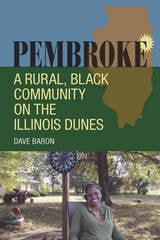
Pembroke
A Rural, Black Community on the Illinois DunesDave Baron
Southern Illinois University Press, 2016
With a population of about two thousand, Pembroke Township, one of the largest rural, black communities north of the Mason-Dixon Line, sits in an isolated corner of Kankakee County, Illinois, sixty-five miles south of Chicago. It is also one of the poorest places in the nation. Many black farmers from the South came to this area during the Great Migration; finding Chicago to be overcrowded and inhospitable, they were able to buy land in the township at low prices. The poor soil made it nearly impossible to establish profitable farms, however, and economic prosperity has eluded the region ever since. Pembroke: A Rural, Black Community on the Illinois Dunes chronicles the history of this inimitable township and shows the author’s personal transformation through his experiences with Pembroke and its people. A native of nearby Kankakee, author Dave Baron first traveled to Pembroke on a church service trip at age fifteen and saw real poverty firsthand, but he also discovered a community possessing grace and purpose.
Baron begins each chapter with a personal narrative from his initial trip to Pembroke. He covers the early history of the area, explaining how the unique black oak savanna ecosystem was created and describing early residents, including Potawatomi tribes and white fur traders. He introduces readers to Pap and Mary Tetter, Pembroke’s first black residents, who—according to local lore—assisted fugitives on the Underground Railroad; details the town’s wild years, when taverns offered liquor, drugs, and prostitution; discusses the many churches of Pembroke and the nearby high school where, in spite of sometimes strained relations, Pembroke’s black students have learned alongside white students of a neighboring community since well before Brown v. Board of Education; outlines efforts by conservation groups to preserve Pembroke’s rare black oak savannas; and analyzes obstacles to and failed attempts at economic development in Pembroke, as well as recent efforts, including organic farms and a sustainable living movement, which may yet bring some prosperity.
Based on research, interviews with residents, and the author’s own experiences during many return trips to Pembroke, this book—part social, cultural, legal, environmental, and political history and part memoir—profiles a number of the colorful, longtime residents and considers what has enabled Pembroke to survive despite a lack of economic opportunities. Although Pembroke has a reputation for violence and vice, Baron reveals a township with a rich and varied history and a vibrant culture.
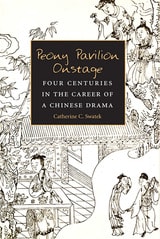
Peony Pavilion Onstage
Four Centuries in the Career of a Chinese DramaCatherine C. Swatek
University of Michigan Press, 2012
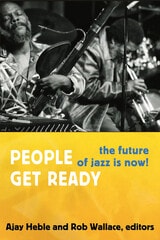
People Get Ready
The Future of Jazz Is Now!Ajay Heble and Rob Wallace, eds.
Duke University Press, 2013
Contributors. Tamar Barzel, John Brackett, Douglas Ewart, Ajay Heble, Vijay Iyer, Thomas King, Tracy McMullen, Paul D. Miller/DJ Spooky, Nicole Mitchell, Roscoe Mitchell, Famoudou Don Moye, Aldon Lynn Nielsen, Eric Porter, Marc Ribot, Matana Roberts, Jaribu Shahid, Julie Dawn Smith, Wadada Leo Smith, Alan Stanbridge, John Szwed, Greg Tate, Scott Thomson, Rob Wallace, Ellen Waterman, Corey Wilkes