110 books match the query 'Cultural pluralism' and 9 start with p

cover of Pluralising Pasts: Heritage, Identity and Place in Multicultural Societies

Pluralising Pasts

Heritage, Identity and Place in Multicultural Societies

Brian Graham, G. J. Ashworth, and J. E. Tunbridge

Pluto Press, 2007
The heritage industry is big business. From museums and the preservation of old buildings to broader questions of community and identity, heritage is now a political issue. This book explores what heritage means and how it is used to encourage people to identify with particular places and 'traditions'. The authors show how contemporary societies use heritage in the creation and management of collective identities and, most especially, the different ways in which it is involved with the questions of multicultural societies. The resources that are poured into heritage mean that questions of identity are widely discussed at a policy level: what does it mean to be American or British, or a minority in any society? This book shows how heritage is used politically and commercially to shape the ways people represent themselves, and are represented, in diverse and hybrid societies.
[more]
cover of Pluralism

Pluralism

William E. Connolly

Duke University Press, 2005

Over the past two decades, the renowned political theorist William E. Connolly has developed a powerful theory of pluralism as the basis of a territorial politics. In this concise volume, Connolly launches a new defense of pluralism, contending that it has a renewed relevance in light of pressing global and national concerns, including the war in Iraq, the movement for a Palestinian state, and the fight for gay and lesbian rights. Connolly contends that deep, multidimensional pluralism is the best way to promote justice and inclusion without violence. He advocates a deep pluralism—in contrast to shallow, secular pluralism—that helps to create space for different groups to bring their religious faiths into the public realm. This form of deep pluralism extends far beyond faith, encompassing multiple dimensions of social and personal lives, including household organization and sexuality.

Connolly looks at pluralism not only in light of faith but also in relation to evil, ethics, relativism, globalization, and sovereignty. In the process, he engages many writers and theorists—among them, Spinoza, William James, Henri Bergson, Marcel Proust, Gilles Deleuze, Giorgio Agamben, Talal Asad, Michael Hardt, and Antonio Negri. Pluralism is the first book in which Connolly explains the relationship between pluralism and the experience of time, and he offers readings of several films that address how time is understood, including Time Code, Far from Heaven, Waking Life, and The Maltese Falcon. In this necessary book Connolly brings a compelling, accessible philosophical critique together with his personal commitment to an inclusive political agenda to suggest how we might—and why we must—cultivate pluralism within both society and ourselves.

[more]
cover of Pluralism and Progressives: Hull House and the New Immigrants, 1890-1919

Pluralism and Progressives

Hull House and the New Immigrants, 1890-1919

Rivka Shpak Lissak

University of Chicago Press, 1989
The settlement house movement, launched at the end of the nineteenth century by men and women of the upper middle class, began as an attempt to understand and improve the social conditions of the working class. It gradually came to focus on the "new immigrants"—mainly Italians, Slavs, Greeks, and Jews—who figured so prominently in this changing working class. Hull House, one of the first and best-known settlement houses in the United States, was founded in September 1889 on Chicago's West Side by Jane Addams and Ellen G. Starr. In a major new study of this famous institution and its place in the movement, Rivka Shpak Lissak reassesses the impact of Hull House on the nationwide debate over the place of immigrants in American society.
[more]
cover of Pluralist Universalism: An Asian Americanist Critique of U.S. and Chinese Multiculturalisms

Pluralist Universalism

An Asian Americanist Critique of U.S. and Chinese Multiculturalisms

Wen Jin

The Ohio State University Press, 2012

 Pluralist Universalism: An Asian Americanist Critique of U.S. and Chinese Multiculturalisms by Wen Jin is an extended comparison of U.S. and Chinese multiculturalisms during the post–Cold War era. Her book situates itself at the intersection of Asian American literary critique and the growing field of comparative multiculturalism. Through readings of fictional narratives that address the issue of racial and ethnic difference in both national contexts simultaneously, the author models a “double critique” framework for U.S.–Chinese comparative literary studies.
            The book approaches U.S. liberal multiculturalism and China’s ethnic policy as two competing multiculturalisms, one grounded primarily in a history of racial desegregation and the other in the legacies of a socialist revolution. Since the end of the Cold War, the two multiculturalisms have increasingly been brought into contact through translation and other forms of mediation. Pluralist Universalism demonstrates that a number of fictional narratives, including those commonly classified as Chinese, American, and Chinese American, have illuminated incongruities and connections between the ethno-racial politics of the two nations.
            The “double critique” framework builds upon critical perspectives developed in Asian American studies and adjacent fields. The book brings to life an innovative vision of Asian American literary critique, even as it offers a unique intervention in ideas of ethnicity and race prevailing in both China and the United States in the post–Cold War era.
 
[more]
cover of Postcolonial France: The Question of Race and the Future of the Republic

Postcolonial France

The Question of Race and the Future of the Republic

Paul Silverstein

Pluto Press, 2018

France has in recent years emerged as a bellwether for worldwide anxieties around postcolonialism and multiculturalism, and the rise of right-wing populism. This book offers a detailed exploration of the dynamics and dilemmas of the present moment of crisis and hope in France through an exploration of a number of recent moral panics. Paul Silverstein here examines urban racial violence, female Islamic dress and male public prayer, anti-system gangster rap, and sports—all of which have triggered major national debates over France’s multicultural future. Silverstein shows convincingly that these conflicts can be traced back to unresolved tensions around France's imperial project, the present-day effects of which are still being felt.
 
[more]
cover of Poverty and Place: Ghettos, Barrios, and the American City

Poverty and Place

Ghettos, Barrios, and the American City

Paul A. Jargowsky

Russell Sage Foundation, 1997

"[An] alarming report, a rigorous study packed with charts, tables, 1990 census data and [Jargowsky's] own extensive field work.... His careful analysis of enterprise zones, job-creation strategies, local economic development schemes and housing and tax policies rounds out an essential handbook for policy makers, a major contribution to public debate over ways to reverse indigence." —Publishers Weekly "A data-rich description and a conceptually innovative explanation of the spread of neighborhood poverty in the United States between 1970 and 1990. Urban scholars and policymakers alike should find Jargowsky's compelling arguments thought-provoking. "—Library Journal "A powerful book that allows us to really understand how ghettos have been changing over time and the forces behind these changes. It should be required reading of anyone who cares about urban poverty." —David Ellwood, Malcolm Wiener Professor of Public Policy, John F. Kennedy School of Government, Harvard University Poverty and Place documents the geographic spread of the nation's ghettos and shows how economic shifts have had a particularly devastating impact on certain regions, particularly in the rust-belt states of the Midwest. Author Paul Jargowsky's thoughtful analysis of the causes of ghetto formation clarifies the importance of widespread urban trends, particularly those changes in the labor and housing markets that have fostered income inequality and segregated the rich from the poor. Jargowsky also examines the sources of employment that do exist for ghetto dwellers, and describes how education and family structure further limit their prospects. Poverty and Place shows how the spread of high poverty neighborhoods has particularly trapped members of poor minorities, who account for nearly four out of five ghetto residents. Poverty and Place sets forth the facts necessary to inform the public understanding of the growth of concentrated poverty, and confronts essential questions about how the spiral of urban decay in our nation's cities can be reversed.
[more]
cover of Power-Sharing: Institutional and Social Reform in Divided Societies

Power-Sharing

Institutional and Social Reform in Divided Societies

Ian O'Flynn & David Russell, Editors

Pluto Press, 2005

It is widely assumed that internal power-sharing is a viable democratic means of managing inter-communal conflict in divided societies. In principle, this form of government enables communities that have conflicting identities to remedy longstanding patterns of discrimination and to co-exist peacefully. Key arguments in support of this view can be found in the highly influential works of Arend Lijphart and Donald Horowitz.

Power-Sharing seeks to explore the unintended consequences of power-sharing for the communities themselves, their individual members, and for others in society. More specifically, it is distinctive in questioning explicitly whether power sharing: perpetuates inter-communal conflict by institutionalising difference at the political level; inhibits conflict resolution by encouraging extremism; stifles internal diversity; and fails to leave sufficient space for individual autonomy.

This book not only provides a theoretical exploration and critique of these questions, but comprehensively examines specific test cases where power-sharing institutions have been established, including in Northern Ireland, Belgium, Bosnia-Herzegovina, Macedonia and Lebanon. It also explores such issues as the role of political leaders, human rights
instruments, the position of women, and the prospects for reconciliation within such societies.

Furthermore it provides a detailed set of policy recommendations to meet the challenges of transition in deeply-divided societies.
[more]
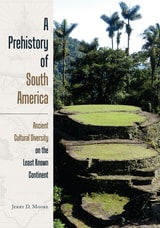
cover of Prehistory of South America: Ancient Cultural Diversity on the Least Known Continent

Prehistory of South America

Ancient Cultural Diversity on the Least Known Continent

Jerry D. Moore

University Press of Colorado, 2014

A Prehistory of South America is an overview of the ancient and historic native cultures of the entire continent of South America based on the most recent archaeological investigations. This accessible, clearly written text is designed to engage undergraduate and beginning graduate students in anthropology.
 
For more than 12,000 years, South American cultures ranged from mobile hunters and gatherers to rulers and residents of colossal cities. In the process, native South American societies made advancements in agriculture and economic systems and created great works of art—in pottery, textiles, precious metals, and stone—that still awe the modern eye. Organized in broad chronological periods, A Prehistory of South America explores these diverse human achievements, emphasizing the many adaptations of peoples from a continent-wide perspective. Moore examines the archaeologies of societies across South America, from the arid deserts of the Pacific coast and the frigid Andean highlands to the humid lowlands of the Amazon Basin and the fjords of Patagonia and beyond.
 
Illustrated in full color and suitable for an educated general reader interested in the Precolumbian peoples of South America, A Prehistory of South America is a long overdue addition to the literature on South American archaeology. 
[more]
cover of Problematic Paradigms and the Contours of US Latinidad

Problematic Paradigms and the Contours of US Latinidad

Essays by Silvio Torres-SaillantEdited by Nancy Kang and Michael Nieto Garcia

University of Texas Press, 2026

Silvio Torres-Saillant’s collected writings examine political contradictions within Latinx identity in the United States.

Since the 1990s Silvio Torres-Saillant’s work has questioned the notion of Latinidad, challenging presumptions of panethnic unity within the US Hispanic population and assessing dominant modes of Latinx representation. The essays in Problematic Paradigms and the Contours of US Latinidad examine the dynamics of a diverse collective of over 65 million people whose cultural heritage, ancestral origins, and belief systems arguably differ as much as they resemble one another. The volume dissects prevailing assumptions, namely the essentializing sense of homogeneity in the Latinx “community,” which mask important nuances and fascinating contradictions. Torres-Saillant also targets the role of marketing and mass communications in shaping popular perceptions of ethnic groups, thereby tracing connections between media rhetoric and the language of scholarship.

Newly revised by editors Nancy Kang and Michael Nieto Garcia, this collection curates Torres-Saillant’s core contributions to Latinx studies over the last two decades and underscores the veteran scholar’s evolving thoughts on key conversations in the field. The epilogue narrates his beginnings in Caribbean studies, acknowledges his ongoing analysis of Dominican blackness, and discourages uncritical views of cultural heritage.

[more]