Results by title
453 books match the query 'Economic policy' and 22 start with p

Perspectives on Trade and Development
Anne O. Krueger
University of Chicago Press, 1990
Providing an important and original perspective for understanding both the development process and policies aimed at raising the standard of living in poorer nations, Perspectives on Trade and Development gathers sixteen of Anne O. Krueger's most important essays on international trade and development economics. Her essays discuss the relationships between trade strategies and development; the links between factor endowments, developing countries' policies, and trade strategies in terms of their growth; the role of economic policy in development; and the international economic environment in which development efforts are taking place. Her analyses are extended to trade and development policies generally, and account for a substantial part of the residue unexplained by past theories. This insightful contribution by an influential scholar will be essential reading for all scholars of trade and development.
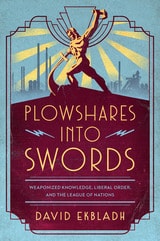
Plowshares into Swords
Weaponized Knowledge, Liberal Order, and the League of NationsDavid Ekbladh
University of Chicago Press, 2022
In Plowshares into Swords, David Ekbladh recaptures the power of knowledge and information developed between World War I and World War II by an international society of institutions and individuals committed to liberal international order and given focus by the League of Nations in Geneva. That information and analysis revolutionized critical debates in a world in crisis. In doing so, Ekbladh transforms conventional understandings of the United States’ postwar hegemony, showing that important elements of it were profoundly influenced by ideas that emerged from international exchanges. The League’s work was one part of a larger transnational movement that included the United States and which saw the emergence of concepts like national income, gross domestic product, and other attempts to define and improve the standards of living, as well as new approaches to old questions about the role of government. Forged as tools for peace these ideas were beaten into weapons as World War II threatened. Ekbladh recounts how, though the US had never been a member of the organization, vital parts of the League were rescued after the fall of France in 1940 and given asylum at the Institute for Advanced Study in Princeton. However, this presence in the US is just one reason its already well-regarded economic analyses and example were readily mobilized by influential American and international figures for an Allied “war of ideas,” plans for a postwar world, and even blueprints for the new United Nations. How did this body of information become so valuable? As Ekbladh makes clear, the answer is that information and analysis themselves became crucial currencies in global affairs: to sustain a modern, liberal global order, a steady stream of information about economics, politics, and society was, and remains, indispensable.
Plowshares into Swords
Weaponized Knowledge, Liberal Order, and the League of NationsDavid Ekbladh
University of Chicago Press, 2022
This is an Auto-narrated audiobook version of this book.
An in-depth look at how the ideas formulated by the interwar League of Nations shaped American thinking on the modern global order.
In Plowshares into Swords, David Ekbladh recaptures the power of knowledge and information developed between World War I and World War II by an international society of institutions and individuals committed to liberal international order and given focus by the League of Nations in Geneva. That information and analysis revolutionized critical debates in a world in crisis. In doing so, Ekbladh transforms conventional understandings of the United States’ postwar hegemony, showing that important elements of it were profoundly influenced by ideas that emerged from international exchanges. The League’s work was one part of a larger transnational movement that included the United States and which saw the emergence of concepts like national income, gross domestic product, and other attempts to define and improve the standards of living, as well as new approaches to old questions about the role of government. Forged as tools for peace these ideas were beaten into weapons as World War II threatened. Ekbladh recounts how, though the US had never been a member of the organization, vital parts of the League were rescued after the fall of France in 1940 and given asylum at the Institute for Advanced Study in Princeton. However, this presence in the US is just one reason its already well-regarded economic analyses and example were readily mobilized by influential American and international figures for an Allied “war of ideas,” plans for a postwar world, and even blueprints for the new United Nations. How did this body of information become so valuable? As Ekbladh makes clear, the answer is that information and analysis themselves became crucial currencies in global affairs: to sustain a modern, liberal global order, a steady stream of information about economics, politics, and society was, and remains, indispensable.

Poland's New Capitalism
Jane Hardy
Pluto Press, 2009
Poland was central to the historic changes that took place across Eastern Europe at the end of the Cold War. It is the largest economy in the region, and was at the forefront of opposition to communism, with the rise of Solidarity in the 1980s. This book explores the way that neoliberal policies have formed the basis of transformation, championed by both post-communist and post-Solidarity governments.
Jane Hardy provides a rigorous assessment of the impact of these policies on everyday lives and Poland's place in the European and global economy. These are firmly set in the context of the complex and dynamic political economy of the country. The role of capital in the form of transnational corporations and foreign direct investment is central to the analysis. The revival of trade unions and growth of new social movements are explored as they challenge Poland's new capitalism.
No other book studies Poland's recent history in such depth. This book will be a key text for students of political economy, international relations, social movements and labour studies.
Policy & Politics Japan
T. Pempel
Temple University Press, 1982
Policy Politics Canada
Carolyn J. Tuohy
Temple University Press, 1992
At a time when Canadian political institutions are being fundamentally questioned, this book provides a comparative perspective on the distinctive features of the Canadian policy process hich have enabled conflict to be resolved in the past. In comparison with other Western industrial nations, Canada's policies in some arenas appear as models of workable compromise; in others, they stand out as marked by continuing irresolution. In this first book-length treatment of Canadian public policy in comparative perspective, Carolyn Tuohy focuses on constitutional change, health care delivery, industrial relations and labor market policy, economic development and adjustment, oil and gas policy, and minority language rights.
What distinguishes Canada's characteristic policy process is its quintessential ambivalence: ambivalence about the appropriate role of the state, about definitions of political community, and about individual and collective values and conceptions of rights. Embedded in the country's political institutions, it has deep roots in Canada's relationship to the United States, its history of English-French tensions, and its regional diversity.
Examining in particular the delicate federal-provincial division of power and the legislative-judicial relationship, Tuohy discusses how the constitutional debates of the 1980s and 1990s are testing Canada's institutions to resolve conflict.
In the series Policy and Politics in Industrial States, edited by Douglas E. Ashford, Peter J. Katzenstein, and T.J. Pempel.
Policy Responses to Tax Competition
Edited by David R. Agrawal, James M. Poterba, and Owen M. Zidar
University of Chicago Press, 2025
A critical examination of the effects of tax competition.
Policy Responses to Tax Competition provides an in-depth exploration of how jurisdictions design taxes on mobile economic factors. Tax competition between jurisdictions that seek to attract businesses and residents presents both opportunities and challenges. It can foster government efficiency and provide a counterweight to lobbying for increased spending, but it can also result in inefficiently low tax rates and revenue shortfalls as jurisdictions vie for tax bases. This volume examines the economic drivers and consequences of tax competition and presents empirical evidence on its effects.
Divided into three parts, the book first reviews existing research on the determinants and consequences of tax competition and related policy initiatives such as development incentives. The second section focuses on specific policies, such as the Kansas-Missouri noncompete pact and international measures like the OECD’s Base Erosion and Profit Shifting initiative, that are designed to limit tax competition. It also considers the economic responses to these policies, the distributional impact of competition-reducing policies, and potential strategic reactions of other governments. The final section presents case studies of the effects of various policies, including inter-municipal cooperation in France and corporate tax equalization in Switzerland.
Altogether, this volume provides new insights into the nature of inter-jurisdictional tax competition and the range of potential responses available to jurisdictions at various levels in federal systems.

Political Economy of Environmental Protection
Analysis and EvidenceRoger D. Congleton, Editor
University of Michigan Press, 1996
Political Economy of U.S. - Taiwan Trade
Robert Baldwin, Tain-Jy Chen, and Douglas Nelson, Editors
University of Michigan Press, 1995
Politics and Economics in the Eighties
Edited by Alberto Alesina and Geoffrey Carliner
University of Chicago Press, 1991
Certain to provoke controversy, this interdisciplinary volume brings together policy experts to provide a coherent analysis of the most important economic policy changes of the 1980s. Through a detailed examination of voting patterns, monetary and fiscal policies, welfare spending, tax reform, minimum wage legislation, the savings and loan collapse, and international trade policy, the authors explore how politics can influence the direction of economic policymaking.
Politics and Policies in Post-Communist Transition
Primary and Secondary Privatisation in Central Europe and the Former Soviet UnionKároly Attila Soós
Central European University Press, 2011
Politics, Markets, and Grand Strategy
Foreign Economic Policies as Strategic InstrumentsLars S. Skalnes
University of Michigan Press, 2000
Skålnes explains changes in foreign economic policy in terms of shifting strategic assessments regarding the importance of military support from allies. When states need military support from their allies to meet threats to their security, they will adopt discriminatory foreign economic policies in an attempt to strengthen alliance relations. When states can go it alone without military support, by contrast, they will not pursue foreign economic policies that discriminate in favor of either allies or other countries. Discriminatory policies, Skalnes argues, are important strategic instruments for several reasons. First, they can be used to tie countries to a military alliance. Second, they are useful as signals of intention. Third, discriminatory policies may strengthen an ally militarily by increasing the economic resources available for military purposes.
Skålnes provides detailed accounts of the grand strategies of Germany (1879-1914), France (1887-1914), Great Britain (1919-1939), and the United States (1945-1967).
Politics, Markets, and Grand Strategy will be important reading for scholars and students in the fields of national security studies, international political economy, and economic history, and to economists working on problems associated with foreign investment and trade generally and customs union theory and discriminatory trade agreements specifically.
Lars S. Skålnes is Associate Professor of Political Science, University of Oregon.
Politics, Process, and American Trade Policy
Sharyn O'Halloran
University of Michigan Press, 1994
Polycentric Games and Institutions
Readings from the Workshop in Political Theory and Policy AnalysisMichael D. McGinnis, Editor
University of Michigan Press, 2000
The readings in this volume illustrate several varieties of institutional analysis. Each reading builds upon the foundation of game theory to address similar sets of questions concerning institutions and self-governance. The chapters in the first section lay out interrelated frameworks for analysis. Section two illustrates the normative component of institutions and their effects on human behavior. Readings in the following two sections detail how these frameworks have been applied to models of specific situations. Section five presents a modeling exercise exploring the functions of monitoring and enforcement, and the sixth section discusses approaches to the problems of complexity that confront individuals playing polycentric games. The final readings provide overviews of experimental research on the behavior of rational individuals.
Contributors include Arun Agrawal, Sue E. S. Crawford, Clark C. Gibson, Roberta Herzberg, Larry L. Kiser, Michael McGinnis, Stuart A. Marks, Elinor Ostrom, Vincent Ostrom, James Walker, Franz J. Weissing, John T. Williams, and Rick Wilson.
Michael McGinnis is Associate Professor, Department of Political Science and Co-Associate Director, Workshop in Political Theory and Policy Analysis, Indiana University.
Polycentric Governance and Development
Readings from the Workshop in Political Theory and Policy AnalysisMichael D. McGinnis, Editor
University of Michigan Press, 1999
The central insight of the research collected in the volume is this: much can be learned by a careful examination of the ways in which local communities have organized themselves to solve collective problems, achieve common aspirations, and resolve conflicts. The first two sections deal with efforts to manage water and other common-pool resources on a relatively small scale. Section three moves to the macro-level of analysis, with particular attention given to examples of constitutional order from Africa, while section four demonstrates that local organizations and informal networks can play essential roles in furthering democratization and development. The concluding section addresses issues at the national level, by linking the practical world of resource management and development policy to the abstract world of the policy analyst. This collection of essays is designed to illustrate how all the pieces fit together and to suggest connections among multiple levels and modes of analysis.
Contributors include Paula C. Baker, William Blomquist, Larry L. Kiser, Ronald J. Oakerson, Elinor Ostrom, Vincent Ostrom, Roger B. Parks, Stephen L. Percy, Charles M. Tiebout, Martha Vandivort, Robert Warren, Gordon P. Whitaker, and Rick Wilson.
Michael McGinnis is Associate Professor, Department of Political Science and Co-Associate Director, Workshop in Political Theory and Policy Analysis, Indiana University.
Polycentricity and Local Public Economies
Readings from the Workshop in Political Theory and Policy AnalysisMichael D. McGinnis, Editor
University of Michigan Press, 1999
The study of metropolitan political economies in the United States has provided much of the intellectual inspiration for the research of the Workshop in Political Theory and Policy Analysis at Indiana University. The readings collected in Polycentricity and Local Public Economies present an overview of the results of this research program on police services and metropolitan governance as well as enduring lessons for institutional analysis and public policy. Polycentricity and Local Public Economies presents both explorations of broad general concepts and specific empirical analyses. The many interactions between the two modes of analysis provide valuable insights for the reader. Readings in the first section cover basic theoretical concepts and analytical distinctions that apply to the study of institutions generally. The second section includes conceptual pieces specifically addressed to the nature of governance in metropolitan areas, while section three reports on a series of empirical studies of police performance. Section four again broadens the focus to highlight the overall organization of local public economies. The final section discusses conceptual advances that have continuing relevance for research and policy debates.Contributors include William Blomquist, Kathryn Firmin-Sellers, Roy Gardner, Dele Olowu, Elinor Ostrom, Vincent Ostrom, Amos Sawyer, Edella Schlager, Shui Yan Tang, Wai Fung Lam, and James S. Wunsch.
Poverty and Wealth in East Africa
A Conceptual HistoryRhiannon Stephens
Duke University Press, 2022
Power over Property
The Political Economy of Communist Land Reform in ChinaMatthew Noellert
University of Michigan Press, 2020
Power Over Property argues that in practice, however, the opposite occurred: the redistribution of political power led to a more equal distribution of property. China’s land reform was accomplished not only through the state’s power to define the distribution of resources, but also through village communities prioritizing political entitlements above property rights. Through the systematic analysis of never-before studied micro-level data on practices of land reform in over five hundred villages, Power Over Property demonstrates how land reform primarily involved the removal of former power holders, the mobilization of mass political participation, and the creation of a new social-political hierarchy. Only after accomplishing all of this was it possible to redistribute land. This redistribution, moreover, was determined by political relations to a new structure of power, not just economic relations to the means of production.
The experience of China’s land reform complicates our understanding of the relations between economic, social, and political equality. On the one hand, social equality in China was achieved through political, not economic means. On the other hand, the fundamental solution was a more effective hierarchy of fair entitlements, not equal rights. This book ultimately suggests that focusing on economic equality alone may obscure more important social and political dynamics in the development of the modern world.
Privatization in Eastern Europe
Is the State Withering Away?Roman Frydman
Central European University Press, 1994
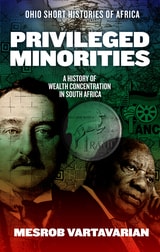
Privileged Minorities
A History of Wealth Concentration in South AfricaMesrob Vartavarian
Ohio University Press, 2026
Explores how anticolonial movements in South Africa enabled enduring inequality through the rise of privileged minorities and exclusive economic advantages
In Privileged Minorities, Mesrob Vartavarian examines a central paradox in South African history: how a nation shaped by anticolonial struggle became fertile ground for wealth concentration and enduring inequality. While these contradictions are not unique to South Africa, its historical trajectory offers broader insights into persistent disparities across African societies.
Vartavarian argues that the rise of privileged minorities—small, exclusive groups that dominate political and economic life—paralleled the development of successful anticolonial movements. These minorities secured exclusive advantages, defined as benefits and protections that enabled material accumulation. Such advantages included land seizures, racialized labor systems, access to coercive institutions, favorable regulatory environments, and targeted state expenditures. Though these mechanisms could foster overall economic growth, they disproportionately benefited select oligarchies and middle classes.
The book traces how distinct sociocultural groups in South Africa navigated and negotiated these advantages from the Dutch colonial era through the rise and decline of African National Congress rule. Rather than dismantling minority privilege, challenges from marginalized groups often served to reshape entrenched advantages by incorporating new actors into existing structures. These dynamics produced composite systems of accumulation that sustained inequality. Through this historical lens, Privileged Minorities offers a compelling framework for understanding how structural advantage persists and evolves, even in the wake of liberation.
Protest and the Politics of Blame
The Russian Response to Unpaid WagesDebra Javeline
University of Michigan Press, 2003
Putting Faith in Partnerships
Welfare-to-Work in Four CitiesStephen V. Monsma
University of Michigan Press, 2004
In this groundbreaking study of a politically controversial topic---the debut offering in Alan Wolfe's Contemporary Political and Social Issues series---author Stephen Monsma avoids overheated rhetoric in favor of a careful, critical analysis of the hard evidence on whether public-private partnerships really work.
The book is based on in-depth studies of social service programs in Los Angeles, Chicago, Philadelphia, and Dallas. By examining public-private partnerships between government offices and nonprofit organizations, Monsma seeks to understand how these partnerships affect the balance between government's efforts to deal with social problems and the rights of individual citizens to control their own lives.
Putting Faith in Partnerships answers many previously unanswered questions in what may be the most controversial public policy debate today: about the feasibility and wisdom of government agencies forming partnerships with private organizations to provide essential public social services.
Stephen V. Monsma is Professor of Political Science at Pepperdine University. He has served as director of the Office of Quality Review in Michigan's Department of Social Services and is a widely recognized expert on the role of faith-based organizations in social service programs.