94 books match the query 'Economy' and 5 start with p

cover of Pandemic Exposures: Economy and Society in the Time of Coronavirus

Pandemic Exposures

Economy and Society in the Time of Coronavirus

Edited by Didier Fassin and Marion Fourcade

HAU, 2021

For people and governments around the world, the onset of the COVID-19 pandemic seemed to place the preservation of human life at odds with the pursuit of economic and social life. Yet this simple alternative belies the complexity of the entanglements the crisis has created and revealed, not just between health and wealth but also around morality, knowledge, governance, culture, and everyday subsistence.
 
Didier Fassin and Marion Fourcade have assembled an eminent team of scholars from across the social sciences, conducting research on six continents, to reflect on the multiple ways the coronavirus has entered, reshaped, or exacerbated existing trends and structures in every part of the globe. The contributors show how the disruptions caused by the pandemic have both hastened the rise of new social divisions and hardened old inequalities and dilemmas. An indispensable volume, Pandemic Exposures provides an illuminating analysis of this watershed moment and its possible aftermath.

[more]
cover of Political Business Cycles: The Political Economy of Money, Inflation, and Unemployment

Political Business Cycles

The Political Economy of Money, Inflation, and Unemployment

Thomas D. Willett, ed.

Duke University Press, 1988
The "political business cycle", according to economist William Nordhaus, creates a situation in which political and bureaucratic incentives create artificial economic booms just before elections, with consequent and deleterious side effects after the ballots are counted. This work examines the issue of whether federal governmental structure inevitably leaves the U.S. economy exposed to unhealthy political influences.
[more]
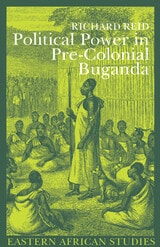
cover of Political Power in Pre-Colonial Buganda: Economy, Society, and Warfare in the Nineteenth Century

Political Power in Pre-Colonial Buganda

Economy, Society, and Warfare in the Nineteenth Century

Richard Reid

Ohio University Press, 2002

Blessed with fertile and well-watered soil, East Africa’s kingdom of Buganda supported a relatively dense population and became a major regional power by the mid-nineteenth century. This complex and fascinating state has also long been in need of a thorough study that cuts through the image of autocracy and military might.

Political Power in Pre-Colonial Buganda explores the material basis of Ganda political power, gives us a new understanding of what Ganda power meant in real terms, and relates the story of how the kingdom used the resources at its disposal to meet the challenges that confronted it. Reid further explains how these same challenges ultimately limited Buganda’s dominance of the East African great lakes region.
[more]
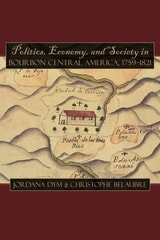
cover of Politics, Economy, and Society in Bourbon Central America, 1759-1821

Politics, Economy, and Society in Bourbon Central America, 1759-1821

Jordana Dym

University Press of Colorado, 2007

Politics, Economy, and Society in Bourbon Central America, 1759-1821 examines how the Spanish policies known broadly as the Bourbon Reforms affected Central American social, economic, and political institutions. Although historians have devoted significant attention to the purpose and impact of these reforms in Spain and some of Spain's other New World colonies, this book is the first to explore their impact on Central America.

These reforms profoundly changed aspects of Central America's politics and society; however, these essays reveal that changes in the region were shaped both internally and externally and that they weakened the region's ties to metropolitan Spain as often as they reinforced them. Contributors focus on specific policy changes and their consequences as well as transformations throughout the region for which no direct Bourbon inspiration appears to be responsible. Together they demonstrate that whether or not the Crown achieved its primary goals of centralization and control, its policies nevertheless provided opportunities for evident, often subtle, and occasionally unintentional shifts in the colonial government's relationship to its constituent populations. Contributors include Christophe Belaubre, Michel Bertrand, Jordana Dym, Jorge H. González, Timothy Hawkins, Sajid Alfredo Herrera, Gustavo Palma, Eugenia Rodriguez, Doug Tompson, and Stephen Webre.
[more]
cover of Privatizing the Economy: Telecommunications Policy in Comparative Perspective

Privatizing the Economy

Telecommunications Policy in Comparative Perspective

Raymond M. Duch

University of Michigan Press, 1991

During the 1980s government economic policies in the United States and many Western countries promoted the privatization of state-owned activities and the liberalization of competition. This has been the Reagan-Thatcher legacy to contemporary political economy. Privatizing the Economy takes a careful second look at the economic arguments that link government ownership with poor economic performance. Through a rigorous comparative analysis of telecommunications policies in France, Germany, and the United Kingdom, Raymond Duch shows that it is political control rather than economic ownership that accounts for variations in economic performance. He also provides a political explanation of why privatization has progressed further in some countries than others. Privatizing the Economy strikes a unique balance between economic and political theory, empirical and theoretical analysis, and cross-national and case-study research design. Having identified the weaknesses of economic arguments regarding public versus private ownership, the author proposes an alternative political explanation for the variations in the performance of public and private firms. The author seeks to explain why some governments have adopted liberal economic policies while others have not. The discussion draws upon an extensive political economy literature, pointing out weaknesses of existing theories and suggesting a novel way of looking at policy change. Evidence supporting the author's theoretical propositions comes from two distinct comparative research traditions: cross-national and case-study analyses. This novel way of looking at policy change and the author's broad use of political economy literature offers readers an understanding of what benefits liberal economic policies might deliver and of the likelihood that such policy initiatives might succeed.
[more]