Results by title
542 books match the query 'Emigration and immigration' and 23 start with p
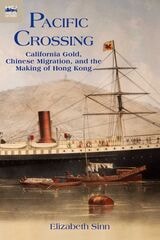
Pacific Crossing
California Gold, Chinese Migration, and the Making of Hong KongElizabeth Sinn
Hong Kong University Press, 2014
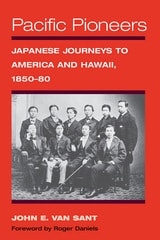
Pacific Pioneers
Japanese Journeys to America and Hawaii, 1850-80John E. Van Sant
University of Illinois Press, 2019
Although Japanese immigrants did not start arriving in substantial numbers in the West until after 1880, in the previous thirty years a handful of key encounters helped shape relations between Japan and the United States. John E. Van Sant explores the motivations and accomplishments of these resourceful, sometimes visionary individuals who made important inroads into a culture quite different from their own and paved the way for the Issei and Nisei.
Pacific Pioneers presents detailed biographical sketches of Japanese such as Joseph Heco, Niijima Jo, and the converts to the Brotherhood of the New Life and introduces the American benefactors, such as William Griffis, David Murray, and Thomas Lake Harris, who built relationships with their foreign visitors. Van Sant also examines the uneasy relations between Japanese laborers and sugar cane plantation magnates in Hawaii during this period and the shortlived Wakamatsu colony of Japanese tea and silk producers in California.
A valuable addition to the literature, Pacific Pioneers brings to life a cast of colorful, long-forgotten characters while forging a critical link between Asian and Asian American studies.
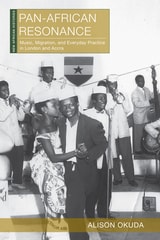
Pan-African Resonance
Music, Migration, and Everyday Practice in London and AccraAlison Okuda
Ohio University Press, 2026
As African and Caribbean nations gained independence from Britain in the 1950s and 1960s, many young musicians, students, and professionals crossed the Atlantic in search of new opportunities and built vibrant communities. Pan-African Resonance: Music, Migration, and Everyday Practice in London and Accra traces these journeys from Ghana, Trinidad and Tobago, Jamaica, Saint Lucia, Barbados, and Guyana, exploring how migrants practiced pan-Africanism through music across continents and generations. Drawing on musical recordings, newspapers, oral histories, and government documents from six countries, Alison Okuda demonstrates that pan-African solidarity thrived through the everyday creation and enjoyment of popular music. The book unfolds in two parts. Starting in the 1950s, it examines how Ghanaian highlife and Trinidadian calypso brought together musicians and young members of the independence generation, first in London and later in Accra. Even amid cultural tensions, Ghanaian and Caribbean communities expressed aspirations for freedom and unity in nightclubs, recording studios, private homes, and public streets. Before Ghana’s 1966 coup d’état, Ghanaians and diasporic Africans collaborated to shape an independent African-Atlantic world. Although the coup disrupted formal Pan-Africanist organizing, in the second part of the book Okuda shows that in the 1970s a new generation sustained dynamic networks of solidarity through highlife, reggae, and other popular styles—heard in recordings, radio broadcasts, live performances, and community events. Influenced by generational change and musical fluidity, African diasporic unity has remained central to popular music, migration, and politics in Ghana and the wider African-Atlantic world into the twenty-first century. Offering a rich interdisciplinary approach, Pan-African Resonance will appeal to readers interested in popular culture, transnational history, diaspora studies, and modern African history.
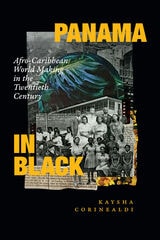
Panama in Black
Afro-Caribbean World Making in the Twentieth CenturyKaysha Corinealdi
Duke University Press, 2022
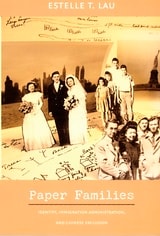
Paper Families
Identity, Immigration Administration, and Chinese ExclusionEstelle T. Lau
Duke University Press, 2006
Drawing on these documents as well as immigration case files, legislative materials, and transcripts of interviews and court proceedings, Lau reveals immigration as an interactive process. Chinese immigrants and their U.S. families were subject to regulation and surveillance, but they also manipulated and thwarted those regulations, forcing the U.S. government to adapt its practices and policies. Lau points out that the Exclusion Acts and the pseudo-familial structures that emerged in response have had lasting effects on Chinese American identity. She concludes with a look at exclusion’s legacy, including the Confession Program of the 1960s that coerced people into divulging the names of paper family members and efforts made by Chinese American communities to recover their lost family histories.
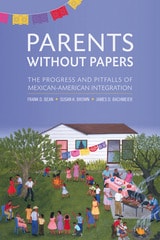
Parents Without Papers
The Progress and Pitfalls of Mexican American IntegrationFrank D. Bean is Distinguished Professor of Sociology and Director of the Center for Research on International Migration at the University of California, Irvine. Susan K. Brown is associate professor of sociology at the University of California, Irvine. James D. Bachmeier is assistant professor of sociology at Temple University.
Russell Sage Foundation, 2015
Parents Without Papers provides both a general conceptualization of immigrant integration and an in-depth examination of the Mexican American case. The authors draw upon unique retrospective data to shed light on three generations of integration. They show in particular that the “membership exclusion” experienced by unauthorized Mexican immigrants—that is, their fear of deportation, lack of civil rights, and poor access to good jobs—hinders the education of their children, even those who are U.S.-born. Moreover, they find that children are hampered not by the unauthorized entry of parents itself but rather by the long-term inability of parents, especially mothers, to acquire green cards.
When unauthorized parents attain legal status, the disadvantages of the second generation begin to disappear. These second-generation men and women achieve schooling on par with those whose parents come legally. By the third generation, socioeconomic levels for women equal or surpass those of native white women. But men reach parity only through greater labor-force participation and longer working hours, results consistent with the idea that their integration is delayed by working-class imperatives to support their families rather than attend college.
An innovative analysis of the transmission of advantage and disadvantage among Mexican Americans, Parents Without Papers presents a powerful case for immigration policy reforms that provide not only realistic levels of legal less-skilled migration but also attainable pathways to legalization. Such measures, combined with affordable access to college, are more important than ever for the integration of vulnerable Mexican immigrants and their descendants.
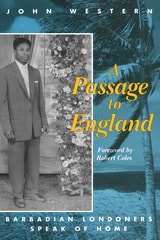
Passage To England
Barbadian Londoners Speak of HomeJohn Western
University of Minnesota Press, 1992
Since World War II London has become a significantly multiracial city. Some of the earliest agents of its transformation were young men and women recruited in the late 1950s from Barbados, then a British colony, to work in the metropolis’s nationalized public transportation system and in its hospitals. These Barbadians met, married, settled in London, and raised Londoner children. In 1987-88 John Western conducted a series of interviews with twelve such families--both parents and children. Their vivid words fill A Passage to England with insight, human, and, often, poignancy. Here is a rich perspective on thirty years or more of London social history.
Western structured the interviews to allow the Barbadians a lot of freedom to discuss whatever came to mind concerning either their own life histories and achievements, or wider themes of culture, politics, and society. Topics covered range from matters of “race” to Margaret Thatcher and the change her decade in power has wrought in Britain. One development, for example, is the strikingly entrepreneurial spirit now embraced by some of the young British blacks, veritably “Mrs. Thatcher’s Children.” Ultimately, many of the interviewees focused on the changes they see in their ancestral island in the Caribbean, to which all of them have returned for visits. For this migrant generation especially, as the prospect of retirement begins to grow increasingly important, inevitable questions regard the definitions of “home” and “belonging” must be confronted: Does one stay in London--with one’s children and grandchildren--or does one return to Barbados, which for many seems no longer the same island as the one they left a working lifetime ago? Within the context of an ever-increasing complement of geographically mobile people worldwide, Western’s study provides unique insights into the particular ambiguities a particular set of person have wrestled with at a particular moment in history...but the import of the Barbadian Londoners’ story is universal.
Passing
Two Publics in a Mexican Border CityRihan Yeh
University of Chicago Press, 2017
Out of the nitty-gritty of quotidian talk and interaction in Tijuana, Yeh captures the dynamics of desire and denial that permeate public spheres in our age of transnational crossings and fortified borders. Original and accessible, Passing is a timely work in light of current fierce debates over immigration, Latin American citizenship, and the US-Mexico border.
Pathways of Desire
The Sexual Migration of Mexican Gay MenHéctor Carrillo
University of Chicago Press, 2017
Further, Carrillo shows that sexual globalization must be regarded as a bidirectional, albeit uneven, process of exchange between countries in the global north and the global south. With this approach, Carrillo challenges the view that gay men from countries like Mexico would logically want to migrate to a “more sexually enlightened” country like the United States—a partial and limited understanding, given the dynamic character of sexuality in countries such as Mexico, which are becoming more accepting of sexual diversity. Pathways of Desire also provides a helpful analytical framework for the simultaneous consideration of structural and cultural factors in social scientific studies of sexuality. Carrillo explains the patterns of cross-cultural interaction that sexual migration generates and—at the most practical level—shows how the intricacies of cross-cultural sexual and romantic relations may affect the sexual health and HIV risk of transnational immigrant populations.
Peace, Preference, and Property
Return Migration after Violent ConflictSandra F. Joireman
University of Michigan Press, 2022
Growing numbers of people are displaced by war and violent conflict. In Ukraine, Afghanistan, Ethiopia, Myanmar, Syria, and elsewhere violence pushes civilian populations from their homes and sometimes from their countries, making them refugees. In previous decades, millions of refugees and displaced people returned to their place of origin after conflict or were resettled in countries in the Global North. Now displacements last longer, the number of people returning home is lower, and opportunities for resettlement are shrinking. More and more people spend decades in refugee camps or displaced within their own countries, raising their children away from their home communities and cultures. In this context, international policies encourage return to place of origin.
Using case studies and first-person accounts from interviews and fieldwork in post-conflict settings such as Uganda, Liberia, and Kosovo, Sandra F. Joireman highlights the divergence between these policies and the preferences of conflict-displaced people. Rather than looking from the top down, at the rights that people have in international and domestic law, the perspective of this text is from the ground up—examining individual and household choices after conflict. Some refugees want to go home, some do not want to return, some want to return to their countries of origin but live in a different place, and others are repatriated against their will when they have no other options. Peace, Preference, and Property suggests alternative policies that would provide greater choice for displaced people in terms of property restitution and solutions to displacement.
Peruvian Lives across Borders
Power, Exclusion, and HomeM. Cristina Alcalde
University of Illinois Press, 2018
Alcalde draws on interviews, surveys, participant observation, and textual analysis to argue that to belong is to exclude. To that end, transnational Peruvians engage in both subtle and direct policing along the borders of belonging. These acts allow them to claim and maintain the social status they enjoyed in their homeland even as they profess their openness and tolerance. Alcalde details these processes and their origins in Peru's gender, racial, and class hierarchies. As she shows, the idea of return—whether desired or rejected, imagined or physical—spurs constructions of Peruvianness, belonging, and home.
Deeply researched and theoretically daring, Peruvian Lives across Borders answers fascinating questions about an understudied group of migrants.

Picturing Immigration
Photojournalistic Representation of Immigrants in Greek and Spanish PressAthanasia Batziou
Intellect Books, 2011
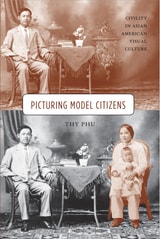
Picturing Model Citizens
Civility in Asian American Visual CultureThy Phu
Temple University Press, 2012
At the heart of the model minority myth—often associated with Asian Americans—is the concept of civility. In this groundbreaking book, Picturing Model Citizens, Thy Phu exposes the complex links between civility and citizenship, and argues that civility plays a crucial role in constructing Asian American citizenship.
Featuring works by Arnold Genthe, Carl Iwasaki, Toyo Miyatake, Nick Ut, and others, Picturing Model Citizens traces the trope of civility from the nineteenth to the twenty-first centuries. Through an examination of photographs of Chinese immigrants, Japanese internment camps, the Hiroshima Maidens project, napalm victims, and the SARS epidemic, Phu explores civility's unexpected appearance in images that draw on discourses of intimacy, cultivation, apology, and hygiene. She reveals how Asian American visual culture illustrates not only cultural ideas of civility, but also contests the contradictions of state-defined citizenship.
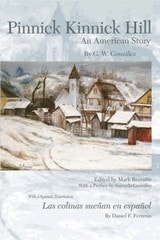
Pinnick Kinnick Hill
An American StoryBy G. W. González, Edited by Mark Brazaitis, with a Preface by Suronda González, with a Spanish translation Las colinas sueñan en español by Daniel Ferreras
West Virginia University Press, 2006
Nearly a century ago, hundreds of families journeyed from Spain to the United States, to search for a better life in the growing zinc-industry towns of Harrison County, West Virginia. As they created a new culture and a new home in this strange land, they added another thread to the rich fabric of our nation. Writing from his perspective as a first-generation son of this immigrant community, González recounts his childhood memories of his neighborhood, where these immigrants raised their families, worked in the often insufferable conditions of the zinc factories, and celebrated "romerias" and feast days with their neighbors.
Poetry of Resistance
Voices for Social JusticeEdited by Francisco X. Alarcón and Odilia Galván Rodríguez
University of Arizona Press, 2016
Since then, more than three thousand original contributions by poets and artists from around the globe have been posted to the page. Poetry of Resistance offers a selection of these works, addressing a wide variety of themes, including racial profiling, xenophobia, cultural misunderstanding, violence against refugees, shared identity, and much more. Contributors include distinguished poets such as Francisco Aragón, Devreaux Baker, Sarah Browning, Lorna Dee Cervantes, Susan Deer Cloud, Sharon Dubiago, Martín Espada, Genny Lim, Pam Uschuk, and Alma Luz Villanueva.
Bringing together more than eighty writers, the anthology powerfully articulates the need for change and the primacy of basic human rights. Each poem shows the heartfelt dedication these writers and artists have to justice in a world that has become larger than borders. Poetry of Resistance is a poetic call for tolerance, reflection, reconciliation, and healing.
Polacos in Argentina
Polish Jews, Interwar Migration, and the Emergence of Transatlantic Jewish CultureMariusz Kalczewiak
University of Alabama Press, 2020
An examination of the social and cultural repercussions of Jewish emigration from Poland to Argentina in the 1920s and 1930s
Between the 1890s and 1930s, Argentina, following the United States and Palestine, became the main destination for Eastern European Ashkenazi Jews seeking safety, civil rights, and better economic prospects. In the period between 1918 and 1939, sixty thousand Polish Jews established new homes in Argentina. They formed a strong ethnic community that quickly embraced Argentine culture while still maintaining their unique Jewish-Polish character. This mass migration caused the transformation of cultural, social, and political milieus in both Poland and Argentina, forever shaping the cultural landscape of both lands.
In Polacos in Argentina: Polish Jews, Interwar Migration, and the Emergence of Transatlantic Jewish Culture, Mariusz Kałczewiak has constructed a multifaceted and in-depth narrative that sheds light on marginalized aspects of Jewish migration and enriches the dialogue between Latin American Jewish studies and Polish Jewish Studies. Based on archival research, Yiddish travelogues on Argentina, and the Yiddish and Spanish-language press, this study recreates a mosaic of entanglements that Jewish migration wove between Poland and Argentina.
Most studies on mass migration fail to acknowledge the role of the country of origin, but this innovative work approaches Jewish migration to Argentina as a continuous process that took place on both sides of the Atlantic. Taken as a whole, Polacos in Argentina enlightens the heterogeneous and complex issue of immigrant commitments, belongings, and expectations. Jewish emigration from Poland to Argentina serves as a case study of how ethnicity evolves among migrants and their children, and the dynamics that emerge between putting down roots in a new country and maintaining commitments to the country of origin.
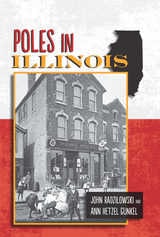
Poles in Illinois
John Radzilowski and Ann Hetzel Gunkel
Southern Illinois University Press, 2020
Authors John Radzilowski and Ann Hetzel Gunkel look at family life among Polish immigrants, their role in the economic development of the state, the working conditions they experienced, and the development of their labor activism. Close-knit Polish American communities were often centered on parish churches but also focused on fraternal and social groups and cultural organizations. Polish Americans, including waves of political refugees during World War II and the Cold War, helped shape the history and culture of not only Chicago, the “capital” of Polish America, but also the rest of Illinois with their music, theater, literature, food.
With forty-seven photographs and an ample number of extensive excerpts from first-person accounts and Polish newspaper articles, this captivating, highly readable book illustrates important and often overlooked stories of this ethnic group in Illinois and the changing nature of Polish ethnicity in the state over the past two hundred years. Illinoisans and Midwesterners celebrating their connections to Poland will treasure this rich and important part of the state’s history.
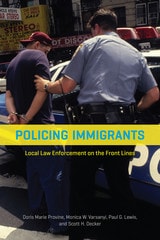
Policing Immigrants
Local Law Enforcement on the Front LinesDoris Marie Provine, Monica W. Varsanyi, Paul G. Lewis, and Scott H. Decker
University of Chicago Press, 2016
Policing Immigrants traces the transition of immigration enforcement from a traditionally federal power exercised primarily near the US borders to a patchwork system of local policing that extends throughout the country’s interior. Since federal authorities set local law enforcement to the task of bringing suspected illegal immigrants to the federal government’s attention, local responses have varied. While some localities have resisted the work, others have aggressively sought out unauthorized immigrants, often seeking to further their own objectives by putting their own stamp on immigration policing. Tellingly, how a community responds can best be predicted not by conditions like crime rates or the state of the local economy but rather by the level of conservatism among local voters. What has resulted, the authors argue, is a system that is neither just nor effective—one that threatens the core crime-fighting mission of policing by promoting racial profiling, creating fear in immigrant communities, and undermining the critical community-based function of local policing.
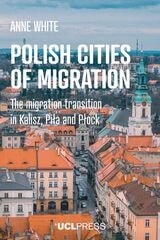
Polish Cities of Migration
The Migration Transition in Kalisz, Pila and PlockAnne White
University College London, 2024
Polish Cities of Migration analyzes Poland’s transition to become a “country of immigration.” Incorporating in-depth interviews with thirty-seven Polish returned migrants, seventy Ukrainians, and seventeen foreigners living in Kalisz, Plock, and Pila, the book explores two interconnected puzzles: how Poland’s migration transition is influenced by its current status as an emigration country, and why migrants are spreading out beyond the metropolises. It argues that migrants’ feelings of comfort in such locations are explained by network and lifestyle considerations, as well as the social acceptance of migration by former migrant Poles.
Possible Paradises
Basque Emigration to Latin AmericaAzcona Pastor
University of Nevada Press, 2003
Possible Paradises, José Manuel Azcona Pastor's engaging and meticulously researched study of Basque emigration to the Americas, is a path breaking work of monumental importance. Ranging over the entire former Spanish American empire from Tierra del Fuego to the U.S. Southwest and covering over five centuries of history, Azcona examines the roles and fates of the Basques who came to the New World. He also studies the impact of the New World on the Basque Country, from the importance in the modern Basque diet of such American foodstuffs as corn and beans to the encouragement given to traditional Basque industries by the colonizers' demand for ships and iron tools. He considers the role of Basques in the Spanish imperial expeditions of exploration and conquest; their participation in transatlantic commerce and communication.
The Basque diaspora, although worldwide in dimension, has had its greatest presence and importance in the Americas. Azcona's pioneering study views the Basque presence in the New World through the broadest possible lens, linking Basque communities and activities from Argentina to the North American West.
Foreword by William A. Douglass. Translation by Roland Vazquez.
Precarious Crossings
Immigration, Neoliberalism, and the AtlanticAlexandra Perisic
The Ohio State University Press, 2019
Perisic argues that in traveling beyond the postcolonial route that connects former colonizer and former colonized, these authors also shift their focus from cultural difference and national belonging to precarity—a condition characterized by a lack of economic and social stability and protection—as a shared characteristic under global neoliberalization. She demonstrates how contemporary Atlantic narratives reveal the contradictions inherent in neoliberalism as an ideology—thereby showing how they further participate in Atlantic literary and cultural dialogues and push against literary conventions of various genre as they explore the complexities of a globalized Atlantic.
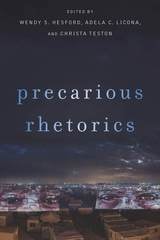
Precarious Rhetorics
Edited by Wendy S. Hesford, Adela C. Licona, and Christa Teston
The Ohio State University Press, 2018
This collection features cross-disciplinary contributions from leading scholars, including the editors of the volume as well as James J. Brown Jr., Gale Coskan-Johnson, Ronald Greene, Lavinia Hirsu, Arabella Lyon, Louis Maraj, Sara McKinnon, Alexandra Schultheis Moore, Kimberlee Pérez, Margaret Price, Amy Shuman, Kristin Swenson, Becca Tarsa, and Belinda Walzer. Chapters emphasize a materialist-rhetorical approach while also drawing on feminist studies, women of color feminisms, affect studies, critical disability studies, critical race and ethnic studies, medical humanities, sexuality studies, queer migration studies, and human rights and humanitarian studies. While theoretically rich, this volume intentionally features chapters that explore precarious rhetorics as they operate in practice—whether in borderlands, politics, public policy, or the quotidian spaces of human activity, such as school, work, social media, and medicine.
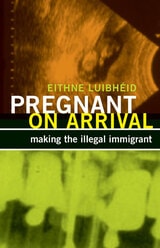
Pregnant on Arrival
Making the Illegal ImmigrantEithne Luibhéid
University of Minnesota Press, 2013
“State alert as pregnant asylum seekers aim for Ireland.” “Country Being Held Hostage by Con Men, Spongers, and Those Taking Advantage of the Maternity Residency Policy.” From 1997 to 2004, headlines such as these dominated Ireland’s mainstream media as pregnant immigrants were recast as “illegals” entering the country to gain legal residency through childbirth. As immigration soared, Irish media and politicians began to equate this phenomenon with illegal immigration that threatened to destroy the country’s social, cultural, and economic fabric.
Pregnant on Arrival explores how pregnant immigrants were made into paradigmatic figures of illegal immigration, as well as the measures this characterization set into motion and the consequences for immigrants and citizens. While focusing on Ireland, Eithne Luibhéid’s analysis illuminates global struggles over the citizenship status of children born to immigrant parents in countries as diverse as the United States, Hong Kong, and elsewhere. Scholarship on the social construction of the illegal immigrant calls on histories of colonialism, global capitalism, racism, and exclusionary nation building but has been largely silent on the role of nationalist sexual regimes in determining legal status. Eithne Luibhéid turns to queer theory to understand how pregnancy, sexuality, and immigrants’ relationships to prevailing sexual norms affect their chances of being designated as legal or illegal.
Pregnant on Arrival offers unvarnished insight into how categories of immigrant legal status emerge and change, how sexual regimes figure prominently in these processes, and how efforts to prevent illegal immigration ultimately redefine nationalist sexual norms and associated racial, gender, economic, and geopolitical hierarchies.