Results by title
70 books match the query 'Essay' and 7 start with p
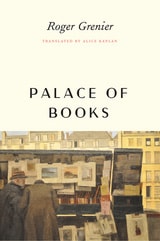
Palace of Books
Roger Grenier
University of Chicago Press, 2014
With Palace of Books, he invites us to explore the domain of literature, its sweeping vistas and hidden recesses. Engaging such fundamental questions as why people feel the need to write, or what is involved in putting one’s self on the page, or how a writer knows she’s written her last sentence, Grenier marshals apposite passages from his favorite writers: Chekhov, Baudelaire, Proust, James, Kafka, Mansfield and many others. Those writers mingle companionably with tales from Grenier’s half-century as an editor and friend to countless legendary figures, including Albert Camus, Romain Gary, Milan Kundera, and Brassai,.
Grenier offers here a series of observations and quotations that feel as spontaneous as good conversation, yet carry the lasting insights of a lifetime of reading and thinking. Palace of Books is rich with pleasures and surprises, the perfect accompaniment to old literary favorites, and the perfect introduction to new ones.
Paracritical Hinge
Essay, Talks, Notes, InterviewsNathaniel Mackey
University of Iowa Press, 2018
Paracritical Hinge is a collection of varied yet interrelated pieces highlighting Nathaniel Mackey’s multifaceted work as writer and critic. It embraces topics ranging from Walt Whitman’s interest in phrenology to the marginalization of African American experimental writing; from Kamau Brathwaite’s “calibanistic” language practices to Federico García Lorca’s flamenco aesthetic of duende and its continuing repercussions; from H. D.’s desert measure and coastal way of knowing to the altered spatial disposition of Miles Davis’s trumpet sound; from Robert Duncan’s serial poetics to diasporic syncretism; from the lyric poem’s present-day predicaments to gnosticism. Offering illuminating commentary on these and other artists including Amiri Baraka, Mississippi Fred McDowell, Wilson Harris, Jack Spicer, John Coltrane, Jay Wright, and Bob Kaufman, Paracritical Hinge also sheds light on Mackey’s own work as a poet, fiction writer, and editor.
Prescribing the Life of the Mind
An Essay on the Purpose of the University, the Aims of Liberal Education, the Competence of Citizens, and the Cultivation of Practical ReasonCharles W. Anderson
University of Wisconsin Press, 1996
Presence and Social Obligation
An Essay on the ShareJames Ferguson
Prickly Paradigm Press, 2021

Producing the Sacred
AN ESSAY ON PUBLIC RELIGIONRobert Wuthnow
University of Illinois Press, 1994
Wuthnow uses as a guiding assumption the idea that cultural expressions, religious or otherwise, do not simply happen but are produced. He considers the major kinds of organizations that produce public religion--congregations, hierarchies, special interests, academies, and public rituals--showing how these organizational vehicles shape public religion's messages and how specific types of religious organization draw resources from their environments. He also reveals the implicit and unintended ways in which sacredness is expressed in modern society.
A volume in the series Public Expressions of Religion in America
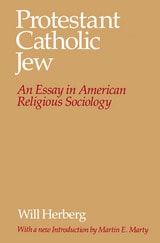
Protestant--Catholic--Jew
An Essay in American Religious SociologyWill Herberg
University of Chicago Press, 1983
"In Protestant-Catholic-Jew Will Herberg has written the most fascinating essay on the religious sociology of America that has appeared in decades. He has digested all the relevant historical, sociological and other analytical studies, but the product is no mere summary of previous findings. He has made these findings the basis of a new and creative approach to the American scene. It throws as much light on American society as a whole as it does on the peculiarly religious aspects of American life. Mr. Herberg. . . illumines many facets of the American reality, and each chapter presents surprising, and yet very compelling, theses about the religious life of this country. Of all these perhaps the most telling is his thesis that America is not so much a melting pot as three fairly separate melting pots."—Reinhold Niebuhr, New Yorks Times Book Review
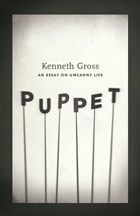
Puppet
An Essay on Uncanny LifeKenneth Gross
University of Chicago Press, 2011
The puppet creates delight and fear. It may evoke the innocent play of childhood, or become a tool of ritual magic, able to negotiate with ghosts and gods. Puppets can be creepy things, secretive, inanimate while also full of spirit, alive with gesture and voice. In this eloquent book, Kenneth Gross contemplates the fascination of these unsettling objects—objects that are also actors and images of life.
The poetry of the puppet is central here, whether in its blunt grotesquery or symbolic simplicity, and always in its talent for metamorphosis. On a meditative journey to seek the idiosyncratic shapes of puppets on stage, Gross looks at the anarchic Punch and Judy show, the sacred shadow theater of Bali, and experimental theaters in Europe and the United States, where puppets enact everything from Baroque opera and Shakespearean tragedy to Beckettian farce. Throughout, he interweaves accounts of the myriad faces of the puppet in literature—Collodi’s cruel, wooden Pinocchio, puppetlike characters in Kafka and Dickens, Rilke’s puppet-angels, the dark puppeteering of Philip Roth’s Micky Sabbath—as well as in the work of artists Joseph Cornell and Paul Klee. The puppet emerges here as a hungry creature, seducer and destroyer, demon and clown. It is a test of our experience of things, of the human and inhuman. A book about reseeing what we know, or what we think we know, Puppet evokes the startling power of puppets as mirrors of the uncanny in life and art.