Results by title
425 books match the query 'Ethics' and 17 start with p
PRESCRIPTION FOR ADVERSITY
THE MORAL ART OF AMBROSE BIERCELAWRENCE BERKOVE
The Ohio State University Press, 2002
A Prescription for Adversity makes the revolutionary case that Ambrose Bierce, far from being a bitter misanthrope, was instead both a compassionate and moral author. Berkove, focusing on Bierce's short fiction, establishes the necessity of recognizing the pattern of his intellectual and literary development over the course of his career. The author shows that Bierce, probably the American author with the most extensive experience of the Civil War, turned to classical Stoicism and English and French Enlightenment literature in his postwar search for meaning. Bierce's fiction arose from his ultimately unsatisfying encounters with the philosophies those sources offered, but the moral commitment as well as the literary techniques of heir authors, particularly Jonathan Swift, inspired him. Dating Bierce's fiction, and introducing uncollected journalism, correspondence, and important new literary history and biographical information, Berkove brings new insights to a number of stories, including "A Son of the Gods" and "A Horseman in the Sky," but especially "An Occurrence at Owl Creek Bridge," and presents compelling readings of the Parenticide Club tales and "Moxon's Master." A Prescription for Adversity substantiates how Bierce at his best is one of the few American authors who rises to the level of Mark Twain, and the only one who touches Jonathan Swift.
A work of both biography and literary criticism, this book rescues Ambrose Bierce and his literature from the neglect to which it has been assigned by "ill-founded, obtuse and unproductive approaches based on skewed notions of his personality and forced or facile readings of individual stories."
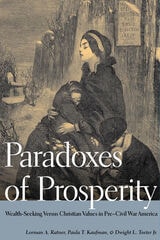
Paradoxes of Prosperity
Wealth Seeking in Pre-Civil War AmericaLorman A. Ratner, Paula T. Kaufman and Dwight L. Teeter Jr.
University of Illinois Press, 2008
At the same time, the United States felt the influence of the rise of popular mass-circulation newspapers and magazines and the surge in American book publishing. Concern over living correctly as well as prosperously was commonly discussed by leading authors and journalists, who were now writing for ever-expanding regional and national audiences. Women became more important as authors and editors, giving advice and building huge markets for women readers, with the magazine Godey's Lady's Book and novels by Susan Warner, Maria Cummins, and Harriet Beecher Stowe expressing women's views about the troubled state of society. Best-selling male writers--including novelist George Lippard, historian George Bancroft, and travel writer Bayard Taylor--were among those adding their voices to concerns about prosperity and morality and about America's place in the world. Writers and publishers discovered that a high moral tone could be exceedingly good for business.
The authors of this book examine how popular writers and widely read newspapers, magazines, and books expressed social tensions between prosperity and morality. This study draws on that nationwide conversation through leading mass media, including circulation-leading newspapers, the New York Herald and the New York Tribune, plus prominent newspapers from the South and West, the Richmond Enquirer and the Cincinnati Enquirer. Best-selling magazines aimed at middle-class tastes, Harper's Magazine and the Southern Literary Messenger, added their voices, as did two leading business magazines.

Peace in the Thought of Thomas Aquinas
Philosophy, Theology, and EthicsJohn M. Meinert
Catholic University of America Press, 2024

Pellegrino's Clinical Bioethics
A CompendiumEdmund Pellegrino
Catholic University of America Press, 2023
Perception in Aristotle’s Ethics
Eve Rabinoff
Northwestern University Press, 2018
Rabinoff's project is philosophically motivated both by the details of Aristotle’s thought and more generally by an increasing philosophical awareness that the ethical agent is an embodied, situated individual, rather than primarily a disembodied, abstract rational will.
Philosophical Topics 41.2
Envisioning Plurality: Feminist Perspectives on Pluralism in Ethics, Politics, and Social TheoryJean Keller
University of Arkansas Press, 2015
Contents:
Why a Feminist Volume on Pluralism? – Bonnie Mann and Jean Keller
PLURALISM ’S FAILURES AND CERTAIN CONDITIONS FOR THE POSSIBILITY OF SUCCESS
Indigenous Agencies and the Pluralism of Empire – Scott L. Pratt
What Would Philosophic Pluralism Look Like?: True Dialogue, Epistemic Credibility, Rational Parity, and Death in the University – Jennifer Lisa Vest
Asking Too Much? Civility vs. Pluralism – Alison Reiheld
Attending to Others: Simone Weil and Epistemic Pluralism – Shari Stone-Mediatore
FEMINIST PLURALISM AND RELIGIOUS WORLDVIEWS
Islamic Feminisms and Freedom – Allison Weir
Is an “Islamic Feminism” Possible?: Gender Politics in the Contemporary Islamic Republic of Iran – Paria Gashtili
Beyond the Modern/Religious Dichotomy: The Veil and Feminist Solidarity in Contemporary Turkey – Fulden Ibrahimhakkioglu
Philosophy, Religion, Race, and Queerness: A Question of Accommodation or Access – Kim Q. Hall
FEMINIST PLURALISM AND FUNDAMENTAL VALUES
Value Pluralism, Intuitions, and Reflective Equilibrium – Lisa Tessman
Radical-cum-Relation: Bridging Feminist Ethics and Native Individual Autonomy – Shay Welch
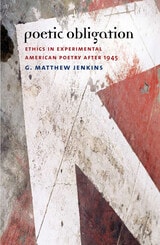
Poetic Obligation
Ethics in Experimental American Poetry after 1945Matthew G. Jenkins
University of Iowa Press, 2008
Since at least the time of Plato's Republic, the relationship between poetry and ethics has been troubled. Through the prism of what has been called the "new" ethical criticism, inspired by the work of Emmanuel Levinas, G. Matthew Jenkins considers the works of Objectivists, Black Mountain poets, and Language poets in light of their full potential to reshape this ancient relationship.
American experimental poetry is usually read in either political or moral terms. Poetic Obligation, by contrast, considers the poems of Louis Zukofsky, Charles Reznikoff, George Oppen, Edward Dorn, Robert Duncan, Susan Howe, and Lyn Hejinian in terms of the philosophical notion of ethical obligation to the Other in language. Jenkins's historical trajectory enables him to consider the full breadth of ethical topics that have driven theoretical debate since the end of World War II. This original approach establishes an ethical lineage in the works of twentieth-century experimental poets, creating a way to reconcile the breach between poetry and the issue of ethics in literature at large.
With implications for a host of social issues, including ethnicity and immigration, economic inequities, and human rights, Jenkins's imaginative reconciliation of poetry and ethics will provide stimulating reading for teachers and scholars of American literature as well as advocates and devotees of poetry in general. Poetic Obligation marshals ample evidence that poetry matters and continues to speak to the important issues of our day.

Postures of the Mind
Essays on Mind and MoralsAnnette Baier
University of Minnesota Press, 1975
Postures of the Mind was first published in 1985. Minnesota Archive Editions uses digital technology to make long-unavailable books once again accessible, and are published unaltered from the original University of Minnesota Press editions.
Annette Baier develops, in these essays, a posture in philosophy of mind and in ethics that grows out of her reading of Hume and the later Wittgenstein, and that challenges several Kantian or analytic articles of faith. She questions the assumption that intellect has authority over all human feelings and traditions; that to recognize order we must recognize universal laws—descriptive or prescriptive; that the essential mental activity is representing; and that mental acts can be analyzed into discrete basic elements, combined according to statable rules of synthesis.
In the first group of essays—"Varieties of Mental Postures"—Baier evaluates the positions taken by philosophers ranging from Descartes to Dennett and Davidson. Among her topics are remembering, intending, realizing, caring, representing, changing one's mind, justifying one's actions and feelings, and having conflicting reasons for them. The second group of essays—"Varieties of Moral Postures" - explores the sort of morality we get when all of these capacities become reflective and self-corrective. Some deal with particular moral issues—our treatment of animals, our policies regarding risk to human life, our contractual obligations; others, with more general questions on the role of moral philosophers and the place of moral theory. These essays respond to the theories of Hobbes, Kant, Rawls, and MacIntyre, but Baier's most positive reaction is to David Hume; Postures of the Mind affirms and cultivates his version of a moral reflection that employs feeling and tradition as well as reason.
Practical Reason, Aristotle, and Weakness of the Will
Norman O. Dahl
University of Minnesota Press, 1984
Practical Reason, Aristotle, and Weakness of the Will was first published in 1984. Minnesota Archive Editions uses digital technology to make long-unavailable books once again accessible, and are published unaltered from the original University of Minnesota Press editions.
One of the central problems in recent moral philosophy is the apparent tension between the "practical" or "action-guiding" side of moral judgments and their objectivity. That tension would not exist if practical reason existed (if reason played a substantial role in producing motivation) and if recognition of obligation were one of the areas in which practical reason operated. In Practical Reason, Aristotle, and the Weakness of the Will,Norman Dahl argies that, despite widespread opinion to the contrary, Aristotle held a position on practical reason that both provides an objective basis for ethics and satisfies an important criterion of adequacy—that it acknowledges genuine cases of weakness of the will. In arguing for this, Dahl distinguishes Aristotle's position from that of David Hume, who denied the existence of practical reason. An important part of his argument is an account of the role that Aristotle allowed the faculty nous to play in the acquisition of general ends. Relying both on this argument and on an examination of passages from Aristotle's ethics and psychology, Dahl argues that Aristotle recognized that a genuine conflict of motives can occur in weakness of the will. This provides him with the basis for an interpretation that finds Aristotle acknowledging genuine cases of weakness of the will.
Dahl's arguments have both a philosophical and a historical point. He argues that Aristotle's position on practical reason deserves to be taken seriously, a conclusion he reinforces by comparing that position with more recent attempts, by Kant, Nagel, and Rawls, to base ethics on practical reason.
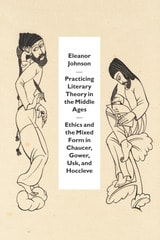
Practicing Literary Theory in the Middle Ages
Ethics and the Mixed Form in Chaucer, Gower, Usk, and HoccleveEleanor Johnson
University of Chicago Press, 2013

Principles of Green Bioethics
Sustainability in Health CareCristina Richie
Michigan State University Press, 2019

Principles of Instrumental Logic
John Dewey's Lectures in Ethics and Political Ethics, 1895-1896Donald F. Koch
Southern Illinois University Press, 1998
John Dewey delivered two sets of related lectures at the University of Chicago in the fall quarter 1895 and the spring quarter 1896. Designed for graduate students, the lectures show the birth of Dewey’s instrumentalist theory of inquiry in its application to ethical and political thinking.
From 1891 through 1903, Dewey attempted to develop a revolutionary experimentalist approach to ethical inquiry, designed to replace the more traditional ways of moral theorizing that relied on the fixed moral knowledge given in advance of the situations in which they were applied. In the lectures on the logic of ethics, he sets forth and defends the view that the "is" in a moral judgment such as "This is good" is a coordinating factor in an inquiry. Although the subject matter of the lectures is highly technical, its significance is paramount. It provides the key to and opens the door for a theory that preserves the difference between strictly scientific inquiry and moral inquiry even while it provides a "scientific treatment" of the latter.
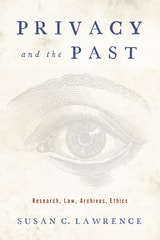
Privacy and the Past
Research, Law, Archives, EthicsLawrence, Susan C
Rutgers University Press, 2016

Professional Ethics and Primary Care Medicine
Beyond Dilemmas and DecorumHarmon L. Smith and Larry R. Churchill
Duke University Press, 1986
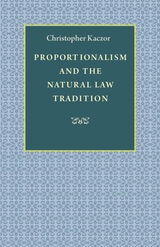
Proportionalism and the Natural Law Tradition
Christopher Kaczor
Catholic University of America Press, 2002
In this book, Christopher Kaczor argues against the plausibility of proportionalism and its first proponents, namely Peter Knauer, Joseph Fuchs, Bruno Schüller, Louis Janssens, and Richard McCormick. Examining the genealogy of the movement, he disputes a received history that depicts proportionalism as a recovery of Thomas Aquinas. Instead, contends Kaczor, proportionalism is best seen as the organic successor to the moral manuals of the pre-Vatican II era. Proportionalism arises not from Thomas but rather extends many of the tendencies and presuppositions of the manuals. In particular, it retains their marginalizing of the account of human action as a knowing-willing involving a number of stages not always consciously recognized yet carefully described by Thomas in Summa theologiae, Prima Secundae, 6-17. Kaczor shows that a great deal of the plausibility of proportionalism rests on a fragile foundation that is rapidly eroding, an education in the moral manuals.
Provocations of Virtue
Rhetoric, Ethics, and the Teaching of WritingJohn Duffy
Utah State University Press, 2018
Drawing upon Aristotle’s Nicomachean Ethics and the branch of philosophical inquiry known as “virtue ethics,” Provocations of Virtue calls for the reclamation of “rhetorical virtues” as a core function in the writing classroom. Duffy considers what these virtues actually are, how they might be taught, and whether they can prepare students to begin repairing the broken state of public argument. In the discourse of the virtues, teachers and scholars of writing are offered a common language and a shared narrative—a story that speaks to the inherent purpose of the writing class and to what is at stake in teaching writing in the twenty-first century.
This book is a timely and historically significant contribution to the field and will be of major interest to scholars and administrators in writing studies, rhetoric, composition, and linguistics as well as philosophers and those exploring ethics.
Putting On Virtue
The Legacy of the Splendid VicesJennifer A. Herdt
University of Chicago Press, 2008