338 books match the query 'Ethnology' and 13 start with p

cover of Palma Africana

Palma Africana

Michael Taussig

University of Chicago Press, 2018

“It is the contemporary elixir from which all manner of being emerges, the metamorphic sublime, an alchemist’s dream.” So begins Palma Africana, the latest attempt by anthropologist Michael Taussig to make sense of the contemporary moment. But to what elixir does he refer?
 
Palm oil. Saturating everything from potato chips to nail polish, palm oil has made its way into half of the packaged goods in our supermarkets. By 2020, world production will be double what it was in 2000. In Colombia, palm oil plantations are covering over one-time cornucopias of animal, bird, and plant life. Over time, they threaten indigenous livelihoods and give rise to abusive labor conditions and major human rights violations. The list of entwined horrors—climatic, biological, social—is long. But Taussig takes no comfort in our usual labels: “habitat loss,” “human rights abuses,” “climate change.” The shock of these words has passed; nowadays it is all a blur. Hence, Taussig’s keen attention to words and writing throughout this work. He takes cues from precursors’ ruminations: Roland Barthes’s suggestion that trees form an alphabet in which the palm tree is the loveliest; William Burroughs’s retort to critics that for him words are alive like animals and don’t like to be kept in pages—cut them and the words are let free.
 
Steeped in a lifetime of philosophical and ethnographic exploration, Palma Africana undercuts the banality of the destruction taking place all around us and offers a penetrating vision of the global condition. Richly illustrated and written with experimental verve, this book is Taussig’s Tristes Tropiques for the twenty-first century. 

[more]
cover of Parallel Worlds: An Anthropologist and a Writer Encounter Africa

Parallel Worlds

An Anthropologist and a Writer Encounter Africa

Alma Gottlieb and Philip Graham

University of Chicago Press, 1994

This suspenseful and moving memoir of Africa recounts the experiences of Alma Gottlieb, an anthropologist, and Philip Graham, a fiction writer, as they lived in two remote villages in the rain forest of Cote d'Ivoire. With an unusual coupling of first-person narratives, their alternate voices tell a story imbued with sweeping narrative power, humility, and gentle humor. Parallel Worlds is a unique look at Africa, anthropological fieldwork, and the artistic process.

"A remarkable look at a remote society [and] an engaging memoir that testifies to a loving partnership . . . compelling."—James Idema, Chicago Tribune
[more]
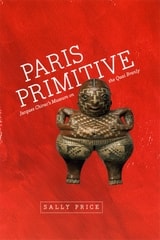
cover of Paris Primitive: Jacques Chirac's Museum on the Quai Branly

Paris Primitive

Jacques Chirac's Museum on the Quai Branly

Sally Price

University of Chicago Press, 2007

In 1990 Jacques Chirac, the future president of France and a passionate fan of non-European art, met Jacques Kerchache, a maverick art collector with the lifelong ambition of displaying African sculpture in the holy temple of French culture, the Louvre. Together they began laying plans, and ten years later African fetishes were on view under the same roof as the Mona Lisa. Then, in 2006, amidst a maelstrom of controversy and hype, Chirac presided over the opening of a new museum dedicated to primitive art in the shadow of the Eiffel Tower: the Musée du Quai Branly.

Paris Primitive recounts the massive reconfiguration of Paris’s museum world that resulted from Chirac’s dream, set against a backdrop of personal and national politics, intellectual life, and the role of culture in French society. Along with exposing the machinations that led to the MQB’s creation, Sally Price addresses the thorny questions it raises about the legacy of colonialism, the balance between aesthetic judgments and ethnographic context, and the role of institutions of art and culture in an increasingly diverse France. Anyone with a stake in the myriad political, cultural, and anthropological issues raised by the MQB will find Price’s account fascinating.

[more]
cover of Perilous States: Conversations on Culture, Politics, and Nation

Perilous States

Conversations on Culture, Politics, and Nation

Edited by George E. Marcus

University of Chicago Press, 1993

Encompassing a range of disciplines—notably anthropology,
politics, history, comparative literature, and
philosophy—the unprecedented annual publication Late
Editions exposes unsettling dilemmas and unprecedented
challenges facing cultural studies on the brink of the
twenty-first century. Successive volumes will appear
annually until the year 2000, each engaging the predicaments
of particular institutions, nations, and persons at this
point of social, cultural, and political change. The
project will test the limits of scholarly conventions by
finding new ways to expose cultural formations emerging from
the maturation or exhaustion of once-powerful ideas whose
validity is now deeply in question.

Perilous States, the first volume of Late
Editions, presents conversations between American
scholars, most of whom are anthropologists, and individuals
situated amidst political and social upheaval. Pimarily but
not exclusively from Eastern Europe, the cast includes
Russian writers, Hungarian scientists and academics, Armenian
politicians, Siberian religious and medical leaders, a Gypsy
leader, a Polish poet, a French politician, and a white South
African musician who is a self-styled Zulu. Their voices
unite around themes of democracy, market economy, individual
rights, and the reawakened force of suppressed ethnic and
racial identities.

To obtain fresh perspectives on these cultural and social
transformations, the volumes will consist of in-depth
conversations, relayed in essay form, between scholars and
individuals in other cultures with whom they share
affinities. This novel approach blends the immediacy of
interviews, the objectivity of journalism, and the
intellectual rigor of scholarship.

Contributors to this volume are Marjorie Balzer, Sam
Beck, David B. Coplan, Michael M. J. Fischer, Nia Georges,
Bruce Grant, Douglas R. Holmes, Stella Gregorian, George E.
Marcus, Kathryn Milun, Eleni Papagaroufali, Paul Rabinow,
Julie Taylor, and Tom White.

[more]
cover of Person and Myth: Maurice Leenhardt in the Melanesian World

Person and Myth

Maurice Leenhardt in the Melanesian World

James Clifford

Duke University Press, 1992
Originally published in 1982, James Clifford's analytical biography of Maurice Leenhardt (1878–1954)—missionary, anthropologist, founder of French Oceanic studies, historian of religion, and colonial reformer—received wide critical acclaim for its insight into the colonial history of anthropology. Drawing extensively on unpublished letters and journals, Clifford traces Leenhardt's life from his work as a missionary on the island of New Caledonia (1902–1926) to his subsequent return to Paris where he became an academic anthropologist at the École Practique des Hautes Études, where he followed Marcel Mauss and was succeeded in 1951 by Claude Lévi-Strauss. Clifford sees in Leenhardt's career a foreshadowing of contemporary anthropological concerns with reflexivity, cultural hybridity, and colonial and post-colonial entanglements.
[more]
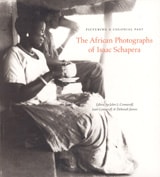
cover of Picturing a Colonial Past: The African Photographs of Isaac Schapera

Picturing a Colonial Past

The African Photographs of Isaac Schapera

Edited by John L. Comaroff, Jean Comaroff, and Deborah James

University of Chicago Press, 2007

This volume presents for the first time the selected photographs of the renowned British anthropologist Isaac Schapera (1905–2003). Taken between 1929 and 1934, largely during his earliest work among the Kgatla peoples of Bechuanaland (now Botswana), the 136 images in this selection reveal an emotional engagement and aesthetic impulse that Schapera seldom expressed in his writings. Covering a broad spectrum of daily activities, they include depictions of everything from pot making, thatching, and cattle herding to village architecture, vernacular medicine, and rainmaking ceremonies. Visually fascinating and of exceptional quality, these images capture the uniqueness of an African people in a particular time and place. They are contexualized and their significance explained in Jean and John Comaroff’s insightful introduction, while Adam Kuper’s illuminating biographical sketch of Schapera provides new insight into the life of the photographer. Picturing a Colonial Past reveals not only a rare side of old Botswana, but also of one of the most famous anthropologist who worked there.
[more]
cover of Placing Outer Space: An Earthly Ethnography of Other Worlds

Placing Outer Space

An Earthly Ethnography of Other Worlds

Lisa Messeri

Duke University Press, 2016

In Placing Outer Space Lisa Messeri traces how the place-making practices of planetary scientists transform the void of space into a cosmos filled with worlds that can be known and explored. Making planets into places is central to the daily practices and professional identities of the astronomers, geologists, and computer scientists Messeri studies. She takes readers to the Mars Desert Research Station and a NASA research center to discuss ways scientists experience and map Mars. At a Chilean observatory and in MIT's labs she describes how they discover exoplanets and envision what it would be like to inhabit them. Today’s planetary science reveals the universe as densely inhabited by evocative worlds, which in turn tells us more about Earth, ourselves, and our place in the universe.
 
[more]
cover of Possessing Polynesians: The Science of Settler Colonial Whiteness in Hawai`i and Oceania

Possessing Polynesians

The Science of Settler Colonial Whiteness in Hawai`i and Oceania

Maile Arvin

Duke University Press, 2019
From their earliest encounters with Indigenous Pacific Islanders, white Europeans and Americans asserted an identification with the racial origins of Polynesians, declaring them to be racially almost white and speculating that they were of Mediterranean or Aryan descent. In Possessing Polynesians Maile Arvin analyzes this racializing history within the context of settler colonialism across Polynesia, especially in Hawai‘i. Arvin argues that a logic of possession through whiteness animates settler colonialism, by which both Polynesia (the place) and Polynesians (the people) become exotic, feminized belongings of whiteness. Seeing whiteness as indigenous to Polynesia provided white settlers with the justification needed to claim Polynesian lands and resources. Understood as possessions, Polynesians were and continue to be denied the privileges of whiteness. Yet Polynesians have long contested these classifications, claims, and cultural representations, and Arvin shows how their resistance to and refusal of white settler logic have regenerated Indigenous forms of recognition.
[more]
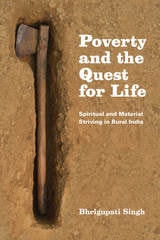
cover of Poverty and the Quest for Life: Spiritual and Material Striving in Rural India

Poverty and the Quest for Life

Spiritual and Material Striving in Rural India

Bhrigupati Singh

University of Chicago Press, 2015

The Indian subdistrict of Shahabad, located in the dwindling forests of the southeastern tip of Rajasthan, is an area of extreme poverty. Beset by droughts and food shortages in recent years, it is the home of the Sahariyas, former bonded laborers, officially classified as Rajasthan’s only “primitive tribe.” From afar, we might consider this the bleakest of the bleak, but in Poverty and the Quest for Life, Bhrigupati Singh asks us to reconsider just what quality of life means. He shows how the Sahariyas conceive of aspiration, advancement, and vitality in both material and spiritual terms, and how such bridging can engender new possibilities of life.

Singh organizes his study around two themes: power and ethics, through which he explores a complex terrain of material and spiritual forces. Authority remains contested, whether in divine or human forms; the state is both despised and desired; high and low castes negotiate new ways of living together, in conflict but also cooperation; new gods move across rival social groups; animals and plants leave their tracks on human subjectivity and religiosity; and the potential for vitality persists even as natural resources steadily disappear. Studying this milieu, Singh offers new ways of thinking beyond the religion-secularism and nature-culture dichotomies, juxtaposing questions about quality of life with political theologies of sovereignty, neighborliness, and ethics, in the process painting a rich portrait of perseverance and fragility in contemporary rural India. 

[more]
cover of Precarious Democracy: Ethnographies of Hope, Despair, and Resistance in Brazil

Precarious Democracy

Ethnographies of Hope, Despair, and Resistance in Brazil

Benjamin Junge

Rutgers University Press, 2021

Brazil changed drastically in the 21st century’s second decade. In 2010, the country’s outgoing president Lula left office with almost 90% approval. As the presidency passed to his Workers' Party successor, Dilma Rousseff, many across the world hailed Brazil as a model of progressive governance in the Global South. Yet, by 2019, those progressive gains were being dismantled as the far right-wing politician Jair Bolsonaro assumed the presidency of a bitterly divided country. Digging beneath this pendulum swing of policy and politics, and drawing on rich ethnographic portraits, Precarious Democracy shows how these transformations were made and experienced by Brazilians far from the halls of power. Bringing together powerful and intimate stories and portraits from Brazil's megacities to rural Amazonia, this volume demonstrates the necessity of ethnography for understanding social and political change, and provides crucial insights on one of the most epochal periods of change in Brazilian history.
 
[more]
cover of Producing Guanxi: Sentiment, Self, and Subculture in a North China Village

Producing Guanxi

Sentiment, Self, and Subculture in a North China Village

Andrew B. Kipnis

Duke University Press, 1997

Throughout China the formation of guanxi, or social connections, involves friends, families, colleagues, and acquaintances in complex networks of social support and sentimental attachment. Focusing on this process in one rural north China village, Fengjia, Andrew Kipnis shows what guanxi production reveals about the evolution of village political economy, kinship and gender, and local patterns of subjectivity in Dengist China. His work offers a detailed description of the communicative actions—such as gift giving, being a host or guest, participating in weddings or funerals—that produce, manage, and deny guanxi in a specific time and place. Kipnis also offers a rare comparative analysis of how these practices relate to the varied and variable phenomenon of guanxi throughout China and as it has changed over time.
Producing Guanxi combines the theory of Pierre Bourdieu and the insights of symbolic anthropology to contest past portrayals of guanxi as either a function of Chinese political economics or an unchanging Confucian social structure. In this analysis guanxi emerges as a purposeful human effort that makes use of past cultural logics while generating new ones. By exploring the role of sentiment in the creation of self, Kipnis critiques recent theories of subjectivity for their narrow focus on language and discourse, and contributes to the anthropological discussion of comparative selfhood. Navigating a path between mainstream social science and abstract social theory, Kipnis presents a more nuanced examination of guanxi than has previously been available and contributes generally to our understanding of relationships and human action.
[more]
cover of Profiles in Cultural Evolution: Papers from a Conference in Honor of Elman R. Service

Profiles in Cultural Evolution

Papers from a Conference in Honor of Elman R. Service

Edited by A. Terry Rambo and Kathleen Gillogly

University of Michigan Press, 1991

Presenting diverse viewpoints and topics, this collection includes the following sections:Part I presents a background on the study of cultural evolution. Part II deals with the evolution of complex societies in the tropics of South America. Part III discusses stage sequences and directionality in cultural evolution. Part IV examines the role of prime movers in cultural evolution. Part V discusses diversity and change.
[more]
cover of Prospero and Caliban: The Psychology of Colonization

Prospero and Caliban

The Psychology of Colonization

O. Mannoni

University of Michigan Press, 1990

In his now classic volume Prospero and Caliban, Octave Mannoni gives his firsthand account of a 1948 revolt in Madagascar that led to one of the bloodiest episodes of colonial repression on the African continent. It is in Prospero and Caliban that Mannoni constructs the notion of the “dependency complex,” for which his book has since been remembered and widely discussed in both psychoanalytical and anthropological writing. Prospero and Caliban was one of the first books to challenge traditional approaches to the study of native American societies by Western colonizers and anthropologists; and Mannoni is recognized today for his close association with and influence on the French psychoanalyst Lacan.
 
Noted anthropologist Maurice Bloch has written a powerful and critical new foreword to the English translation, which allows the reader to view Mannoni’s unique work in its historical and intellectual context.
 
[more]