Results by title
81 books match the query 'Executive Branch' and 14 start with p
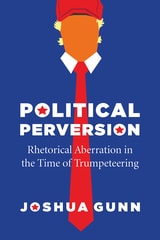
Political Perversion
Rhetorical Aberration in the Time of TrumpeteeringJoshua Gunn
University of Chicago Press, 2020
Drawing on insights from critical theory, media ecology, and psychoanalysis, Gunn argues that perverse rhetorics dominate not only the political sphere but also our daily interactions with others, in person and online. From sexting to campaign rhetoric, Gunn advances a new way to interpret our contemporary political context that explains why so many of us have difficulty deciphering the appeal of aberrant public figures. In this book, Trump is only the tip of a sinister, rapidly growing iceberg, one to which we ourselves unwittingly contribute on a daily basis.
Political Tone
How Leaders Talk and WhyRoderick P. Hart, Jay P. Childers, and Colene J. Lind
University of Chicago Press, 2013
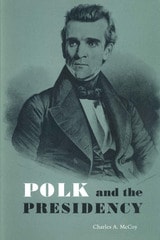
Polk and the Presidency
By Charles A. McCoy
University of Texas Press, 1960
“Who is James K. Polk?” was a rallying cry of the Whigs during the campaign of 1844. Polk answered that question adequately by winning the election against his Whig opponent, Henry Clay.
Today the question might be recast—respectfully, not derisively—“Who was James K. Polk?” Few persons could give more than a perfunctory answer, even though when he left office the United States was half again larger than it was when he became president.
Polk, unlike his close friend Andrew Jackson, has been the subject of but few books. Stern and serious-minded, intent upon his work, he never caught the public’s imagination as did some of the more magnetic personalities who filled the office of president. His lack of personal charm, however, should not hide from generations of Americans the great benefit he brought their country and his key role in developing the powers of the presidency.
This book will be a revelation to readers who might be confounded, even momentarily, by the question “Who was James K. Polk?” It is based on the assumption that the presidential power-role, though expressed in the Constitution and prescribed by law, is not a static role but a dynamic one, shaped and developed by a president’s personal reaction to the crises and circumstances of the times during which he serves. And Polk faced many crises, among them the Mexican War, the Oregon boundary dispute, the tariff question, Texas’s admission to the Union, and the establishment by the United States of a more stable and respected position in the world of nations.
Based on the dynamic power-role theory, the book analyzes its theme of how and why James K. Polk, the eleventh president of the United States, responded to the challenges of his times and thereby increased the authority and importance of the presidential role for future incumbents.
Charles McCoy became interested in writing this book after two of his friends, both informed historians, pointed out to him that James K. Polk was a neglected figure in American history. Preliminary research showed this to be true, but without reason—for, as the eminent historian George Bancroft said, “viewed from the standpoint of results, [Polk’s administration] was perhaps the greatest in our national history, certainly one of the greatest.” For his own astute appraisal of the Polk administration, McCoy emphasized the use of firsthand sources of information: the Polk Diary; newspapers of the period; the unpublished papers of Polk, Jackson, Trist, Marcy, and Van Buren; and congressional documents and reports.
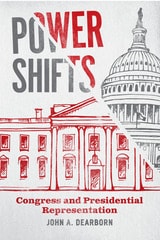
Power Shifts
Congress and Presidential RepresentationJohn A. Dearborn
University of Chicago Press, 2021
The emergence of the modern presidency in the first half of the twentieth century transformed the American government. But surprisingly, presidents were not the primary driving force of this change—Congress was. Through a series of statutes, lawmakers endorsed presidential leadership in the legislative process and augmented the chief executive’s organizational capacities.
But why did Congress grant presidents this power? In Power Shifts, John A. Dearborn shows that legislators acted on the idea that the president was the best representative of the national interest. Congress subordinated its own claims to stand as the nation’s primary representative institution and designed reforms that assumed the president was the superior steward of all the people. In the process, Congress recast the nation’s chief executive as its chief representative.
As Dearborn demonstrates, the full extent to which Congress’s reforms rested on the idea of presidential representation was revealed when that notion’s validity was thrown into doubt. In the 1970s, Congress sought to restore its place in a rebalanced system, but legislators also found that their earlier success at institutional reinvention constrained their efforts to reclaim authority. Chronicling the evolving relationship between the presidency and Congress across a range of policy areas, Power Shifts exposes a fundamental dilemma in an otherwise proud tradition of constitutional adaptation.
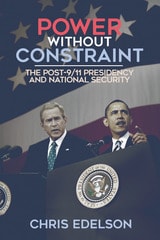
Power without Constraint
The Post-9/11 Presidency and National SecurityChris Edelson
University of Wisconsin Press, 2016
In a thorough comparison of the Bush and Obama administrations’ national security policies, Chris Edelson demonstrates that President Obama and his officials have used softer rhetoric and toned-down legal arguments, but in key areas—military action, surveillance, and state secrets—they have simply found new ways to assert power without meaningful constitutional or statutory constraints.
Edelson contends that this legacy of the two immediately post-9/11 presidencies raises crucial questions for future presidents, Congress, the courts, and American citizens. Where is the political will to restore a balance of powers among branches of government and adherence to the rule of law? What are the limits of authority regarding presidential national security power? Have national security concerns created a permanent shift to unconstrained presidential power?
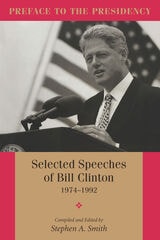
Preface to the Presidency
Selected Speeches of Bill Clinton 1974-1992Stephen Smith
University of Arkansas Press, 1996
Presidential Accountability in Wartime
President Bush, the Treatment of Detainees, and the Laws of WarStuart Streichler
University of Michigan Press, 2023
The American presidency has long tested the capacity of the system of checks and balances to constrain executive power, especially in times of war. While scholars have examined presidents starting military conflicts without congressional authorization or infringing on civil liberties in the name of national security, Stuart Streichler focuses on the conduct of hostilities. Using the treatment of war-on-terror detainees under President George W. Bush as a case study, he integrates international humanitarian law into a constitutional analysis of the repercussions of presidential war powers for human rights around the world.
Putting President Bush’s actions in a wider context, Presidential Accountability in Wartime begins with a historical survey of the laws of war, with particular emphasis on the 1949 Geneva Conventions and the Nuremberg Tribunal. Streichler then reconstructs the decision-making process that led to the president’s approval of interrogation methods that violated Geneva’s mandate to treat wartime captives humanely. While taking note of various accountability options—from within the executive branch to the International Criminal Court—the book illustrates the challenge in holding presidents personally responsible for violating the laws of war through an in-depth analysis of the actions taken by Congress, the Supreme Court, and the public in response. In doing so, this book not only raises questions about whether international humanitarian law can moderate wartime presidential behavior but also about the character of the presidency and the American constitutional system of government.
Presidential Campaigns and Presidential Accountability
Michele P. Claibourn
University of Illinois Press, 2011
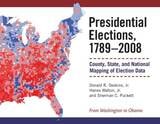
Presidential Elections, 1789-2008
County, State, and National Mapping of Election DataDonald R. Deskins, Jr., Hanes Walton, Jr., and Sherman C. Puckett
University of Michigan Press, 2010
"Hanes Walton, Donald Deskins, and Sherman Puckett have produced a highly impressive collection and valuable contribution to the literature on American electoral politics. This work is indispensable for academic libraries, political scientists, historians, and serious students of American government."
---Immanuel Ness, Professor, Department of Political Science, Brooklyn College, City University of New York
"Massive amounts of information about presidential elections which are not readily available elsewhere. Unprecedented coverage in one volume of every single American presidential election."
---James Gimpel, Professor of Government, University of Maryland
"This is an extraordinary research endeavor; the most comprehensive set of aggregate election data ever assembled. Painstakingly researched, this color-coded volume presents data for every presidential election from 1789 to 2008. Unlike most, the wide ranging narrative for this atlas identifies racial patterns in the vote. Everyone who studies or is interested in presidential elections should have this impressive collection of statistical data in their libraries. A visual gem for the digital age."
---Robert Smith, Professor of Political Science, San Francisco State University
"Presidential Elections, 1789-2008 is a genuine tour de force that captures in an extremely accessible and comprehensive way the electoral geography of America's presidential elections, from Washington to Obama. An invaluable addition to the library of all those interested in presidential elections and U.S. politics."
---Marion Orr, Frederick Lippitt Professor of Public Policy and Professor of Political Science, Brown University
"This volume sets an extraordinarily high standard in scholarship, completeness, description, and explanation of our political process. It has been said that all politics are local, but never before has this been demonstrated with such clarity and panache, using the simple method of standardized tables summarizing voting, then showing state and county breakdowns of the numbers, greatly strengthened by beautiful full-color maps and cartograms. Every scholar of politics and democracy will benefit from the work laid out in this volume."
---Keith Clarke, Professor of Geography, University of California, Santa Barbara
Presidential Elections is an almanac of the popular vote in every presidential election in American history, analyzed at the county level with histories of each campaign, graphs, and stunning four-color maps. Most Americans are familiar with the crude red state/blue state maps used by commentators and campaign strategists---and even, for want of an alternative, by many academics. In providing a higher-resolution view of voting behavior the authors of this new volume enable examination of local and regional political trends that are invisible in state-level aggregations.
Presidential Elections will enable scholars to more subtly analyze voting behavior, campaigns, and presidential politics; commentators will use it to analyze trends and trace the historical evolution of new coalitions and voting blocs; strategists will use it to plan campaigns and mobilize constituencies. Presidential Elections will become the standard almanac on the subject: a required resource for academic and public libraries, as well as for scholars, consultants, and pundits nationwide.
Donald R. Deskins, Jr., is a political geographer and Emeritus Professor of Sociology and a former Associate Dean of the Horace H. Rackham School of Graduate Studies at the University of Michigan.
Hanes Walton, Jr., is Professor of Political Science at the University of Michigan. He also holds positions as Senior Research Scientist at the Center for Political Studies and as a faculty member in the Center for Afroamerican and African Studies.
Presidents Creating the Presidency
Deeds Done in WordsKarlyn Kohrs Campbell and Kathleen Hall Jamieson
University of Chicago Press, 2008
Identifying the primary genres of presidential oratory, Campbell and Jamieson add new analyses of signing statements and national eulogies to their explorations of inaugural addresses, veto messages, and war rhetoric, among other types. They explain that in some of these genres, such as farewell addresses intended to leave an individual legacy, the president acts alone; in others, such as State of the Union speeches that urge a legislative agenda, the executive solicits reaction from the other branches. Updating their coverage through the current administration, the authors contend that many of these rhetorical acts extend over time: George W. Bush’s post-September 11 statements, for example, culminated in a speech at the National Cathedral and became a touchstone for his subsequent address to Congress.
For two centuries, presidential discourse has both succeeded brilliantly and failed miserably at satisfying the demands of audience, occasion, and institution—and in the process, it has increased and depleted political capital by enhancing presidential authority or ceding it to the other branches. Illuminating the reasons behind each outcome, Campbell and Jamieson draw an authoritative picture of how presidents have used rhetoric to shape the presidency—and how they continue to re-create it.
Presidents and Parties in the Public Mind
Gary C. Jacobson
University of Chicago Press, 2019
With Presidents and Parties in the Public Mind, Gary C. Jacobson draws on survey data from the past seven administrations to show that the expansion of the executive branch in the twentieth century that gave presidents a greater role in national government also gave them an enlarged public presence, magnifying their role as the parties’ public voice and face. As American politics has become increasingly nationalized and president-centered over the past few decades, the president’s responsibility for the party’s image and status has continued to increase dramatically. Jacobson concludes by looking at the most recent presidents’ effects on our growing partisan polarization, analyzing Obama’s contribution to this process and speculating about Trump’s potential for amplifying the widening demographic and cultural divide.
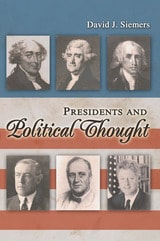
Presidents and Political Thought
David J. Siemers
University of Missouri Press, 2009
Presidents, Populism, and the Crisis of Democracy
William G. Howell and Terry M. Moe
University of Chicago Press, 2020
The most visible cause is Donald Trump, who has used his presidency to attack the nation’s institutions and violate its democratic norms. Yet Trump is but a symptom of causes that run much deeper: social forces like globalization, automation, and immigration that for decades have generated economic harms and cultural anxieties that our government has been wholly ineffective at addressing. Millions of Americans have grown angry and disaffected, and populist appeals have found a receptive audience. These are the drivers of Trump’s dangerous presidency. And after he leaves office, they will still be there for other populists to weaponize.
What can be done to safeguard American democracy? The disruptive forces of modernity cannot be stopped. The solution lies, instead, in having a government that can deal with them—which calls for aggressive new policies, but also for institutional reforms that enhance its capacity for effective action.
The path to progress is filled with political obstacles, including an increasingly populist, anti-government Republican Party. It is hard to be optimistic. But if the challenge is to be met, we need reforms of the presidency itself—reforms that harness the promise of presidential power for effective government, but firmly protect against the fear that it may be put to anti-democratic ends.
Prisoners of Their Premises
How Unexamined Assumptions Lead to War and Other Policy DebaclesGeorge C. Edwards III
University of Chicago Press, 2022
Why do accomplished and stable leaders frequently make calamitous decisions with devastating consequences for their countries—and other nations? We debate debacles such as the American involvement in Vietnam, seeking to understand why leaders pursued disastrous policies. In Prisoners of Their Premises, George C. Edwards III argues that the failure of leaders to examine their premises—the assumptions they make about the world and situation they are dealing with—cause them to ignore real problems or pursue policies that, in costly ways, deal with problems that are different than they think or simply don’t exist. Edwards looks at the role of premises in identifying (or ignoring) a problem in a series of case studies that range from strategic decisions in World War I and the Korean War to the wars in Vietnam and Iraq. Too often, unexamined premises color initial decisions to pursue a policy and shape the strategies leaders employ to achieve their goals, with grave consequences for their countries, organizations, and potentially the world. Timely and important, Prisoners of Their Premises demonstrates the real costs leaders incur by failing to question their assumptions.