Results by title
527 books match the query 'Feminism & Feminist Theory' and 19 start with p

Pandora's Senses
The Feminine Character of the Ancient TextVered Lev Kenaan
University of Wisconsin Press, 2010
In this compelling study, Vered Lev Kenaan offers a radical revision of the Greek myth of the first woman. She argues that Pandora leaves a decisive mark on ancient poetics and shows that we can unravel the profound impact of Pandora’s image once we recognize that Pandora embodies the very idea of the ancient literary text. Locating the myth of the first woman right at the heart of feminist interrogation of gender and textuality, Pandora’s Senses moves beyond a feminist critique of masculine hegemony by challenging the reading of Pandora as a one-dimensional embodiment of the misogynist vision of the feminine. Uncovering Pandora as a textual principle operating outside of the feminine, Lev Kenaan shows the centrality of this iconic figure among the poetics of such central genres as the cosmological and didactic epic, the Platonic dialogue, the love elegy, and the ancient novel. Pandora’s Senses innovates our understanding of gender as a critical lens through which to view ancient literature.

Paternal Tyranny
Arcangela Tarabotti
University of Chicago Press, 2004
Paternal Tyranny, the first of these works, is a fiery but carefully argued manifesto against the oppression of women by the Venetian patriarchy. Denouncing key misogynist texts of the era, Tarabotti shows how despicable it was for Venice, a republic that prided itself on its political liberties, to deprive its women of rights accorded even to foreigners. She accuses parents of treating convents as dumping grounds for disabled, illegitimate, or otherwise unwanted daughters. Finally, through compelling feminist readings of the Bible and other religious works, Tarabotti demonstrates that women are clearly men's equals in God's eyes.
An avenging angel who dared to speak out for the rights of women nearly four centuries ago, Arcangela Tarabotti can now finally be heard.
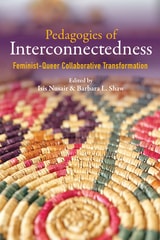
Pedagogies of Interconnectedness
Feminist-Queer Collaborative TransformationEdited by Isis Nusair and Barbara Shaw
University of Illinois Press, 2025
The contributors describe ways of building communities within and beyond academic programs and examine what it means to engage in community-building work and action across institutional boundaries. In Part One, the essayists focus on the centrality of community building and reinterpreting bodies of knowledge with students, staff, faculty, and community members. Part Two looks at bringing transnational approaches to feminist collaborations in ways that challenge the classroom’s central place in knowledge production. Part Three explores organic collaborations in and beyond the classroom.
A practical and much-needed resource, Pedagogies of Interconnectedness offers cutting-edge ideas for collaboration in pedagogy, education justice, community-based activities, and liberatory worldmaking.
Contributors: Jordyn Alderman, Leen Al-Fatafta, Meryl Altman, María Claudia André, Andrea N. Baldwin, Carolyn Beer, Luisa Bieri, Rebecca Dawson, Misty De Berry, Danielle M. DeMuth, Emily Fairchild, Sara Youngblood Gregory, Letizia Guglielmo, Jeremy Hall, K. Melchor Hall, Linh U. Hua, Christine Keating, Charlotte Meehan, Brayden Milam, Isis Nusair, Montserrat Pérez-Toribio, Andrea Putala, Ariella Rotramel, Ann Russo, Kimberly Sanchez, Barbara L. Shaw, M. Gabriela Torres, Ayana K. Weekley, and Sharon R. Wesoky

Poetics of the Flesh
Mayra Rivera
Duke University Press, 2015
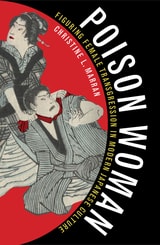
Poison Woman
Figuring Female Transgression in Modern Japanese CultureChristine L. Marran
University of Minnesota Press, 2007
Based on the lives and crimes of no less than twenty real women, dokufu (poison women) narratives emerged as a powerful presence in Japan during the 1870s. During this tumultuous time, as the nation moved from feudalism to oligarchic government, such accounts articulated the politics and position of underclass women, sexual morality, and female suffrage. Over the next century, the figure of the oversexed female criminal, usually guilty of robbery or murder, became ubiquitous in modern Japanese culture.
In Poison Woman, Christine L. Marran investigates this powerful icon, its shifting meanings, and its influence on defining women’s sexuality and place in Japan. She begins by considering Meiji gesaku literature, in which female criminality was often medically defined and marginalized as abnormal. She describes the small newspapers (koshinbun) that originally reported on poison women, establishing journalistic and legal conventions for future fiction about them. She examines zange, or confessional narratives, of female and male ex-convicts from the turn of the century, then reveals how medical and psychoanalytical literature of the 1920s and 1930s offered contradictory explanations of the female criminal as an everywoman or a historical victim of social circumstances and the press. She concludes by exploring postwar pulp fiction (kasutori), film and underground theater of the 1970s, and the feminist writer Tomioka Taeko’s take on the transgressive woman.
Persistent stories about poison women illustrate how a few violent acts by women were transformed into myriad ideological, social, and moral tales that deployed notions of female sexual desire and womanhood. Bringing together literary criticism, the history of science, media theory, and gender and sexuality studies, Poison Woman delves into genre and gender in ways that implicate both in projects of nation-building.
Christine L. Marran is associate professor of Japanese literature and cultural studies at the University of Minnesota.
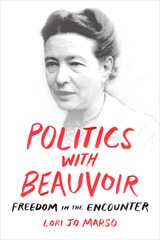
Politics with Beauvoir
Freedom in the EncounterLori Jo Marso
Duke University Press, 2017
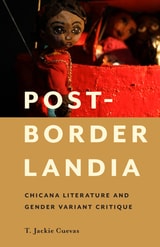
Post-Borderlandia
Chicana Literature and Gender Variant CritiqueCuevas, T. Jackie
Rutgers University Press, 2018
2019 Lambda Literary Awards Finalist
Bringing Chicana/o studies into conversation with queer theory and transgender studies, Post-Borderlandia examines why gender variance is such a core theme in contemporary Chicana and Chicanx narratives. It considers how Chicana butch lesbians and Chicanx trans people are not only challenging heteropatriarchal norms, but also departing from mainstream conceptions of queerness and gender identification.
Expanding on Gloria Anzaldúa’s classic formulation of the Chicana as transformer of the “borderlands,” Jackie Cuevas explores how a new generation of Chicanx writers, performers, and filmmakers are imagining a “post-borderlands” subjectivity, where shifting national, racial, class, sexual, and gender identifications produce complex power dynamics. In addition, Cuevas offers fresh archival analysis of the Chicana feminist canon to reveal how queer gender variance has always been crucial to this literary tradition.
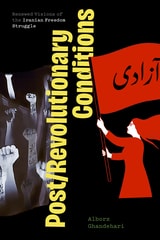
Post/Revolutionary Conditions
Renewed Visions of the Iranian Freedom StruggleAlborz Ghandehari
Northwestern University Press, 2025
An exploration of how the Iranian people have renewed their longtime struggle for freedom
The Woman, Life, Freedom uprising is only the latest manifestation of a century-long struggle for liberation in Iran. This ongoing movement for justice has encompassed two revolutions against domestic dictatorship and foreign imperialism, as well as a series of uprisings since the 1979 Iranian Revolution, which was followed by a new era of repression. Post/Revolutionary Conditions: Renewed Visions of the Iranian Freedom Struggle offers an intersectional analysis of how progressive and radical movement builders have reenvisioned liberation in the post-’79 era, despite new forms of oppression under the Islamic Republic and from US and other foreign imperial powers. Bringing together a diverse array of sources, including oral histories with Iranian labor, student, and gender justice organizers, as well as resistance literature and art, Alborz Ghandehari challenges narratives that treat working-class, feminist, queer, and oppressed ethnic minorities’ movements as separate from one another. Post/Revolutionary Conditions demonstrates how such potent reimaginings of collective liberation and a radically democratic future have been shaped by multiple generations of protest and kindred struggles globally.
Postcolonial Hauntings
Play and Transnational FeminismSushmita Chatterjee
University of Illinois Press, 2024
Often examined separately, play and hauntings in fact act together to frame postcolonial issues. Sushmita Chatterjee showcases their braided workings in social and political fabrics. Drawing on this intertwined idea of play and hauntings, Chatterjee goes to the heart of conundrums within transnational postcolonial feminisms by examining the impossible echoes of translations, differing renditions of queer, and the possibilities of solidarity beyond the fraternal friendships that cement nation-states. Meaning-plays, or slippages through language systems as we move from one language to another, play a pivotal role in a global world. As Chatterjee shows, an attentiveness to meaning-plays discerns the past and present, here and there, and moves us toward responsive ethics in our theories and activisms.
Insightful and stimulating, Postcolonial Hauntings centers the inextricable work of play and hauntings as a braided ethics for postcolonial transnational struggles.
Postconflict Utopias
Everyday Survival in Chocó, ColombiaTania Lizarazo
University of Illinois Press, 2024
A merger of eyewitness accounts and theory, Postconflict Utopias explores the links between lived knowledge and survival while revealing the power unleashed when women ask the simple question, “Why not?”

Postfeminist War
Women in the Media-Military-Industrial ComplexMary Douglas Vavrus
Rutgers University Press, 2019
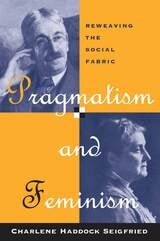
Pragmatism and Feminism
Reweaving the Social FabricCharlene Haddock Seigfried
University of Chicago Press, 1996
With careful attention to their interwoven histories and contemporary concerns, Pragmatism and Feminism effectively invigorates both traditions, opening them to new interpretations and appropriations and asserting their timely philosophical relevance. This foundational work in feminist theory simultaneously invites and guides future scholarship in an area of rapidly emerging significance.
Praising Girls
The Rhetoric of Young Women, 1895-1930Henrietta Rix Wood
Southern Illinois University Press, 2016
The site of the study—Kansas City, Missouri—reflects the diverse rhetorical experiences of girls in cities across the United States at the beginning of the last century. Four case studies examine the writing of privileged white girls at a college preparatory school, Native American girls at an off-reservation boarding school, African American girls at a segregated high school, and working- and middle-class girls at a large whites-only public high school. Wood’s analysis reveals a contemporary concept of epideictic rhetoric that accounts for issues of gender, race, class, and age.
Proper Women
Feminism and the Politics of Respectability in IranFae Chubin
Temple University Press, 2024
Chubin brings attention to the varying class, ethnic, religious, and national identities of NGO staff and clients that shaped their differing understandings of oppression and justice. Her examination of the tensions within the organization reveals why the efforts of the NGO workers failed to gain purchase among the intended beneficiaries.
Proper Women concludes by encouraging feminist activists to not only examine the role of local politics and transnational connections in shaping their definitions of empowerment, but also consider the advantages of a justice-enhancing practice as opposed to justice monism for their target populations.

Provoking Feminisms
Edited by Carolyn Allen and Judith A. Howard
University of Chicago Press, 2000

Psychosomatic
Feminism and the Neurological BodyElizabeth A. Wilson
Duke University Press, 2004
Public Catastrophes, Private Losses
Sarah Tobias
Rutgers University Press, 2025
This essay collection explores how the definition of catastrophe might be expanded to include many forms of large-scale structural violence on communities, species, and ecosystems. Using feminist methodologies, the contributors to Public Catastrophes, Private Losses trace the connections between seemingly unrelated forms of violence such as structural racism, environmental degradation, and public health crises. In contrast to a news media that focuses on mass fatalities and immediate consequences, these essays call our attention to how catastrophes can also involve slow violence with long-term effects.
The authors also consider how these catastrophes are profoundly shaped by government action or inaction, offering a powerful critique of how government neglect has cost lives and demonstrating how vulnerable populations can be better protected. The essays in this collection examine how public catastrophes imprint themselves on lives, as individuals and communities narrate, process, and grapple with legacies of loss. The book is thus a feminist intervention that challenges the binary between public and private, personal and political.
Public Feminisms
From Academy to CommunityEdited by Carrie N. Baker and Aviva Dove-Viebahn
Lever Press, 2023
The field of feminist studies grew from the U.S. women’s movements of the 1960s and 1970s and has continued to be deeply connected to ongoing movements for social justice. As educational institutions are increasingly seeing public scholarship and community engagement as relevant and fruitful complements to traditional academic work, feminist scholars have much to offer in demonstrating different ways to inform and interact with various communities. In Public Feminisms: From Academy to Community edited by Carrie N. Baker and Aviva Dove-Viebahn, a diverse range of feminist scholar-activists write about the dynamic and varied methods they use to reach beyond the traditional academic classroom and scholarly journals to share their work with the public.
Part one explores how feminist scholars engage broader audiences through art, media, and public programming, including essays on a public discussion series teaching intersectional feminist analysis of popular films, and a podcast from Latina scholars discussing issues of reproductive justice, social justice, motherhood, sexuality, race, and gender. Part two focuses on activism and public education, including essays on “Take Back the Night,” and archiving the women’s march protests. Part three turns to public writing and scholarship, including an essay on elevating the perspectives and voices of underrepresented creatives in the film and television industry. Part four explores feminist pedagogies for community engagement and for teaching public feminisms.
Accessible and engaging to a broad range of readers, the essays in this volume are a rich resource for scholars and students interested in infusing their academic knowledge into the public sphere. With this timely book, the editors offer an opportunity to reflect on the meaning and importance of community engagement and highlight some of the important public-facing work feminist scholars are doing today. Faculty, graduate, and undergraduate students, as well as administrators hoping to increase their schools’ connections to the community, will find this volume indispensable.
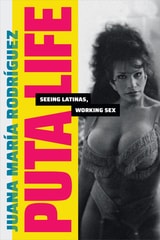
Puta Life
Seeing Latinas, Working SexJuana María Rodríguez
Duke University Press, 2023