Results by title
34 books match the query 'Reconstruction'
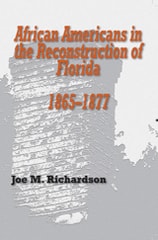
African Americans in the Reconstruction of Florida, 1865-1877
Joe M. Richardson
University of Alabama Press, 2008
Exploration of African American contributions to the state of Florida during the era of Reconstruction
Despite their shortcomings, “radical” politicians, including African Americans, made worthy contributions to the state of Florida during the era of Reconstruction. Joe Richardson disputes many of the misconceptions about the state’s debt and corruption by exploring how some African American politicians were quite capable and learned their duties quickly. Even more remarkable was the rapidity with which the unlettered ex-slaves absorbed education and adjusted to their status as free men. African Americans in the Reconstruction of Florida delves into the problems encountered by the freed men and traces their successes and failures during the first decade after emancipation.

African Diasporic Cinema
Aesthetics of ReconstructionDaniela Ricci
Michigan State University Press, 2020
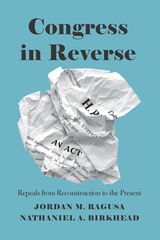
Congress in Reverse
Repeals from Reconstruction to the PresentJordan M. Ragusa and Nathaniel A. Birkhead
University of Chicago Press, 2020
Congress in Reverse is the first book to attempt to answer these questions. Jordan M. Ragusa and Nathaniel A. Birkhead examine when and why existing statutes are successfully “undone,” arguing that repeals are most common when the parties are united on the issue—which was not the case when it came to Obamacare for the Republican Party—and the majority party wins control of Congress after a long stint in the minority. By shifting focus from the making of laws to their un-making, Congress in Reverse opens up a new arena for studying legislative activity in Congress.
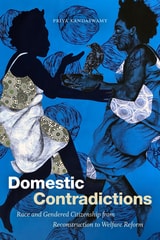
Domestic Contradictions
Race and Gendered Citizenship from Reconstruction to Welfare ReformPriya Kandaswamy
Duke University Press, 2021
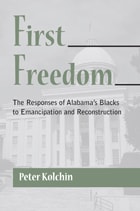
First Freedom
The Responses of Alabama's Blacks to Emancipation and ReconstructionPeter Kolchin
University of Alabama Press, 2008
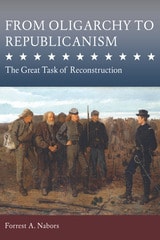
From Oligarchy to Republicanism
The Great Task of ReconstructionForrest A. Nabors
University of Missouri Press, 2026
In From Oligarchy to Republicanism: The Great Task of Reconstruction, Forrest A. Nabors shows that the ultimate goal of the Republican Party, the war, and Reconstruction was the same. This goal was to preserve and advance republicanism as the American founders understood it, against its natural, existential enemy: oligarchy. The principle of natural equality justified American republicanism and required abolition and equal citizenship. Likewise, slavery and discrimination on the basis of color stand on the competing moral foundation of oligarchy, the principle of natural inequality, which requires ranks.
The effect of slavery and the division of the nation into two “opposite systems of civilization” are causally linked. Charles Devens, a lawyer who served as a general in the Union Army, and his contemporaries understood that slavery’s existence transformed the character of political society.
One of those dramatic effects was the increased power of slaveowners over those who did not have slaves. When the slave state constitutions enumerated slaves in apportioning representation using the federal three-fifths ratio or by other formulae, intra-state sections where slaves were concentrated would receive a substantial grant of political power for slave ownership. In contrast, low slave-owning sections of the state would lose political representation and political influence over the state. This contributed to the non-slaveholders’ loss of political liberty in the slave states and provided a direct means by which the slaveholders acquired and maintained their rule over non-slaveholders.
This book presents a shared analysis of the slave South, synthesized from the writings and speeches of the Republicans who served in the Thirty-Eighth, Thirty-Ninth or Fortieth Congress from 1863-1869. The account draws from their writings and speeches dated before, during, and after their service in Congress. Nabors shows how the Republican majority, charged with the responsibility of reconstructing the South, understood the South.
Republicans in Congress were generally united around the fundamental problem and goal of Reconstruction. They regarded their work in the same way as they regarded the work of the American founders. Both they and the founders were engaged in regime change, from monarchy in the one case, and from oligarchy in the other, to republicanism. The insurrectionary states’ governments had to be reconstructed at their foundations, from oligarchic to republican. The sharp differences within Congress pertained to how to achieve that higher goal.

Gendered Strife and Confusion
The Political Culture of ReconstructionLaura F. Edwards
University of Illinois Press, 1997

Japan’s Economy in War and Reconstruction
Jerome B. Cohen
University of Minnesota Press, 1949
Japan's Economy in War and Reconstruction was first published in 1949. Minnesota Archive Editions uses digital technology to make long-unavailable books once again accessible, and are published unaltered from the original University of Minnesota Press editions.
Dr. Cohen's substantial monograph is a carefully documented account of Japan's economic development from 1937 to 1949. It describes with much statistical evidence a remarkable experiment in planned industrial expansion prior to 1941, then continues with a survey of the war years, showing both the successes and failures of the planning, controlling, financing, and developing of Japan's war industries.
The last part of the book deals with the post-war problems of Japan from the war's end to the latter part of 1948—three years of occupation by the Allied Powers. Dr. Cohen discusses the three key economic factors: the basic reforms, the rapidly mounting inflation, and the slowly increasing, but still low level of production.
Dr. Cohen's first chapter is devoted to the careful planning of the years before the war. The next chapters discuss Japan's efforts to cope with the problems of munitions, food supply, and labor as the Allied war effort gradually wore her down. There are detailed studies of separate industries, shipping, and agriculture, and a discussion of the parts played respectively by air, sea, and land operations in the destruction of Japan's ability to wage successful war.
One of the main theses of these chapters is that the increasingly enveloping blockade of Japan shut off necessary industrial raw materials, and so brought Japanese war production to a virtual standstill before the main weight of the strategic air attack was delivered, and so made it impossible for Japan to continue the war.
The author's grim picture of inter-service quarrels and overlapping and inconsistent controls demonstrates that the Japanese army, navy, and civil service, in spite of their reputation for exact and strict organization, in practice failed to make good use of their unlimited powers.
Kaleidoscopic Ethnicity
International Migration and the Reconstruction of Community Identities in IndiaKurien, Prema A
Rutgers University Press, 2002
Co-Winner of the 2003 American Sociological Association's Asia/Asian American book award.
Based on ethnographic research in three communities (Ezhava Hindu, Mappila Muslim, and Syrian Christian) in Kerala, India, which sent large numbers of workers to the Middle East for temporary jobs, Kaleidoscopic Ethnicity explores the factors responsible for the striking differences in the groups’ patterns of migration and migration-induced social change. Most broadly, Prema Kurien seeks to understand what ethnicity is and how it affects people’s activities and decisions. She argues that, in each case, a community-specific nexus of religion, gender, and status shaped migration, and was, in turn, transformed by it.
The religious background of the three groups determined their social location within colonial and postcolonial Kerala. This social location in turn affected their occupational profiles, family structures, and social networks, as well as their conceptions of gender and honor, and thus was fundamental in shaping migration patterns. The rapid enrichment brought about by international migration resulted in a reinterpretation of religious identity and practice which was manifested by changes in patterns of gendered behavior and status in each of the three communities. What makes this book unique is its focus on the sociocultural patterns of short-term international migration and its comparative ethnographic approach.
Kinship Systems
Change and ReconstructionPatrick McConvell
University of Utah Press, 2013
One key argument in the book is that linguistic evidence for reconstruction of ancient terminologies can provide strong independent evidence to complement anthropologists’ notions of structural kinship transformations and ground them in actual historical and geographical contexts. There are principles that we all share, no matter what kind of society we live in, and these provide a common “language” for anthropology and linguistics. With this language we can accurately compare how family relations are organized in different societies, as well as how we talk about such relations. Because this concept has often been denied by the trajectories in anthropology over the last few decades, Kinship Systems represents a reassertion of, and advances on, classical kinship theory and methods. Innovations and interdisciplinary methods are described by the originators of the new approaches and other leading regional experts.
Leftist Theories of Sport
A Critique and ReconstructionWilliam J. Morgan
University of Illinois Press, 1994
Life's Splendid Drama
Evolutionary Biology and the Reconstruction of Life's Ancestry, 1860-1940Peter J. Bowler
University of Chicago Press, 1996
"Intriguing and insightful."—William Kimler, American Scientist
"[A] volume of impressive scholarship and extensive references."—Library Journal
"One of Bowler's best."—Kevin Padian, Nature
"[Bowler's] comprehensive review of the various debates and ideas in taxonomy, morphology, and vertebrate evolution . . . deserves the attention of biologists and other scholars interested in the history of ideas."—Choice
"The persistence of pre-Darwinian modes of thought in contemporary biology underlines the importance of Bowler's book. Its value is not only in the history it provides, but also in the way it illumines the present."—Peter J. Causton, Boston Book Review
Lincoln and Reconstruction
John C. Rodrigue
Southern Illinois University Press, 2013
Although Abraham Lincoln dominates the literature on the American Civil War, he remains less commonly associated with reconstruction. Previous scholarly works touch on Lincoln and reconstruction, but they tend either to speculate on what Lincoln might have done after the war had he not been assassinated or to approach his reconstruction plans merely as a means of winning the war. In this thought-provoking study, John C. Rodrigue offers a succinct but significant survey of Lincoln’s wartime reconstruction initiatives while providing a fresh interpretation of the president’s plans for postwar America.
Revealing that Lincoln concerned himself with reconstruction from the earliest days of his presidency, Rodrigue details how Lincoln’s initiatives unfolded, especially in the southern states where they were attempted. He explores Lincoln’s approach to various issues relevant to reconstruction, including slavery, race, citizenship, and democracy; his dealings with Congressional Republicans, especially the Radicals; his support for and eventual abandonment of colonization; his dealings with the border states; his handling of the calls for negotiations with the Confederacy as a way of reconstructing the Union; and his move toward emancipation and its implications for his approach to reconstruction.
As the Civil War progressed, Rodrigue shows, Lincoln’s definition of reconstruction transformed from the mere restoration of the seceded states to a more fundamental social, economic, and political reordering of southern society and of the Union itself. Based on Lincoln’s own words and writings as well as an extensive array of secondary literature, Rodrigue traces the evolution of Lincoln’s thinking on reconstruction, providing new insight into a downplayed aspect of his presidency.
Lost Homelands
Ruin and Reconstruction in the 20th-Century SouthwestAudrey Goodman
University of Arizona Press, 2010
Through analyzing a variety of texts and images, Goodman illuminates the ways that modern forces such as militarization, environmental degradation, internal migration, and an increased border patrol presence have shattered the perception of a secure homeland in the Southwest. The deceptive natural beauty of the Southwest deserts shields a dark history of trauma and decimation that has remained as a shadow on the region’s psyche. The first to really synthesize such wide-ranging material about the effects of the atomic age in the Southwest, Goodman realizes the value of combined visual and verbal art and uses it to put forth her own original ideas about reconstructing a new sense of homeland.
Lost Homelands reminds us of the adversity and dislocation suffered by people of the Southwest by looking at the ways that artists, photographers, filmmakers, and writers have grappled with these problems for decades. In assessing the ruination of the region, however, Goodman argues that those same artists and writers have begun to reassemble a new sense of homeland from these fragments.
My Father's Name
A Black Virginia Family after the Civil WarLawrence P. Jackson
University of Chicago Press, 2012
My Father’s Name is a family story full of twists and turns—and one of haunting familiarity to many Americans, who may question whether the promises of emancipation have ever truly been fulfilled. It is also a resolute look at the duties that come with reclaiming and honoring Americans who survived slavery and a thoughtful meditation on its painful and enduring history.
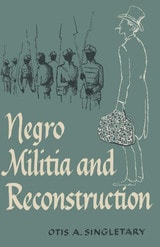
Negro Militia and Reconstruction
By Otis A. Singletary
University of Texas Press, 1957
Much of the violence that characterized Reconstruction was directly associated with the Negro militia movement organized by Radical politicians to support their precarious regimes in Southern states. This book is the story of that ill-fated movement, a story with important implication for later times.
Most Southern whites did not disguise their hostility toward the governments that were imposed on their states after Reconstruction entered its Radical phase. and Radical leaders lived in constant fear that this hostility would flare into open revolt. Organization of a loyal protective force was imperative if they were to remain in power.
Although planned originally as a defensive force, the Negro militia was quickly used by the Radicals for such purposes as controlling elections. The resentment of Southern whites resulting from this political activity was aggravated by crimes of violence, depredations, and minor social offenses committed by some of the militiamen. However, the white Southerner’s fundamental enmity toward the Negro militia stemmed from the racial implications of a policy that armed the Negroes and placed them in positions of authority over white men.
At first, opposition to the Negro militia movement took the form of legal stratagems and other measures short of force, but the final blow to the Negro militia was dealt by white volunteer rifle companies— illegal, armed counterforces that were at the very core of the White Line movement. The race riot as a political technique was born, the most notorious riot occurring at Hamburg, South Carolina, where, the author states, the policy of “disbandment through extermination” was successfully employed. Disintegration of the entire movement was inevitable.
“It is ironic,” Singletary states, “that the organization of this protective force, because of its racial implications, actually aided in the destruction of the very thing it was created to protect.”
Before its publication, Negro Militia and Reconstruction won the Moncado Prize, a cash award made biennially by the American Military Institute for “the best original book-length manuscript in any field of United States Military history.”
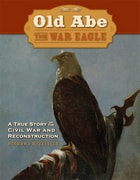
Old Abe the War Eagle
A True Story of the Civil War And ReconstructionRichard Zeitlin
Wisconsin Historical Society Press, 1986
The story of Old Abe, the bald eagle that became the mascot of the Eighth Regiment of Wisconsin Volunteer Infantry. It is also the story of the men among whom Old Abe lived: the farmers, loggers, clerks, and immigrants who flocked to the colors in 1861.
Reissued in 2012 with a new cover.
Only One Place of Redress
African Americans, Labor Regulations, and the Courts from Reconstruction to the New DealDavid E. Bernstein
Duke University Press, 2001
A pioneer in applying the insights of public choice theory to legal history, Bernstein contends that the much-maligned jurisprudence of the Lochner era—with its emphasis on freedom of contract and private market ordering—actually discouraged discrimination and assisted groups with little political clout. To support this thesis he examines the motivation behind and practical impact of laws restricting interstate labor recruitment, occupational licensing laws, railroad labor laws, minimum wage statutes, the Davis-Bacon Act, and New Deal collective bargaining. He concludes that the ultimate failure of Lochnerism—and the triumph of the regulatory state—not only strengthened racially exclusive labor unions but contributed to a massive loss of employment opportunities for African Americans, the effects of which continue to this day.
Scholars and students interested in race relations, labor law, and legal or constitutional history will be fascinated by Bernstein’s daring—and controversial—argument.
Psychology in Human Context
Essays in Dissidence and ReconstructionSigmund Koch
University of Chicago Press, 1999
The broad scope of essays in Psychology in Human Context—which began as the basis for the eagerly anticipated postscript to Koch's seminal Psychology: A Study of a Science—reveals his writings to be as fresh and relevant today as ever. Carefully edited by two of Koch's close associates, this collection places psychological and philosophical issues in the context of twentieth-century thought and provides intellectual and moral signposts for future travelers in what Koch regarded as the irreducibly rich and human realm of the psychological studies.
Sigmund Koch was University Professor of Psychology and Philosophy at Boston University, the editor of the landmark six-volume series Psychology: A Study of a Science (1959-1963) and coeditor of A Century of Psychology as Science. He served as the president of three divisions of the American Psychological Association and was director of the Ford Foundation program in the Humanities and the Arts (1964-1967).
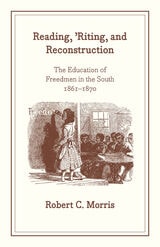
Reading, 'Riting, and Reconstruction
The Education of Freedmen in the South, 1861-1870Robert C. Morris
University of Chicago Press, 1981
This study of education for freedmen following Emancipation is the definitive treatment of the subject. Employing a wide range of sources, Robert C. Morris examines the organizations that staffed and managed black schools in the South, with particular attention paid to the activities of the Freedman’s Bureau. He looks as well at those who came to teach, a diverse group—white, black, Northern, Southern—and at the curricula and textbooks they used. While giving special emphasis to the Freedmen’s Bureau school program, Morris places the freedmen’s educational movement fully in its nineteenth-century context, relating it both to the antislavery crusade that preceded it and to the conservative era of race relations that followed.
Reconstruction in Texas
By Charles William Ramsdell
University of Texas Press, 1970
A reprint of the 1910 study, Reconstruction in Texas examines the events that still impact upon Texas and the South.

Superstorm Sandy
The Inevitable Destruction and Reconstruction of the Jersey ShoreBates, Diane C
Rutgers University Press, 2015
Diane C. Bates offers a wide-ranging look at the Jersey Shore both before and after Sandy, examining the many factors—such as cultural attachment, tourism revenues, and governmental regulation—that combined to create a highly vulnerable coastal region. She explains why the Shore is so important to New Jerseyans, acting as a key cultural touchstone in a state that lacks a central city or even a sports team to build a shared identity among the state’s residents. She analyzes post-Sandy narratives about the Jersey Shore that trumpeted the dominance of human ingenuity over nature (such as the state’s “Stronger than the Storm” advertising campaign) or proclaimed a therapeutic community (“Jersey Strong”)—narratives rooted in emotion and iconography, waylaying any thought of the near-certainty of future storms. The book also examines local business owners, politicians, real estate developers, and residents who have vested interests in the region, explaining why the Shore was developed intensively prior to Sandy, and why restoration became an imperative in the post-storm period.
Engagingly written and insightful, Superstorm Sandy highlights the elements that compounded the disaster on the Shore, providing a framework for understanding such catastrophes and preventing them in the future.
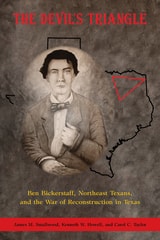
The Devil's Triangle
Ben Bickerstaff, Northeast Texans, and the War of Reconstruction in TexasJames M. Smallwood
University of North Texas Press, 2007
The Greatest and the Grandest Act
The Civil Rights Act of 1866 from Reconstruction to TodayEdited by Christian G. Samito
Southern Illinois University Press, 2018
Essays examine the history and legal ramifications of the act and highlight competing impulses within it, including the often-neglected Section 9, which allows the president to use the nation’s military in its enforcement; an investigation of how the Thirteenth Amendment operated to overturn the Dred Scott case; and New England’s role in the passage of the act. The act is analyzed as it operated in several states such as Kentucky, Missouri, and South Carolina during Reconstruction. There is also a consideration of the act and its interpretation by the Supreme Court in its first decades. Other essays include a discussion of the act in terms of contract rights and in the context of the post–World War II civil rights era as well as an analysis of the act’s backward-looking and forward-looking nature.
The Impact of the Civil War and Reconstruction on Arkansas
Persistence in the Midst of RuinCarl H. Moneyhon
University of Arkansas Press, 2002
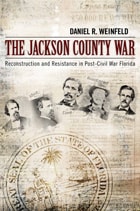
The Jackson County War
Reconstruction and Resistance in Post–Civil War FloridaDaniel R. Weinfeld
University of Alabama Press, 2023
Offers original conclusions explaining why Jackson County became the bloodiest region in Reconstruction Florida
From early 1869 through the end of 1871, citizens of Jackson County, Florida, slaughtered their neighbors by the score. The nearly three year frenzy of bloodshed became known as the Jackson County War. The killings, close to one hundred and by some estimates twice that number, brought Jackson County the notoriety of being the most violent county in Florida during the Reconstruction era. Daniel R. Weinfeld has made a thorough investigation of contemporary accounts. He adds an assessment of recently discovered information, and presents a critical evaluation of the standard secondary sources.
The Jackson County War focuses on the role of the Freedmen’s Bureau, the emergence of white “Regulators,” and the development of African American political consciousness and leadership. It follows the community’s descent after the Civil War into disorder punctuated by furious outbursts of violence until the county settled into uneasy stability seven years later. The Jackson County War emerges as an emblem of all that could and did go wrong in the uneasy years after Appomattox and that left a residue of hatred and fear that endured for generations.
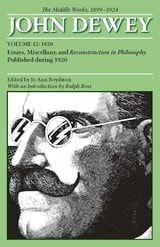
The Middle Works of John Dewey, Volume 12, 1899 - 1924
Essays, Miscellany, and Reconstruction in Philosophy Published during 1920John Dewey. Edited by Jo Ann Boydston
Southern Illinois University Press, 2008
A collection of all of Dewey’s writings for 1920 with the exception of Letters from China and Japan. A Modern Language Association Committee on Scholarly Editions textual edition.
The nineteen items collected here, including his major work, Reconstruction in Philosophy, evolved in the main from Dewey’s travel, touring, lecturing, and teaching in Japan and China. Ralph Ross notes in his Introduction to this volume that Reconstruction in Philosophy is “a radical book . . . a pugnacious book by a gentle man.” It is in this book that Dewey summarizes his version of pragmatism, then called Instrumentalism. For Dewey, the pragmatist, it was people acting on the strength of intelligence modeled on science who could find true ideas, ones “we can assimilate, validate, corroborate, and verify.” Optimism pervades Reconstruction of Philosophy; in keeping with Dewey’s world of open possibilities, the book recognizes that the observation and thought of human striving can make the difference between despair and affirmation of life.
The seven essays on Chinese politics and social tradition that Dewey sent back from the Orient exhibit both the liveliness and the sensitive power of an insightful mind. Set against a backdrop of Japanese hegemony in China, the last days of Manchu imperialism, Europe’s carving of China into concessions, and China’s subsequent refusal to accept the terms of the Treaty of Versailles, the essays were startlingly relevant in this time of Eastern turbulence and change.
At the National University of Peking, Dewey delivered a series of lectures on “Three Contemporary Philosophers: William James, Henri Bergson, and Bertrand Russell.” The James and Bergson lectures are published for the first time in this volume. Dewey chose these philosophers, according to Ralph Ross, because he was trying to show “his oriental audience what he believed and hoped about man and society and was talking about those fellow philosophers who shared the same beliefs and hopes.”
The Reconstruction of Georgia
Alan Conway
University of Minnesota Press, 1966
The Reconstruction of Georgia was first published in 1966. Minnesota Archive Editions uses digital technology to make long-unavailable books once again accessible, and are published unaltered from the original University of Minnesota Press editions.
In this study of the reconstruction period in Georgia following the Civil War, a British historian provides a dispassionate account of a highly controversial subject. A revisionist reappraisal, Dr. Conway's study is the first substantial history of the period to be published in fifty years. The sources include considerable material that has become available since the publication of the last major work on the subject in 1915.
The author gives close attention to the last days of the Civil War and its aftermath in Georgia, the early attempts at political reconstruction in 1865, the work of the Freedmen's Bureau, the economic problems involved in reshaping the state's economy, the development of the state-cropping and crop-lien systems, the imposition of Congressional reconstruction on Georgia under military supervision, the political maneuverings and economic ventures of such prominent figures as Joseph E. Brown, Benjamin Hill, and Hannibal I. Kimball, the efforts of the Ku-Klux Klan to nullify Negro voting rights and re-establish "white supremacy" concepts, and, finally, the investigations by the Democratic party of Republication misgovernment during the administration of Governor Rufus B. Bullock.
Dr. Conway, who did the research for the book in Georgia, has made considerable use of primary manuscripts, travelers' accounts, state and federal reports, and contemporary newspaper material to arrive at an account which judiciously assesses the claims and counter-claims of violently opposed groups which were vitally concerned with the place of the Negro in Southern society after emancipation and with the return of Georgia to the Union.

The Reconstruction of Patriotism
Education for Civic ConsciousnessMorris Janowitz
University of Chicago Press, 1984
"In The Reconstruction of Patriotism, Morris Janowitz . . . places a national-service program on the national agenda. . . . Like William James, Janowitz envisions government enrolling young people to work for a year or two at subsistence pay, doing jobs that benefit society—working with, say, 'conservation, health, or old-age problems.' He believes that we need a service program because since the end of the Second World War our citizens (and, indeed, citizens of almost all the advanced industrial nations) have become more keenly aware of their rights than of their obligations, and generations are growing up with little or no understanding that they are members of a national community and have responsibilities to it—that they must give as well as take. . . . Because it reopens discussion of our wider obligations and how to fulfill them, Mr. Janowitz's thoughtful book is in itself a national service."—Naomi Bliven, The New Yorker
"Morris Janowitz examines an issue that seldom is subject to social and political analysis—patriotism. His thesis is clear: The long-term trend in politics has been to enhance citizen rights without effective articulation of citizen obligations. A meaningful balance between the two, he contends, must be restored. . . . The strength of this study lies in Janowitz's persuasive argument that the durability and vitality of democratic institutions require that a sense of community, or shared values, be preserved. Without civiz consciousness, he rightly observes, social and political fragmentation ensues. . . . A lucid and impressively researched polemic."—W. Wesley McDonald, American Political Science Review
"Janowitz addresses a seminal issue: how to restore the sense of shared civic responsibility that has fallen victim in recent years to our growing preoccupation with individual rights and the rise of special-interest groups. . . . Central to his prescription is the revival of the concept of the citizen soldier, whose importance since pre-Revolutionary War days Janoqitz discusses at length. He concludes, 'There can be no reconstruction of patriotism without a system of national service.' . . . An important book. I highly recommend it."—Washington Monthly
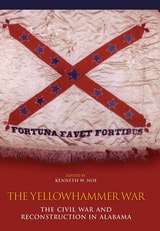
The Yellowhammer War
The Civil War and Reconstruction in AlabamaEdited by Kenneth W. Noe
University of Alabama Press, 2014
During the first winter of the war, Confederate soldiers derided the men of an Alabama Confederate unit for their yellow-trimmed uniforms that allegedly resembled the plumage of the yellow-shafted flicker or “yellowhammer” (now the Northern Flicker, Colaptes auratus, and the state bird of Alabama). The soldiers’ nickname, “Yellowhammers,” came from this epithet. After the war, Alabama veterans proudly wore yellowhammer feathers in their hats or lapels when attending reunions. Celebrations throughout the state have often expanded on that pageantry and glorified the figures, events, and battles of the Civil War with sometimes dubious attention to historical fact and little awareness of those who supported, resisted, or tolerated the war off the battlefield.
Many books about Alabama’s role in the Civil War have focused serious attention on the military and political history of the war. The Yellowhammer War likewise examines the military and political history of Alabama’s Civil War contributions, but it also covers areas of study usually neglected by centennial scholars, such as race, women, the home front, and Reconstruction. From Patricia A. Hoskins’s look at Jews in Alabama during the Civil War and Jennifer Ann Newman Treviño’s examination of white women’s attitudes during secession to Harriet E. Amos Doss’s study of the reaction of Alabamians to Lincoln’s Assassination and Jason J. Battles’s essay on the Freedman’s Bureau, readers are treated to a broader canvas of topics on the Civil War and the state.
CONTRIBUTORS
Jason J. Battles / Lonnie A. Burnett / Harriet E. Amos Doss / Bertis English / Michael W. Fitzgerald / Jennifer Lynn Gross / Patricia A. Hoskins / Kenneth W. Noe / Victoria E. Ott / Terry L. Seip / Ben H. Severance / Kristopher A. Teters / Jennifer Ann Newman Treviño / Sarah Woolfolk Wiggins / Brian Steel Wills
Published in Cooperation with the Frances S. Summersell Center for the Study of the South
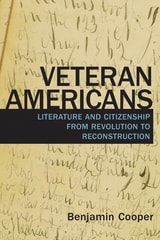
Veteran Americans
Literature and Citizenship from Revolution to ReconstructionBenjamin Cooper
University of Massachusetts Press, 2018
“I may dare to speak, and I intend to speak and write what I think,” wrote a New York volunteer serving in the Mexican War in 1848. Such sentiments of resistance and confrontation run throughout the literature produced by veteran Americans in the nineteenth century—from prisoner-of-war narratives and memoirs to periodicals, adventure pamphlets, and novels. Military men and women were active participants in early American print culture, yet they struggled against civilian prejudice about their character, against shifting collective memories that removed military experience from the nation's self-definition, and against a variety of headwinds in the uneven development of antebellum print culture.
In this new literary history of early American veterans, Benjamin Cooper reveals how soldiers and sailors from the Revolutionary War through the Civil War demanded, through their writing, that their value as American citizens and authors be recognized. Relying on an archive of largely understudied veteran authors, Cooper situates their perspective against a civilian monopoly in defining American citizenship and literature that endures to this day.
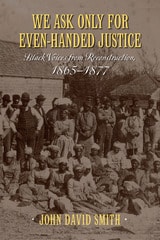
We Ask Only for Even-Handed Justice
Black Voices from Reconstruction, 1865-1877John David Smith
University of Massachusetts Press, 2014
The years following Appomattox offered the freed people numerous opportunities and challenges. Ex-slaves reconnected with relatives dispersed by the domestic slave trade and the vicissitudes of civil war. They sought their own farms and homesteads, education for their children, and legal protection from whites hostile to their new status. They negotiated labor contracts, established local communities, and, following the 1867 Reconstruction Acts, entered local, state, and national politics.
Though aided by Freedmen's Bureau agents and sympathetic whites, former slaves nevertheless faced daunting odds. Ku Klux Klansmen and others terrorized blacks who asserted themselves, many northerners lost interest in their plight, and federal officials gradually left them to their own resources. As a result, former Confederates regained control of the southern state governments following the 1876 presidential election.
We Ask Only for Even-Handed Justice is a substantially revised and expanded edition of a book originally published under the title Black Voices from Reconstruction, 1865–1877.
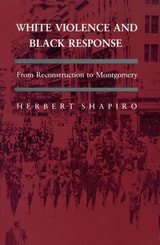
White Violence and Black Response
From Reconstruction to MontgomeryHerbert Shapiro
University of Massachusetts Press, 1988
We are taught that America is a society based on respect for the law and orderly procedures. That the Constitution stands as a safeguard of individual freedom, and the courts and the police are supposedly established to enforce the law. When a controversial issue arises in the American fabric, it is to be resolved not in the streets but through the democratic processes of elections. Yet, for blacks these liberal values have been turned into their opposites. The courts have most often stood silent in the face of racist violence or have turned their wrath against the victims, not the perpetrators; the police have protected the mob rather than the mobbed and have often either aided the lynchers or displayed amazing inability to identify them. Where race is concerned, legislative or judicial action to deal with controversial issues has often come late and been partial in nature, while white violence has continued to terrorize black Americans without hindrance.
In White Violence and Black Response: From Reconstruction to Montgomery, Herbert Shapiro explores the depths of violence generated by white racism and the irony of the American association with violence as a behavior of black people. Citing the nation's political leadership, educational institutions, and news media as institutions that fail to educate Americans about the oppressive social conditions that have root in these criminal acts, Shapiro is able to expose the ways in which white supremacy operates within American institutions and the responses by black people in this powerful read.

Worlds Before Adam
The Reconstruction of Geohistory in the Age of ReformMartin J. S. Rudwick
University of Chicago Press, 2008
The first detailed account of the reconstruction of prehuman geohistory, Martin J. S. Rudwick’s Worlds Before Adam picks up where his celebrated Bursting the Limits of Time leaves off. Here, Rudwick takes readers from the post-Napoleonic Restoration in Europe to the early years of Britain’s Victorian age, chronicling the staggering discoveries geologists made during the period: the unearthing of the first dinosaur fossils, the glacial theory of the last ice age, and the meaning of igneous rocks, among others. Ultimately, Rudwick reveals geology to be the first of the sciences to investigate the historical dimension of nature, a model that Charles Darwin used in developing his evolutionary theory.
Featuring an international cast of colorful characters, with Georges Cuvier and Charles Lyell playing major roles and Darwin appearing as a young geologist, Worlds Before Adam is a worthy successor to Rudwick’s magisterial first volume. Completing the highly readable narrative of one of the most momentous changes in human understanding of our place in the natural world, Worlds Before Adam is a capstone to the career of one of the world’s leading historians of science.