Results by title
1726 books match the query 'Film' and 65 start with p
Paid to Care
Domestic Workers in Contemporary Latin American CultureRachel Randall
University of Texas Press, 2023
An insight into the struggles of paid domestic workers in Latin America through an exploration of films, texts, and digital media produced since the 1980s in collaboration with them or inspired by their experiences.
Paid domestic work in Latin America is often undervalued, underpaid, and underregulated. Exploring a wave of Latin American cultural texts since the 1980s that draw on the personal experiences of paid domestic work or intimate ties to domestic employees, Paid to Care offers insights into the struggles domestic workers face through an analysis of literary testimonials, documentary and fiction films, and works of digital media.
From domestic workers’ experiences of unionization in the 1980s to calls for their rights to be respected today, the cultural texts analyzed in Paid to Care provide additional insight into public debates about paid domestic work. Rachel Randall examines work made in Brazil, Argentina, Chile, Mexico, Peru, and Uruguay. The most recent of these texts respond to the Covid-19 pandemic, which put many domestic workers’ health and livelihoods at risk. Engaging with the legal histories of domestic work in multiple distinct national contexts, Randall demonstrates how the legacy of colonialism and slavery shapes the profession even today. Focusing on personal or coproduced cultural representations of domestic workers, Paid to Care explores complex ethical issues relating to consent, mediation, and appropriation.
Painting the City Red
Chinese Cinema and the Urban ContractYomi Braester
Duke University Press, 2010
Drawing on extensive archival research, interviews with leading filmmakers and urban planners, and close readings of scripts and images, Braester describes how films and stage plays have promoted and opposed official urban plans and policies as they have addressed issues such as demolition-and-relocation plans, the preservation of vernacular architecture, and the global real estate market. He shows how the cinematic rewriting of historical narratives has accompanied the spatial reorganization of specific urban sites, including Nanjing Road in Shanghai; veterans’ villages in Taipei; and Tiananmen Square, centuries-old courtyards, and postmodern architectural landmarks in Beijing. In Painting the City Red, Braester reveals the role that film and theater have played in mediating state power, cultural norms, and the struggle for civil society in Chinese cities.
Palestinian Cinema in the Days of Revolution
By Nadia Yaqub
University of Texas Press, 2018
Palestinian cinema arose during the political cinema movements of the late 1960s and early 1970s, yet it was unique as an institutionalized, though modest, film effort within the national liberation campaign of a stateless people. Filmmakers working within the Palestinian Liberation Organization (PLO) and through other channels filmed the revolution as it unfolded, including the Israeli bombings of Palestinian refugee camps, the Jordanian and Lebanese civil wars, and Palestinian life under Israeli occupation, attempting to create a cinematic language consonant with the revolution and its needs. They experimented with form both to make effective use of limited material and to process violent events and loss as a means of sustaining active engagement in the Palestinian political project.
Palestinian Cinema in the Days of Revolution presents an in-depth study of films made between 1968 and 1982, the filmmakers and their practices, the political and cultural contexts in which the films were created and seen, and their afterlives among Palestinian refugees and young filmmakers in the twenty-first century. Nadia Yaqub discusses how early Palestinian cinema operated within emerging public-sector cinema industries in the Arab world, as well as through coproductions and solidarity networks. Her findings aid in understanding the development of alternative cinema in the Arab world. Yaqub also demonstrates that Palestinian filmmaking, as a cinema movement created and sustained under conditions of extraordinary precarity, offers important lessons on the nature and possibilities of political filmmaking more generally.

Paolo Sorrentino's Cinema and Television
Edited by Annachiara Mariani
Intellect Books, 2021
This is the first English-language collection dedicated to the prolific director, who has emerged as one of the most compelling figures in twenty-first-century European cinema. International contributors—from the UK, Italy, France, the Netherlands, Australia, Israel, Canada, and the US—offer original interpretations of Sorrentino’s work in film and television. In an invaluable contribution to the existing literature, they examine Sorrentino’s recurrent grand themes, offer new perspectives and cues for discussion, and challenge established notions about the filmmaker and his career.

Parallel Tracks
The Railroad and Silent CinemaLynne Kirby
Duke University Press, 1997
In wide-ranging and provocative analyses of dozens of silent films—icons of film history like The General and The Great Train Robbery as well as many that are rarely discussed—Kirby examines how trains and rail travel embodied concepts of spectatorship and mobility grounded in imperialism and the social, sexual, and racial divisions of modern Western culture. This analysis at the same time provides a detailed and largely unexamined history of the railroad in silent filmmaking. Kirby also devotes special attention to the similar ways in which the railroad and cinema structured the roles of men and women. As she demonstrates, these representations have had profound implications for the articulation of gender in our culture, a culture in some sense based on the machine as embodied by the train and the camera/projector.
Ultimately, this book reveals the profound and parallel impact that the railroad and the cinema have had on Western society and modern urban industrial culture. Parallel Tracks will be eagerly awaited by those involved in cinema studies, American studies, feminist theory, and the cultural study of modernity.
Pare Lorentz and Documentary Film
Robert L. Snyder
University of Nevada Press, 2001
Originally published in 1967, Pare Lorentz and the Documentary Film was the first book devoted exclusively to the works of Lorentz. Robert L. Snyder focuses on the films Lorentz made for the United State Film Service--The River, The Plow That Broke the Plains, and The Fight for Life. With the exception of a few vintage World War I training films, these three films were the first made by the government for general viewing by the American public.
It was Lorentz's idea to produce a series of films about the pressing problems facing the nation during the Great Depression--drought, floods, poverty, and slums. With an initial budget of $6,000 and the enormous drive and energy of a young director who had never made a motion picture, the beignnings were anything but auspicious. The results, however, were sensational and often made national headlines.
In spite of inadequate budgets, bureaucratic red tape, and professional jealousies, Lorentz developed new filming techniques and set new standards in his documentaries. Snyder has written a perceptive account of the production of these classic films and the contemporary reaction to them, along with a critical evaluation of each work. This is an important book for anyone interested in documentary film and the history of the Depression era.
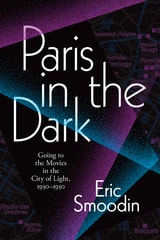
Paris in the Dark
Going to the Movies in the City of Light, 1930–1950Eric Smoodin
Duke University Press, 2020
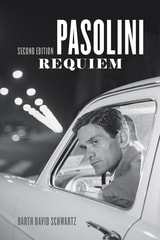
Pasolini Requiem
Second EditionBarth David Schwartz
University of Chicago Press, 2017
Based on extensive interviews with those who knew Pasolini, both friends and enemies, admirers and detractors, Pasolini Requiem chronicles his growth from poet in the provinces to Italy’s leading “civil poet”; his flight to Rome in 1950; the scandalous success of his two novels and political writing; and his transition to film, where he started as a contributor to the golden age of Italian cinema and ended with the shocking Salò, or the 120 Days of Sodom. Pasolini’s tragic and still unsolved murder has remained a subject of contentious debate for four decades. The enduring fascination with who committed the crime—and why—reflects his vital stature in Italy’s political and social history.
Updated throughout and with a new afterword covering the efforts to reopen the investigation—and the legal maelstrom surrounding Pasolini’s demise—this edition of Pasolini Requiem is a riveting account of one of the twentieth century’s most controversial, ever-present iconoclasts.
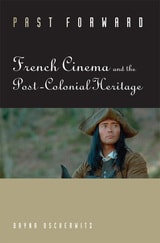
Past Forward
French Cinema and the Post-Colonial HeritageDayna Oscherwitz
Southern Illinois University Press, 2010
In Past Forward: French Cinema and the Post-Colonial Heritage, author Dayna Oscherwitz focuses on the world of French films with a new lens. Drawing upon a wealth of research and the examination of popular French movies, Oscherwitz offers fresh perspectives not only on the unique importance of motion pictures and their indelible influence on French character, but on current debates regarding individual and collective memory.
Past Forward traces the development and ascension of the French heritage film—those historical and costume dramas focusing on prestigious French subjects, events, and settings. These motion pictures, preeminent during a period of globalization and fear over the affects of immigration in 1980s France, quickly came to embody a specific version of French national and collective identity: one that idealized the past, condemned the present, and created an institutional form of memory. Oscherwitz presents the intriguing notion that French heritage films are not exclusively expressions of nationalism and nostalgia as has commonly been asserted. On the contrary, although these movies were born out of a perceived loss of French culture, their ambivalence toward traditional hallmarks of nationalism opens them up to new interpretation. Also in contrast to typical conceptions, the author suggests that these heritage films are far from cinematic bastions of multicultural backlash; instead, she argues, popular culture has in its own fashion reinserted the history of colonialism and immigration into the national past, thus reimagining heritage itself.
Against this backdrop, Oscherwitz goes on to investigate the multicultural worlds of beur and banlieue movies—cinema seemingly in direct contrast with the heritage film—offering the theory that these films serve as a “countermemory” to an institutionalized one and provide alternative models of collective memory and identity. Through careful analysis of several examples, Oscherwitz demonstrates how these two seemingly different realms—heritage and multicultural cinema—are far from mutually exclusive in the construction of French identity.
Throughout the volume, numerous well-known French movies are reexamined, inviting new interpretations of and challenging old views through investigations of familiar cinematic works. Past Forward is arevolutionary volume that boldly reimagines our ideas about French film and its role in communicating history and memory.
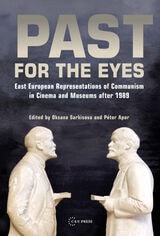
Past for the Eyes
East European Representations of Communism in Cinema and Museums After 1989Oksana Sarkisova
Central European University Press, 2008
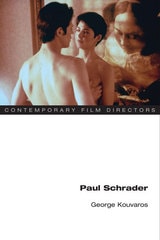
Paul Schrader
George Kouvaros
University of Illinois Press, 2007
George Kouvaros draws on a personal interview conducted with Schrader and the director's prior commentary to trace common motivations and impulses behind such well-known films as Light Sleeper, American Gigolo, Affliction, Auto Focus, Taxi Driver, and Patty Hearst. Kouvaros reads Schrader's films not only in terms of a number of important themes such as male obsession and estrangement, but also in regard to harder to define issues that include melancholia, trauma, and the complex linkages of violence and guilt that bind individuals to places and each other.
Paul Thomas Anderson
George Toles
University of Illinois Press, 2016
Peckinpah Today
New Essays on the Films of Sam PeckinpahEdited by Michael Bliss
Southern Illinois University Press, 2012
Written exclusively for this collection by today’s leading Peckinpah critics, the nine essays in Peckinpah Today explore the body of work of one of America’s most important filmmakers, revealing new insights into his artistic process and the development of his lasting themes. Edited by Michael Bliss, this book provides groundbreaking criticism of Peckinpah’s work by illuminating new sources, from modified screenplay documents to interviews with screenplay writers and editors.
Included is a rare interview with A. S. Fleischman, author of the screenplay for The Deadly Companions, the film that launched Peckinpah’s career in feature films. The collection also contains essays by scholar Stephen Prince and Paul Seydor, editor of the controversial special edition of Pat Garrett and Billy the Kid. In his essay on Straw Dogs, film critic Michael Sragow reveals how Peckinpah and co-scriptwriter David Zelag Goodman transformed a pulp novel into a powerful film. The final essay of the collection surveys Peckinpah’s career, showing the dark turn that the filmmaker’s artistic path took between his first and last films. This comprehensive approach reinforces the book’s dawn-to-dusk approach, resulting in a fascinating picture of a great filmmaker’s work.
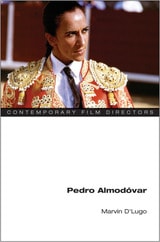
Pedro Almodóvar
Marvin D’Lugo
University of Illinois Press, 2006
Marvin D'Lugo offers a concise, informed, and insightful commentary on a preeminent force in modern cinema. D'Lugo follows Almodóvar's career chronologically, tracing the director's works and their increasing complexity in terms of theme and the Spanish film tradition. Drawing on a wide range of critical sources, D'Lugo explores Almodóvar's use of melodrama and Hollywood genre film, his self-invention as a filmmaker, and his on-screen sexual politics. D'Lugo also discusses what he calls "geocultural positioning," that is, Almodóvar's paradoxical ability to use his marginal positions—in terms of his class, geographical origin, and identity—to develop an expressive language that is emotionally recognizable by audiences worldwide. Two fascinating interviews with the director round out the volume.
An exciting consideration of an arthouse giant, Pedro Almodóvar mixes original interpretations into an analysis sure to reward film students and specialists alike.
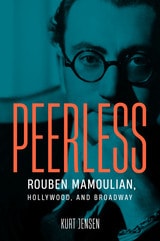
Peerless
Rouben Mamoulian, Hollywood, and BroadwayKurt Jensen
University of Wisconsin Press, 2024
Kurt Jensen’s magisterial volume, extensively researched and filled with trenchant observations, brings to life this charming, flawed, and fascinating man—and demonstrates how the wellspring of his art contained the seeds of his own destruction. Drawing upon Mamoulian’s unfinished memoir and voluminous diaries, as well as interviews with the director’s surviving collaborators, Jensen delivers fresh and informative insider stories from seminal productions. Meanwhile, he explores Mamoulian’s aesthetic principles and strategies as manifested in lighting, choreography, and sound design. A tour de force, Peerless offers readers a multifaceted, in-depth look at an idiosyncratic genius.
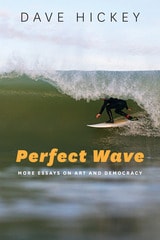
Perfect Wave
More Essays on Art and DemocracyDave Hickey
University of Chicago Press, 2017
When Dave Hickey was twelve, he rode the surfer’s dream: the perfect wave. And, like so many things in life we long for, it didn’t quite turn out—he shot the pier and dashed himself against the rocks of Sunset Cliffs in Ocean Beach, which nearly killed him.
Hickey went on to develop a career as one of America’s foremost critical iconoclasts, a trusted no-nonsense voice commenting on the worlds of art and culture. Perfect Wave brings together essays on a wide range of subjects from throughout Hickey’s career, displaying his breadth of interest and powerful insight into what makes art work, or not, and why we care. With Hickey as our guide, we travel to Disneyland and Vegas, London and Venice. We discover the genius of Karen Carpenter and Waylon Jennings, learn why Robert Mitchum matters more than Jimmy Stewart, and see how the stillness of Antonioni speaks to us today. Never slow to judge—or to surprise us in doing so—Hickey relates his wincing disappointment in the later career of his early hero Susan Sontag and shows us the appeal to our commonality that we’ve been missing in Norman Rockwell.
Bookended by previously unpublished personal essays that offer a new glimpse into Hickey’s own life—including the aforementioned conclusion to his surfing career—Perfect Wave is a welcome addition to the Hickey canon.
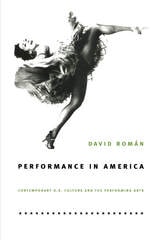
Performance in America
Contemporary U.S. Culture and the Performing ArtsDavid Román
Duke University Press, 2005
The performances that Román analyzes range from localized community-based arts events to full-scale Broadway productions and from the controversial works of established artists such as Tony Kushner to those of emerging artists. Román considers dances produced by the choreographers Bill T. Jones and Neil Greenberg in the mid-1990s as new aids treatments became available and the aids crisis was reconfigured; a production of the Asian American playwright Chay Yew’s A Beautiful Country in a high-school auditorium in Los Angeles’s Chinatown; and Latino performer John Leguizamo’s one-man Broadway show Freak. He examines the revival of theatrical legacies by female impersonators and the resurgence of cabaret in New York City. Román also looks at how the performing arts have responded to 9/11, the U.S. invasion of Afghanistan, and the second war in Iraq. Including more than eighty illustrations, Performance in America highlights the dynamic relationships among performance, history, and contemporary culture through which the past is revisited and the future reimagined.
Phantasmatic Indochina
French Colonial Ideology in Architecture, Film, and LiteraturePanivong Norindr
Duke University Press, 1996
Analyzing the first Exposition Coloniale Internationale, held in Paris in 1931, Norindr shows how the exhibition’s display of architecture gave a vision to the colonies that justified France’s cultural prejudices, while stimulating the desire for further expansionism. He critiques the Surrealist counter-exposition mounted to oppose the imperialist aims of the Exposition Coloniale, and the Surrealist incorporation and appropriation of native artifacts in avant-garde works. According to Norindr, all serious attempts at interrogating French colonial involvement in Southeast Asia are threatened by discourse, images, representations, and myths that perpetuate the luminous aura of Indochina as a place of erotic fantasies and exotic adventures. Exploring the resilience of French nostalgia for Indochina in books and movies, the author examines work by Malraux, Duras, and Claudel, and the films Indochine, The Lover, and Dien Bien Phu.
Certain to impact across a range of disciplines, Phantasmatic Indochina will be of interest to those engaged in the study of the culture and history of Vietnam, Cambodia, Thailand, and Laos, as well as specialists in the fields of French modernism, postcolonial studies, cultural studies, and comparative literature.
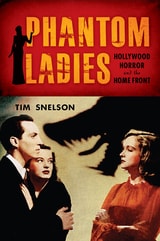
Phantom Ladies
Hollywood Horror and the Home FrontSnelson, Tim
Rutgers University Press, 2014
Phenomenology's Material Presence
Video, Vision and ExperienceGabrielle A Hezekiah
Intellect Books, 2010
Phenomenology’s Material Presence draws on recent work in phenomenology, embodiment, and cinema and extends the field by examining metaphysical presence in postcolonial cinema. Where other scholarship has assimilated insight from individual phenomenological thinkers, Phenomenology’s Material Presence utilizes the methods of these thinkers—Husserl, Heidegger, and Merleau-Ponty—to produce a richly textured and poetic essay that brings them into conversation. Through a meditation on three experimental videos by Trinidadian filmmaker Robert Yao Ramesar, this book makes the case that video performs an act of phenomenological inquiry. Phenomenology’s Material Presence extends our theorizing in both film studies and philosophy.
Philip Kaufman
Annette Insdorf
University of Illinois Press, 2012
Photocinema
The Creative Edges of Photography and FilmEdited by Neil Campbell and Alfredo Cramerotti
Intellect Books, 2013

Photography, Cinema, Memory
The Crystal Image of TimeDamian Sutton
University of Minnesota Press, 2009
A philosophical investigation into the differing sensations of time in cinema and photography
Cinema and photography are both intimately associated with time—cinema with time in passing, the photograph with the lost moment. In Photography, Cinema, Memory, Damian Sutton explores time in both media to present a radical new understanding of the photographic image as always coming into being.
Drawing on Gilles Deleuze’s concept of the crystal image to move beyond the tropes of immobility, stasis, and death, Sutton’s analysis reveals the open-endedness of time expressed in the photograph, either as a potential for an abundant future or as a depth of meandering remembrance. He presents an innovative taxonomy of time in the photograph, considering particular representations of time in the work of Nan Goldin, Eugène Atget, Andy Warhol, and others. He contrasts this taxonomy with representations of time in cinema since 1895, offering fresh readings of the films of the Lumière brothers and Mitchell & Kenyon, as well as more recent works, including Eternal Sunshine of the Spotless Mind, Amélie, and A Matter of Life and Death. Throughout this work, Sutton connects and grounds cinema and photography as starting points to comprehend how we come to terms, ultimately, with time itself as pure, immanent change.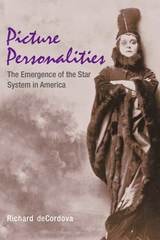
Picture Personalities
The Emergence of the Star System in AmericaRichard deCordova
University of Illinois Press, 1990
Conventional wisdom attributes the rise of the star system to the charisma of individual performers or to the public's desire to idolize an appealing star. In Picture Personalities, Richard deCordova argues that the fledgling movie industry and the press conspired to develop the star system, along with a system of discourse to support it.
How actors became stars and how they began to assume public identities distinct from their fictional roles was closely tied to the journalistic discourse of the period, produced by the trade press, newspapers, general periodicals, fan magazines, publicity stills, posters, and other material. DeCordova shows how the studios worked to fabricate moral images of the stars' marriages and personal lives and how a series of star scandals in the 1920s challenged those images and brought about changes in the conventions of representing stars. A new foreword by Corey K. Creekmur enhances this first paperback edition.
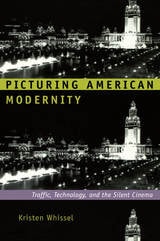
Picturing American Modernity
Traffic, Technology, and the Silent CinemaKristen Whissel
Duke University Press, 2008
Whissel shows that by portraying key events, achievements, and anxieties, the cinema invited American audiences to participate in the rapidly changing world around them. Moving pictures provided astonishing visual dispatches from military camps prior to the outbreak of fighting in the Spanish-American War. They allowed audiences to delight in images of the Pan-American Exposition, and also to mourn the assassination of President McKinley there. One early film genre, the reenactment, presented spectators with renditions of bloody battles fought overseas during the Philippine-American War. Early features offered sensational dramatizations of the scandalous “white slave trade,” which was often linked to immigration and new forms of urban work and leisure. By bringing these frequently distant events and anxieties “near” to audiences in cities and towns across the country, the cinema helped construct an American national identity for the machine age.
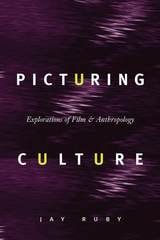
Picturing Culture
Explorations of Film and AnthropologyJay Ruby
University of Chicago Press, 2000
The book begins with analyses of key filmmakers (Robert Flaherty, Robert Garner, and Tim Asch) who have striven to generate profound statements about human behavior on film. Ruby then discusses the idea of research film, Eric Michaels and indigenous media, the ethics of representation, the nature of ethnography, anthropological knowledge, and film and lays the groundwork for a critical approach to the field that borrows selectively from film, communication, media, and cultural studies. Witty and original, yet intensely theoretical, this collection is a major contribution to the field of visual anthropology.
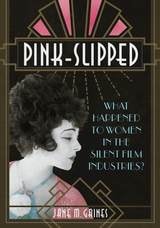
Pink-Slipped
What Happened to Women in the Silent Film Industries?Jane M Gaines
University of Illinois Press, 2018
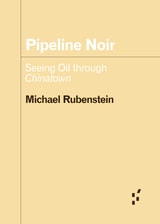
Pipeline Noir
Seeing Oil through ChinatownMichael Rubenstein
University of Minnesota Press, 2025
Watching Chinatown fifty years after its release reveals hidden connections to today’s energy and climate crises
Pipeline Noir offers a fascinating interpretation of Chinatown, a classic of New Hollywood cinema, through the lens of petromodernity. Michael Rubenstein reimagines the film as an allegory for the 1970s energy crises, revealing how its focus on water infrastructure in early-twentieth-century California serves as a surrogate for the oil pipelines shaping the postwar global order. Introducing the concept of the “petroscope,” Rubenstein demonstrates how the film’s cinematic style mirrors the worldview shaped by petroleum’s dominance in modern life.
Blending appreciation and analysis, this book uncovers layers of Chinatown’s narrative that resonate urgently today, and Rubenstein’s meticulous examinations of the screenplay’s draft history and of key scenes in the finished film shed new light on the film’s cultural and environmental significance. By aligning Chinatown with the emerging field of petrocriticism, Pipeline Noir offers a compelling contribution to film theory and the energy humanities.
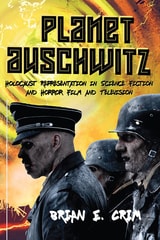
Planet Auschwitz
Holocaust Representation in Science Fiction and Horror Film and TelevisionBrian E. Crim
Rutgers University Press, 2020
Planet Auschwitz website (https://planetauschwitz.com)
Playful Frames
Styles of Widescreen CinemaSteven Rybin
Rutgers University Press, 2024
Playing the Percentages
How Film Distribution Made the Hollywood Studio SystemDerek Long
University of Texas Press, 2024
A history of film distribution in the United States from the 1910s to the 1930s, concentrating on booking, circuiting, and packaging marketing practices.
Told not as a “golden age” narrative of films, stars, or individual studios but as an economic history of the industry’s film distribution practices, Playing the Percentages is the story of how Hollywood’s vertically integrated studio system came to be. Studying the history of distribution during the growth of Hollywood, Derek Long makes a case for the domination of the studio system as the result of struggles over distribution practices.
Through a combination of archival research, critical surveys of the film industry trade press, and economic analysis, Long uncovers a complex and ever-shifting system of wrangling between distributors and exhibitors. Challenging the overemphasis within scholarship on “block booking” as a monolithic distribution mode, and attending to distribution practices beyond simple circulation, Long highlights the crucial changes in film distribution brought about by live theater, the rise of features, and the transition to sound. Playing the Percentages is a comprehensive history of film distribution in the United States during the silent era that illustrates the importance of power struggles between distributors and exhibitors over booking, pricing, and playing time.
Playing with Memories
Essays on Guy MaddinDavid Church
University of Manitoba Press, 2009
Politics of Contemporary European Cinema
Mike Wayne
Intellect Books, 1995
Mike Wayne identifies some key themes pertinent to a study of the contemporary cultural and political dynamics of European cinema from the mid-1980's, including the fall of the Berlin wall and the end of the Soviet Empire.
Throughout the book, issues are raised that question European culture and the nature of national cinema, including;
• The cultural relationship with Hollywood;
• Debates over cultural plurality and diversity;
• The disintegration of nation states along the eastern flank;
• Postcolonial travels and the hybridisation of the national formation.
Pop Modernism
Noise and the Reinvention of the EverydayJuan A. Suarez
University of Illinois Press, 2007
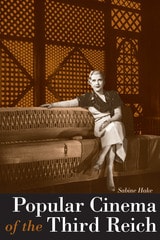
Popular Cinema of the Third Reich
By Sabine Hake
University of Texas Press, 2002
Too often dismissed as escapist entertainment or vilified as mass manipulation, popular cinema in the Third Reich was in fact sustained by well-established generic conventions, cultural traditions, aesthetic sensibilities, social practices, and a highly developed star system—not unlike its Hollywood counterpart in the 1930s. This pathfinding study contributes to the ongoing reassessment of Third Reich cinema by examining it as a social, cultural, economic, and political practice that often conflicted with, contradicted, and compromised the intentions of the Propaganda Ministry. Nevertheless, by providing the illusion of a public sphere presumably free of politics, popular cinema helped to sustain the Nazi regime, especially during the war years.
Rather than examining Third Reich cinema through overdetermined categories such as propaganda, ideology, or fascist aesthetics, Sabine Hake concentrates on the constituent elements shared by most popular cinemas: famous stars, directors, and studios; movie audiences and exhibition practices; popular genres and new trends in set design; the reception of foreign films; the role of film criticism; and the representation of women. She pays special attention to the forced coordination of the industry in 1933, the changing demands on cinema during the war years, and the various ways of coming to terms with these filmic legacies after the war. Throughout, Hake's findings underscore the continuities among Weimar, Third Reich, and post-1945 West German cinema. They also emphasize the codevelopment of German and other national cinemas, especially the dominant Hollywood model.
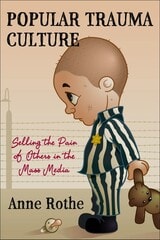
Popular Trauma Culture
Selling the Pain of Others in the Mass MediaRothe, Anne
Rutgers University Press, 2011
In Popular Trauma Culture, Anne Rothe argues that American Holocaust discourse has a particular plot structure—characterized by a melodramatic conflict between good and evil and embodied in the core characters of victim/survivor and perpetrator—and that it provides the paradigm for representing personal experiences of pain and suffering in the mass media. The book begins with an analysis of Holocaust clichés, including its political appropriation, the notion of vicarious victimhood, the so-called victim talk rhetoric, and the infusion of the composite survivor figure with Social Darwinism. Readers then explore the embodiment of popular trauma culture in two core mass media genres: daytime TV talk shows and misery memoirs.
Rothe conveys how victimhood and suffering are cast as trauma kitsch on talk shows like Oprah and as trauma camp on modern-day freak shows like Springer. The discussion also encompasses the first scholarly analysis of misery memoirs, the popular literary genre that has been widely critiqued in journalism as pornographic depictions of extreme violence. Currently considered the largest growth sector in book publishing worldwide, many of these works are also fabricated. And since forgeries reflect the cultural entities that are most revered, the book concludes with an examination of fake misery memoirs.
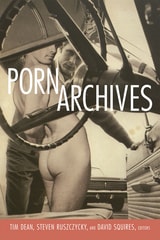
Porn Archives
Tim Dean, Steven Ruszczycky and David Squires, eds.
Duke University Press, 2014
The essays in this collection address the historically and culturally varied interactions between porn and the archive. Topics range from library policies governing access to sexually explicit material to the growing digital archive of "war porn," or eroticized combat imagery; and from same-sex amputee porn to gay black comic book superhero porn. Together the pieces trace pornography as it crosses borders, transforms technologies, consolidates sexual identities, and challenges notions of what counts as legitimate forms of knowledge. The collection concludes with a valuable resource for scholars: a list of pornography archives held by institutions around the world.
Contributors. Jennifer Burns Bright, Eugenie Brinkema, Joseph Bristow, Robert Caserio, Ronan Crowley, Tim Dean, Robert Dewhurst, Lisa Downing, Frances Ferguson, Loren Glass, Harri Kahla, Marcia Klotz, Prabha Manuratne, Mireille Miller-Young, Nguyen Tan Hoang, John Paul Ricco, Steven Ruszczycky, Melissa Schindler, Darieck Scott, Caitlin Shanley, Ramon Soto-Crespo, David Squires, Linda Williams
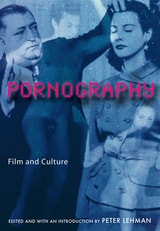
Pornography
Film and CultureLehman, Peter
Rutgers University Press, 2006
In this collection of path-breaking essays, thirteen respected scholars bring critical insights to the reality of porn and what it can tell us about ourselves sexually, culturally, and economically. Moving beyond simplistic feminist and religious positions that cast these films as categorical evils-a collective preserve of sexual perversion, misogyny, pedophilia, and racism-the contributors to this volume raise the bar of the debate and push porn studies into intriguing new territory.
The essays are divided into two sections. The first reprints important debates on the topic and traces the evolution of pornographic film, including comparing its development to that of Hollywood cinema. The second part presents new essays that consider current trends in the field, including pornography's expansion into new technologies.
This book separates this compelling genre from the sensation and shame that have long surrounded and obscured it. It will be of interest to general readers and film scholars alike.
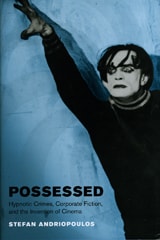
Possessed
Hypnotic Crimes, Corporate Fiction, and the Invention of CinemaStefan Andriopoulos
University of Chicago Press, 2008
Tracing this preoccupation through the period’s films—as well as its legal, medical, and literary texts—Andriopoulos pays particular attention to the terrifying notion of murder committed against one’s will. He returns us to a time when medical researchers described the hypnotized subject as a medium who could be compelled to carry out violent crimes, and when films like The Cabinet of Dr. Caligari and Dr. Mabuse, the Gambler famously portrayed the hypnotist’s seemingly unlimited power on the movie screen. Juxtaposing these medicolegal and cinematic scenarios with modernist fiction, Andriopoulos also develops an innovative reading of Kafka’s novels, which center on the merging of human and corporate bodies.
Blending theoretical sophistication with scrupulous archival research and insightful film analysis, Possessed adds a new dimension to our understanding of today’s anxieties about the onslaught of visual media and the expanding reach of vast corporations that seem to absorb our own identities.
Post-Catastrophe Film
Cinematic Visions in the Aftermath of DisasterStephen Lee Naish
Intellect Books, 2026
Focusing on the fragile, immediate aftermath of global events, before any new social order or rules for living have formed, Stephen Lee Naish’s latest book introduces an emerging subgenre: post-catastrophe film. Positioned between disaster movies, which depict humanity facing large-scale collapse, and post-apocalyptic films, where new societies and rules have already taken hold, this subgenre captures a unique threshold of survival amid change. Through lively case studies of selected popular films, Naish not only offers close readings of cinematic narratives but also explores deeper themes that emerge in the aftermath of disaster, including the role of artificial intelligence and cyborgs, cosmic survival and colonization, and the tensions between individual isolation and life with others. Ultimately, Naish shows how post-catastrophe films speak to our present reality.
In an age shaped by pandemics, climate crisis, and the uncertainties of postmodernity, cinema persists as a resilient mythmaking machine—mapping scenarios of global destruction while offering anxious viewers ways to envision alternative modes of being before a true “post-catastrophe era” arrives. Written in an engaging style and grounded in accessible examples from popular films, this book appeals to scholars, film enthusiasts, and anyone seeking to better understand our uncertain times.
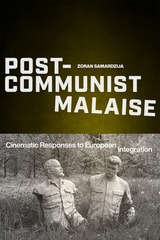
Post-Communist Malaise
Cinematic Responses to European IntegrationZoran Samardzija
Rutgers University Press, 2020
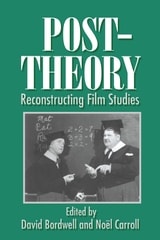
Post-Theory
Reconstructing Film StudiesEdited by David Bordwell and Noël Carroll
University of Wisconsin Press, 1996
Post-Theory offers fresh directions for understanding film, presenting new essays by twenty-seven scholars on topics as diverse as film scores, audience response, and the national film industries of Russia, Scandinavia, the U.S., and Japan. They use historical, philosophical, psychological, and feminist methods to tackle such basic issues as: What goes on when viewers perceive a film? How do filmmakers exploit conventions? How do movies create illusions? How does a film arouse emotion? Bordwell and Carroll have given space not only to distinguished film scholars but to non-film specialists as well, ensuring a wide variety of opinions and ideas on virtually every topic on the current agenda of film studies. Full of stimulating essays published here for the first time, Post-Theory promises to redefine the study of cinema.
Postcinematic Vision
The Coevolution of Moving-Image Media and the SpectatorRoger F. Cook
University of Minnesota Press, 2020
A study of how film has continually intervened in our sense of perception, with far-ranging insights into the current state of lived experience
How has cinema transformed our senses, and how does it continue to do so? Positing film as a stage in the long coevolution of human consciousness and visual technology, Postcinematic Vision offer a fresh perspective on the history of film while providing startling new insights into the so-called divide between cinematic and digital media.
Starting with the argument that film viewing has long altered neural circuitry in our brains, Roger F. Cook proceeds to reevaluate film’s origins, as well as its merger with digital imaging in the 1990s. His animating argument is that film has continually altered the relation between media and human perception, challenging the visual nature of modern culture in favor of a more unified, pan-sensual way of perceiving. Through this approach, he makes original contributions to our understanding of how mediation is altering lived experience.
Along the way, Cook provides important reevaluations of well-known figures such as Franz Kafka, closely reading cinematic passages in the great author’s work; he reassesses the conventional wisdom that Marshall McLuhan was a technological determinist; and he lodges an original new reading of The Matrix. Full of provocative and far-reaching ideas, Postcinematic Vision is a powerful work that helps us see old concepts anew while providing new ideas for future investigation.
Postfeminist War
Women in the Media-Military-Industrial ComplexMary Douglas Vavrus
Rutgers University Press, 2019
Postmodernism, or, The Cultural Logic of Late Capitalism
Fredric Jameson
Duke University Press, 1992
Precarious Intimacies
The Politics of Touch in Contemporary Western European CinemaMaria Stehle and Beverly Weber
Northwestern University Press, 2020
Twenty-first-century Europe is undergoing dramatic political and economic transformations that produce new forms of transnational contact as well as new regimes of exclusion and economic precarity. These political and economic shifts both circumscribe and enable new possibilities for intimacy. Many European films of the last two decades depict experiences of political and economic vulnerability in narratives of precarious intimacies. In these films, stories of intimacy, sex, love, and friendship are embedded in violence and exclusion, but, as Maria Stehle and Beverly Weber show, the politics of touch and connection also offers avenues to theorize forms of attention and affection that challenge exclusive notions of race, citizenship, and belonging.
Precarious Intimacies examines the aesthetic strategies that respond to this tension and proposes a politics of interpretation that identifies the potential and possibility of intimacy.
Precarious Secrets
A History of the Latin American Political ThrillerFabricio Tocco
University of Texas Press, 2025
An exploration of the political thriller genre and its context in Latin American politics and entertainment.
For the past five decades, a distinctive type of political thriller has been steadily developing in Latin America. Precarious Secrets is a panoramic overview of the genre in the hands of renowned writers and filmmakers from Argentina, Mexico, Chile, and Brazil, as well as lesser-known Peruvian, Uruguayan and Paraguayan artists for whom the style has been a vehicle for pungent narratives shot through with menace and conspiracy.
Fabricio Tocco explores the genre’s unique role in Latin American entertainment and activism. Precarious Secrets traces the evolutions of the Latin American political thriller from its emergence in the 1970s, through the silence imposed by dictatorships and the genre’s resurgence after the Cold War. The political thriller has dramatized the region’s turbulent past, through assassinations, coups, mass killings, revolutions and the search of desaparecidos by human rights organizations. In the process, Tocco isolates the Latin American political thriller’s particular grammar of secrecy. In the Hollywood thriller, revealing secrets involves high stakes and transformative consequences. In Latin American political thrillers, by contrast, secrets produce only more precarity—moral ambiguity as unsettling as it is unshakeable.
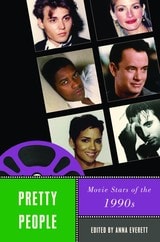
Pretty People
Movie Stars of the 1990sEverett, Anna
Rutgers University Press, 2012
In the 1990s, American civil society got upended and reordered as many social, cultural, political, and economic institutions were changed forever. Pretty People examines a wide range of Hollywood icons who reflect how stardom in that decade was transformed as the nation itself was signaling significant changes to familiar ideas about gender, race, ethnicity, age, class, sexuality, and nationality.
Such actors as Denzel Washington, Andy Garcia, Halle Berry, Angela Bassett, Will Smith, Jennifer Lopez, and Antonio Banderas became bona fide movie stars who carried major films to amazing box-office success. Five of the decade’s top ten films were opened by three women—Julia Roberts, Jodie Foster, and Whoopi Goldberg. “Chick flick” entered the lexicon as Leonardo DiCaprio became the “King of the World,” ushering in the cult of the mega celebrity. Tom Hanks and Tom Cruise defined screen masculinity as stark contrasts between “the regular guy” and “the intense guy” while the roles of Michael Douglas exemplified the endangered “Average White Male.” A fascinating composite portrait of 1990s Hollywood and its stars, this collection marks the changes to stardom and society at century’s end.
Pretty Pictures
Production Design and the History FilmBy C. S. Tashiro
University of Texas Press, 1998
Theories of film have traditionally dealt with either narrative or industrial issues, with the consequence that the physical content of the graphic frame has often been ignored or relegated to the sidelines. By contrast, C. S. Tashiro foregrounds the visual aspect of cinema in this book, drawing on his experiences as a designer and filmmaker, as well as on contemporary theory, to show how production design can support or contradict narrative structure, or exist in an entirely parallel realm of meaning.
Tashiro looks at cinematic production design from a broadly interdisciplinary perspective, encompassing art and architecture theory, audience reception, narrative theory, and phenomenology, to arrive at a more encompassing definition of the process. He builds his argument around studies of several prominent history films, since design is central to historical representation, and explores the most pertinent issues raised by the topic, particularly commodity consumption. In his conclusion, he also offers possible solutions to some of the social problems raised by design.
Principles of Adaptation for Film and Television
By Ben Brady
University of Texas Press, 1994
From All Quiet on the Western Front, the Academy Award-winning "Best Picture" of 1929-1930, to Dances with Wolves, the 1991 winner, many of Hollywood's most popular and enduring movies have been screen adaptations of written work, including novels, stories, and plays. In this practical, hands-on guide, veteran TV and screenwriter Ben Brady unlocks the secrets of the adaptation process, showing aspiring writers and writing teachers how to turn any kind of narrative material into workable, salable screenplays for film and television.
Step by step, Brady guides novice screenwriters to the completion of a professional screenplay. He begins with an incisive discussion of how to evaluate a written work's potential as a screenplay. Then he discusses each step of the writing process, showing how to identify the plot and premise of the play, develop character, treatment, and dialogue, and handle camera language and format. Brady illustrates each of these points by developing and writing a complete screenplay of the novel Claire Serrat within the text.
With these tools, beginning screenwriters can draw on the rich resources of words in print to create exciting screenplays for film and television. Written in vivid, entertaining prose, the book will be equally useful in the classroom or at the kitchen table, wherever enterprising writers ply their craft.