Results by title
67 books match the query 'Global Warming & Climate Change' and 5 start with p
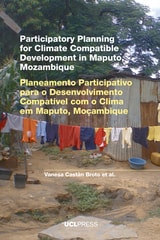
Participatory Planning for Climate Compatible Development in Maputo, Mozambique
Edited by Vanesa Castán Broto, Jonathan Ensor, Emily Boyd, Charlotte Allen, Carlos Seventine, and Domingos Augusto Macucule
University College London, 2015
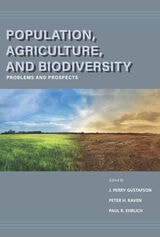
Population, Agriculture, and Biodiversity
Problems and ProspectsJ. Perry Gustafson
University of Missouri Press, 2020
The world population is projected to be nine to ten billion by 2050, signaling the need to increase world food production by more than 70 percent on the same amount of land currently under production—and this without further damaging our fragile environment. The essays in this collection, written by experts for laypersons, present the problems we face with clarity and assess our prospects for solving them, calling for action but holding out viable solutions.
Power Shift
Keywords for a New Politics of EnergyImre Szeman
West Virginia University Press, 2025
Featuring brief essays on 101 key terms by scholars, artists, and activists from around the world and across disciplines, Power Shift offers an expansive, kaleidoscopic guide to the history of petromodernity, recent technological and social developments, and pathways to new energy futures. The book offers new insights into the emergent politics of energy, contrasting today’s environmental and climate movements with the geopolitical contests of the Cold War era. It explores the still unfolding story of energy transition by focusing on the ongoing struggles of communities and individuals against decisions made by corporations, governments, and international organizations.

Prepared
The Environmental Politics of the End of the WorldAllison Ford
University of Chicago Press, 0
Shares deep insights into the world of “prepping” and reveals how prepping functions as an environmental practice expressed through right-wing ideology.
Sensationalized in TV shows like Doomsday Preppers, ordinary people who prepare for the end of the world are a subject of fascination. While beginners might keep a few days’ worth of food and water on hand in case of a weather emergency, others truly push themselves to acquire the materials, skills, and knowledge they would need to survive complete societal collapse. Though we might think of them as on the fringe, some estimate that there are as many as 20 million preppers worldwide.
Sociologist Allison Ford’s Prepared: The Environmental Politics of the End of the World shares a behind-the-scenes look at preppers. Ford’s ethnography finds that prepping is a response to environmental risk that originates in right-wing political ideology. Instead of turning to collective action to find a solution, however, preppers approach emergency preparedness as an individual responsibility. Preparedness reasserts and confirms preppers’ self-identification as people who protect their families and maintain self-control, without depending upon others. She argues that preppers adopt the strategies that they do because they are culturally attached to their worldviews, specifically their commitments to liberalism and its unspoken gendered, racial, and class hierarchies, which are being challenged by the failures of modernity that preppers observe. Ultimately, Prepared gives critical insight into how people who do not necessarily identify as environmentalists respond to and deal with environmental risk.
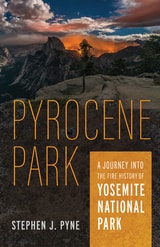
Pyrocene Park
A Journey into the Fire History of Yosemite National ParkStephen J. Pyne
University of Arizona Press, 2023
In the last decade, fire has blasted into public attention. California’s blazes have captured national and global media interest with their drama and urgency. Expand the realm of fire to include the burning of fossil fuels, and the fire story also subsumes climate change. Renowned fire historian Stephen J. Pyne argues that the relationship between fire and humans has become a defining feature of our epoch, and he reveals how Yosemite offers a cameo of how we have replaced an ice age with a fire age: the Pyrocene.
Organized around a backcountry trek to a 50-year experiment in restoring fire, Pyrocene Park describes the 150-year history of fire suppression and management that has led us, in part, to where the park is today. But there is more. Yosemite’s fire story is America’s, and the Earth’s, as it shifts from an ice-informed world to a fire-informed one. Pyrocene Park distills that epic story into a sharp miniature.
Flush with people, ideas, fires, and controversy, Pyrocene Park is a compelling and accessible window into the American fire scene and the future it promises.