Results by title
2646 books match the query 'History & Criticism' and 117 start with p
Paid to Care
Domestic Workers in Contemporary Latin American CultureRachel Randall
University of Texas Press, 2023
An insight into the struggles of paid domestic workers in Latin America through an exploration of films, texts, and digital media produced since the 1980s in collaboration with them or inspired by their experiences.
Paid domestic work in Latin America is often undervalued, underpaid, and underregulated. Exploring a wave of Latin American cultural texts since the 1980s that draw on the personal experiences of paid domestic work or intimate ties to domestic employees, Paid to Care offers insights into the struggles domestic workers face through an analysis of literary testimonials, documentary and fiction films, and works of digital media.
From domestic workers’ experiences of unionization in the 1980s to calls for their rights to be respected today, the cultural texts analyzed in Paid to Care provide additional insight into public debates about paid domestic work. Rachel Randall examines work made in Brazil, Argentina, Chile, Mexico, Peru, and Uruguay. The most recent of these texts respond to the Covid-19 pandemic, which put many domestic workers’ health and livelihoods at risk. Engaging with the legal histories of domestic work in multiple distinct national contexts, Randall demonstrates how the legacy of colonialism and slavery shapes the profession even today. Focusing on personal or coproduced cultural representations of domestic workers, Paid to Care explores complex ethical issues relating to consent, mediation, and appropriation.
Painting the City Red
Chinese Cinema and the Urban ContractYomi Braester
Duke University Press, 2010
Drawing on extensive archival research, interviews with leading filmmakers and urban planners, and close readings of scripts and images, Braester describes how films and stage plays have promoted and opposed official urban plans and policies as they have addressed issues such as demolition-and-relocation plans, the preservation of vernacular architecture, and the global real estate market. He shows how the cinematic rewriting of historical narratives has accompanied the spatial reorganization of specific urban sites, including Nanjing Road in Shanghai; veterans’ villages in Taipei; and Tiananmen Square, centuries-old courtyards, and postmodern architectural landmarks in Beijing. In Painting the City Red, Braester reveals the role that film and theater have played in mediating state power, cultural norms, and the struggle for civil society in Chinese cities.
Palestinian Cinema in the Days of Revolution
By Nadia Yaqub
University of Texas Press, 2018
Palestinian cinema arose during the political cinema movements of the late 1960s and early 1970s, yet it was unique as an institutionalized, though modest, film effort within the national liberation campaign of a stateless people. Filmmakers working within the Palestinian Liberation Organization (PLO) and through other channels filmed the revolution as it unfolded, including the Israeli bombings of Palestinian refugee camps, the Jordanian and Lebanese civil wars, and Palestinian life under Israeli occupation, attempting to create a cinematic language consonant with the revolution and its needs. They experimented with form both to make effective use of limited material and to process violent events and loss as a means of sustaining active engagement in the Palestinian political project.
Palestinian Cinema in the Days of Revolution presents an in-depth study of films made between 1968 and 1982, the filmmakers and their practices, the political and cultural contexts in which the films were created and seen, and their afterlives among Palestinian refugees and young filmmakers in the twenty-first century. Nadia Yaqub discusses how early Palestinian cinema operated within emerging public-sector cinema industries in the Arab world, as well as through coproductions and solidarity networks. Her findings aid in understanding the development of alternative cinema in the Arab world. Yaqub also demonstrates that Palestinian filmmaking, as a cinema movement created and sustained under conditions of extraordinary precarity, offers important lessons on the nature and possibilities of political filmmaking more generally.

Parallel Tracks
The Railroad and Silent CinemaLynne Kirby
Duke University Press, 1997
In wide-ranging and provocative analyses of dozens of silent films—icons of film history like The General and The Great Train Robbery as well as many that are rarely discussed—Kirby examines how trains and rail travel embodied concepts of spectatorship and mobility grounded in imperialism and the social, sexual, and racial divisions of modern Western culture. This analysis at the same time provides a detailed and largely unexamined history of the railroad in silent filmmaking. Kirby also devotes special attention to the similar ways in which the railroad and cinema structured the roles of men and women. As she demonstrates, these representations have had profound implications for the articulation of gender in our culture, a culture in some sense based on the machine as embodied by the train and the camera/projector.
Ultimately, this book reveals the profound and parallel impact that the railroad and the cinema have had on Western society and modern urban industrial culture. Parallel Tracks will be eagerly awaited by those involved in cinema studies, American studies, feminist theory, and the cultural study of modernity.
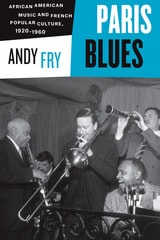
Paris Blues
African American Music and French Popular Culture, 1920-1960Andy Fry
University of Chicago Press, 2014
In Paris Blues, Andy Fry provides an alternative history of African American music and musicians in France, one that looks beyond familiar personalities and well-rehearsed stories. He pinpoints key issues of race and nation in France’s complicated jazz history from the 1920s through the 1950s. While he deals with many of the traditional icons—such as Josephine Baker, Django Reinhardt, and Sidney Bechet, among others—what he asks is how they came to be so iconic, and what their stories hide as well as what they preserve. Fry focuses throughout on early jazz and swing but includes its re-creation—reinvention—in the 1950s. Along the way, he pays tribute to forgotten traditions such as black musical theater, white show bands, and French wartime swing. Paris Blues provides a nuanced account of the French reception of African Americans and their music and contributes greatly to a growing literature on jazz, race, and nation in France.
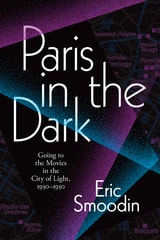
Paris in the Dark
Going to the Movies in the City of Light, 1930–1950Eric Smoodin
Duke University Press, 2020
Party in the U.S.A.
A Song by Miley CyrusMike Barthel
Duke University Press, 2027
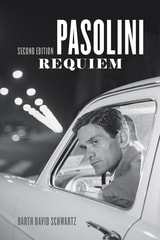
Pasolini Requiem
Second EditionBarth David Schwartz
University of Chicago Press, 2017
Based on extensive interviews with those who knew Pasolini, both friends and enemies, admirers and detractors, Pasolini Requiem chronicles his growth from poet in the provinces to Italy’s leading “civil poet”; his flight to Rome in 1950; the scandalous success of his two novels and political writing; and his transition to film, where he started as a contributor to the golden age of Italian cinema and ended with the shocking Salò, or the 120 Days of Sodom. Pasolini’s tragic and still unsolved murder has remained a subject of contentious debate for four decades. The enduring fascination with who committed the crime—and why—reflects his vital stature in Italy’s political and social history.
Updated throughout and with a new afterword covering the efforts to reopen the investigation—and the legal maelstrom surrounding Pasolini’s demise—this edition of Pasolini Requiem is a riveting account of one of the twentieth century’s most controversial, ever-present iconoclasts.
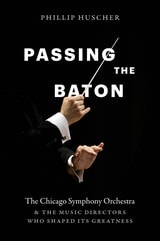
Passing the Baton
The Chicago Symphony Orchestra and the Music Directors Who Shaped Its GreatnessPhillip Huscher
University of Chicago Press, 2026
The untold story of how the Chicago Symphony Orchestra forged its place among the world’s foremost performing arts institutions through 135 years of change.
The Chicago Symphony Orchestra boasts a tradition and staying power that few cultural institutions can rival—a legacy that is tested each time one music director passes the conductor’s baton to another. In this first narrative account of the orchestra’s 135-year history, music critic and historian Phillip Huscher delivers a passionate description of how an upstart ensemble rose to international prominence and established itself as the premier symphony orchestra in the United States.
With a scholar’s care for detail and a novelist’s attention to drama, Huscher invites us into the tangled machinations behind the success or failure of each chapter in the orchestra’s storied past. We see how legendary directors such as Fritz Reiner, Sir Georg Solti, and Riccardo Muti carried the orchestra to new heights of technical perfection and sonic brilliance, but also how others provoked public outcry, caved to insider hostility, or fell to cruel press. The result is a vivid portrait of an orchestra fighting to sustain its identity amid the constant contest between past and present, supporters and critics, and artistic and financial vision.
Woven into this saga are personal stories drawn from newly uncovered documents and interviews with players, conductors, and policymakers about the burden of inheritance, the price of ambition, and the yearning to forge a legacy. Taken together, this is a tale about the power of music—how it can help us navigate our lives and leave a lasting impact on the world around us.
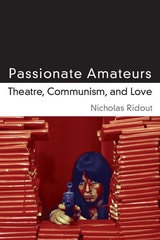
Passionate Amateurs
Theatre, Communism, and LoveNicholas Ridout
University of Michigan Press, 2015
Passionate Amateurs tells a new story about modern theater: the story of a romantic attachment to theater’s potential to produce surprising experiences of human community. It begins with one of the first great plays of modern European theater—Chekhov’s Uncle Vanya in Moscow—and then crosses the 20th and 21st centuries to look at how its story plays out in Weimar Republic Berlin, in the Paris of the 1960s, and in a spectrum of contemporary performance in Europe and the United States. This is a work of historical materialist theater scholarship, which combines a materialism grounded in a socialist tradition of cultural studies with some of the insights developed in recent years by theorists of affect, and addresses some fundamental questions about the social function and political potential of theater within modern capitalism. Passionate Amateurs argues that theater in modern capitalism can help us think afresh about notions of work, time, and freedom. Its title concept is a theoretical and historical figure, someone whose work in theater is undertaken within capitalism, but motivated by a love that desires something different. In addition to its theoretical originality, it offers a significant new reading of a major Chekhov play, the most sustained scholarly engagement to date with Benjamin’s “Program for a Proletarian Children’s Theatre,” the first major consideration of Godard’s La chinoise as a “theatrical” work, and the first chapter-length discussion of the work of The Nature Theatre of Oklahoma, an American company rapidly gaining a profile in the European theater scene.
Passionate Amateurs contributes to the development of theater and performance studies in a way that moves beyond debates over the differences between theater and performance in order to tell a powerful, historically grounded story about what theater and performance are for in the modern world.
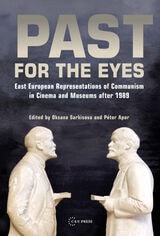
Past for the Eyes
East European Representations of Communism in Cinema and Museums After 1989Oksana Sarkisova
Central European University Press, 2008
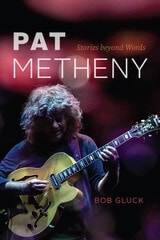
Pat Metheny
Stories beyond WordsBob Gluck
University of Chicago Press, 2024
Guitarist and composer Pat Metheny, among the most acclaimed, visionary musicians of our time, has for five decades toured with his many creative musical projects, most prominently the Pat Metheny Group, while collaborating with celebrated artists, including Charlie Haden, Ron Carter, Herbie Hancock, Ornette Coleman, and Steve Reich.
Bob Gluck, whose perspective as pianist, composer, and educator has illuminated the music of Herbie Hancock and Miles Davis in his two previous books, now focuses his lens on the music of Metheny. Neither a biography nor chronological record of Metheny’s musical output, Pat Metheny: Stories beyond Words instead captures Metheny’s self-conception as a musician and the threads that unite and distinguish his creative process. Drawing upon a wealth of new interviews and close readings of musical examples, Gluck offers a bird’s-eye view of Metheny’s musical ideas. Among these are the metaphor of storytelling, the complementarity of simplicity and complexity, and the integrated roles of composer, performer, and band leader. Much like Metheny’s signature style, this book is accessible to a wide range of readers, presenting new clarity, musical insight, and historical perspective about the legacy of Metheny’s groundbreaking music.
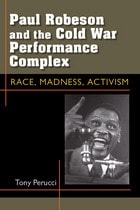
Paul Robeson and the Cold War Performance Complex
Race, Madness, ActivismTony Perucci
University of Michigan Press, 2012
Actor and singer Paul Robeson's performances in Othello, Show Boat, and The Emperor Jones made him famous, but his midcentury appearances in support of causes ranging from labor and civil rights to antilynching and American warmongering made him notorious. When Robeson announced at the 1949 Paris Peace Conference that it was "unthinkable" for blacks to go to war against the Soviet Union, the mainstream American press declared him insane.
Notions of Communism, blackness, and insanity were interchangeably deployed during the Cold War to discount activism such as Robeson's, just a part of an array of social and cultural practices that author Tony Perucci calls the Cold War performance complex. Focusing on two key Robeson performances---the concerts in Peekskill, New York, in 1949 and his appearance before the House Committee on Un-American Activities in 1956---Perucci demonstrates how these performances and the government's response to them are central to understanding the history of Cold War culture in the United States. His book provides a transformative new perspective on how the struggle over the politics of performance in the 1950s was also a domestic struggle over freedom and equality. The book closely examines both of these performance events as well as artifacts from Cold War culture---including congressional documents, FBI files, foreign policy papers, the popular literature on mental illness, and government propaganda films---to study the operation of power and activism in American Cold War culture.
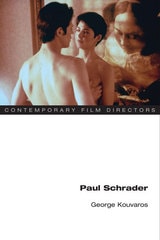
Paul Schrader
George Kouvaros
University of Illinois Press, 2007
George Kouvaros draws on a personal interview conducted with Schrader and the director's prior commentary to trace common motivations and impulses behind such well-known films as Light Sleeper, American Gigolo, Affliction, Auto Focus, Taxi Driver, and Patty Hearst. Kouvaros reads Schrader's films not only in terms of a number of important themes such as male obsession and estrangement, but also in regard to harder to define issues that include melancholia, trauma, and the complex linkages of violence and guilt that bind individuals to places and each other.
Paul Thomas Anderson
George Toles
University of Illinois Press, 2016
Paula Vogel
Joanna Mansbridge
University of Michigan Press, 2014
Peace Be Still
How James Cleveland and the Angelic Choir Created a Gospel ClassicRobert M. Marovich
University of Illinois Press, 2021
In September of 1963, Reverend Lawrence Roberts and the Angelic Choir of the First Baptist Church of Nutley, New Jersey, teamed with rising gospel star James Cleveland to record Peace Be Still. The LP and its haunting title track became a phenomenon. Robert M. Marovich draws on extensive oral interviews and archival research to chart the history of Peace Be Still and the people who created it. Emerging from an established gospel music milieu, Peace Be Still spent several years as the bestselling gospel album of all time. As such, it forged a template for live recordings of services that transformed the gospel music business and Black worship. Marovich also delves into the music's connection to fans and churchgoers, its enormous popularity then and now, and the influence of the Civil Rights Movement on the music's message and reception.
The first in-depth history of a foundational recording, Peace Be Still shines a spotlight on the people and times that created a gospel music touchstone.
Peckinpah Today
New Essays on the Films of Sam PeckinpahEdited by Michael Bliss
Southern Illinois University Press, 2012
Written exclusively for this collection by today’s leading Peckinpah critics, the nine essays in Peckinpah Today explore the body of work of one of America’s most important filmmakers, revealing new insights into his artistic process and the development of his lasting themes. Edited by Michael Bliss, this book provides groundbreaking criticism of Peckinpah’s work by illuminating new sources, from modified screenplay documents to interviews with screenplay writers and editors.
Included is a rare interview with A. S. Fleischman, author of the screenplay for The Deadly Companions, the film that launched Peckinpah’s career in feature films. The collection also contains essays by scholar Stephen Prince and Paul Seydor, editor of the controversial special edition of Pat Garrett and Billy the Kid. In his essay on Straw Dogs, film critic Michael Sragow reveals how Peckinpah and co-scriptwriter David Zelag Goodman transformed a pulp novel into a powerful film. The final essay of the collection surveys Peckinpah’s career, showing the dark turn that the filmmaker’s artistic path took between his first and last films. This comprehensive approach reinforces the book’s dawn-to-dusk approach, resulting in a fascinating picture of a great filmmaker’s work.
Pedro Almodóvar
Marvin D’Lugo
University of Illinois Press, 2006
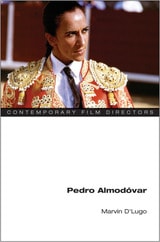
Marvin D'Lugo offers a concise, informed, and insightful commentary on a preeminent force in modern cinema. D'Lugo follows Almodóvar's career chronologically, tracing the director's works and their increasing complexity in terms of theme and the Spanish film tradition. Drawing on a wide range of critical sources, D'Lugo explores Almodóvar's use of melodrama and Hollywood genre film, his self-invention as a filmmaker, and his on-screen sexual politics. D'Lugo also discusses what he calls "geocultural positioning," that is, Almodóvar's paradoxical ability to use his marginal positions—in terms of his class, geographical origin, and identity—to develop an expressive language that is emotionally recognizable by audiences worldwide. Two fascinating interviews with the director round out the volume.
An exciting consideration of an arthouse giant, Pedro Almodóvar mixes original interpretations into an analysis sure to reward film students and specialists alike.
Peerless
Rouben Mamoulian, Hollywood, and BroadwayKurt Jensen
University of Wisconsin Press, 2024
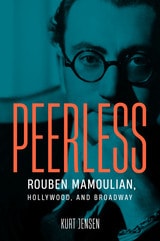
Kurt Jensen’s magisterial volume, extensively researched and filled with trenchant observations, brings to life this charming, flawed, and fascinating man—and demonstrates how the wellspring of his art contained the seeds of his own destruction. Drawing upon Mamoulian’s unfinished memoir and voluminous diaries, as well as interviews with the director’s surviving collaborators, Jensen delivers fresh and informative insider stories from seminal productions. Meanwhile, he explores Mamoulian’s aesthetic principles and strategies as manifested in lighting, choreography, and sound design. A tour de force, Peerless offers readers a multifaceted, in-depth look at an idiosyncratic genius.
People Get Ready
The Future of Jazz Is Now!Ajay Heble and Rob Wallace, eds.
Duke University Press, 2013
Contributors. Tamar Barzel, John Brackett, Douglas Ewart, Ajay Heble, Vijay Iyer, Thomas King, Tracy McMullen, Paul D. Miller/DJ Spooky, Nicole Mitchell, Roscoe Mitchell, Famoudou Don Moye, Aldon Lynn Nielsen, Eric Porter, Marc Ribot, Matana Roberts, Jaribu Shahid, Julie Dawn Smith, Wadada Leo Smith, Alan Stanbridge, John Szwed, Greg Tate, Scott Thomson, Rob Wallace, Ellen Waterman, Corey Wilkes
Perfect Wave
More Essays on Art and DemocracyDave Hickey
University of Chicago Press, 2017
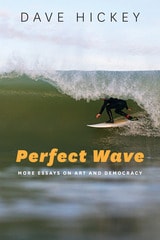
When Dave Hickey was twelve, he rode the surfer’s dream: the perfect wave. And, like so many things in life we long for, it didn’t quite turn out—he shot the pier and dashed himself against the rocks of Sunset Cliffs in Ocean Beach, which nearly killed him.
Hickey went on to develop a career as one of America’s foremost critical iconoclasts, a trusted no-nonsense voice commenting on the worlds of art and culture. Perfect Wave brings together essays on a wide range of subjects from throughout Hickey’s career, displaying his breadth of interest and powerful insight into what makes art work, or not, and why we care. With Hickey as our guide, we travel to Disneyland and Vegas, London and Venice. We discover the genius of Karen Carpenter and Waylon Jennings, learn why Robert Mitchum matters more than Jimmy Stewart, and see how the stillness of Antonioni speaks to us today. Never slow to judge—or to surprise us in doing so—Hickey relates his wincing disappointment in the later career of his early hero Susan Sontag and shows us the appeal to our commonality that we’ve been missing in Norman Rockwell.
Bookended by previously unpublished personal essays that offer a new glimpse into Hickey’s own life—including the aforementioned conclusion to his surfing career—Perfect Wave is a welcome addition to the Hickey canon.
Performance
Diana Taylor
Duke University Press, 2016
Performance Beyond the Pale
Meditations on Art, Activism, and Bodies in ExtremisJames M. Harding
University of Michigan Press, 2026
The metaphor “beyond the pale” refers to something that’s unacceptable and, as James M. Harding argues in this book, “almost always refers to something—an activity, an action, or an act—that is performed.” In this book, Harding recalls that historically the pale marked contested political boundaries and that what lay beyond the pale was considered to be a dangerous frontier. Siding with seemingly excessive and unreasonable acts and with the artists and activists who produce them, Harding brings together a series of ideas and performances that operate beyond the pale and asks readers to examine them on their own terms.
Drawing on political science, critical theory, and philosophy, Harding investigates instances of self-immolation, life-threatening journeys across deserts and seas, radical political hoaxes, extreme speech acts, and anti-police activism. The book’s five chapters consist of a series of meditations, each with an easily identifiable scholarly logic and clear argument, though the connections between the meditations are left up to the reader. Together these meditations urge readers to understand that “beyond the pale” acts are frequently the product of a sense of urgency that preempts the dictates of accepted reason, conventional logic, and safety.
Performance in America
Contemporary U.S. Culture and the Performing ArtsDavid Román
Duke University Press, 2005
The performances that Román analyzes range from localized community-based arts events to full-scale Broadway productions and from the controversial works of established artists such as Tony Kushner to those of emerging artists. Román considers dances produced by the choreographers Bill T. Jones and Neil Greenberg in the mid-1990s as new aids treatments became available and the aids crisis was reconfigured; a production of the Asian American playwright Chay Yew’s A Beautiful Country in a high-school auditorium in Los Angeles’s Chinatown; and Latino performer John Leguizamo’s one-man Broadway show Freak. He examines the revival of theatrical legacies by female impersonators and the resurgence of cabaret in New York City. Román also looks at how the performing arts have responded to 9/11, the U.S. invasion of Afghanistan, and the second war in Iraq. Including more than eighty illustrations, Performance in America highlights the dynamic relationships among performance, history, and contemporary culture through which the past is revisited and the future reimagined.
Performance in the Zócalo
Constructing History, Race, and Identity in Mexico's Central Square from the Colonial Era to the PresentAna Martínez
University of Michigan Press, 2020
A saying in Mexico City is “quien domina el centro, domina el país” (whoever dominates the center, dominates the country) as the Zócalo continues to act as the performative embodiment of Mexican society. This book highlights how particular performances build upon each other by recycling past architectures and performative practices for new purposes. Ana Martínez discusses the singular role of collective memory in creating meaning through space and landmarks, providing a new perspective and further insight into the problem of Mexico’s relationship with its own past. Rather than merely describe the commemorations, she traces the relationship between space and the invention of a Mexican imaginary. She also explores how indigenous communities, Mexico’s alienated subalterns, performed as exploited objects, exotic characters, and subjects with agency. The book’s dual purposes are to examine the Zócalo as Mexico’s central site of performance and to unmask, without homogenizing, the official discourse regarding Mexico’s natives. This book will be of interest for students and scholars in theater studies, Mexican Studies, Cultural Geography, Latinx and Latin American Studies.
Performing Brazil
Essays on Culture, Identity, and the Performing ArtsEdited by Severino J. Albuquerque and Kathryn Bishop-Sanchez
University of Wisconsin Press, 2015
The contributors to the volume are Maria José Somerlate Barbosa, Eric A. Galm, Annie McNeill Gibson, Ana Paula Höfling, Benjamin Legg, Bryan McCann, Simone Osthoff, Fernando de Sousa Rocha, Cristina F. Rosa, Alessandra Santos, and Lidia Santos.
Performing Citizenship in Postdictatorship Chile
Cultural Policy and the Making of Political DramaturgiesJennifer Joan Thompson
Northwestern University Press, 2025
Offering a nuanced understanding of the performing arts’ relationship to politics
Through careful readings of key political performances in Chile's transition from military dictatorship to neoliberal democracy, Jennifer Joan Thompson examines how the production and aesthetics of theater are intertwined in processes of democratization, enactments of citizenship, and the development of cultural policy. Performing Citizenship in Postdictatorship Chile: Cultural Policy and the Making of Political Dramaturgies reveals how artists performed changing models of democratic citizenship. Thompson traces the ways artists confronted and resisted the military dictatorship of Augusto Pinochet, how they then reimagined the body politic during the early transitional period and challenged official constructions of history and memory as the transition to democracy progressed, how they critiqued Chile’s neoliberal economic model and its violence, and, finally, how they have made claims for feminist and Indigenous citizen subjectivities throughout Chile’s current social crisis. Incorporating archival and ethnographic research alongside readings of theatrical and political performances, this study offers a nuanced understanding of the performing arts’ relationship to politics, one that accounts for the ways artists and the state collaborate in the production of the political imagination.
Performing Commemoration
Musical Reenactment and the Politics of TraumaAnnegret Fauser and Michael A. Figueroa, editors
University of Michigan Press, 2020
Performing Flight
From the Barnstormers to Space TourismScott Magelssen
University of Michigan Press, 2020
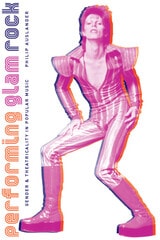
Performing Glam Rock
Gender and Theatricality in Popular MusicPhilip Auslander
University of Michigan Press, 2006
Yet glam was as much about substance as style, and Performing Glam Rock delves into the many ways glam paved the way for new explorations of identity in terms of gender, sexuality, and performance. Philip Auslander positions glam historically and examines it as a set of performance strategies, exploring the ways in which glam rock-while celebrating the showmanship of 1950s rock and roll-began to undermine rock's adherence to the ideology of authenticity in the late 1960s.
In this important study of a too-often-overlooked phenomenon, Auslander takes a fresh look at the genius of the glam movement and introduces glam to a new generation of performance enthusiasts and scholars alike.
Philip Auslander is Professor in the School of Literature, Communication, and Culture at the Georgia Institute of Technology and author of numerous books, including Liveness: Performance in a Mediatized Culture and Presence and Resistance: Postmodernism and Cultural Politics in Contemporary American Performance. He is editor of the major reference work Performance: Critical Concepts and coeditor, with Carrie Sandahl, of Bodies in Commotion: Disability and Performance.
Performing History
Theatrical Representations of the Past in Conetmporary TheatreFreddie Rokem
University of Iowa Press, 2000
Performing Identities on the Restoration Stage
Cynthia Lowenthal
Southern Illinois University Press, 2002
In Performing Identities on the Restoration Stage, Cynthia Lowenthal explores identity—especially masculinity and femininity, English and “foreign,” middle-class and aristocratic—as it is enacted, idealized, deployed, and redefined on the late-seventeenth-century British stage. Particular emphasis is placed on the ways the theatre contributed to new and often shifting early modern definitions of the boundaries of nation, status, and gender.
The first portion of the book focuses on the playwrights’ presentations of idealized men and the comic ridicule of male bodies and behaviors that fall short of the ideal. Of special interest are those moments when playwrights use stereotypes of national character, particularly the Spaniards and Turks, as examples of the worst in male behavior, judgments that are always inflected with elements of class or status inconsistency.
The second portion of Lowenthal’s discussion focuses on playwrights’ attempts to redefine the idealized woman. Lowenthal investigates the ways that an extratheatrical discourse surrounding the actresses, one that essentialized them as sexual bodies demanding scrutiny and requiring containment, also serves to secure for them an equally essential aristocratic status. Anchored by Manley’s Royal Mischief, Lowenthal’s reading reveals that even a woman playwright’s attempts to represent female subjectivity or interiority at odds with the surfaces of the body are doomed to return to those same surfaces.
By focusing on a new, early modern lability of identity and by reading less canonical women playwrights, such as Manley and Pix, alongside established male playwrights such as Dryden and Wycherley, Performing Identities on the Restoration Stage yields both a more accurate and a more compelling picture of the cultural dynamics at work on the early modern stage.
Performing Loss
Rebuilding Community through Theater and WritingJodi Kanter
Southern Illinois University Press, 2007
In Performing Loss: Rebuilding Community through Theater and Writing, author Jodi Kanter explores opportunities for creativity and growth within our collective responses to grief. Performing Loss provides teachers, students, and others interested in performance with strategies for reading, writing, and performing loss as communities—in the classroom, the theater, and the wider public sphere.
From an adaptation of Jose Saramago’s novel Blindness to a reading of Suzan-Lori Parks’s The America Play, from Kanter’s own experience creating theater with terminally ill patients and federal prisoners to a visual artist’s response to September 11th, Kanter shows in practical, replicable detail how performing loss with community members can transform experiences of isolation and paralysis into experiences of solidarity and action.
Drawing on academic work in performance, cultural studies, literature, sociology, and anthropology, Kanter considers a range of responses to grief in historical context and goes on to imagine newer, more collaborative, and more civically engaged responses. Performing Loss describes Kanter’s pedagogical and artistic processes in lively and vivid detail, enabling the reader to use her projects as models or to adapt the techniques to new communities, venues, and purposes. Kanter demonstrates through each example the ways in which writing and performing can create new possibilities for mourning and living together.
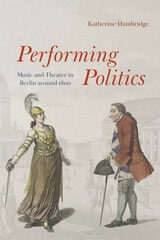
Performing Politics
Music and Theater in Berlin Around 1800Katherine Hambridge
University of Chicago Press, 2027
A new account of the emergence of modern cultural politics through a study of music and theater in Berlin around 1800.
Berlin around 1800 has been seen—at the time and since—as somewhat behind other major European cities in terms of its musical culture, peripheral to the momentous developments attributed to the period. By contrast, early nineteenth-century Berlin has been exhaustively studied as the site of a nascent German-national movement and the Prussian Reforms. In Performing Politics, Katherine Hambridge examines the confluence of music and politics in Berlin around 1800, challenging the dichotomies of being behind or ahead, and central or peripheral, in order to tell new stories about nineteenth-century German history, musical and otherwise.
Performing Politics emphasizes events as much as repertoires, paying special attention to the noncanonical: dynastic birthday celebrations, the music of historical dramas, political song and communal singing, and popular music theater. By focusing our attention on the unfamiliar specificity of the Berlin Nationaltheater, Hambridge reenergizes our understanding of 1800–1815 as a key period in the development of musical and political modernity. Using sources largely unexploited by musicologists and phenomena neglected by historians, she reveals the quotidian aesthetics, values, and practices that shaped both the sociopolitical narratives and musical developments of the time. Performing Politics is thus not only a history of music and theater in Berlin at a critical moment, but a music history of modern cultural politics.
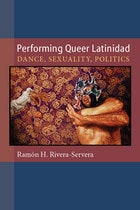
Performing Queer Latinidad
Dance, Sexuality, PoliticsRamón H. Rivera-Servera
University of Michigan Press, 2012
Performing Queer Latinidad highlights the critical role that performance played in the development of Latina/o queer public culture in the United States during the 1990s and early 2000s, a period when the size and influence of the Latina/o population was increasing alongside a growing scrutiny of the public spaces where latinidad could circulate. Performances---from concert dance and street protest to the choreographic strategies deployed by dancers at nightclubs---served as critical meeting points and practices through which LGBT and other nonnormative sex practitioners of Latin American descent (individuals with greatly differing cultures, histories of migration or annexation to the United States, and contemporary living conditions) encountered each other and forged social, cultural, and political bonds. At a time when latinidad ascended to the national public sphere in mainstream commercial and political venues and Latina/o public space was increasingly threatened by the redevelopment of urban centers and a revived anti-immigrant campaign, queer Latinas/os in places such as the Bronx, San Antonio, Austin, Phoenix, and Rochester, NY, returned to performance to claim spaces and ways of being that allowed their queerness and latinidad to coexist. These social events of performance and their attendant aesthetic communication strategies served as critical sites and tactics for creating and sustaining queer latinidad.

Performing Refuge and Risk
Precarious Theatre in East Central EuropeRachel Merrill Moss
University of Iowa Press, 2027
Performing Whitely in the Postcolony
Afrikaners in South African Theatrical and Public LifeMegan Lewis
University of Iowa Press, 2016
Performing Whitely examines the multiple speech acts, political acts, and theatrical acts of the Afrikaner volk or nation in theatrical and public life, including pageants, museum sites, film, and popular music as well as theatrical productions. Lewis explores the diverse ways in which Afrikaners perform whitely, and the tactics they use, including nostalgia, melodrama, queering, abjection, and kitsch. She first investigates the way that apartheid’s architects leveraged whiteness in support of their nation-building efforts in the early twentieth century. In addition to re-enacting national pilgrimages of colonial-era migrations and building massive monuments at home, Afrikaner nationalists took their show to the United States, staging critical events of the Boer War at the 1904 St. Louis Exposition. A case study of the South African experience, Performing Whitely also offers parables for global whitenesses in the postcolonial era.
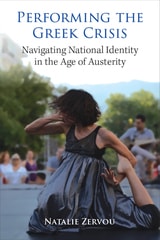
Performing the Greek Crisis
Navigating National Identity in the Age of AusterityNatalie Zervou
University of Michigan Press, 2024
Winner of the 2025 Dance Studies Association de la Torre Bueno Book Prize
Performing the Greek Crisis explores the impact of the Greek financial crisis (2009–19) on the performing arts sector in Greece, and especially on contemporary concert dance. When Greece became the first European Union member to be threatened with default, the resulting budget cuts pushed dance to develop in unprecedented directions. The book examines the repercussions that the crisis had on artists’ daily lives and experiences, weaving the personal with the political to humanize a phenomenon that, to date, had been examined chiefly through economic and statistical lenses. Informed by the author’s experience of growing up in Greece and including interviews and rich descriptions of performances, the book offers a glimpse into a pivotal moment in Greek history.
In Greece, dance (and, by extension, the body) has historically held a central role in the process of national identity construction. When the crisis broke out, artists had to navigate through a precariously fluctuating landscape, with their bodies as their only stable referent. By centering the analysis of the Greek crisis on the dancing bodies, Performing the Greek Crisis is able to examine the various ways that artists reconceptualized their history and reframed ideas of national belonging, race, citizenship, and immigration.
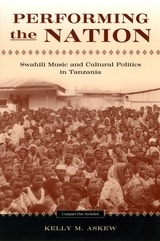
Performing the Nation
Swahili Music and Cultural Politics in TanzaniaKelly Askew
University of Chicago Press, 2002
As Askew shows, the genres of ngoma (traditional dance), dansi (urban jazz), and taarab (sung Swahili poetry) have played prominent parts in official articulations of "Tanzanian National Culture" over the years. Drawing on over a decade of research, including extensive experience as a taarab and dansi performer, Askew explores the intimate relations among musical practice, political ideology, and economic change. She reveals the processes and agents involved in the creation of Tanzania's national culture, from government elites to local musicians, poets, wedding participants, and traffic police. Throughout, Askew focuses on performance itself—musical and otherwise—as key to understanding both nation-building and interpersonal power dynamics.
Performing the News
Identity, Authority, and the Myth of NeutralityElia Powers
Rutgers University Press, 2024
Performing the News: Identity, Authority, and the Myth of Neutrality explores how journalists from historically marginalized groups have long felt pressure to conform when performing for audiences. Many speak with a flat, “neutral” accent, modify their delivery to hide distinctive vocal attributes, dress conventionally to appeal to the “average” viewer, and maintain a consistent appearance to avoid unwanted attention. Their aim is what author Elia Powers refers to as performance neutrality—presentation that is deemed unobjectionable, reveals little about journalists’ social identity, and supposedly does not detract from their message. Increasingly, journalists are challenging restrictive, purportedly neutral forms of self-presentation. This book argues that performance neutrality is a myth that reinforces the status quo, limits on-air diversity, and hinders efforts to make newsrooms more inclusive. Through in-depth interviews with journalists in broadcasting and podcasting, and those who shape their performance, the author suggests ways to make journalism more inclusive and representative of diverse audiences.
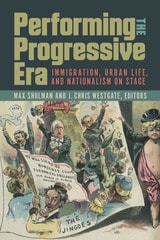
Performing the Progressive Era
Immigration, Urban Life, and Nationalism on StageMax Shulman and J. Chris Westgate
University of Iowa Press, 2019
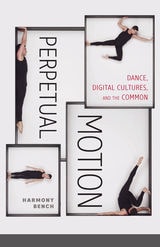
Perpetual Motion
Dance, Digital Cultures, and the CommonHarmony Bench
University of Minnesota Press, 2020
A new exploration of how digital media assert the relevance of dance in a wired world
How has the Internet changed dance? Dance performances can now be seen anywhere, can be looped endlessly at user whim, and can integrate crowds in unprecedented ways. Dance practices are evolving to explore these new possibilities. In Perpetual Motion, Harmony Bench argues that dance is a vital part of civil society and a means for building participation and community. She looks at how, after 9/11, it became a crucial way of recuperating the common character of public spaces. She explores how crowdsourcing dance contributes to the project of performing a common world, as well as the social relationships forged when we look at dance as a gift in the era of globalization. Throughout, she asks how dance brings people together in digital spaces and what dance’s digital travels might mean for how we experience and express community.
From original research on dance today to political economies of digital media to the philosophy of dance, Perpetual Motion provides an ambitious, invigorating look at a commonly shared practice.
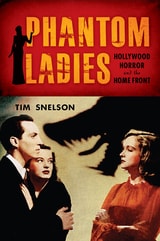
Phantom Ladies
Hollywood Horror and the Home FrontSnelson, Tim
Rutgers University Press, 2014
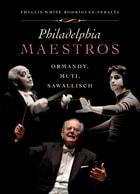
Philadelphia Maestros
Ormandy, Muti, SawallischPhyllis Rodriquez-Peralta
Temple University Press, 2006
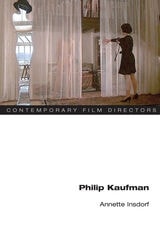
Philip Kaufman
Annette Insdorf
University of Illinois Press, 2012
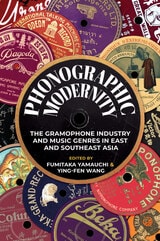
Phonographic Modernity
The Gramophone Industry and Music Genres in East and Southeast AsiaEdited by Fumitaka Yamauchi and Ying-fen Wang
University of Illinois Press, 2024
A roster of experts on countries from Japan to Indonesia explores the complicated relationship between the gramophone industry and music genres in East and Southeast Asia. Extending the boundaries of their research across multiple disciplines, the contributors connect the gramophone industry to theories surrounding phonography and modernity. Their focus on phonography combines an interest in discs with an interest in the sounds contributing to the recent sonic-auditory turn in sound studies.
Ambitious and expansive, Phonographic Modernity examines the bloc of East and Southeast Asia within the larger global history of sound recording.
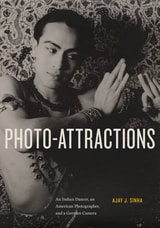
Photo-Attractions
An Indian Dancer, an American Photographer, and a German CameraAjay Sinha
Rutgers University Press, 2022
Art historian Ajay Sinha uses these hitherto unpublished photographs and archival research to raise provocative and important questions about photographic technology, colonial histories, race, sexuality and transcultural desires. Challenging the assumption that Gopal was merely objectified by Van Vechten’s Orientalist gaze, he explores the ways in which the Indian dancer co-authored the photos. In Sinha’s reading, Van Vechten’s New York studio becomes a promiscuous contact zone between world cultures, where a “photo-erotic” triangle is formed between the American photographer, Indian dancer, and German camera.
A groundbreaking study of global modernity, Photo-Attractions brings scholarship on American photography, literature, race and sexual economies into conversation with work on South Asian visual culture, dance, and gender. In these remarkable historical documents, it locates the pleasure taken in cultural difference that still resonates today.

Photography, Cinema, Memory
The Crystal Image of TimeDamian Sutton
University of Minnesota Press, 2009
A philosophical investigation into the differing sensations of time in cinema and photography
Cinema and photography are both intimately associated with time—cinema with time in passing, the photograph with the lost moment. In Photography, Cinema, Memory, Damian Sutton explores time in both media to present a radical new understanding of the photographic image as always coming into being.
Drawing on Gilles Deleuze’s concept of the crystal image to move beyond the tropes of immobility, stasis, and death, Sutton’s analysis reveals the open-endedness of time expressed in the photograph, either as a potential for an abundant future or as a depth of meandering remembrance. He presents an innovative taxonomy of time in the photograph, considering particular representations of time in the work of Nan Goldin, Eugène Atget, Andy Warhol, and others. He contrasts this taxonomy with representations of time in cinema since 1895, offering fresh readings of the films of the Lumière brothers and Mitchell & Kenyon, as well as more recent works, including Eternal Sunshine of the Spotless Mind, Amélie, and A Matter of Life and Death. Throughout this work, Sutton connects and grounds cinema and photography as starting points to comprehend how we come to terms, ultimately, with time itself as pure, immanent change.
Pick Up the Pieces
Excursions in Seventies MusicJohn Corbett
University of Chicago Press, 2019
Rock. Disco. Pop. Soul. Jazz. Folk. Funk. The music scene of the 1970s was as varied as it was exhilarating, but the decade’s diversity of sound has never been captured in one book before now. Pick Up the Pieces gives a panoramic view of the era’s music and culture through seventy-eight essays that allow readers to dip in and out of the decade at random or immerse themselves completely in Corbett’s chronological journey.
An inviting mix of skilled music criticism and cultural observation, Pick Up the Pieces is also a coming-of-age story, tracking the author’s absorption in music as he grows from age seven to seventeen. Along with entertaining personal observations and stories, Corbett includes little-known insights into musicians from Pink Floyd, Joni Mitchell, James Brown, and Fleetwood Mac to the Residents, Devo, Gal Costa, and Julius Hemphill.
A master DJ on the page, Corbett takes us through the curated playlist that is Pick Up the Pieces with captivating melody of language and powerful enthusiasm for the era. This funny, energetic book will have readers longing nostalgically for a decade long past.