Results by title
405 books match the query 'Human Geography' and 20 start with p

PRESIDENTIAL MUSINGS FROM THE MERIDIAN
REFLECTIONS ON THE NATURE OF GEOGRAPHYM. DUANE NELLIS
West Virginia University Press, 2005
For decades, presidents of the Association of American Geographers have written insightful columns in the AAG Newsletter. One of the most popular sections of the newsletter, these columns illustrate the changes and consistencies of geography over the past thirty-four years. They offer an insight into the past of the geography discipline and a broader perspective on the future. Previously inaccessible even to most professional geographers, the Presidential Columns will now be available in Presidential Musings from the Meridian: Reflections of the Nature of Geography.
Pale Morning Dun
StoriesStories by Richard Dokey
University of Missouri Press, 2004
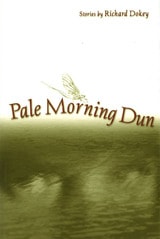
When Gramp tied those thin-bodied ephemerella, as he called them, on size-eighteen hooks, their pale green bodies and diaphanous gray wings reminded us of tiny, unmoored sailboats, and when the duns themselves were adrift upon the surface of the pool, we watched as an entire armada of delicate, translucent ships spun and took flight. . . . I couldn't fish right away. I never can when the duns first come up. I have to watch them, suddenly upon the surface, their wings drying for that one day of life above the stream. . . . To have a chance at life, each pale dun for a time must drift, ignorant of the forms that wait below.
In the thirteen stories of Pale Morning Dun, Richard Dokey endeavors to suggest common truths that uncover the human reality any time, in any place. He explores the ephemeral nature of life through an assemblage of characters as diverse as the settings they inhabit: from a beggar on the streets of San Francisco, “The West Coast Coliseum of Consumption,” to a boy and his brother fly-fishing in a peaceful mountain stream, unaware that they have stumbled upon the threshold of a horrific crime; from a desperate husband pursuing his estranged wife into the bloody arena of a bullfight, to a lakeside cottage where two lovers reveal perhaps too much of themselves. Each uniquely rendered character faces a dilemma that leads him beyond what he knows of himself, forcing him to new insights. The characters’ struggles, though distinctively their own, reveal universal truths about human nature and the transient quality of life. Employing an inspired blend of humor, irony, and imagination in seamless narration, Dokey allows one to enter readily into these idiosyncratic lives, inviting the reader to explore his own capacity to be human, to empathize and respond.
Palestine Is Throwing a Party and the Whole World Is Invited
Capital and State Building in the West BankKareem Rabie
Duke University Press, 2021
Pipeline Populism
Grassroots Environmentalism in the Twenty-First CenturyKai Bosworth
University of Minnesota Press, 2022
How contemporary environmental struggles and resistance to pipeline development became populist struggles
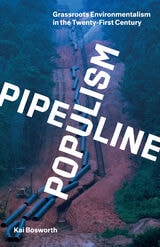
Stunning Indigenous resistance to the Keystone XL and the Dakota Access pipelines has made global headlines in recent years. Less remarked on are the crucial populist movements that have also played a vital role in pipeline resistance. Kai Bosworth explores the influence of populism on environmentalist politics, which sought to bring together Indigenous water protectors and environmental activists along with farmers and ranchers in opposition to pipeline construction.
Here Bosworth argues that populism is shaped by the “affective infrastructures” emerging from shifts in regional economies, democratic public-review processes, and scientific controversies. With this lens, he investigates how these movements wax and wane, moving toward or away from other forms of environmental and political ideologies in the Upper Midwest. This lens also lets Bosworth place populist social movements in the critical geographical contexts of racial inequality, nationalist sentiments, ongoing settler colonialism, and global empire—crucial topics when grappling with the tensions embedded in our era’s immense environmental struggles.
Pipeline Populism reveals the complex role populism has played in shifting interpretations of environmental movements, democratic ideals, scientific expertise, and international geopolitics. Its rich data about these grassroots resistance struggles include intimate portraits of the emotional spaces where opposition is first formed. Probing the very limits of populism, Pipeline Populism presents essential work for an era defined by a wave of people-powered movements around the world.
Place Names of Wisconsin
Edward Callary
University of Wisconsin Press, 2016
Planet Work
Rethinking Labor and Leisure in the AnthropoceneRyan Hediger
Bucknell University Press, 2023
Plantation Worlds
Maan Barua
Duke University Press, 2024

Plants for Desperate Times
The Diversity of Life-Saving Famine FoodsPaul E. Minnis and Robert L. Freedman
University of Arizona Press, 2024
Plants for Desperate Times is an introduction to the diversity of plant foods that have saved millions of lives during lethal food shortages. While not a field guide, it addresses questions about what famine foods are and why they are important. The work highlights one hundred plants. Each entry includes the common and scientific names, botanical family, distribution, use as a famine food and other uses, and nutritional information. The species come from across the botanical kingdom, demonstrating the diversity of life-saving plants and the human ingenuity of making what might seem to be inedible plants edible. Unexpectedly, important famine foods include alternative uses of important crops as well as native plants.
Beyond a study of famine foods, the authors share why keeping an inventory of plant foods of last resort is so important. They help to build an understanding of little-known and underappreciated foods that may have a greater role in provisioning humanity in the future. As much as we may hope that severe food scarcity will never occur again, history suggests otherwise, and Plants for Desperate Times provides invaluable documentation of these vital foods.
Pluriversal Politics
The Real and the PossibleArturo Escobar
Duke University Press, 2020
Political Matter
Technoscience, Democracy, and Public LifeBruce Braun
University of Minnesota Press, 2010
Exploring the frictions that come from linking the work of scholars in science and technology studies and political theory, these essays spark new ways of understanding the matter of politics.
Contributors: Andrew Barry, U of Oxford; Jane Bennett, Johns Hopkins U; Stephen J. Collier, New School; William E. Connolly, Johns Hopkins U; Rosalyn Diprose, U of New South Wales; Lisa Disch, U of Michigan; Gay Hawkins, U of New South Wales; Andrew Lakoff, UC San Diego; Noortje Marres, U of London; Isabelle Stengers, U Libre de Bruxelles; Nigel Thrift, U of Warwick.
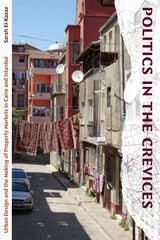
Politics in the Crevices
Urban Design and the Making of Property Markets in Cairo and IstanbulSarah El-Kazaz
Duke University Press, 2023

Popular Music in Leeds
Histories, Heritage, People and PlacesEdited by Brett Lashua, Karl Spracklen, and Kitty Ross
Intellect Books, 2023
This is the first scholarly volume to focus on popular music in Leeds. It delves into the rich musical history of Leeds and its long tradition of vibrant venues, nightclubs, dance halls, pubs, and other sites of musical entertainment. The contributors use the popular music of Leeds to exemplify and inform understandings of broader cultural and urban changes, the social and historical significance of music as mass media; music and migration; music, racialization, and social equity; and industrial decline, deindustrialization, neoliberalism, and the rise of the twenty-four-hour city. Charting moments of stark musical politicization and de-politicization, while also tracing arguments about heritagizing popular music within discussions about music’s place in museums and in the urban economy, this book contributes to debates about why music matters, has mattered, and continues to matter in Leeds and beyond.
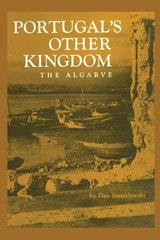
Portugal's Other Kingdom
The AlgarveBy Dan Stanislawski
University of Texas Press, 1963
A land of long ago on the brink of tomorrow. That is the Algarve, the southernmost province of Portugal, a land that knew the Phoenicians, Carthaginians, Greeks, Romans, Visigoths, Moslems—and yet retained its own distinctive personality. In the 1950s it first felt the impact of industrialization, and from that situation the author developed this book.
In presenting this descriptive geography of the Algarve, Dan Stanislawski offers no thesis, except that geographers, economists, politicians, humanists—all those interested in the way the world is developing—should watch the small, culturally disparate areas of the world, to learn what they have of value to teach, to enjoy the qualities of their independent ways of living, and to observe and evaluate their reaction to modern change. This book, the result of detailed observation of one such region, is a valuable contribution to the knowledge necessary to form sound value judgments on the future development of these areas.
From this account the charm of the Algarve emerges in all of its picturesqueness. With the aid of Stanislawski's vivid descriptions, his eighteen helpful maps and graphs, and his more than ninety photographs, the reader moves leisurely through this appealing, but unpublicized, region: along roadways bordered by rock walls and blooming almonds, traveled by sturdy burros bearing their loads of produce; through colorful landscapes of the Lower Algarve, with their pastel-calcimined dwellings and their intensively cultivated plots of olives, figs, carobs, grain, and vegetables; along the rugged cliff coast near Portimão, and the boat-filled port of Faro; past the canyon gardens of the Caldeirão; along the Arade River with its cork barges; northward past Cape S. Vicente to the area of wind-sheared trees.
Guided by Stanislawski, the reader comes to understand Algarvian problems inherent in soils, topography, climate, location, and history. He sees the Algarvians following the occupational practices that have produced for them, in the midst of difficult conditions, a stable culture: fishing, netmaking, shipbuilding, farming, herding, and so on. He realizes that these people, with their unique cultural background and environment, desire to live, and to change, in their own way. Finally, he learns how it is possible to communicate effectively with the Algarvians and with millions of other people whose peculiar problems tend to isolate them from the rest of the world.
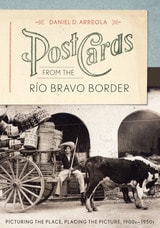
Postcards from the Río Bravo Border
Picturing the Place, Placing the Picture, 1900s–1950sBy Daniel D. Arreola
University of Texas Press, 2013
Between 1900 and the late 1950s, Mexican border towns came of age both as tourist destinations and as emerging cities. Commercial photographers produced thousands of images of their streets, plazas, historic architecture, and tourist attractions, which were reproduced as photo postcards. Daniel Arreola has amassed one of the largest collections of these border town postcards, and in this book, he uses this amazing visual archive to offer a new way of understanding how the border towns grew and transformed themselves in the first half of the twentieth century, as well as how they were pictured to attract American tourists.
Postcards from the Río Bravo Border presents nearly two hundred images of five significant towns on the lower Río Bravo—Matamoros, Reynosa, Nuevo Laredo, Piedras Negras, and Villa Acuña. Using multiple images of sites within each city, Arreola tracks changes both within the cities as places and in the ways in which the cities have been pictured for tourist consumption. He makes a strong case that visual imagery has a shaping influence on how we negotiate and think about places, creating a serial scripting or narrating of the place. Arreola also shows how postcard images, when systematically and chronologically arranged, can tell us a great deal about how Mexican border towns have been viewed over time. This innovative visual approach demonstrates that historical imagery, no less than text or maps, can be assembled to tell a compelling geographical story about place and time.
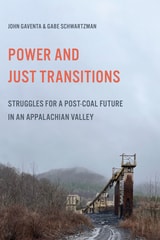
Power and Just Transitions
Struggles for a Post-Coal Future in an Appalachian ValleyJohn Gaventa and Gabe Schwartzman
University of Illinois Press, 2026
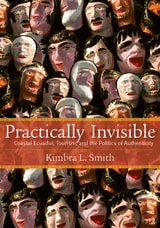
Practically Invisible
Coastal Ecuador, Tourism, and the Politics of AuthenticityKimbra Smith
Vanderbilt University Press, 2015
Thus came a nearly inevitable shock, as the daily rhythms of life--rising before dawn to prepare for a long day of maintaining livestock and crops; returning for a late lunch and siesta; joining in a game of soccer followed by dinner in the evening--transformed forever in favor of a new tourist industry and the compromises required to support it. As Practically Invisible demonstrates, for Agua Blancans, becoming a supposedly "authentic" version of their own indigenous selves required performing their culture for outsiders, thus becoming these performances within the minds of these visitors. At the heart of this story, then, is a delicate balancing act between tradition and survival, a performance experienced by countless indigenous groups.

Predatory Welfare
Debt, Race, and Cash TransfersErin Torkelson
Duke University Press, 2026
Prison Land
Mapping Carceral Power across Neoliberal AmericaBrett Story
University of Minnesota Press, 2019
From broken-window policing in Detroit to prison-building in Appalachia, exploring the expansion of the carceral state and its oppressive social relations into everyday life
Prison Land offers a geographic excavation of the prison as a set of social relations—including property, work, gender, and race—enacted across various landscapes of American life. Prisons, Brett Story shows, are more than just buildings of incarceration bound to cycles of crime and punishment. Instead, she investigates the production of carceral power at a range of sites, from buses to coalfields and from blighted cities to urban financial hubs, to demonstrate how the organization of carceral space is ideologically and materially grounded in racial capitalism.
Story’s critically acclaimed film The Prison in Twelve Landscapes is based on the same research that informs this book. In both, Story takes an expansive view of what constitutes contemporary carceral space, interrogating the ways in which racial capitalism is reproduced and for which police technologies of containment and control are employed. By framing the prison as a set of social relations, Prison Land forces us to confront the production of new carceral forms that go well beyond the prison system. In doing so, it profoundly undermines both conventional ideas of prisons as logical responses to the problem of crime and attachment to punishment as the relevant measure of a transformed criminal justice system.
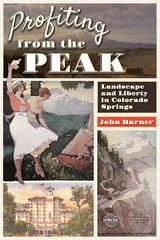
Profiting from the Peak
Landscape and Liberty in Colorado SpringsJohn Harner
University Press of Colorado, 2021
Colorado Springs, Colorado, has long profited from Pikes Peak and built an urban infrastructure to sustain that relationship. In Profiting from the Peak, geographer John Harner surveys the events and socioeconomic conditions that formed the city, analyzing the built landscape to offer insight into the origins of its urban forms and spatial layout, focusing particularly on historic downtown architecture and public spaces. He examines the cultural values that have come to define the city, showing how military and other institutions, tourism, political and economic conditions, cultural movements, key individual actors, and administrative policies have created a singular urban personality.
Capital accumulation has been a defining theme of Colorado Springs from its very beginning, with enormous profits generated from regional industrialization, railroads, land sales, water appropriation, and extraction of coal and gold. These conditions and its setting in the Rocky Mountain West formed a libertarian-oriented, limited governance philosophy.
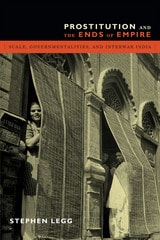
Prostitution and the Ends of Empire
Scale, Governmentalities, and Interwar IndiaStephen Legg
Duke University Press, 2014