Results by title
71 books match the query 'Human beings' and 6 start with p
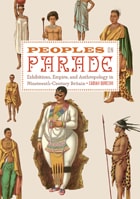
Peoples on Parade
Exhibitions, Empire, and Anthropology in Nineteenth-Century BritainSadiah Qureshi
University of Chicago Press, 2011
In May 1853, Charles Dickens paid a visit to the “savages at Hyde Park Corner,” an exhibition of thirteen imported Zulus performing cultural rites ranging from songs and dances to a “witch-hunt” and marriage ceremony. Dickens was not the only Londoner intrigued by these “living curiosities”: displayed foreign peoples provided some of the most popular public entertainments of their day. At first, such shows tended to be small-scale entrepreneurial speculations of just a single person or a small group. By the end of the century, performers were being imported by the hundreds and housed in purpose-built “native” villages for months at a time, delighting the crowds and allowing scientists and journalists the opportunity to reflect on racial difference, foreign policy, slavery, missionary work, and empire.
Peoples on Parade provides the first substantial overview of these human exhibitions in nineteenth-century Britain. Sadiah Qureshi considers these shows in their entirety—their production, promotion, management, and performance—to understand why they proved so commercially successful, how they shaped performers’ lives, how they were interpreted by their audiences, and what kinds of lasting influence they may have had on notions of race and empire. Qureshi supports her analysis with diverse visual materials, including promotional ephemera, travel paintings, theatrical scenery, art prints, and photography, and thus contributes to the wider understanding of the relationship between science and visual culture in the nineteenth century.
Through Qureshi’s vibrant telling and stunning images, readers will see how human exhibitions have left behind a lasting legacy both in the formation of early anthropological inquiry and in the creation of broader public attitudes toward racial difference.
[more]
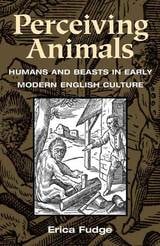
Perceiving Animals
Humans and Beasts in Early Modern English CultureErica Fudge
University of Illinois Press, 2000
The boundaries between human and beast forged a rugged philosophical landscape across early modern England. Spectators gathered in London's Bear Garden to watch the callous and brutal baiting of animals. A wave of "new" scientists performed vivisections on live animals to learn more about the human body.
In Perceiving Animals, the British scholar Erica Fudge traces the dangers and problems of anthropocentrism in texts written from 1558 to 1649. Meticulous examinations of scientific, legal, political, literary, and religious writings offer unique and fascinating depictions of human perceptions about the natural world.
Views carried over from bestiaries--medieval treatises on animals--
posited animals as nonsentient beings whose merits were measured solely by what provisions they afforded humans: food, medicine, clothing, travel, labor, scientific knowledge. Without consciences or faith, animals were deemed far inferior to humans.
While writings from the period asserted an enormous biological superiority, Fudge contends actual human behavior and logic worked, sometimes accidentally, to close the alleged gap. In the Bear Garden, even a man of the lowest social rank had power over a tortured animal, sinking him, though, below the beasts. The beast fable itself fails to show a true understanding of animals, as it merely attributes human characteristics to beasts in an attempt to teach humanist ideals. Scholars and writers continually turned to the animal world for reflection. Despite this, scientists of the period used animals for empirical and medical knowledge, recognizing biological and spiritual similarities but refusing to renege human superiority.
Including an insightful reexamination of Ben Jonson's Volpone and fascinating looks at works by Francis Bacon, Edward Coke, and Richard Overton, among others, Fudge probes issues of animal ownership and biological and spiritual superiority in early modern England that resonate with philosophical quandaries still relevant in contemporary society.
[more]
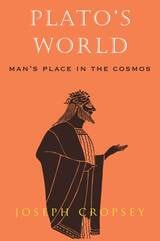
Plato's World
Man's Place in the CosmosJoseph Cropsey
University of Chicago Press, 1995
In this culmination of a lifetime's study, Joseph Cropsey examines the crucial relationship between Plato's conception of the nature of the universe and his moral and political thought.
Cropsey interprets seven of Plato's dialogues—Theaetetus, Euthyphro, Sophist, Statesman, Apology, Crito, and Phaedo—in light of their dramatic consecutiveness and thus as a conceptual and dramatic whole. The cosmos depicted by Plato in these dialogues, Cropsey argues, is often unreasonable, and populated by human beings unaided by gods and dealt with equivocally by nature. Masterfully leading the reader through the seven scenes of the drama, Cropsey shows how they are, to an astonishing degree, concerned with the resources available to help us survive in such a world.
This is a world—and a Plato—quite at odds with most other portraits. Much more than a summary of Plato's thinking, this book is an eloquent, sometimes amusing, often moving guide to the paradoxes and insights of Plato's philosophy.
[more]
Population, Contact, and Climate in the New Mexican Pueblos
Ezra B. W. Zubrow
University of Arizona Press, 1974
The Anthropological Papers of the University of Arizona is a peer-reviewed monograph series sponsored by the School of Anthropology. Established in 1959, the series publishes archaeological and ethnographic papers that use contemporary method and theory to investigate problems of anthropological importance in the southwestern United States, Mexico, and related areas.
[more]
Power of Nature
Archaeology and Human-Environmental Dynamicsedited by Monica L. Smith
University Press of Colorado, 2022
In The Power of Nature archaeologists address the force and impact of nature relative to human knowledge, action, and volition. Case studies from around the world focusing on different levels of sociopolitical complexity—ranging from early agricultural societies to states and empires—address the ways in which nature retains the upper hand in human agentive environmental discourse, providing an opportunity for an insightful perspective on the current anthropological emphasis on how humans affect the environment.
Climatic events, pathogens, and animals as nonhuman agents, ranging in size from viruses to mega-storms, have presented our species with dynamic conditions that overwhelm human capacities. In some cases, people have modified architecture to deal with a constant onslaught of storms, as in Japan or the Caribbean; in other cases, they have welcomed the occasional natural disaster as a chance to start fresh or to put into place new ideas and practices, as in the case of ancient Roman cities. Using the concept of “agency” as one in which multiple sentient and nonhuman actors interact in a landscape, and exploring locations such as the Caribbean, the Pacific, South Asia, the Andes, the Mediterranean, Mesoamerica, North America, and the Arctic, the authors provide compelling explanations of the effect of an entire realm of natural powers that beset human societies past and present—from storms, earthquakes, and fires to vegetation, domestic animals, and wild birds. Throughout, the emphasis is on the philosophical and engineering adjustments that people make to stay resilient when facing the perpetual changes of the natural world.
Using an archaeological perspective, The Power of Nature illustrates and analyzes the many
ways that people do not control their environments. It will be of interest to archaeologists, as well as scholars in science, biology, botany, forestry, urban studies, and disaster management.
Contributors: Steven Ammeran, Traci Ardren, Katelyn J. Bishop, Karen Mohr Chávez, Sergio Chávez, Stanislava Chávez, Emelie Cobb, Jago Cooper, Harper Dine, Chelsea Fisher, Jennifer Huebert, Dale L. Hutchinson, Sara L. Juengst, Kanika Kalra, François Oliva, Matthew C. Peros, Jordan Pickett, Seth Quintus, John Robb, Monica L. Smith, Jillian A. Swift, Silvia Tomášková, Kyungsoo Yoo
[more]

Primitive Passions
Men, Women, and the Quest for EcstasyMarianna Torgovnick
University of Chicago Press, 1998
Marianna Torgovnick's Primitive Passions investigates Westerners' profound attraction to cultures that we call "primitive." Torgovnick explores the stories of Carl Jung, Isak Dinesen, D. H. Lawrence, and Georgia O'Keefe and the ways they used the primitive as a medium for soul-searching and personal fulfillment. Brilliantly linking literature, art, psychology, and cultural studies, Primitive Passions provides insight into our very notion of the exotic.
"Primitive Passions intends to provoke thought, not to tell you what you already know and for that reason alone it's extraordinary."—Walter Kendrick, New York Times Book Review
"A powerfully argued, impassioned, and intelligent exploration of the 'primitive' in our culture and in ourselves. Like Marianna Torgovnick's previous work, it is certain to be much discussed and provocative."—Joyce Carol Oates
"An inspiring effort to bring gender to bear on matters of race, ethnic identity, and spirituality."—Susan Gubar
"A fascinating, wide-ranging and provocative tour of twentieth century Western culture."—Cynthia D. Schrager, Women's Review of Books
[more]